La Bastide Saint-Antoine
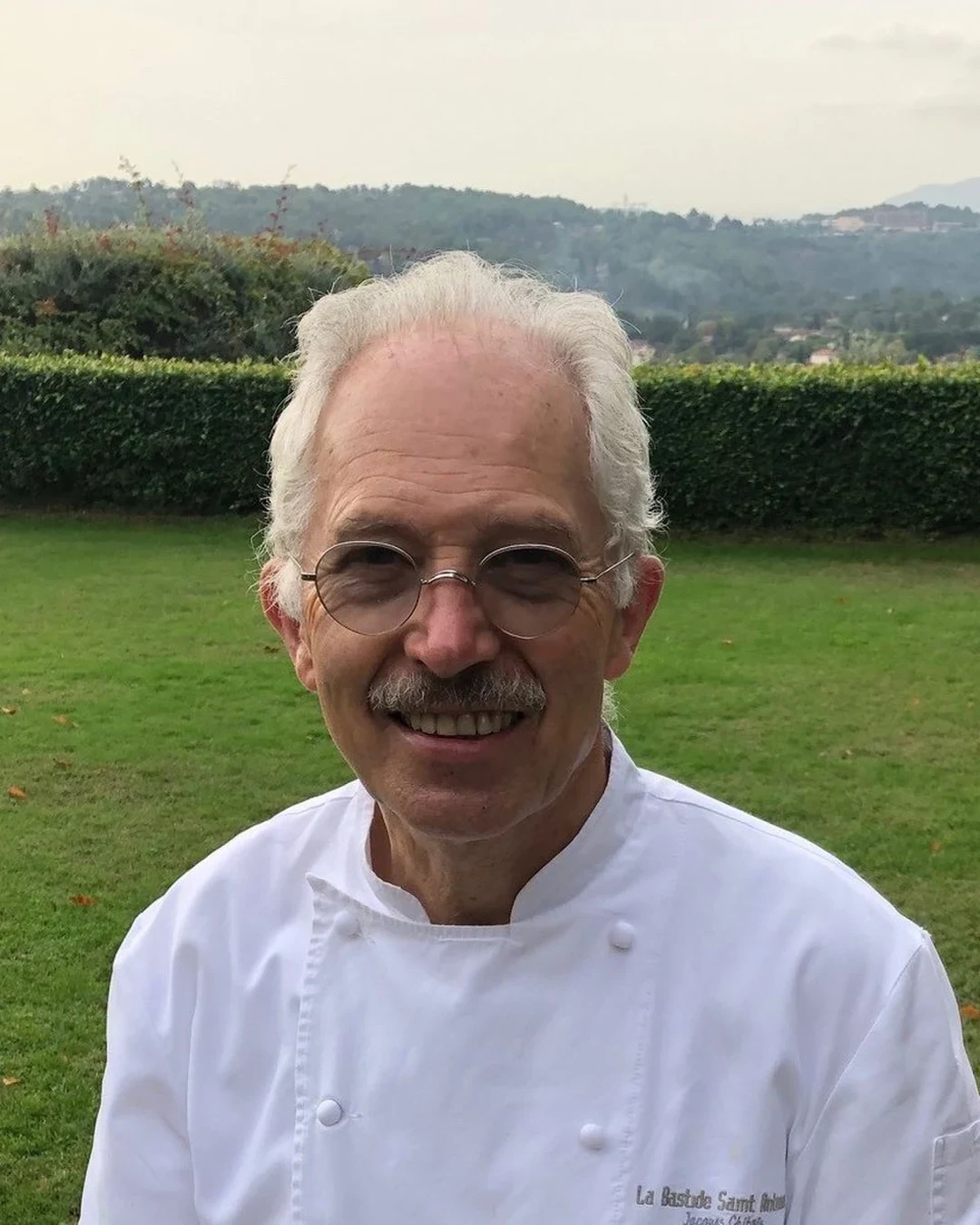
In Residence
Jacques Chibois
Chef
- 01CuisineProvençal Fine Dining
- 02CityGrasse, France
- Relais Chateaux Award · 2026
- Michelin Plate · 2026
- Les Grandes Tables du Monde Member · 2026
- Michelin Plate · 2025
- Relais Chateaux Award · 2025
- Gault & Millau Remarkable Restaurant: 16.5pts · 2025
- Michelin Plate · 2024
- Opinionated About Dining Classical in Europe Ranked #355 · 2024
- Opinionated About Dining Classical in Europe Recommended · 2023
Where Provençal Land Meets the Plate
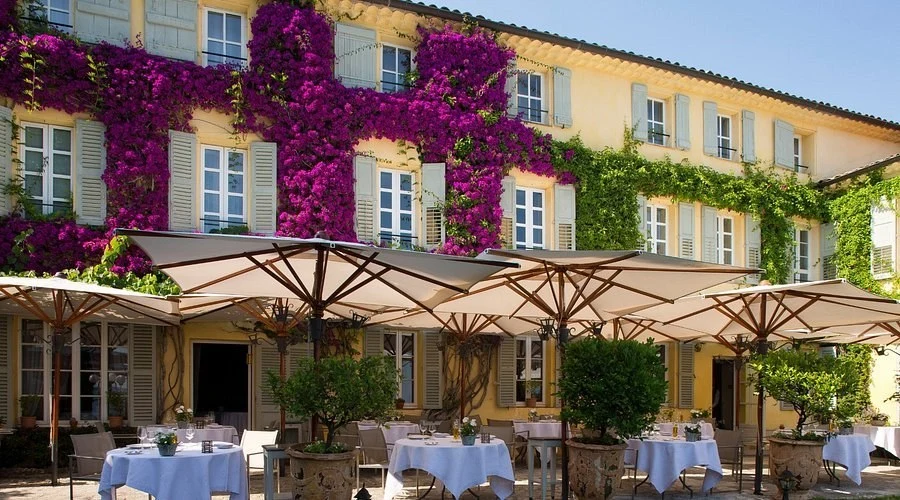
The road up to La Bastide Saint-Antoine winds through one of France's most scent-saturated landscapes: the terraced hills above Grasse, where jasmine, rose, and lavender have been cultivated for centuries to supply the world's perfume industry. That context is not incidental to understanding what happens at the table here. The Alpes-Maritimes hinterland produces some of France's most identifiable terroir signals, olive oil pressed from centuries-old trees, wild thyme and savory from the garrigue, courgettes and tomatoes ripened slowly under the Provençal sun. A restaurant sitting inside this landscape has a narrower job than its counterparts in Paris or Lyon: it must translate place into plate.
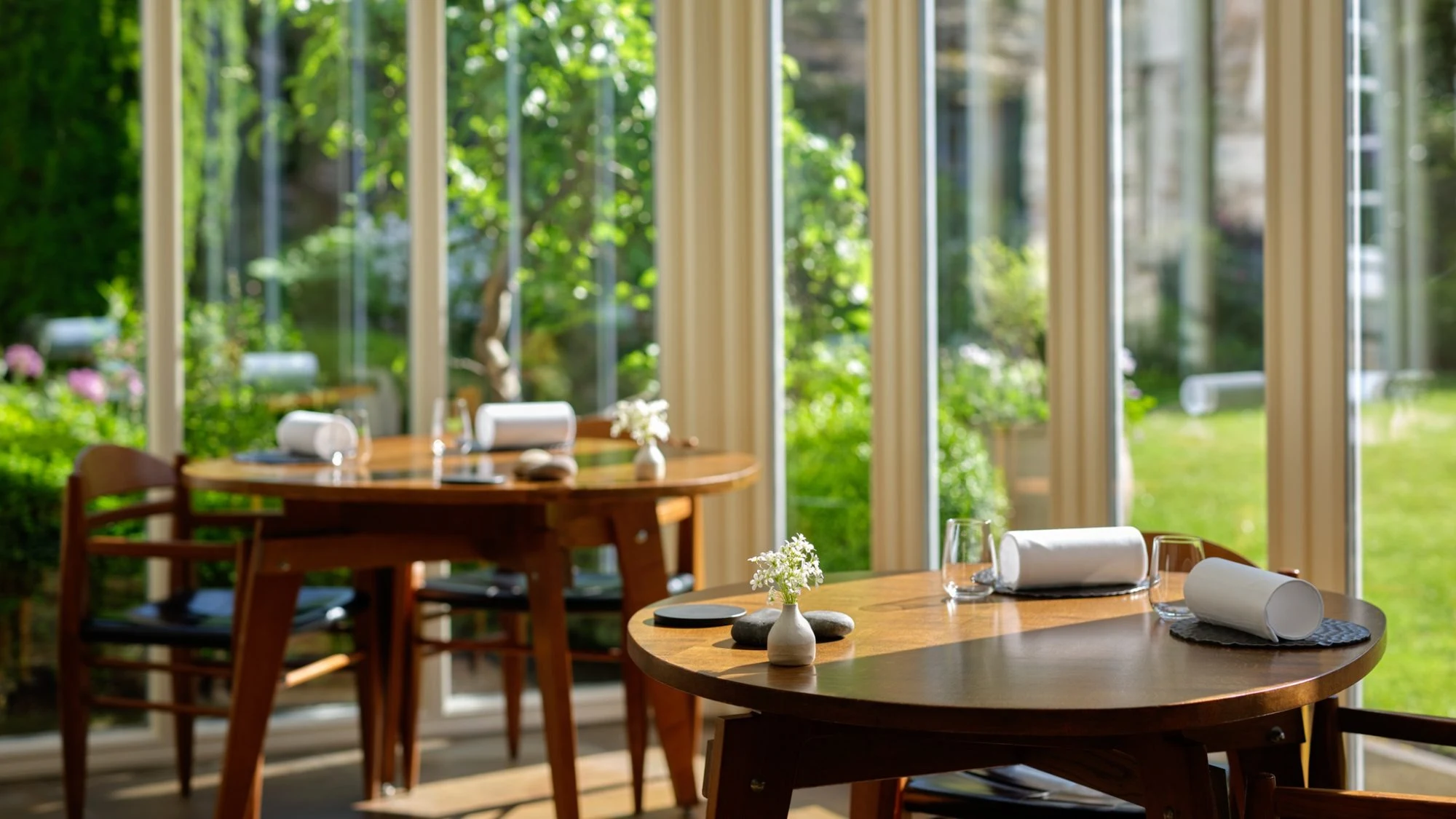
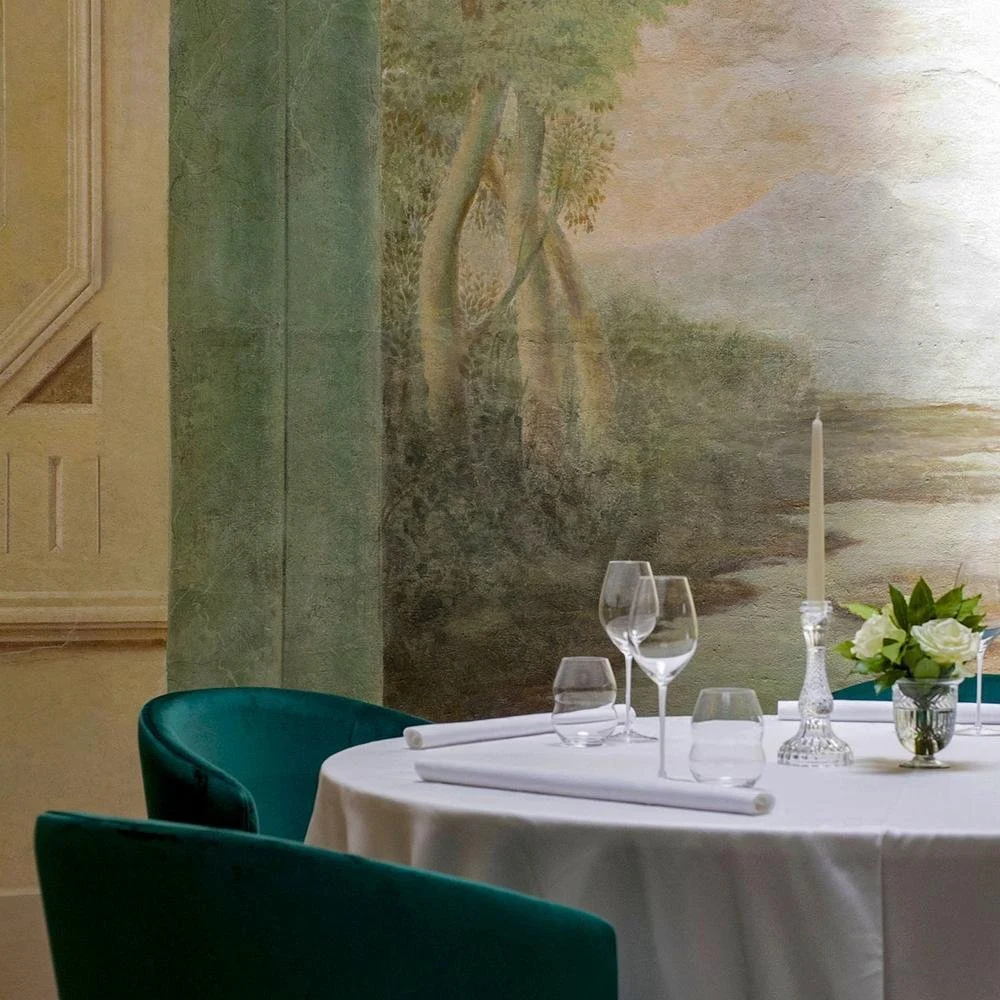
Jacques Chibois has been doing that work from this 17th-century stone bastide for long enough that the property and the cuisine feel inseparable. The house itself frames the meal before a dish arrives: thick-walled, shaded by mature plane trees, with the kind of proportions that predate the idea of designed dining environments. Provençal decoration inside runs to terracotta, warm textiles, and the unhurried visual language of the mas tradition. It reads as authenticity rather than theme, which matters in a region where that distinction is increasingly difficult to maintain.
The Sunday letter
Find new places through the people who run them.
Our Sunday email brings you the chefs, winemakers and hoteliers behind our newest stories. See a sample before you subscribe.
See a sample of the Sunday emailOne email a week. Unsubscribe from any issue.
The Provençal Table in Its Regional Context
Provençal cuisine at the fine dining level occupies a specific position within the wider map of French gastronomy. Unlike the butter-and-cream register of Normandy or the vinous richness of Burgundian cooking, the Provençal table is built on olive oil, aromatics, and vegetables with enough character to carry a plate without heavy sauce architecture. That restraint reads differently depending on execution: at its weakest, it produces pleasant but forgettable food; at its strongest, it achieves the kind of precision that regional cooking needs to justify €€€€ pricing.
For comparison, Mirazur in Menton operates further along the coast and has converted Côte d'Azur produce into a three-Michelin-star creative program ranked among the world's most recognised restaurants. Alain Llorca in La Colle-sur-Loup and La Bastide Bourrelly - Mathias Dandine in Cabriès represent the southern French tradition applied through more contemporary lenses. La Bastide Saint-Antoine holds its ground as a classical address, acknowledged by Opinionated About Dining's Classical in Europe list.
That classical orientation also connects it to a broader lineage of French regional houses. Properties like Auberge de l'Ill in Illhaeusern, Bras in Laguiole, and Auberge du Vieux Puits in Fontjoncouse demonstrate how the strongest French regional cooking is inseparable from a specific geography. La Bastide Saint-Antoine belongs to that conversation, with Michelin Plate recognition placing it within the current institutional frame.
Ingredients, Sourcing, and the Logic of Terroir
Grasse's agricultural identity gives any serious kitchen here material that urban restaurants cannot replicate by procurement alone. The olive groves of the Alpes-Maritimes produce oils with a distinct herbaceous character shaped by limestone soils and a dry, bright microclimate. Herbs in this part of Provence are not a garnish category; they are structural flavour elements with genuine provenance. A kitchen anchored in this environment has a persuasive argument to make through sourcing alone, before technique enters the equation.
The Michelin Plate designation signals that inspectors recognise quality cooking without elevating it to star level, a meaningful distinction. Les Grandes Tables du Monde membership adds a second institutional layer, particularly for travellers already familiar with the organisation's broader roster of houses like Flocons de Sel in Megève and Troisgros - Le Bois sans Feuilles in Ouches.
For readers calibrating expectations: this is not a restaurant chasing creative disruption in the manner of AM par Alexandre Mazzia in Marseille or operating the multi-course precision machinery of Alléno Paris au Pavillon Ledoyen or Assiette Champenoise in Reims. La Bastide Saint-Antoine is a classical Provençal house where the intelligence is in the sourcing and in the restraint applied to it. That is a genuinely different proposition, and one that suits a different kind of traveller.
Planning Your Visit
Grasse sits roughly forty minutes inland from Nice and about twenty-five minutes from Cannes, placing La Bastide Saint-Antoine within range of the Côte d'Azur's main transport hubs. The property functions as both restaurant and hotel, the bastide setting with its Relais & Châteaux affiliation makes it a credible overnight stop for those coming from further afield, and the combination of accommodation and table avoids the logistical problem of driving Provence's hill roads after dinner at €€€€ price point. The restaurant draws a Google review score of 4.5 from 773 submissions, which for a property at this price and formality level suggests consistent execution over time. Spring and early summer, when the surrounding hills are in aromatic bloom and local produce hits its seasonal peak, represent the strongest case for timing a visit.
Questions
Frequently asked
Who works at La Bastide Saint-Antoine?
Made By profiles Jacques Chibois (Chef) at La Bastide Saint-Antoine.
How expensive is La Bastide Saint-Antoine?
La Bastide Saint-Antoine is listed at a price level of $$$$.
Where is La Bastide Saint-Antoine and what does it serve?
La Bastide Saint-Antoine is in Grasse, Grasse, serving Provençal Fine Dining.
The field
How it compares
| Place | Cuisine | Notes | Awards |
|---|---|---|---|
| La Bastide Saint-Antoine | Provençal Fine Dining | Grasse, $$$$ | · |
| Daniel | Modern French Fine Dining | New York City | Michelin 1 Star, World's 50 Best |
| Fu He Hui | Modern Seasonal Vegetarian Fine Dining | Shanghai | Michelin 2 Stars, World's 50 Best |
| L'Enclume | Modern British Farm-to-Table | Cartmel | Michelin 3 Stars |
| La Bastide de Moustiers | Provençal Fine Dining | Moustiers-Sainte-Marie | Michelin 1 Star |
| La Table de Xavier Mathieu | Provençal Fine Dining | Joucas | Michelin 1 Star |
| Providence | Modern Seafood Fine Dining | Los Angeles | Michelin 3 Stars, World's 50 Best |
In residence
Similar places
Modern French Fine Dining
Daniel
New York City, United States
★ · 50 Best
Modern Seasonal Vegetarian Fine Dining
Fu He Hui
Shanghai, China
★★ · 50 Best
Modern British Farm-to-Table
L'Enclume
Cartmel, United Kingdom
★★★
Provençal Fine Dining
La Bastide de Moustiers
Moustiers-Sainte-Marie, France
★
Provençal Fine Dining
La Table de Xavier Mathieu
Joucas, France
★
Modern Seafood Fine Dining
Providence
Los Angeles, United States
★★★ · 50 Best
The Sunday letter
Get the next Made By story in your inbox.
We send one email every Sunday morning with the places and people we covered that week.
See a sample of the Sunday emailOne email a week. Unsubscribe from any issue.