L'Amitié
In Residence
Jang Myoung-sik
Chef
- 01CuisineClassic French Fine Dining
- 02CitySeoul, South Korea
- 03RecognitionOne Michelin Star
From the people index
Recommended by
One trusted voice points here.
French technique, Korean seasonal produce
- 1 Michelin Star · Michelin Guide
- La Liste Top Restaurants: 77pts · 2026
- Michelin 1 Star · 2025
- La Liste Top Restaurants: 79pts · 2025
- Michelin 1 Star · 2024
Seasonal French work at the Gangnam pass
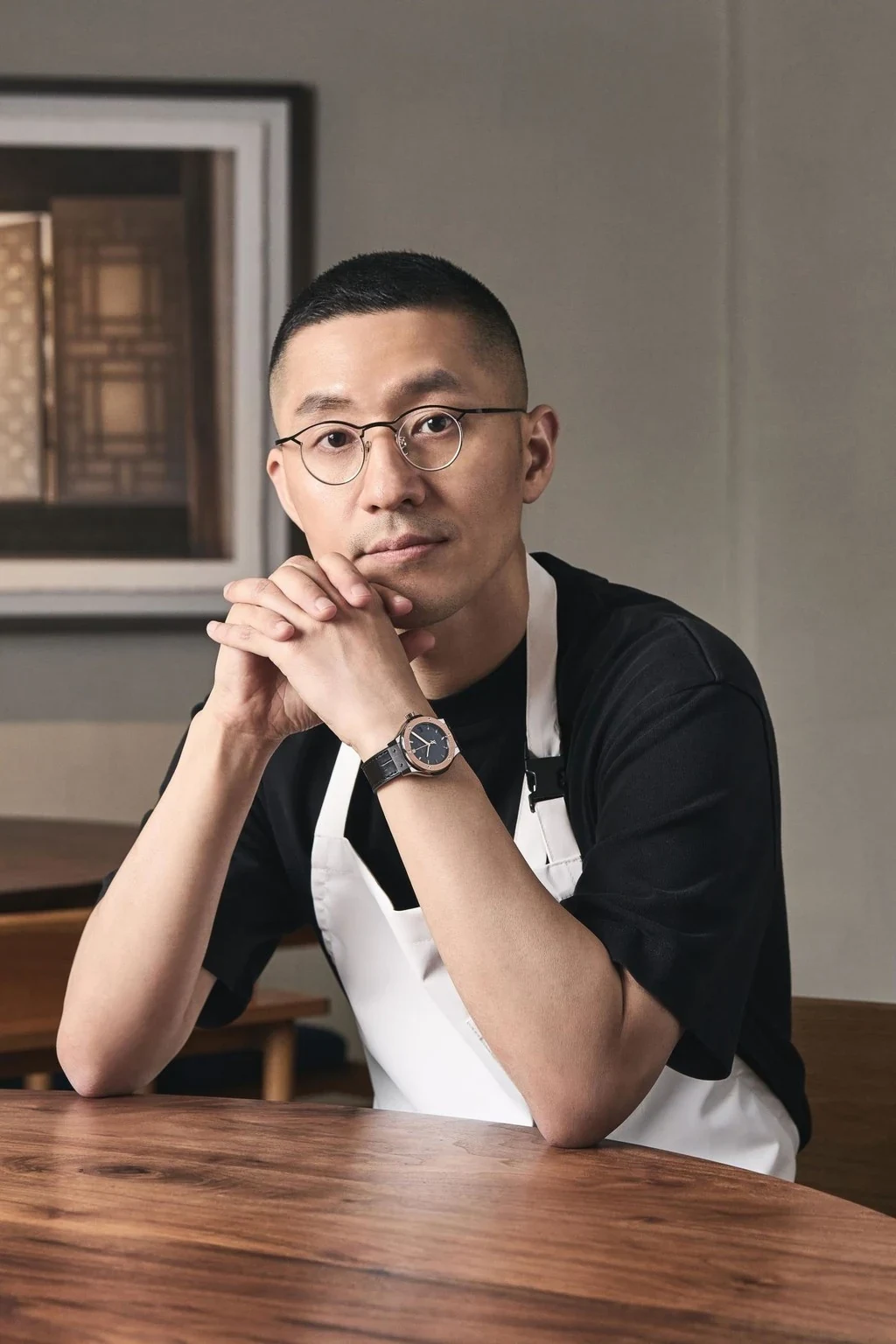
Foie gras moves from cold to heat with little room for correction at L'Amitié in Seoul, and Jang Myoung-sik has been head chef and owner since 2006. He left a stable job and took on debt to buy the restaurant, and the house has been cooking French in this city since 1999. The name, 라미띠에, carries the French word for friendship, but the kitchen leans on discipline rather than sentiment: set courses, reduction and gloss, and the local question of what to serve when the produce is clearest.
The restaurant holds one Michelin star, carried from Seoul's first guide in 2018 and retained in 2025. What the star rewards here is restraint: a formal tasting menu in which each course feels composed rather than arranged. The scale supports that. For years the room ran on reservation only, at one point with two tables, which is a working condition before it is an exclusivity claim.
The Sunday letter
Find new places through the people who run them.
Our Sunday email brings you the chefs, winemakers and hoteliers behind our newest stories. See a sample before you subscribe.
See a sample of the Sunday emailOne email a week. Unsubscribe from any issue.
Bisque, abalone, beef, and the French frame
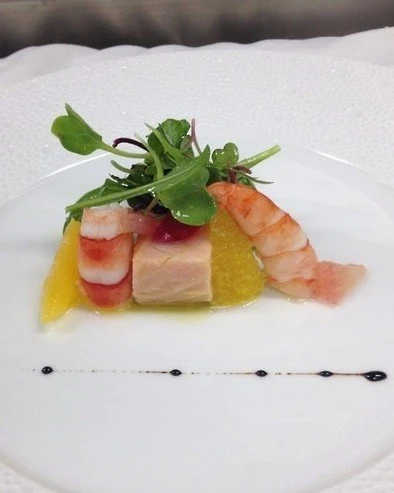
The program reads as French in method before it reads as French in reference. Lobster bisque brings shell, cream and depth to the table, sometimes with peas, romaine and celeriac foam in the surrounding architecture. Steamed Wando abalone places a Korean ingredient inside a fine-dining cadence without asking it to behave like an imported luxury. Korean beef tenderloin arrives with the grammar of the French kitchen around it: dauphinoise, cauliflower purée, red onion purée, herb oil, fried cauliflower, truffle aioli. Hanwoo striploin and foie gras stay in the house vocabulary as markers of classic technique rather than ornament.
The set menu gives the kitchen control of progression. A course can move from egg custard and spider crab bisque into cod with herb crust, beurre noisette onion and spinach, and paprika beurre blanc; another can turn toward silk fowl with pâté, mushrooms, rice paper tuile and classic jus. These are not loose gestures toward France. They are station work: confit, bisque, gel, foam, beurre blanc, jus, purée. The measurements that matter most are internal ones, the heat of the pan, the reduction on the stove, the point at which richness needs acid or bitterness to keep moving.
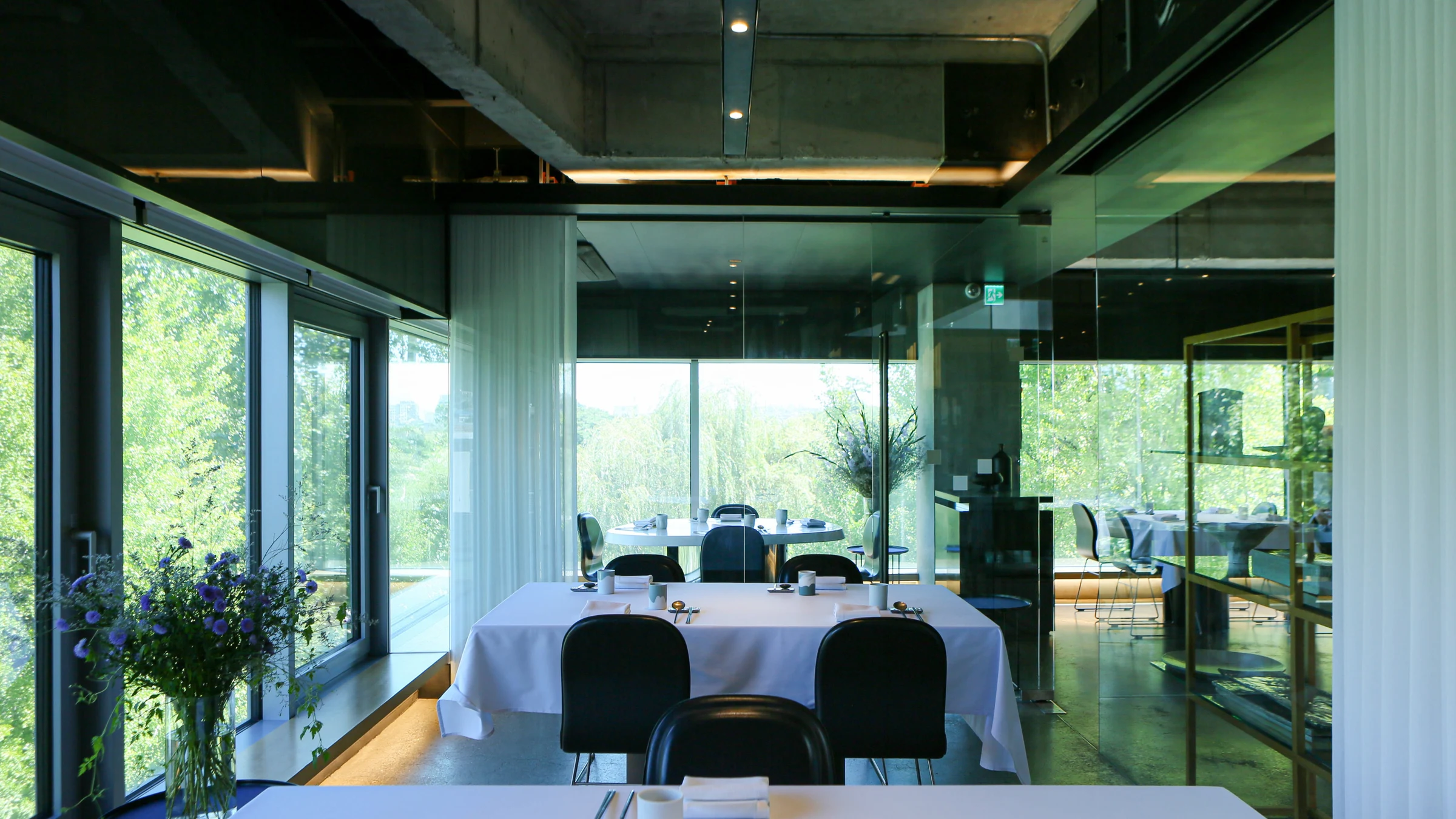
A quiet second-floor room
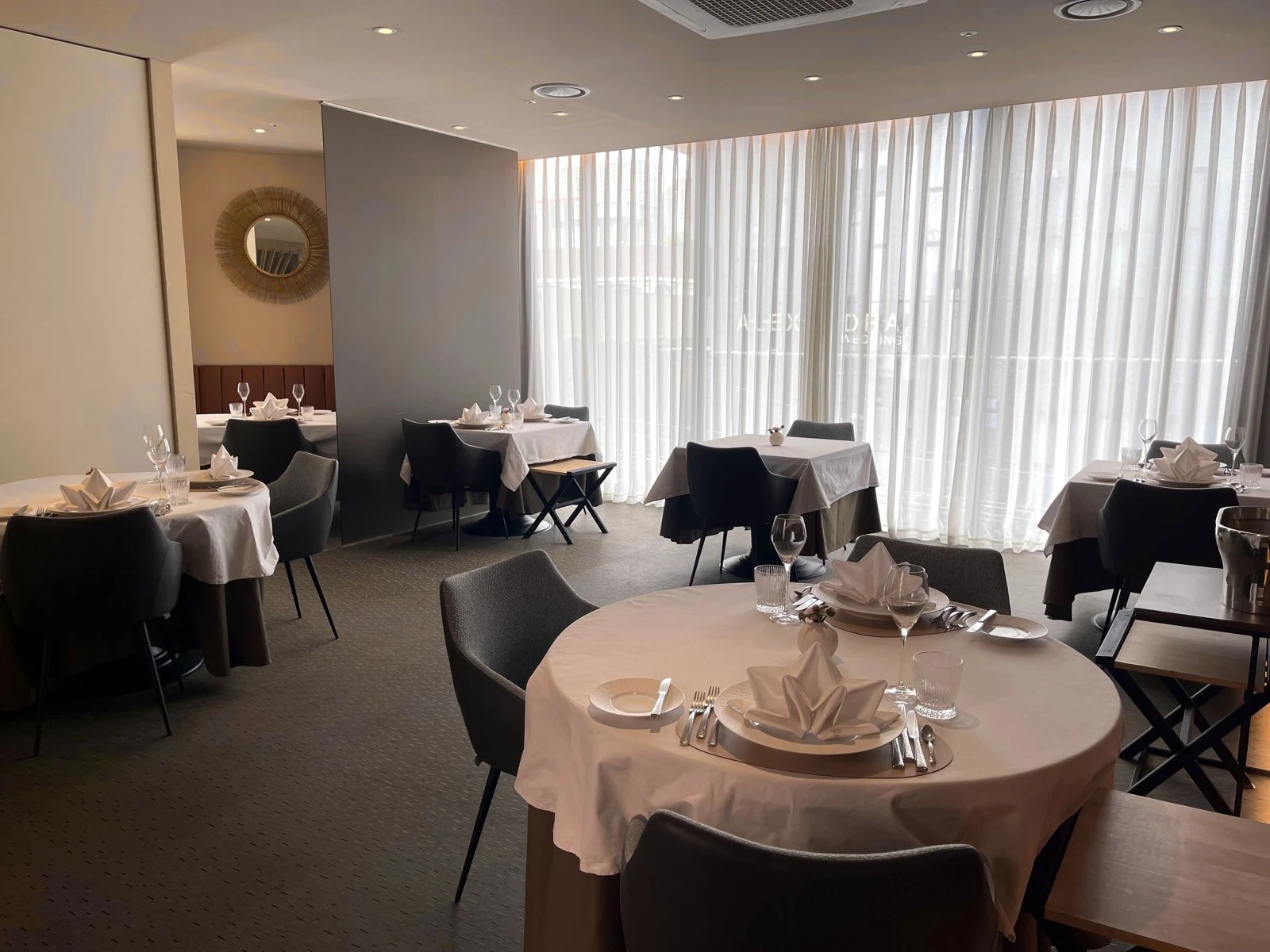
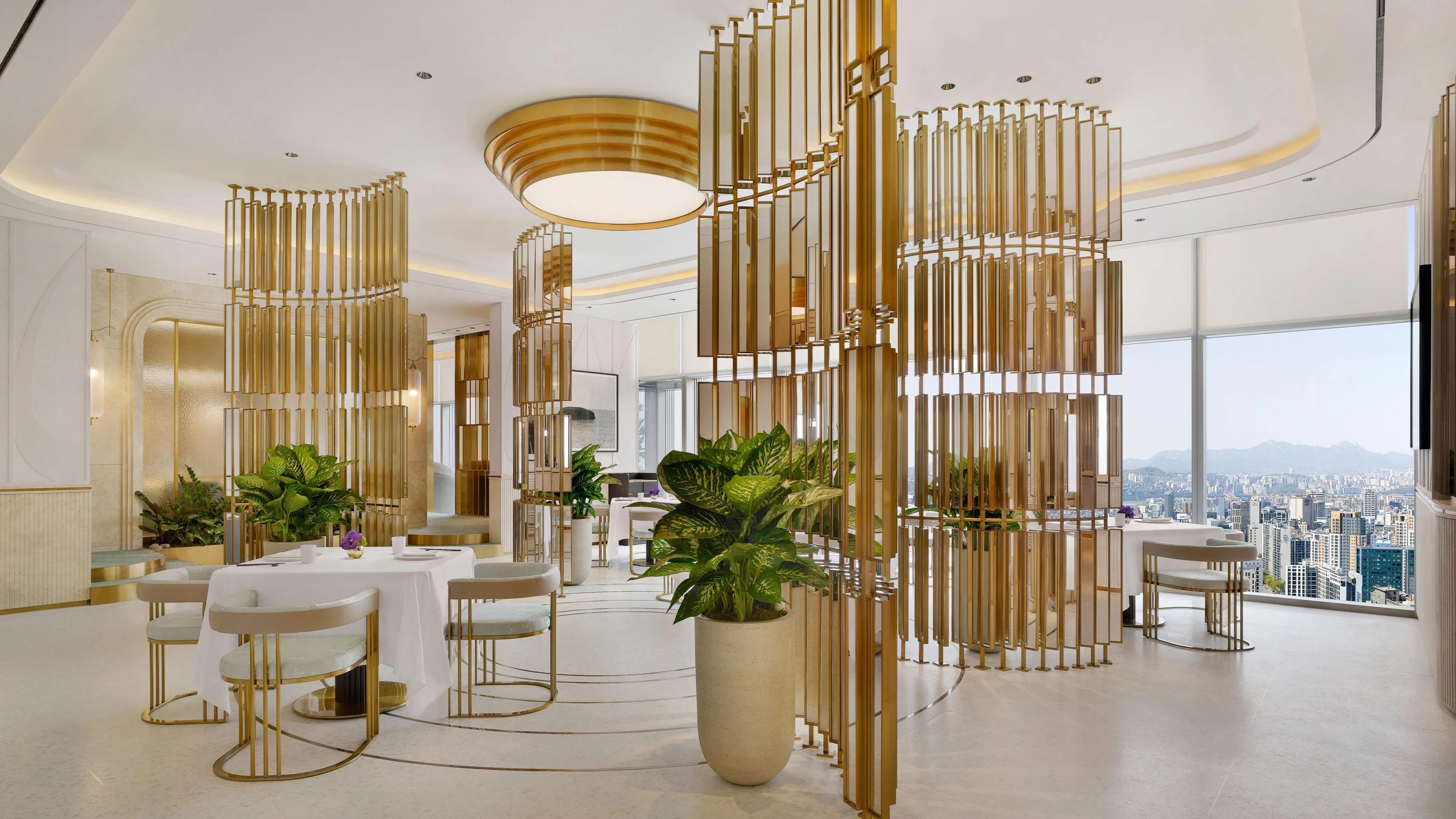
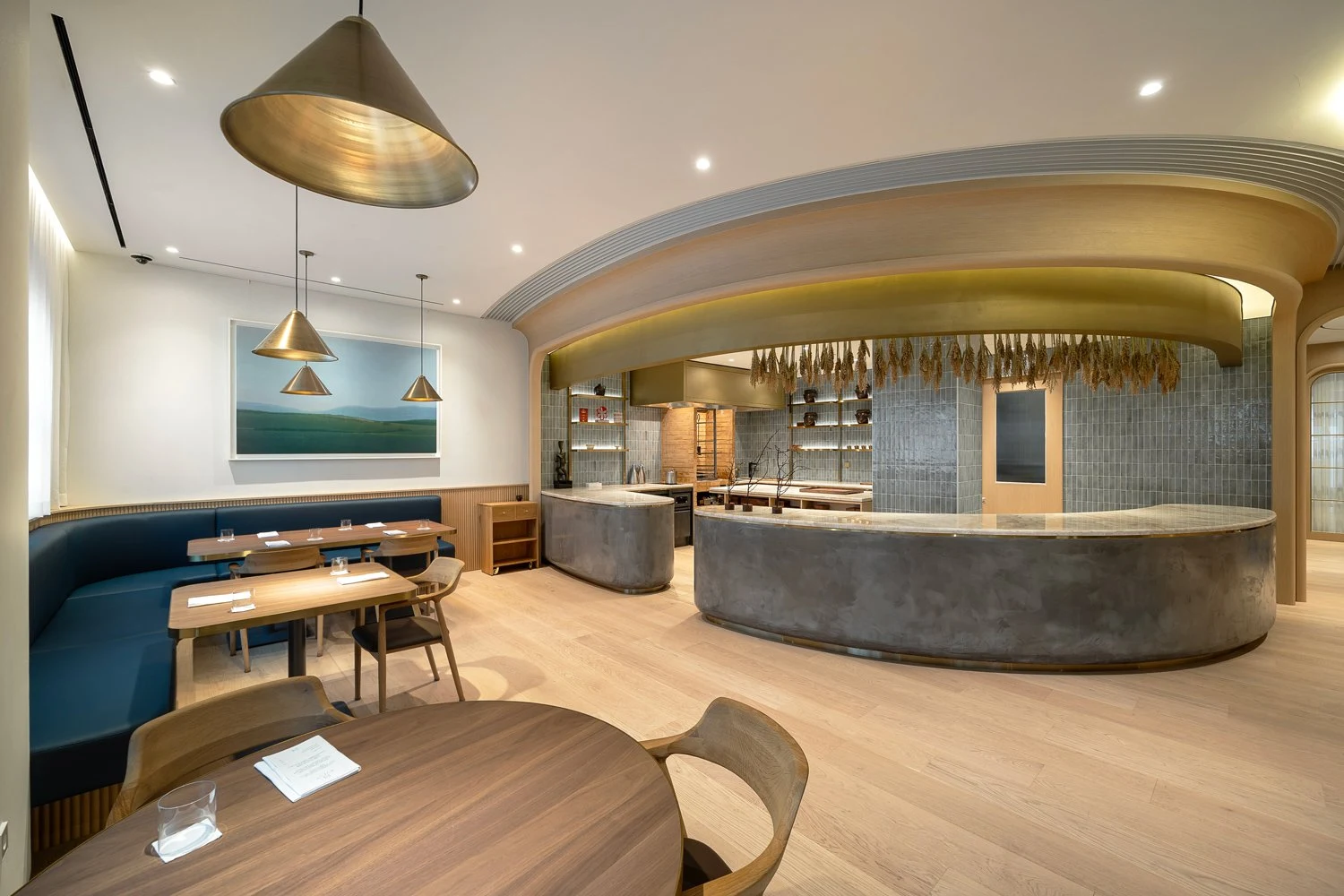
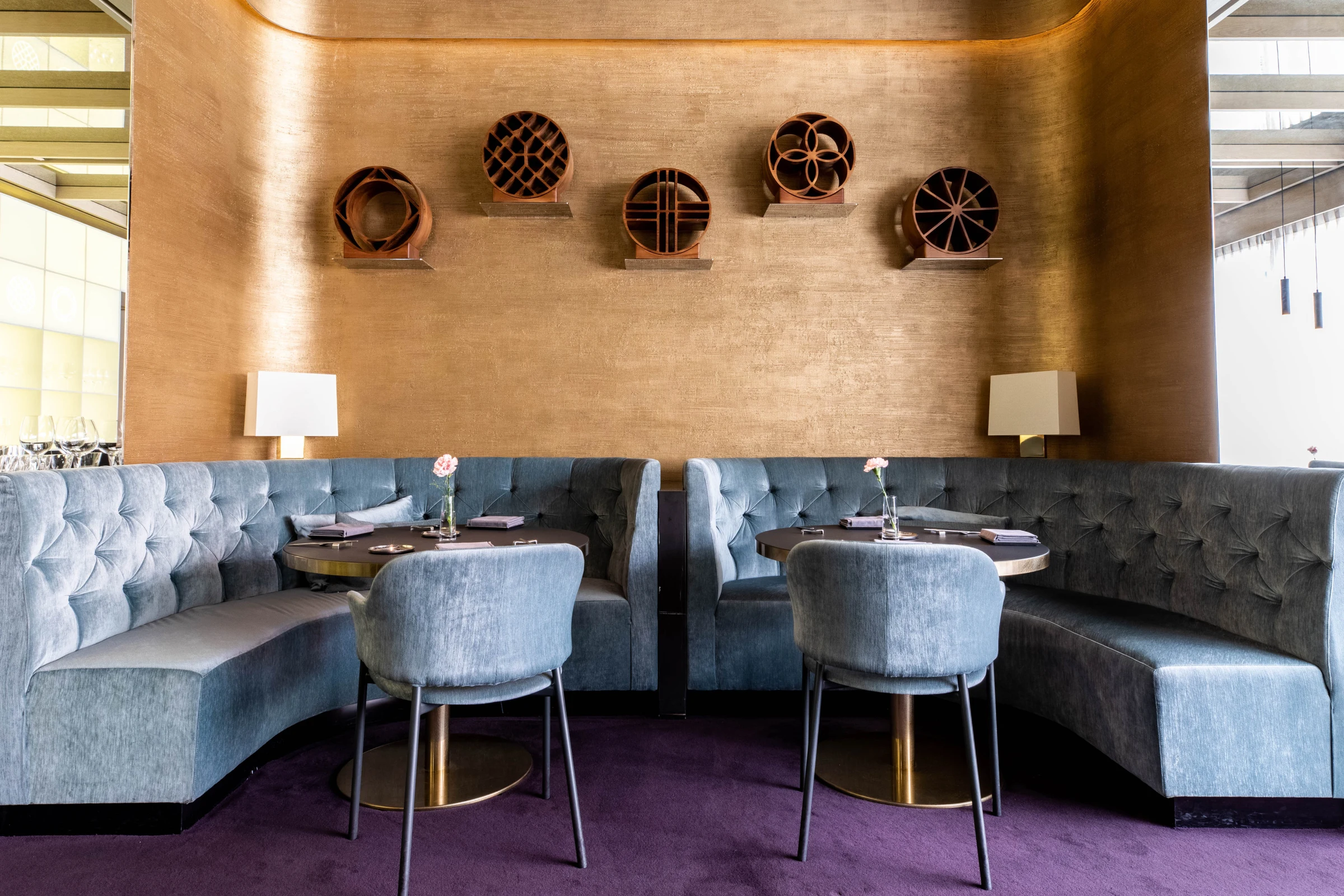
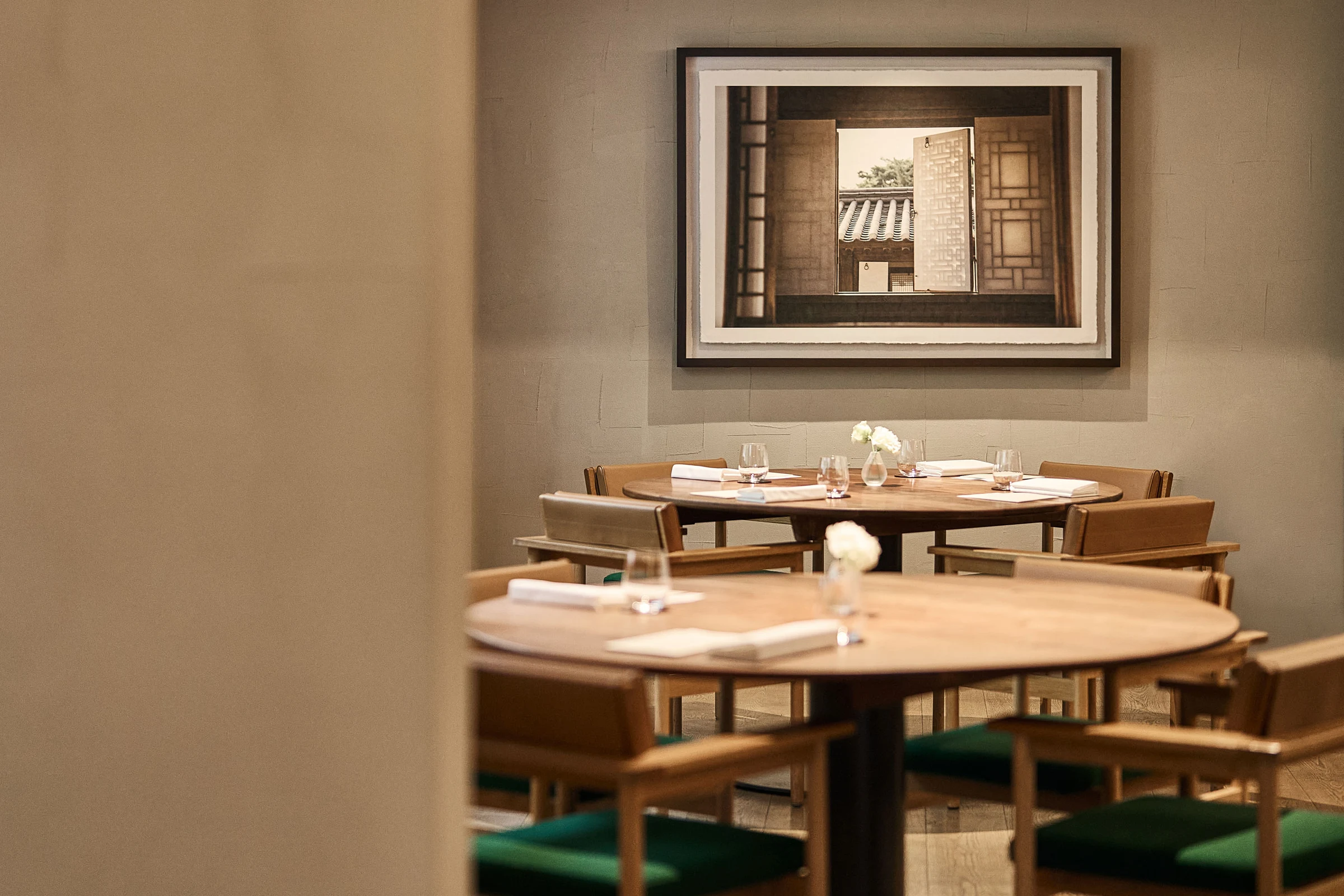
The room changes with the light. At lunch, the second-floor dining room is bright and airy, with soft daylight on the table and enough quiet for a sauce spoon to feel audible. At dinner, the lighting tightens. The room becomes warmer, lower, more controlled, made for privacy rather than theatre. Service is formal, but the scale stays intimate; the attention gathers around the plate, not the room's performance of attention.
That matters for this kind of cooking. Bisque asks for concentration from the kitchen and from the guest. So does abalone, when the pleasure is in texture rather than abundance. The counterpoint between Korean produce and French method can become loud in less patient hands; here it stays quiet, a course arriving with its sauce settled, its garnish placed, its temperature still intact. The pass sets the pace, and the room lets it hold.
What remains on the plate
L'Amitié has been part of Seoul's French dining life since 1999, long enough for the city around it to change its appetite more than once. It has moved address, adjusted, and kept its centre: seasonal courses, local sourcing, formal service, and a small room where the craft has to justify the ceremony. What comes next is not a public flourish. It is the next seasonal turn of steamed Wando abalone, lobster bisque and Korean beef tenderloin under Jang Myoung-sik at L'Amitié.
Questions
Frequently asked
What kind of restaurant is L'Amitié?
L'Amitié is a classic French fine-dining restaurant in Gangnam, Seoul. The kitchen is led by chef and owner Jang Myoung-sik, who has run it since 2006, and the restaurant has been cooking French food in Seoul since 1999.
What does L'Amitié cook?
The menu is built around seasonal courses that use French technique with Korean produce. Signature dishes include steamed Wando abalone, Korean beef tenderloin, lobster bisque and foie gras.
Does L'Amitié have Michelin recognition?
L'Amitié holds one Michelin star. It was included in Seoul's first Michelin guide in 2018 and retained the star in 2025.
How does booking work at L'Amitié?
Reservations are essential and booking is direct. The restaurant also has an on-site parking lot.
What is the dress code at L'Amitié?
The dress code is smart casual.
The field
How it compares
| Place | Awards | Cuisine | Notes |
|---|---|---|---|
| L'Amitié | Michelin 1 Star | Classic French Fine Dining | 압구정동, $$$$ |
| alla prima | Michelin 2 Stars, World's 50 Best | Modern Fusion Fine Dining | Seoul |
| Eatanic Garden | Michelin 1 Star, World's 50 Best | Modern Korean Contemporary | Seoul |
| Evett | Michelin 2 Stars | Modern Innovative Korean | Seoul |
| Jungsik | Michelin 2 Stars, World's 50 Best | Modern Korean Fine Dining | Seoul |
| Mingles | Michelin 3 Stars, World's 50 Best | Modern Korean Fine Dining | Seoul |
| Onjium | Michelin 1 Star, World's 50 Best | Modern Korean Royal Court Cuisine | Seoul |
In residence
Similar places
Modern Fusion Fine Dining
alla prima
Seoul, South Korea
★★ · 50 Best
Modern Korean Contemporary
Eatanic Garden
Seoul, South Korea
★ · 50 Best
Modern Innovative Korean
Evett
Seoul, South Korea
★★
Modern Korean Fine Dining
Jungsik
Seoul, South Korea
★★ · 50 Best
Modern Korean Fine Dining
Mingles
Seoul, South Korea
★★★ · 50 Best
Modern Korean Royal Court Cuisine
Onjium
Seoul, South Korea
★ · 50 Best
The Sunday letter
Get the next Made By story in your inbox.
We send one email every Sunday morning with the places and people we covered that week.
See a sample of the Sunday emailOne email a week. Unsubscribe from any issue.