Le Jardin d'Hiver

In Residence
Boris Rommel
Chef
- 01CuisineMoroccan-Mediterranean Fusion Fine Dining
- 02CityMarrakech, Morocco
- Relais Chateaux Award · 2026
- Relais Chateaux Award · 2025
Where the Medina's Cooking Tradition Gets Rethought
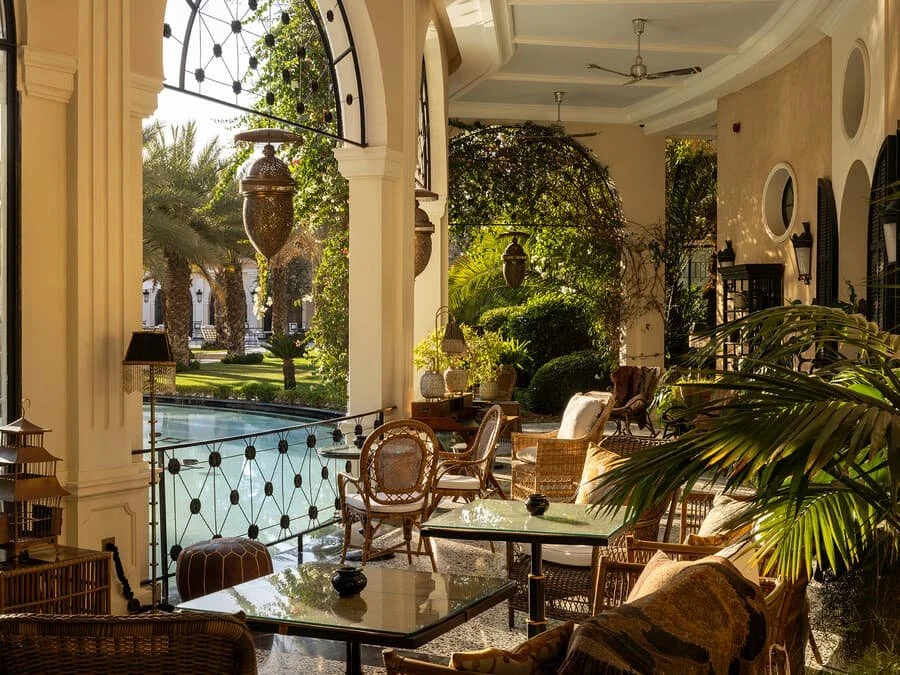
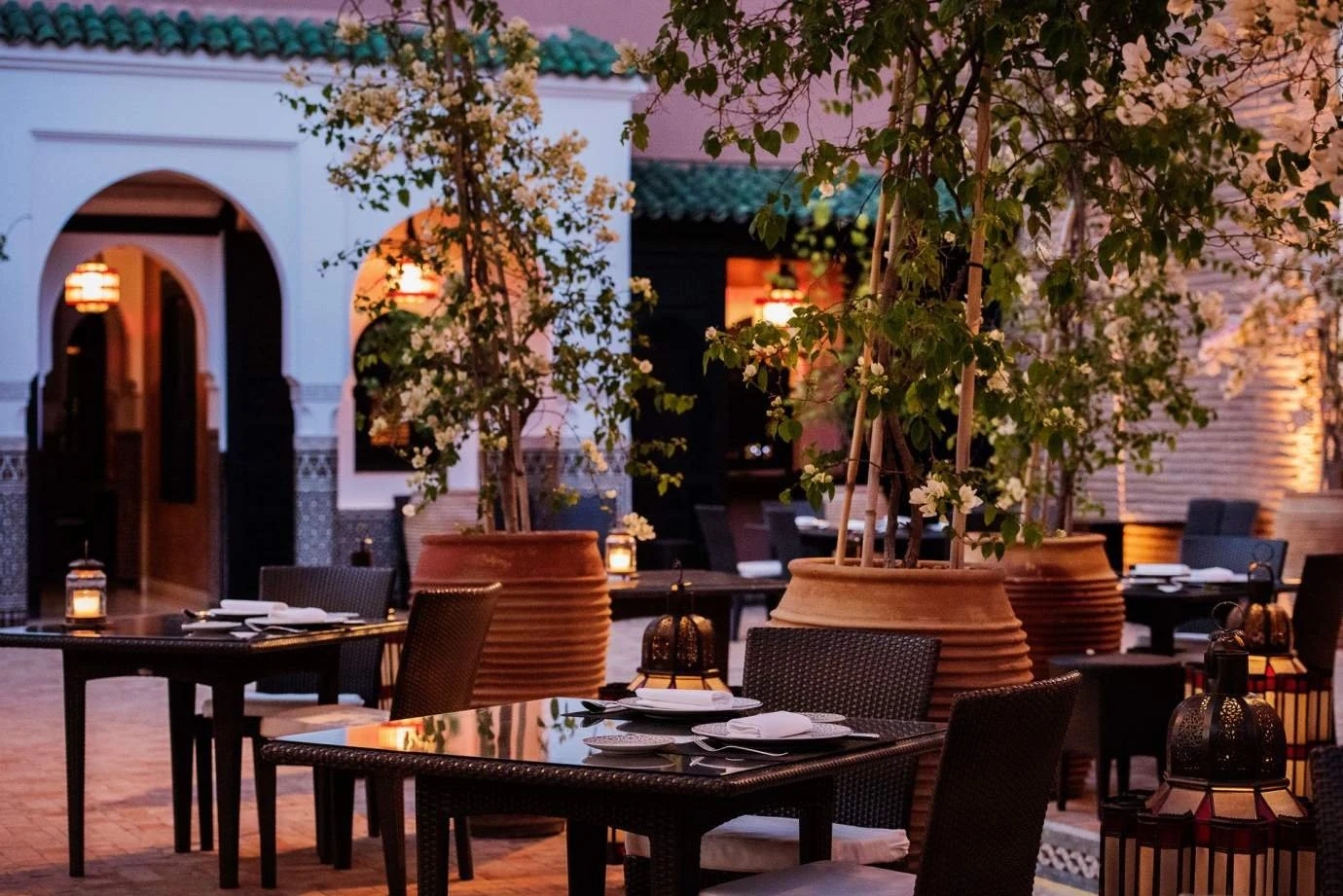
Marrakesh has long sorted its restaurants into two visible camps: the ceremonial palace-dining experience, where tanjia and bastilla arrive in theatrically tiled rooms, and the riad kitchen, where the same dishes are executed with varying degrees of care inside courtyard settings. A third tier has been forming more quietly, made up of addresses where chefs trained outside the country's traditional hospitality infrastructure apply a different kind of attention to the same ingredients and canon. Le Jardin d'Hiver is a restaurant in Marrakesh's Taddart Oufella district, priced around $80 per person, and it operates in that third space.
The neighbourhood itself sits away from the high-traffic drag of Jemaa el-Fna and the denser tourist concentration around the main souks. That separation matters in practical terms: the walk or drive to reach it involves moving through streets that function as the city does for residents rather than visitors, which sets the register of the experience before you arrive. It is the kind of address that rewards a degree of preparation rather than impulse, and that characteristic tends to filter its audience toward people who have already decided what kind of meal they want.
The Sunday letter
Find new places through the people who run them.
Our Sunday email brings you the chefs, winemakers and hoteliers behind our newest stories. See a sample before you subscribe.
See a sample of the Sunday emailOne email a week. Unsubscribe from any issue.
Creative Cooking Within a Traditional Frame
The award recognition Le Jardin d'Hiver carries is a Creative Cooking citation, which in the context of Moroccan traditional cuisine says something specific. It does not signal fusion in the loose, undisciplined sense. What the designation typically marks in this region is a kitchen that has absorbed the formal logic of Moroccan spice architecture, slow-cook methodology, and preserved-ingredient tradition, then applied a more contemporary sensibility to proportion, presentation, and textural contrast.
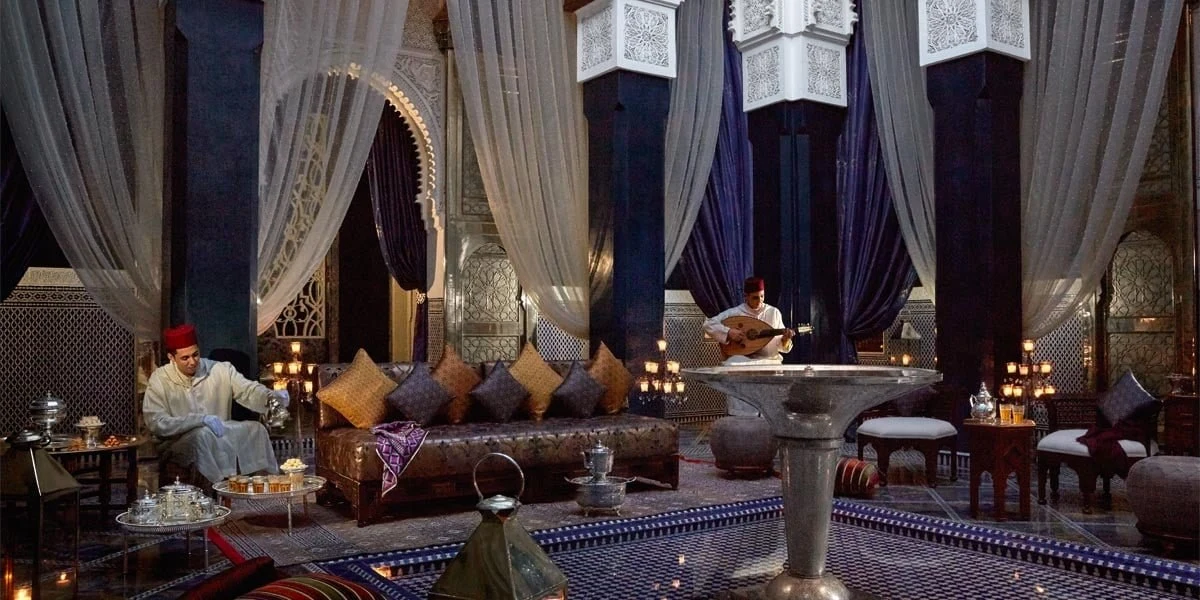
Across Morocco's more ambitious dining addresses, that approach has become the dominant mode among younger or internationally trained chefs. At Dar Moha (Moroccan Fine Dining), the traditional riad format is retained while the cooking pushes toward more personal interpretation. La Grande Table Marocaine at Royal Mansour occupies the higher end of that spectrum, where classical Moroccan cooking is produced to palace-grade standards with considerable institutional resource behind it. Le Jardin d'Hiver positions itself at a different scale but operates with a similar instinct: the tradition is the point, and the creativity works within it rather than away from it.
Chef Boris Rommel's presence at the helm places this kitchen within a broader trend visible across the region, where European-trained chefs, or chefs with cross-cultural exposure, take on Moroccan culinary frameworks not as outsiders appropriating a tradition but as practitioners adding a layer of technical discipline to ingredients and preparations that have always had the depth to support it. The comparable dynamic has played out across the Middle East and North Africa more broadly, from Beirut's pre-crisis restaurant scene to the current Casablanca cohort. At Hôtel Le Doge in Casablanca, a similar fusion of French technique and Moroccan material has established a recognisable dining register that Le Jardin d'Hiver echoes at a more intimate scale.
Marrakesh's Competitive Dining Tier
Marrakesh's restaurant scene has broadened considerably over the past decade. The city now supports addresses ranging from the internationally ambitious, such as La Grande Brasserie by Hélène Darroze, which brings a fully European fine-dining framework into the city, to Mediterranean alternatives like Sesamo and +61, which occupy a more casual international register. The Moroccan traditional category occupies its own competitive tier within that spread, and within that tier, quality varies considerably.
What it does suggest is that the early audience has found the experience consistent with expectations, which for a creative Moroccan kitchen operating outside the city's main hospitality corridors is its own kind of endorsement.
The Marrakesh addresses that tend to perform durably in the creative Moroccan tier are those that avoid the trap of becoming more decorative than culinary: venues where the riad setting and the candlelit aesthetic carry the evening while the food recedes into competent background. Le Jardin d'Hiver's Creative Cooking recognition marks it as a kitchen that has been assessed on what it produces rather than how it frames it. That distinction matters when choosing between addresses at this level. For further context on where it sits among the city's full restaurant range, our full Marrakesh restaurants guide maps the broader field.
Beyond Marrakesh: The Wider Moroccan Table
Readers whose interest in Moroccan cuisine extends beyond Marrakesh will find useful comparative data points elsewhere in the country. Gayza in Fès represents the northern Moroccan culinary tradition, where the city's historic role as a medieval capital produced a more refined and spice-restrained register than Marrakesh typically shows. Heure Bleue Palais in Essaouira applies a coastal Atlantic frame to similar ingredients. Inland, L'Oliveraie in El Hajeb and Château Roslane in Icr Iqaddar connect the dining tradition to the country's agricultural and wine-producing hinterland. For Marrakesh-based Moroccan cooking in a more classical riad format, Riad Fès in Fès provides a useful reference for how the same traditional framework reads in a different civic context. And if you are interested in how global technique gets applied to French-adjacent menus at a high level, Le Bernardin in New York City remains the benchmark for what disciplined culinary classicism actually looks like at full stretch.
For those planning a longer Marrakesh visit, Le Petit Cornichon in Marrakech offers a European bistro counterpoint for evenings when the Moroccan register gives way to something more direct.
Planning Your Visit
Le Jardin d'Hiver sits in the Taddart Oufella area of Marrakesh, an address that requires navigation beyond the central medina grid. Reservations are essential. The restaurant sits in Taddart Oufella, beyond the central medina grid, so arranging your visit in advance is the prudent approach.
Questions
Frequently asked
Who works at Le Jardin d'Hiver?
Made By profiles Boris Rommel (Chef) at Le Jardin d'Hiver.
How expensive is Le Jardin d'Hiver?
Le Jardin d'Hiver is listed at a price level of $$$$.
Where is Le Jardin d'Hiver and what does it serve?
Le Jardin d'Hiver is in Palmeraie, Marrakech, serving Moroccan-Mediterranean Fusion Fine Dining.
The field
How it compares
| Place | Cuisine | Notes | Awards |
|---|---|---|---|
| Le Jardin d'Hiver | Moroccan-Mediterranean Fusion Fine Dining | Palmeraie, $$$$ | · |
| +61 | Modern Australian Fusion | Marrakech | World's 50 Best |
| Atrio | Modern Spanish Fine Dining with Iberian Pork Focus | Cáceres | Michelin 3 Stars |
| La Grande Table Marocaine | Traditional Moroccan Fine Dining | Marrakech | World's 50 Best |
| Le Marocain - La Mamounia | Traditional Moroccan | Marrakech | · |
| Le Petit Cornichon | Modern French Bistronomique | Marrakech | World's 50 Best |
| Sesamo | Modern Italian Fine Dining | Marrakech | World's 50 Best |
In residence
Similar places
Modern Australian Fusion
+61
Marrakech, Morocco
50 Best
Modern Spanish Fine Dining with Iberian Pork Focus
Atrio
Cáceres, Spain
★★★
Traditional Moroccan Fine Dining
La Grande Table Marocaine
Marrakech, Morocco
50 Best
Traditional Moroccan
Le Marocain - La Mamounia
Marrakech, Morocco
Modern French Bistronomique
Le Petit Cornichon
Marrakech, Morocco
50 Best
Modern Italian Fine Dining
Sesamo
Marrakech, Morocco
50 Best
The Sunday letter
Get the next Made By story in your inbox.
We send one email every Sunday morning with the places and people we covered that week.
See a sample of the Sunday emailOne email a week. Unsubscribe from any issue.