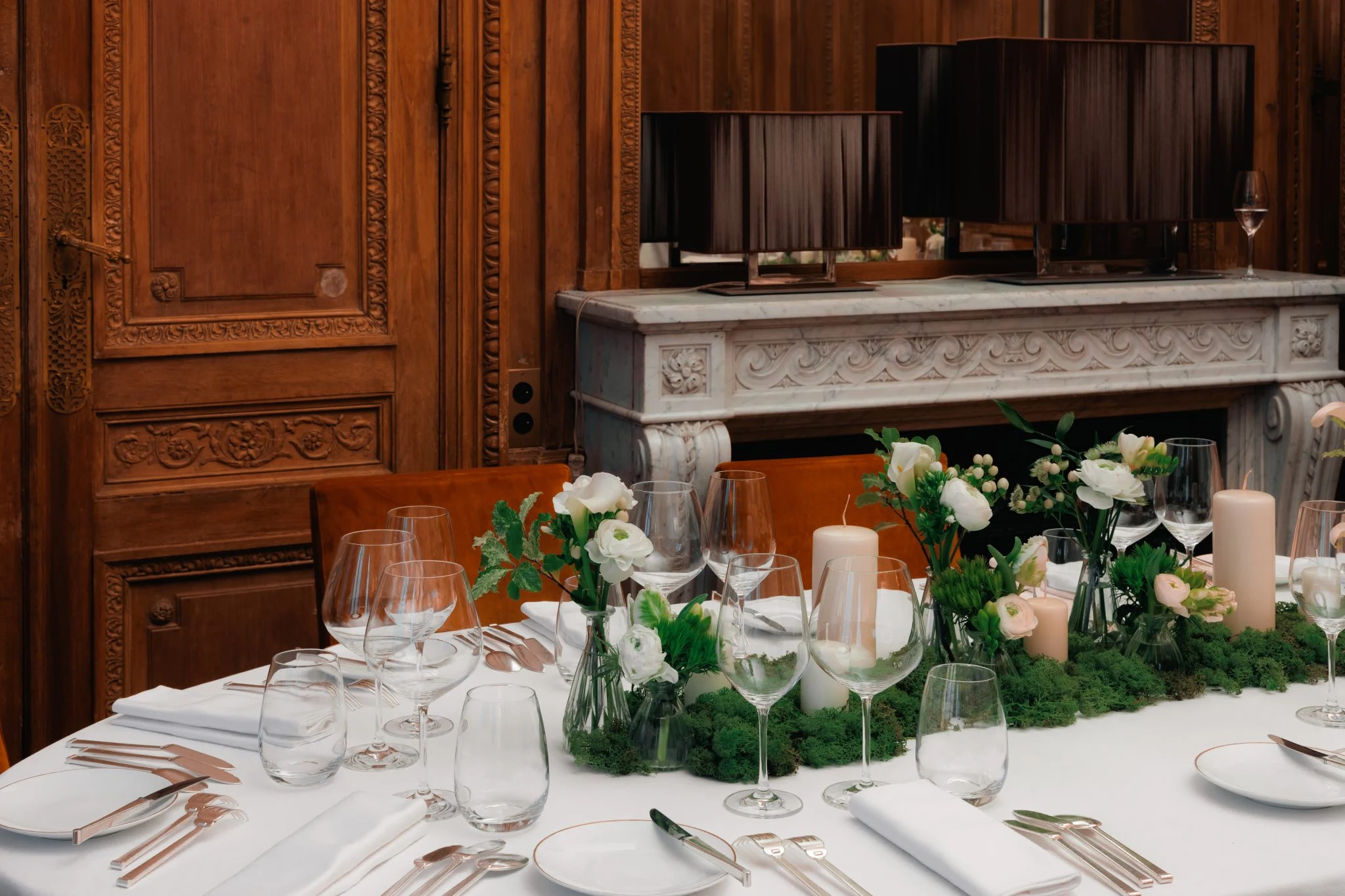
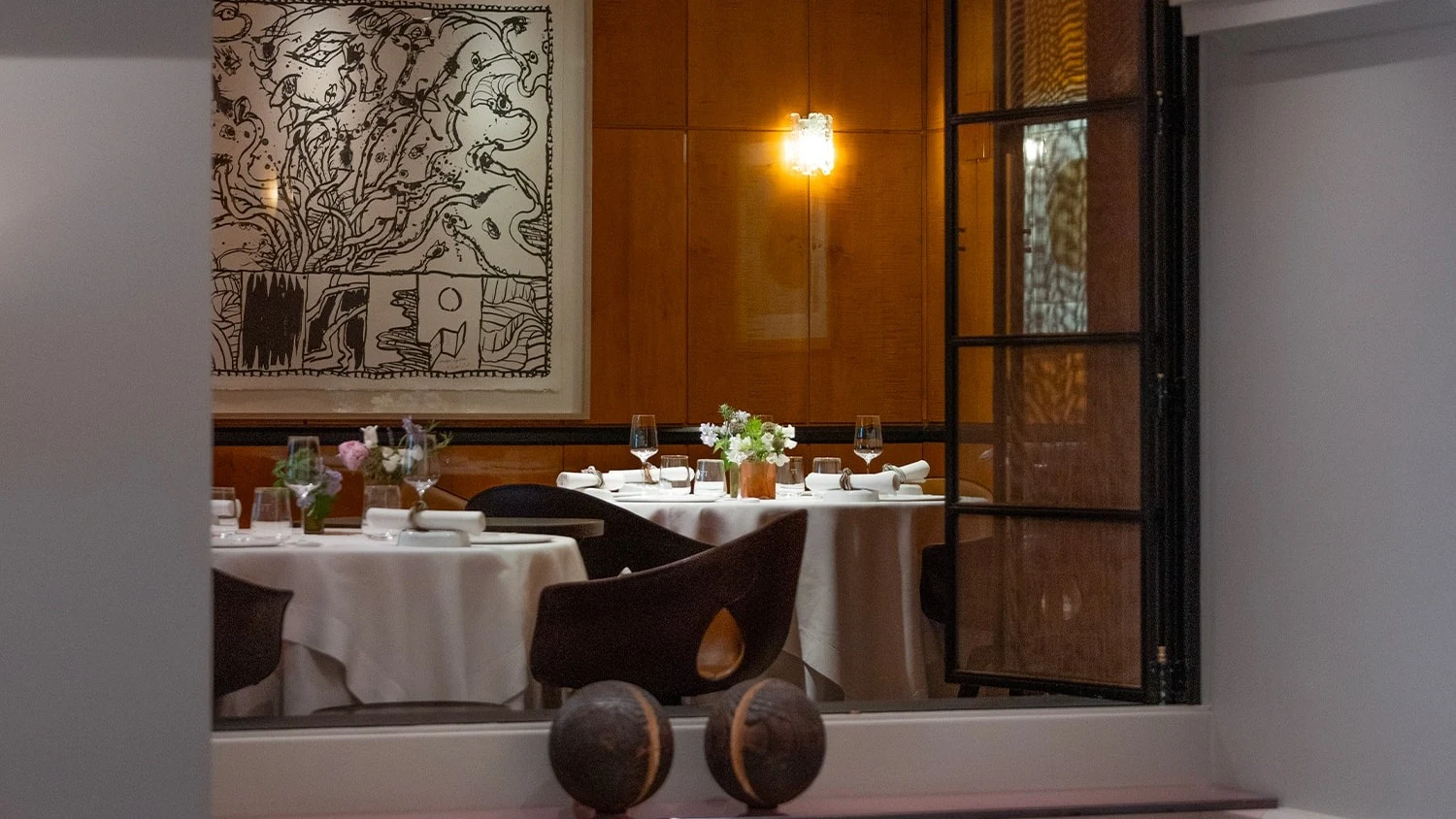
Le Train Bleu par Michel Rostang
In Residence
Jean-Pierre Hocquet
Chef
- 01CuisineFrench
- 02CityParis, France
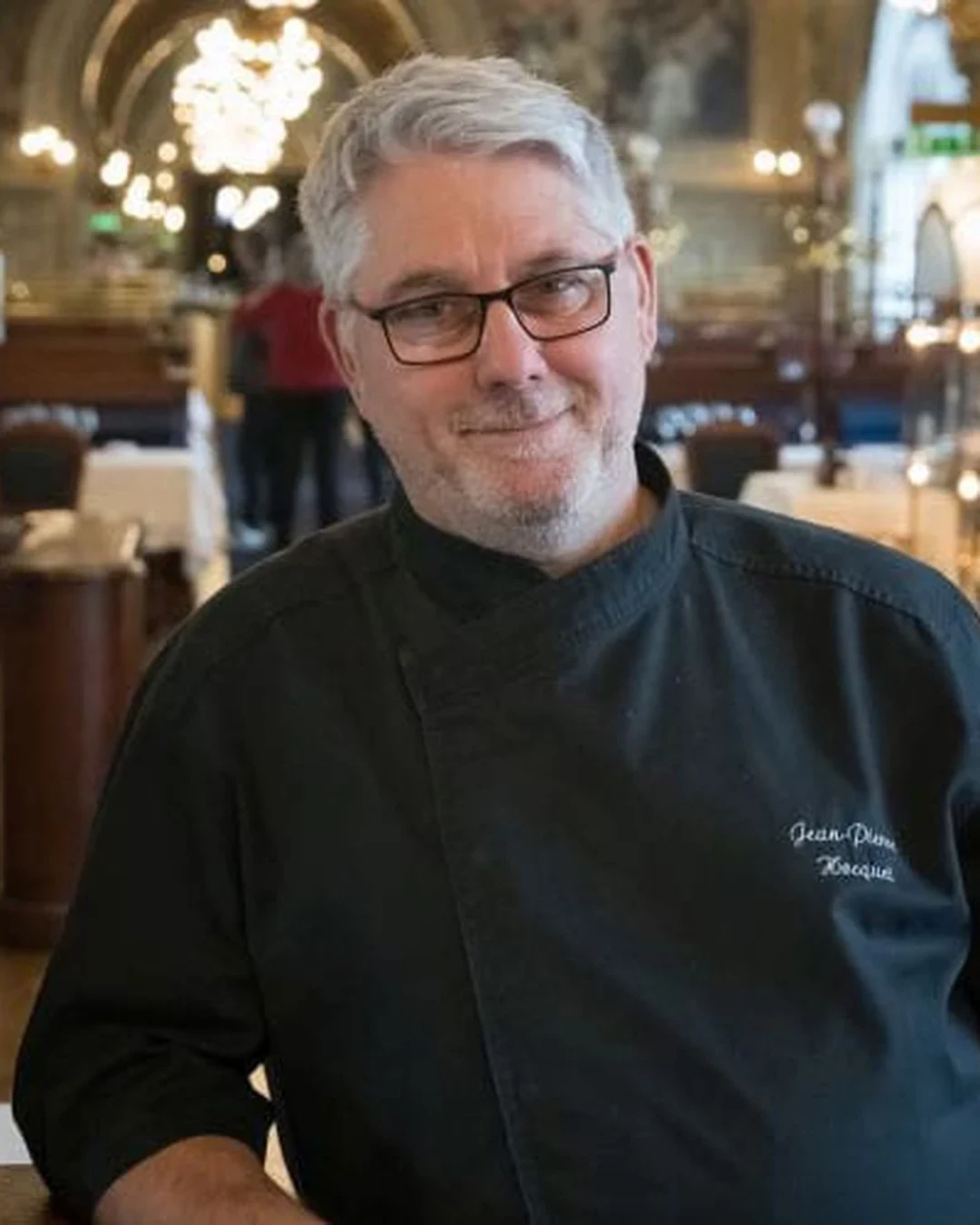
Jean-Pierre Hocquet, chef at Le Train Bleu par Michel Rostang in Paris, keeps classic French dishes steady in the Gare de Lyon dining room.
- Opinionated About Dining Classical in Europe Highly Recommended · 2026
- Opinionated About Dining Newly Added European Restaurants · 2026
Since 2004 at the pass
The roast has to leave the pass with enough restraint for the room around it. Jean-Pierre Hocquet, chef at Le Train Bleu par Michel Rostang in Paris, has held that line since 2004, inside the Gare de Lyon dining room where appetite arrives with memory already attached. His station is not built around rupture. It asks for continuity, finish, and the kind of control that can survive repetition.
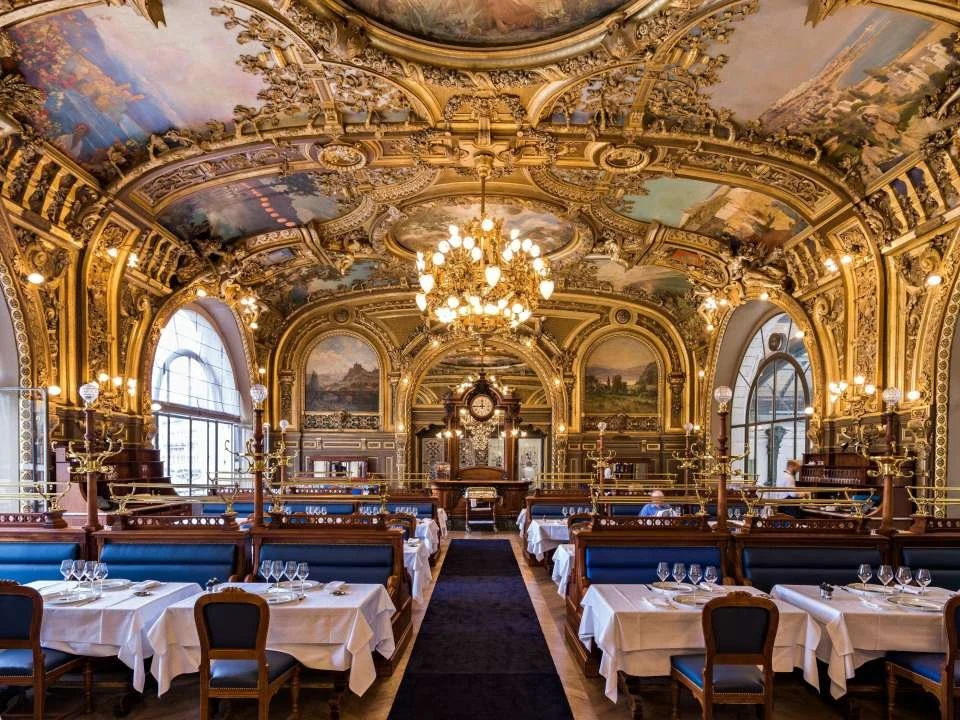
Hocquet works in a house where the dining room carries its own pressure: frescoes overhead, chandeliers above the tables, formal French cooking moving through a railway station without being reduced to station food. The kitchen has to answer that setting without competing with it. His work is to keep the plate legible, the service paced, and the classic forms intact. The house’s own sentence for the discipline is direct: “Perfect attention is paid to detail to ensure, every day, excellence and high standards in gastronomic cooking.” In practice, that means the same gesture has to be right again tomorrow.
Dishes held in circulation
The kitchen’s known signatures give the method its shape: gigot d'agneau rôti and baba au rhum ambré Saint-James. The first depends on heat, timing, rest, and carving; the second on saturation without collapse, sweetness held by structure. Neither dish benefits from theatrical intervention. They ask for the hand to disappear into the standard.
Hocquet’s task is also generational. “Among other things, we welcome a clientele that has been coming to the Train Bleu for several generations and wants to be able to share with their children and grandchildren dishes they have always known.” That line explains the program more clearly than a menu description could. Recognition matters here. A returning table is not asking the kitchen to erase its memory of the place; it is asking the kitchen to make that memory edible again, with enough precision that the dish can be passed across the table as a reference rather than a souvenir.
The room keeps its own tempo
The room is lavish without being loose. Painted ceilings and gilded surfaces sit above the movement of plates, glassware, folded napkins, and a pass that has to keep its composure while the station continues around it. In that setting, French formality is not an accessory. It sets the tempo of the meal.
Hocquet’s kitchen has to work at the scale of the room, but not in its volume. Foie gras, steak tartare, roast lamb, rum baba: the vocabulary is familiar, which makes the margin for drift smaller. A plate can look correct and still miss the point if the timing goes soft or the finish feels careless. The discipline here sits in repetition, in the refusal to let a known dish become approximate.
Continuity as the craft
There is no need to invent a future for a room built on return. The next movement is the next service, when a family comes back expecting the same thread to hold between generations. Hocquet’s craft remains most visible when the baba au rhum ambré Saint-James arrives as something already known, and still worth ordering.
Questions
Frequently asked
Who cooks at Le Train Bleu par Michel Rostang?
Jean-Pierre Hocquet is the chef at Le Train Bleu par Michel Rostang in Paris, and he has held the role since 2004.
What kind of cooking does the restaurant serve?
It serves formal French cooking, with a focus on keeping classic dishes intact and clearly finished.
What dishes is the kitchen known for?
The kitchen’s known signatures include gigot d'agneau rôti and baba au rhum ambré Saint-James.
What is the room like?
The dining room is in Gare de Lyon and is described with frescoes overhead, chandeliers above the tables, and a formal atmosphere that gives the meal its pace.
What kind of clientele does it serve?
The restaurant welcomes a clientele that has been coming to the Train Bleu for several generations and wants to share dishes they have always known with their children and grandchildren.
The field
How it compares
| Place | Cuisine | Awards | Notes |
|---|---|---|---|
| Le Train Bleu par Michel Rostang | French | · | · |
| Arpège | Vegetable-Focused French Fine Dining | Michelin 3 Stars, World's 50 Best | Paris |
| Epicure | Contemporary French Fine Dining | Michelin 3 Stars | Paris |
| Guy Savoy | Classic French Fine Dining | Michelin 2 Stars, World's 50 Best | Paris |
| Le Cinq | Modern French Fine Dining | Michelin 3 Stars, World's 50 Best | Paris |
| Le Taillevent | Classic and Modern French Fine Dining | Michelin 2 Stars, World's 50 Best | Paris |
| Pierre Gagnaire | Avant-Garde French Fine Dining | Michelin 3 Stars, World's 50 Best | Paris |
In residence
Similar places
Vegetable-Focused French Fine Dining
Arpège
Paris, France
★★★ · 50 Best
Contemporary French Fine Dining
Epicure
Paris, France
★★★
Classic French Fine Dining
Guy Savoy
Paris, France
★★ · 50 Best
Modern French Fine Dining
Le Cinq
Paris, France
★★★ · 50 Best
Classic and Modern French Fine Dining
Le Taillevent
Paris, France
★★ · 50 Best
Avant-Garde French Fine Dining
Pierre Gagnaire
Paris, France
★★★ · 50 Best