Leo Cocina y Cava
In Residence
Laura Hernández Espinosa
Chef
- 01CuisineModern Colombian
- 02CityBogotá, Colombia
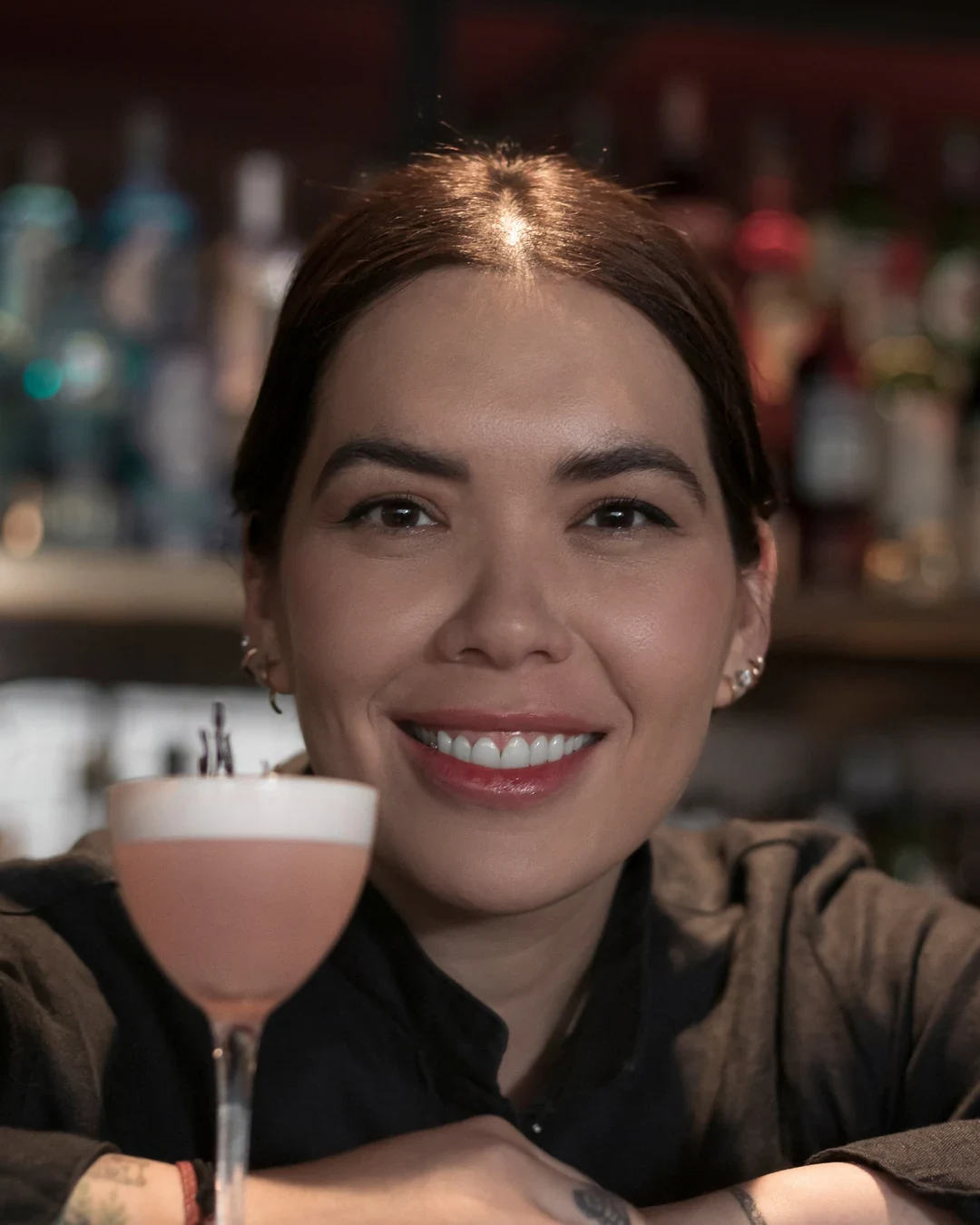
Laura Hernández Espinosa, chef at Leo Cocina y Cava in Bogotá, works where Colombian ingredients meet cellar discipline.
- Opinionated About Dining Top Restaurants in South America Ranked #10 · 2026
Coca leaf at the first turn
Coca leaf liqueur gives Laura Hernández Espinosa a point of contact between flavor and memory; she works as chef at Leo Cocina y Cava in Bogotá, with the judgment of a sommelier close to the pass. Her formation began in classrooms and tasting rooms, through study at University in Buenos Aires, EAS wine school, and University, then settled into service at Leo, where she has been head sommelier since 2009. She has also been executive director of FunLeo since 2009, so the work here carries two disciplines at once: the control of a room and the broader consequence of a kitchen.
That double station matters at Leo. The restaurant opened in 2007 and built its language around contemporary Colombian cooking, drawing from indigenous and Afro-Colombian foodways and the biodiversity of the country. Laura’s role is not framed as a single gesture at the table. It sits in selection, pairing, management, and the reading of a guest across a sequence of courses. Wine service asks for temperature, order, and restraint. The kitchen asks that the ingredient keep its shape as an argument. At this house, those two demands meet.
A program built through country and cellar
The menu can move through five, eight, or twelve courses, and the beverage program has to hold that pace without becoming decoration. Laura’s work with wine and non-alcoholic botanical pairings places the glass beside ingredients that do not always arrive with familiar reference points: hormigas culonas from Santander, pirarucú, titote rice, Antillean rum, Colombian coffees and chocolates, local fruits folded into mongo-mongo. The pairing has to make room for acidity, smoke, sweetness, fat, and bitterness without flattening the dish into a lesson.
Ancestral beverages sit in the same field of attention. Wild cane spirits, herbs, vines, and coca leaf liqueur belong to a Colombian pantry that Leo treats as material for a modern pass, not as ornament. The method is one of translation by use. A chilled pirarucú soup does not need an explanatory flourish if the broth, temperature, and glass beside it land in the right register. A fish tamale with titote rice asks for a different kind of pressure from the cellar. Laura’s training gives her the base for that pressure, but repetition gives it authority.
The room around the pass
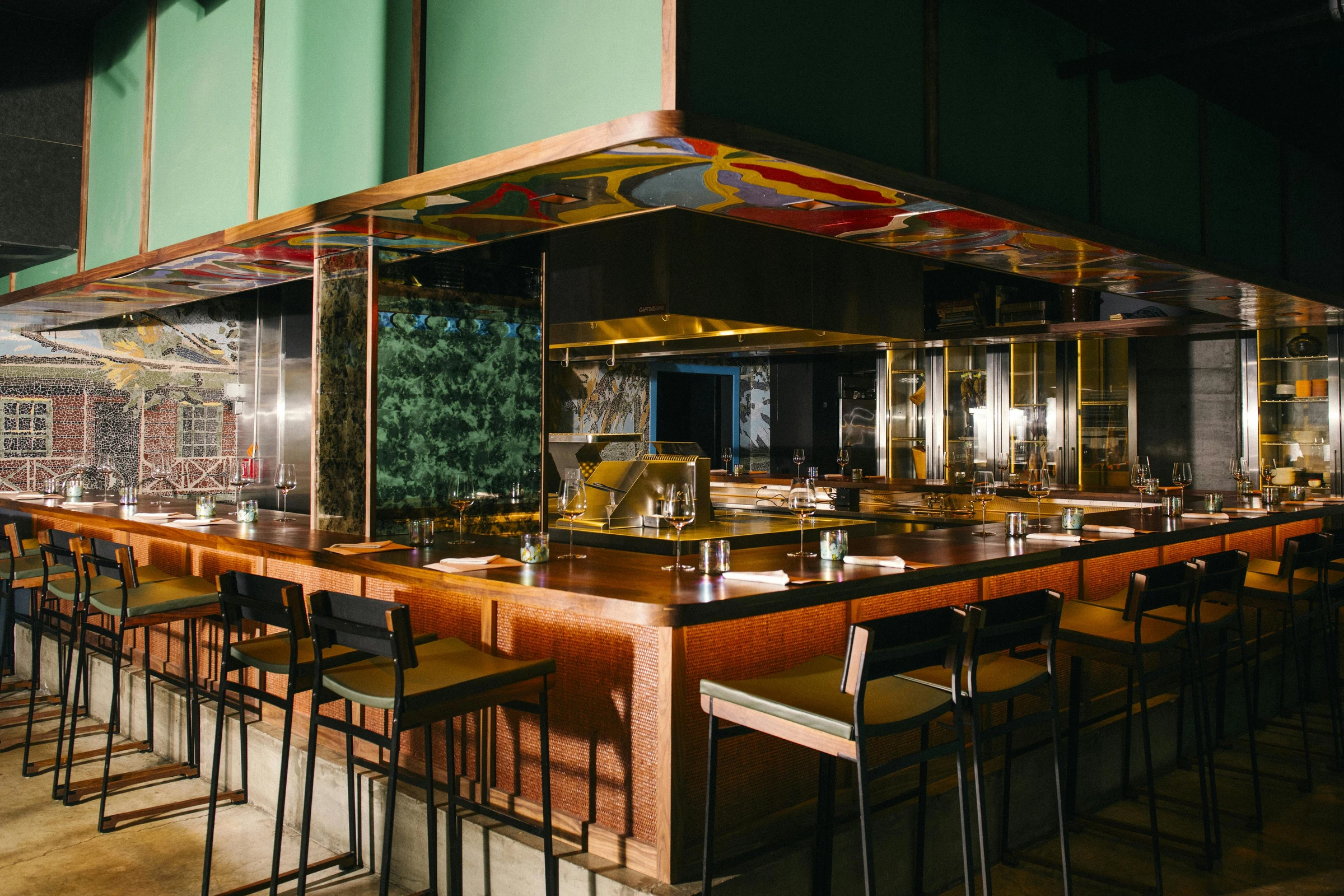
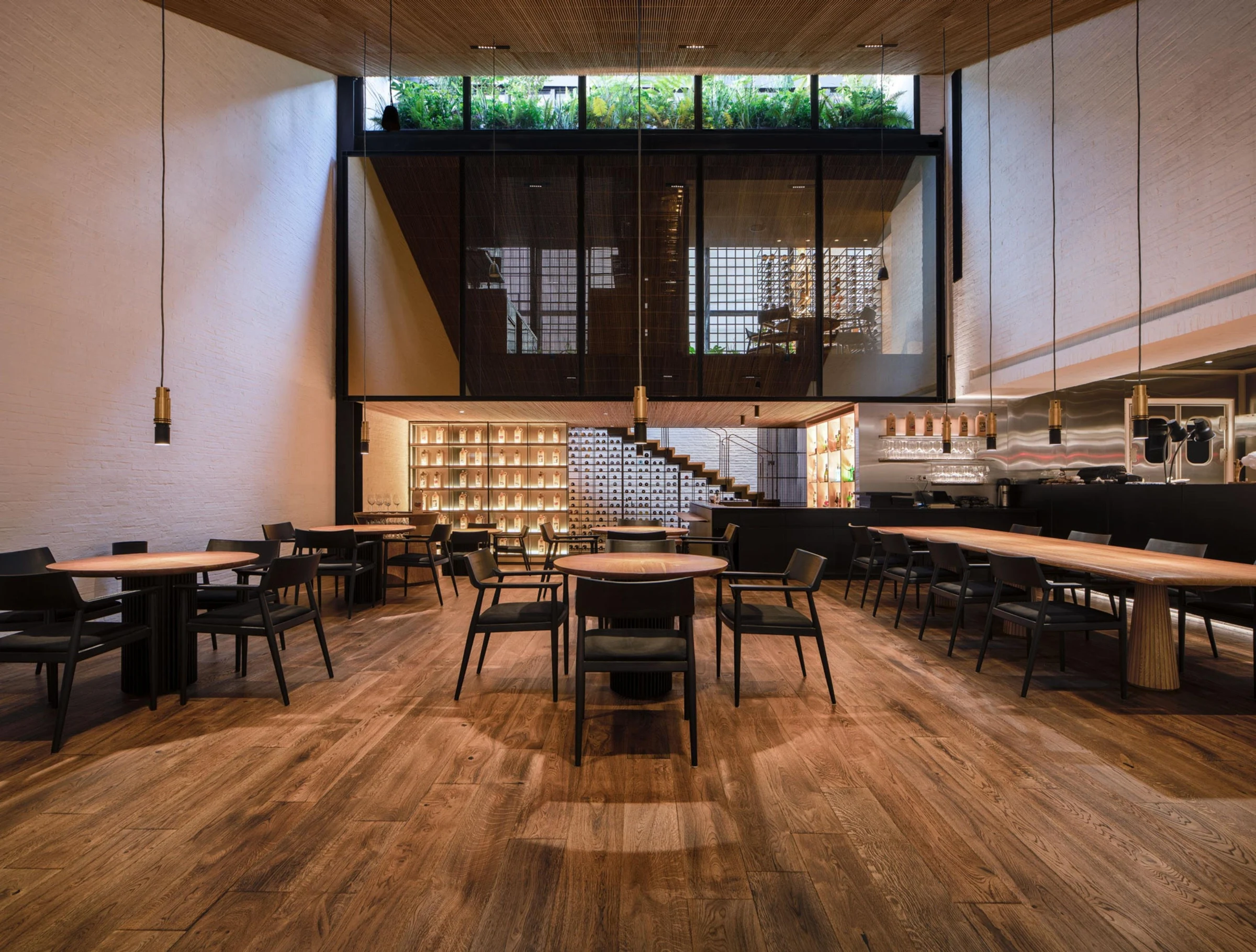
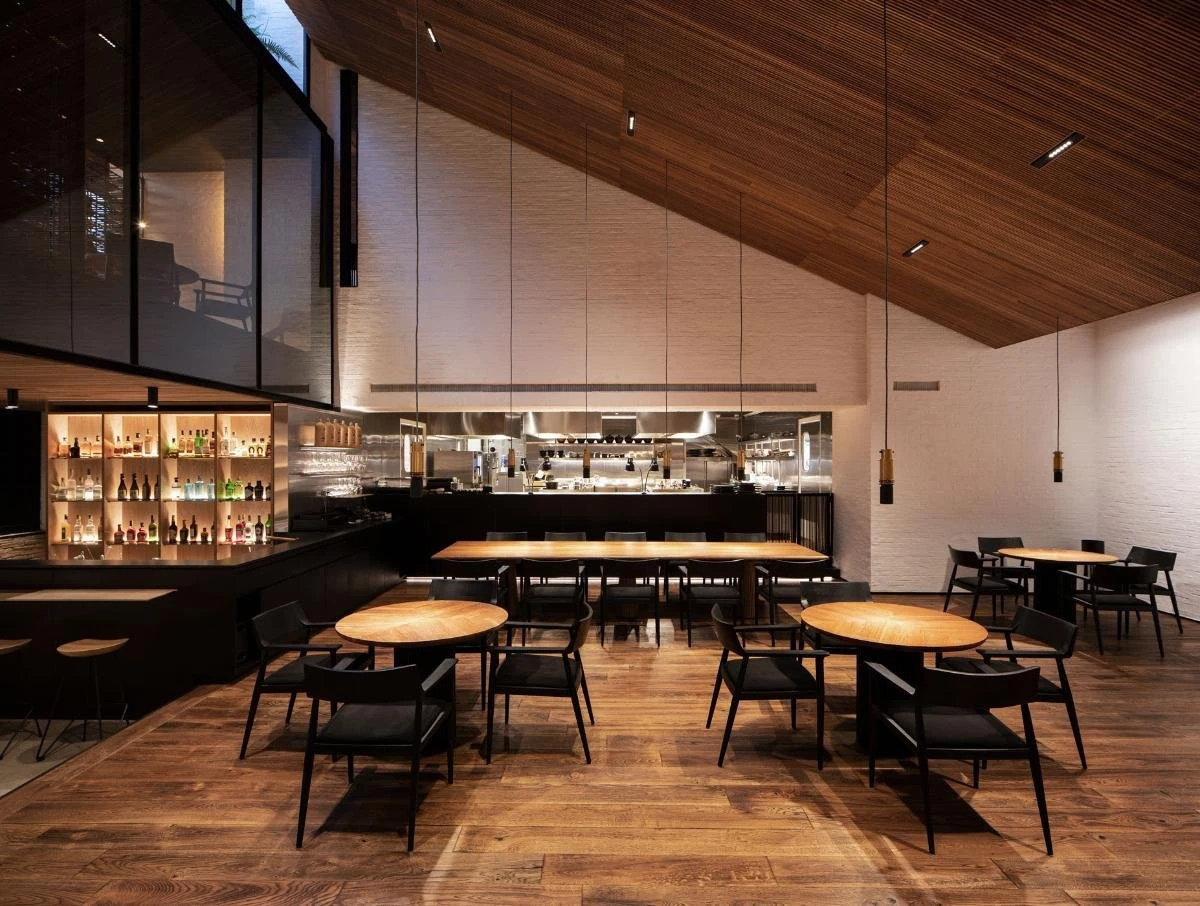
The room keeps the work close. Leo has been described through clean lines, high ceilings, organic materials, natural light, and an open kitchen, a setting that lets the pass remain visible without turning it into theatre. Red, white, and silver have appeared in accounts of the room; so have quieter descriptions of an elegant, laid-back space. The useful constant is proximity. Plates leave the kitchen with the sense that their sourcing has already been argued over long before service begins.
At the counter or the table, the craft depends on sequence. A server has to know when a botanical pairing should speak plainly and when wine should carry the weight. The kitchen has to let an unfamiliar ingredient arrive as food first. Laura’s bench-side discipline is in that calibration, the glass placed with enough confidence that the next bite can stay in charge.
The consequence held in service
FunLeo gives context to the work, but the restaurant still has to prove the idea plate by plate. Laura has spoken of the kitchen as a way to generate social and economic well-being, especially in developing countries; at Leo, that ambition passes through the station before it reaches any public language. The close thing to follow is not a slogan, but a material one: coca leaf liqueur in Laura Hernández Espinosa’s hands.
Questions
Frequently asked
Who is the chef at Leo Cocina y Cava?
Laura Hernández Espinosa is the chef at Leo Cocina y Cava in Bogotá. She has also been head sommelier there since 2009 and executive director of FunLeo since 2009.
What kind of cooking does Leo Cocina y Cava do?
Leo Cocina y Cava opened in 2007 and built its language around contemporary Colombian cooking. Its approach draws from indigenous and Afro-Colombian foodways and the biodiversity of Colombia.
What is the menu format at Leo Cocina y Cava?
The menu can move through five, eight, or twelve courses.
What does the beverage program focus on?
The beverage program includes wine and non-alcoholic botanical pairings. It also works with ancestral beverages such as wild cane spirits, herbs, vines, and coca leaf liqueur.
What ingredients and dishes are part of the restaurant's pairing work?
The pairing work includes ingredients such as hormigas culonas from Santander, pirarucú, titote rice, Antillean rum, Colombian coffees and chocolates, local fruits folded into mongo-mongo, a chilled pirarucú soup, and a fish tamale with titote rice.
The field
How it compares
| Place | Cuisine | Awards | Notes |
|---|---|---|---|
| Leo Cocina y Cava | Modern Colombian | · | · |
| El Chato | Contemporary Colombian | World's 50 Best | Bogotá |
| Humo Negro | Modern Japanese Izakaya with Colombian Fusion | World's 50 Best | Bogotá |
| Kabawa | Modern Caribbean Prix Fixe | World's 50 Best | New York City |
| Kitchen Table | Modern British Fine Dining | Michelin 2 Stars | London |
| Leo | Modern Colombian Fine Dining | World's 50 Best | Bogotá |
| Per Se | French Fine Dining Tasting Menu | Michelin 3 Stars, World's 50 Best | New York City |
In residence
Similar places
Contemporary Colombian
El Chato
Bogotá, Colombia
50 Best
Modern Japanese Izakaya with Colombian Fusion
Humo Negro
Bogotá, Colombia
50 Best
Modern Caribbean Prix Fixe
Kabawa
New York City, United States
50 Best
Modern British Fine Dining
Kitchen Table
London, United Kingdom
★★
Modern Colombian Fine Dining
Leo
Bogotá, Colombia
50 Best
French Fine Dining Tasting Menu
Per Se
New York City, United States
★★★ · 50 Best