Made ByRestaurant
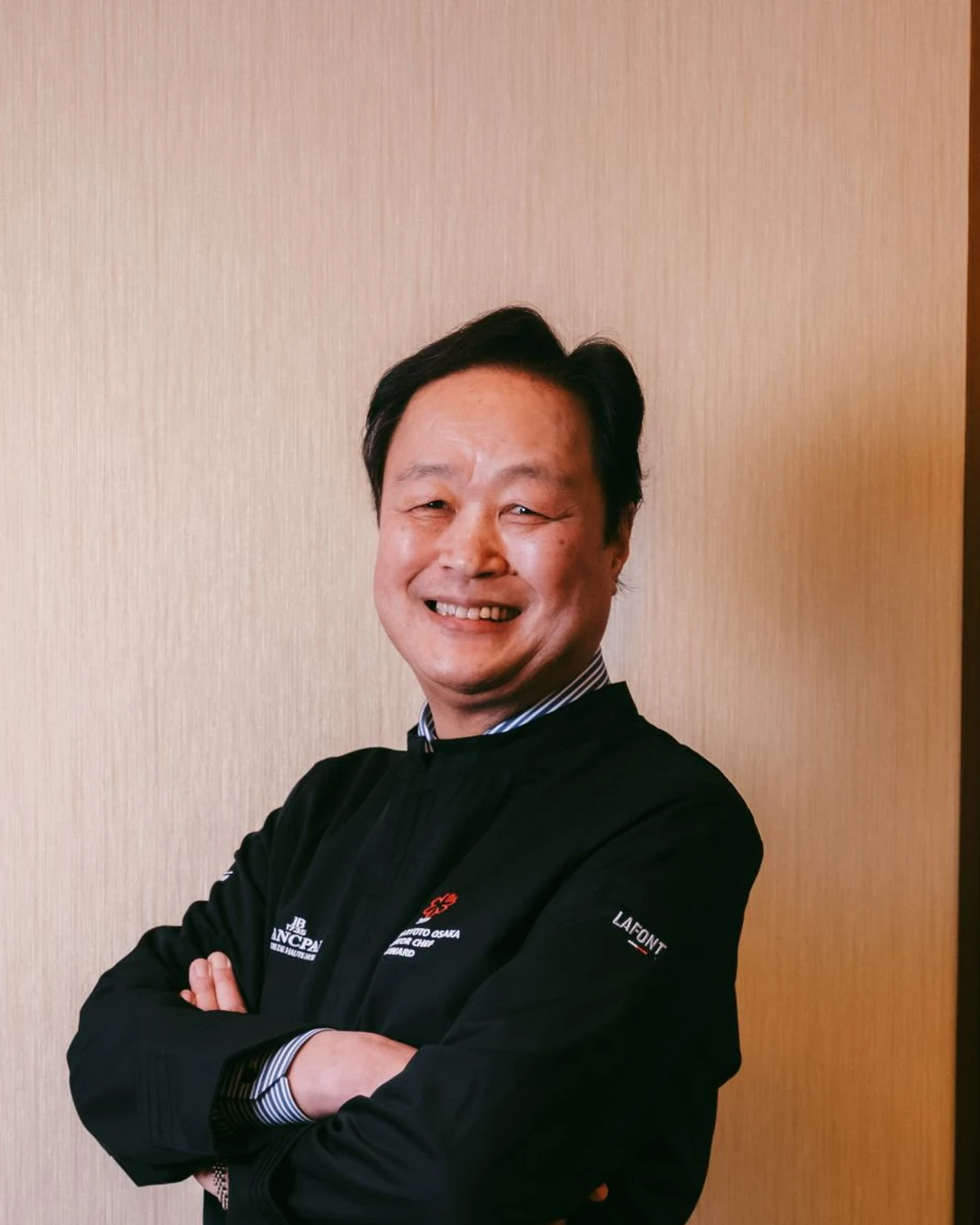
Yoshichika Masuda, Chef at Masuda in Kyoto, brings Kitcho-trained discipline to a kaiseki restaurant under his own name.
At a glance
- Cuisine
- Kaiseki
Correction before authorship
The sequence of a kaiseki menu asks for restraint before display. Yoshichika Masuda, Chef at Masuda in Kyoto, works from that discipline at the restaurant carrying his name. His formation began at Kitcho, where the terms of the craft were set by repetition, correction, and attention to the order of things. At Masuda, that training moves from apprenticeship into authorship: the chef is no longer only absorbing a house method, he is responsible for the measure of his own. The restaurant makes that responsibility plain. A personal name above the door changes the pressure at the pass; every bowl, cut, and interval returns to the person whose name the guest has already read. In 2025, MICHELIN recognized Masuda with the Mentor Chef Award, placing the public honor on a career whose shape is otherwise quiet: Kitcho, then Masuda, training, then leadership. The distinction matters because it names not only cooking, but transmission. A mentor chef is judged by what leaves the hands of the next cook as much as by what leaves the pass under his own. That is the more exact weight of Masuda’s role here.
Kaiseki held to its order
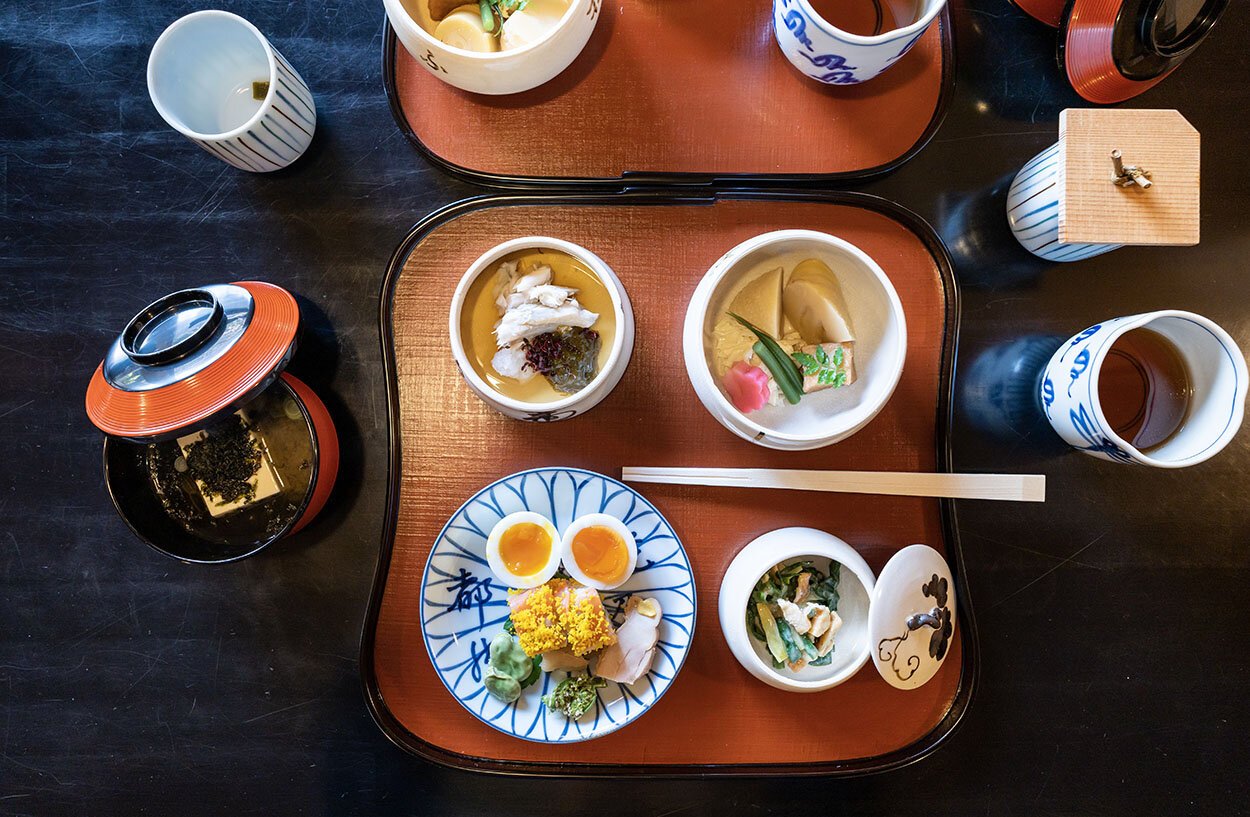
Kaiseki gives a chef little cover. The form depends on sequence, season, temperature, vessel, and the space between courses; a dish can fail by arriving with the wrong force even when each component is correct. Masuda’s known lineage points toward that kind of control. Kitcho’s influence is not a list of copied preparations to be claimed at another address, but a discipline of attention: polish earned through constant correction, technique kept close to judgment, restraint treated as a working method rather than a pose. At Masuda, the program sits within that frame. The chef’s task is to decide how much the season needs, where the hand should be visible, and where it should recede. Kaiseki is often discussed through ingredients, but inside the kitchen it is also an architecture of timing. The pass has to hold temperature and cadence at once. A lacquer bowl, a cut of fish, a simmered vegetable, or the final rice course each asks a different pressure from the hands. Masuda’s cooking is described less by spectacle than by continuity, and that suits the form.
The room around the pass
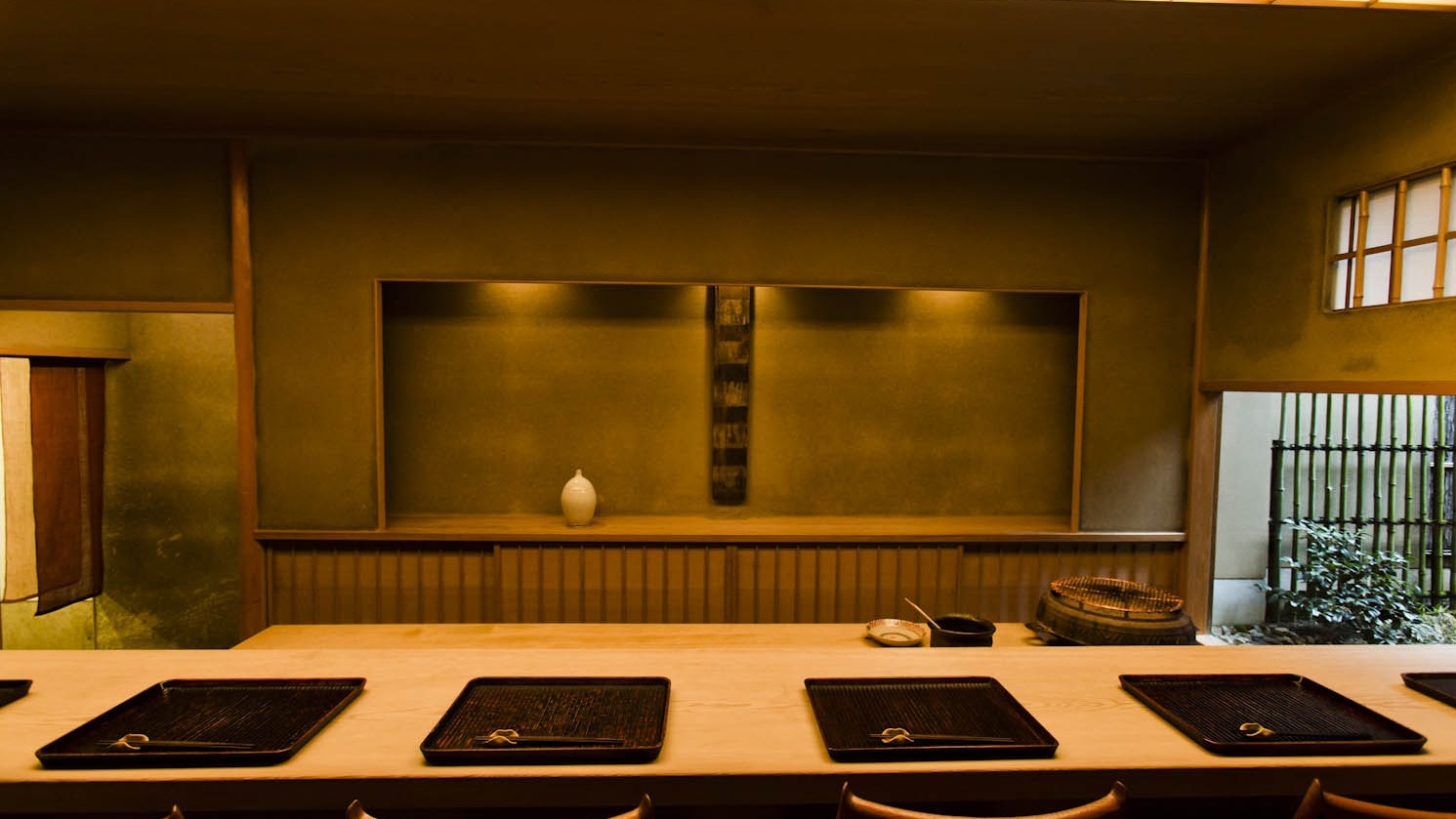
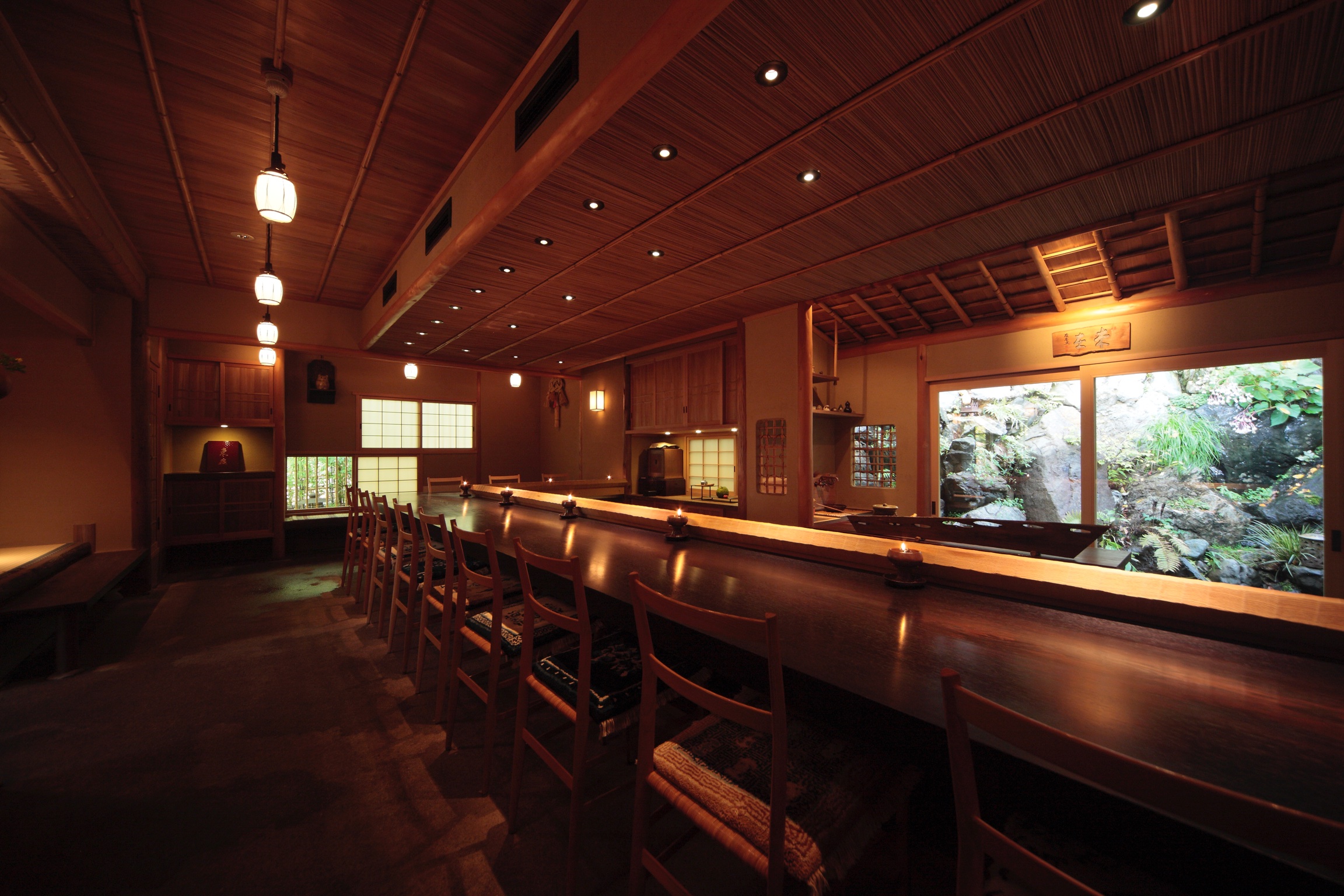
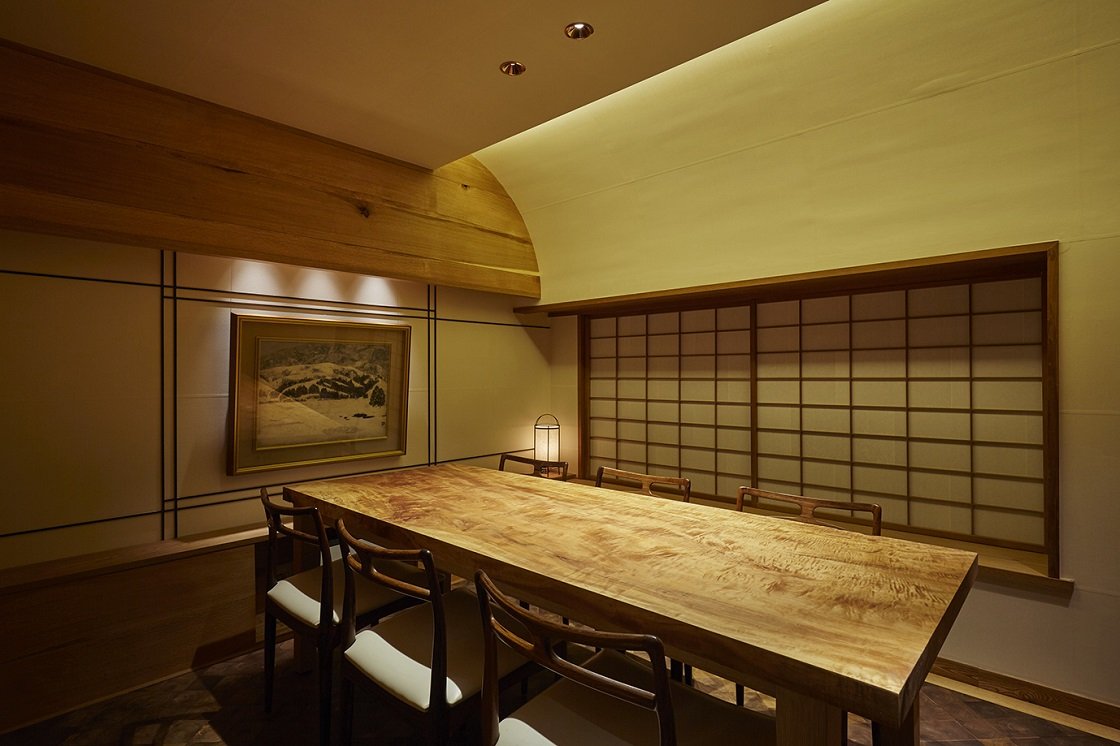
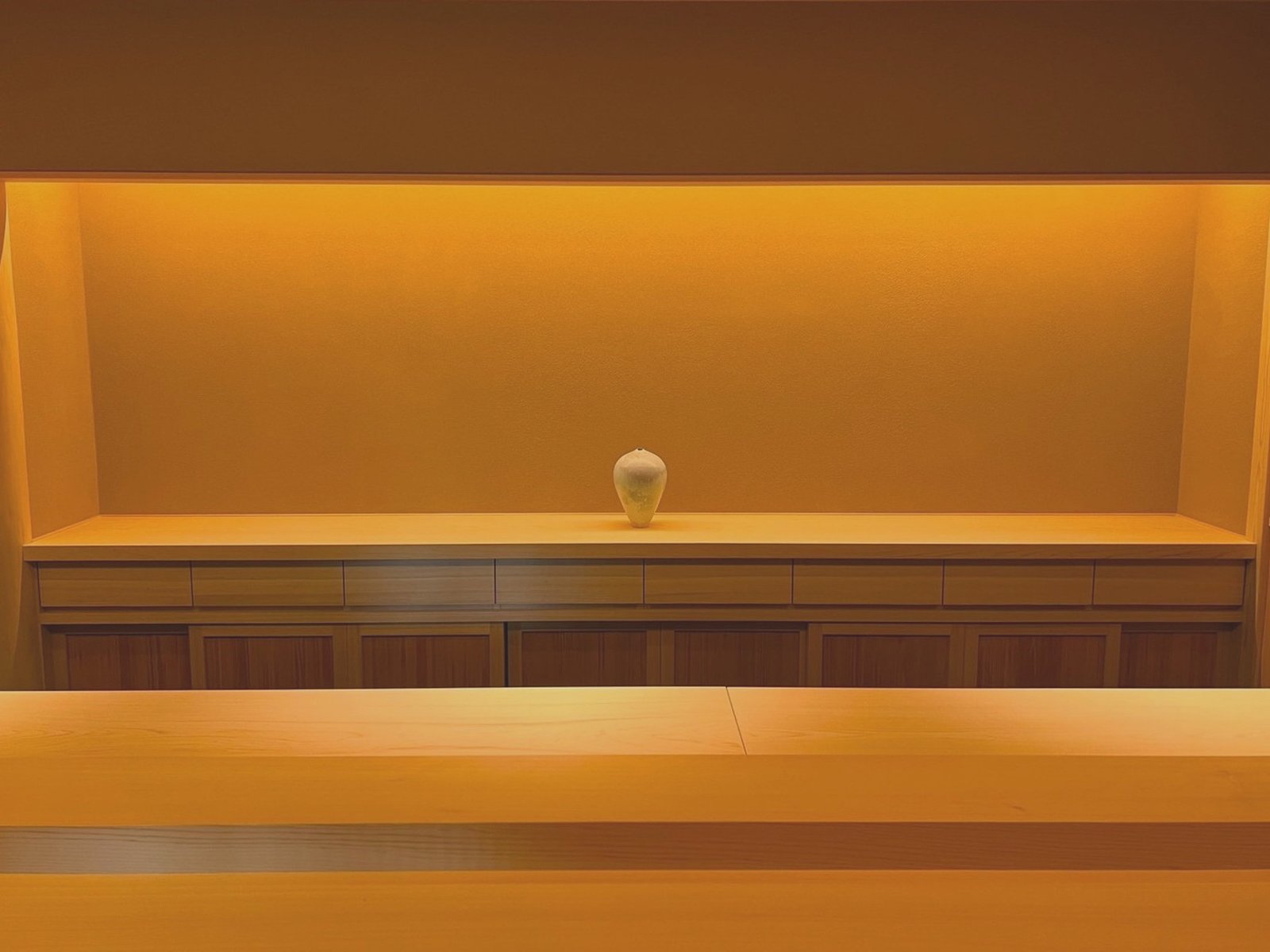
The room at Masuda exists to keep the guest near the work without turning the work into performance. Kaiseki needs that degree of quiet. The counter, the pass, and the bench-side rhythm matter because the meal depends on small changes of pace: a course set down while it still carries heat, a vessel chosen for the season, a garnish placed for balance rather than ornament. The house does not need to announce its seriousness in the room. It can let the order of service do that. For a chef trained in an exacting environment, the restaurant becomes a place where correction continues in public, one plate at a time, with no separation between the method and the moment it reaches the guest. The authority of the room comes from that proximity to Yoshichika Masuda’s pass.
A name that carries the station
Masuda’s present work remains tied to the city named on the restaurant page, while his known professional formation runs through Kitcho in Osaka. That movement gives the restaurant its useful tension: a chef shaped by one disciplined kitchen now holding the station under his own name in Kyoto. The next line to read here is not a promised opening or a staged announcement, but the daily transfer of standards from chef to cooks, from pass to room, from Kitcho to Masuda.
Address
Japan, 〒107-0062 Tokyo, Minato City, Minamiaoyama, 3 Chome−14−27 IJK南青山れい 1F