Made ByRestaurant
Maurice
Chef in Residence
Kristen D. Murray
Chef
- 01CuisineFrench
- 02CityPortland, United States
- 03RecognitionJames Beard Award
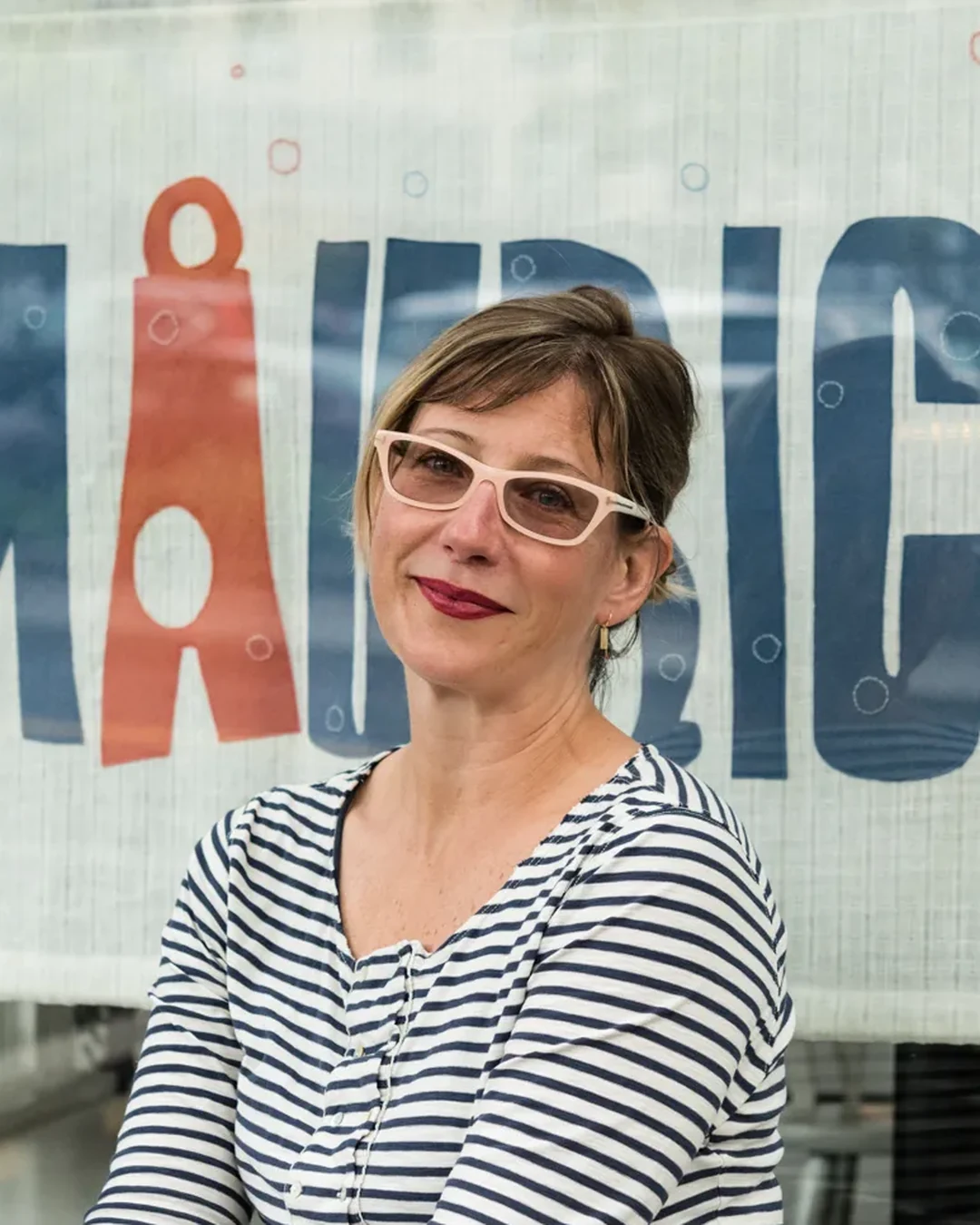
Kristen D. Murray, chef at Maurice in Portland, brings pastry discipline to a French-Scandinavian luncheonette shaped by fika.
- James Beard Winner
At a glance
- Cuisine
- French
- Price
- $$
- Hours
- Mon: Closed; Tue: Closed; Wed: 10 AM–4 PM; Thu: 10 AM–4 PM; Fri: 10 AM–4 PM; Sat: 10 AM–4 PM; Sun: Closed
- Rating
- 4.4 (329)
The daily hand on the menu
The menu often begins in Kristen D. Murray’s hand, written for Maurice in Portland as the chef works between pastry, luncheonette, and the room. She opened the French-Scandinavian restaurant in December 2013, naming it after her pet rabbit, and the scale of the place still suits a maker who lets pastry discipline carry the larger meal. Murray trained at Antica Terra and the California Culinary Academy, then worked as pastry chef at Paley’s Place in Portland until 2012. At Maurice, where she has been pastry chef since 2013, that foundation shows in the way the sweet and savory sides of the bench speak to each other without needing a hard border.
Her own account of learning begins before the professional kitchen: “I started cooking with my grandmother and my great-aunt Crys.” The line matters because Maurice does not treat polish as distance. Black pepper cheesecake, rhubarb-and-celery leaf vacherin, and Paris-level quiche all sit in the same register: dairy sharpened by spice, fruit cut with leaf, custard held to its shape. Murray has also said, “For me, food was always easy,” which reads here less as ease than fluency. The station asks for a hand that can move from dough to custard to lunch without changing voice.
Pastry logic at lunch
Maurice works as a pastry luncheonette, not quite a pastry shop and not simply a cafe. The method is built around a French-Nordic vocabulary and the Swedish idea of fika, the long coffee break that makes room for cake, conversation, and pace. On the plate, that can mean currant and rosemary scones, peach and pistachio anise seed tarts, chocolate capuchin cakes, anchovy smørbrød, chicken-liver pâté on country toast, or oysters with fig leaf oil and raspberries. The menu changes, but the grammar stays legible: butter, acid, herb, shellfish, custard, fruit.
Murray’s pastry training gives the savory cooking its measure. A fluffy quiche depends on the same patience as a lemon soufflé pudding cake; a goat-filled bisteeya asks for a pastry cook’s sense of enclosure and release. Polenta clafouti with confit chicken heart carries the same structural thinking, batter holding the center without turning heavy. Even the more playful combinations keep to the bench. Pickled spot prawns with trout roe do not need ornament when salt, cure, and pop have been set in the right order.
Pale wood, marble, and the counter
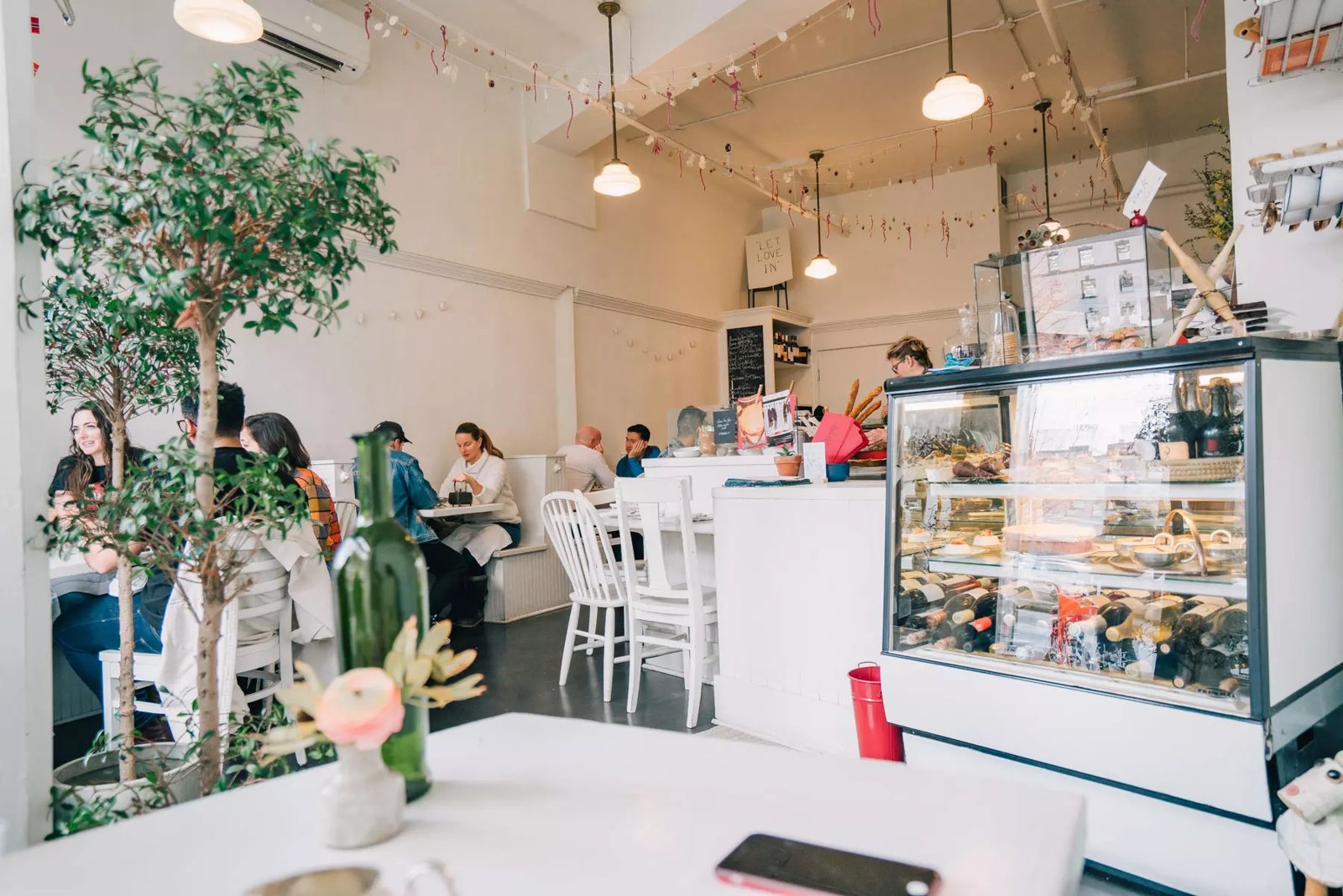
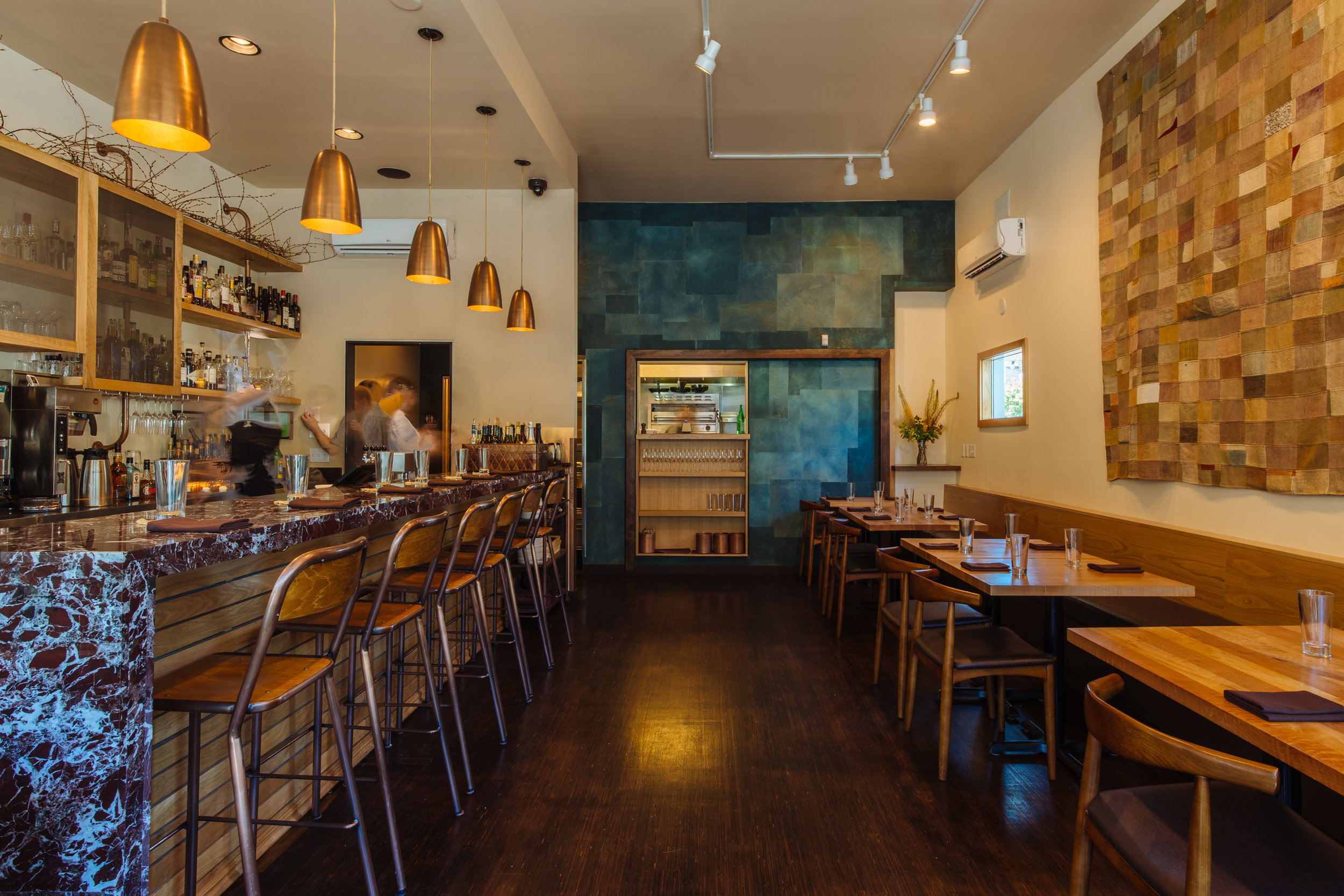
The room gives the work little cover. Pale woods, soft brass fixtures, a white-marble bar, dried leaves and flowers, antique dishes, small two-person booths, a counter, and an open kitchen keep the distance short between the hands and the guest. Downtown Portland sits outside the door, a block off the West End restaurant strip and near Powell’s Books, but the pace inside is narrower and more deliberate. You read the place in small movements: a plate set down, a handwritten line checked, a slice of quiche carried from the pass.
Murray has said, “I talk to my staff about body language daily.” That is service language, but it is also craft language. Posture, eye contact, and timing shape how the food lands, especially in a room this close. At Maurice in Portland, black pepper cheesecake, a cup of coffee, and the white-marble bar feel like they belong.
Address
921 SW Oak St, Portland, Oregon, United States
In residence
Similar places
Modern Haitian Caribbean
Kann
Portland, United States
50 Best
Roman-Style Artisan Pizza
Ken’s Artisan Pizza
Portland, United States
Modern American Fine Dining
Coquine
Portland, United States
Farm-to-Table Italian Wood-Fired Pizza
Nostrana
Portland, United States
Modern Japanese Kaiseki
Nodoguro
Portland, United States
Modern Thai Tasting Menu
Langbaan
Portland, United States