McHenry Distillery sits on the Tasman Peninsula at Port Arthur, one of the most climatically distinct corners of Tasmania, and holds a Pearl 2 Star Prestige rating for 2025. The combination of cool maritime air, extraordinary heritage surroundings, and serious production credentials places it in a narrow tier of Australian craft distilleries where geography shapes the spirit as directly as it does the glass.
<h2>Spirits at the Edge of the World: Tasmania's Distilling Terrain</h2><p>Tasmania occupies a position in Australian craft spirits that is structurally similar to the role cooler-climate regions play in Australian wine. The island's latitude, low humidity, clean air, and slow diurnal temperature shifts create maturation conditions that larger mainland producers cannot replicate. Within Tasmania itself, the Tasman Peninsula sits at the southern extreme of that already-marginal climate, where proximity to the Southern Ocean tightens temperature ranges further and keeps atmospheric moisture constant across the seasons. McHenry Distillery, located at 229 Radnor Road in Port Arthur, occupies this precise corner of the island.</p><p>The broader Australian craft distilling scene has grown considerably since the early 2010s, with producers like <a href="https://www.enprimeurclub.com/wineries/archie-rose-distilling-co-sydney-winery">Archie Rose Distilling Co in Sydney</a> and <a href="https://www.enprimeurclub.com/wineries/bundaberg-rum-distillery-bundaberg-winery">Bundaberg Rum Distillery in Bundaberg</a> occupying different points on the spectrum from heritage volume to contemporary craft. Tasmania's producers sit in a distinct third category: low-volume, terroir-driven, with award trajectories that track closer to fine wine estates than to spirits brands. McHenry's 2025 prestige rating places it in that upper tier of the island's operators.</p><h2>Approaching Port Arthur</h2><p>The Tasman Peninsula is accessed via the Arthur Highway from Hobart, roughly 90 kilometres southeast, and the drive itself functions as a geographic argument for the distillery's positioning. The land narrows at Eaglehawk Neck before widening again toward Port Arthur, and the vegetation shifts progressively toward a harder, salt-tolerant coastal character. By the time you reach Radnor Road, the Southern Ocean is close enough to feel in the air. This is not incidental to what McHenry produces. The same maritime exposure that shapes the peninsula's ecology presses itself into the maturation environment of anything aged here.</p><p>Port Arthur itself carries one of Australia's most significant colonial heritage profiles, the UNESCO-listed convict site drawing substantial annual visitor traffic. The distillery sits within that broader heritage context while operating as a working production facility, a combination that distinguishes it from purely tourism-oriented cellar doors. Visitors arriving for a serious tasting do so in a setting where the historical and the agricultural weight of the peninsula is genuinely present. Comparisons to the way estates in established wine regions like <a href="https://www.enprimeurclub.com/wineries/all-saints-estate-rutherglen-winery">All Saints Estate in Rutherglen</a> or <a href="https://www.enprimeurclub.com/wineries/bests-wines-great-western-winery">Leading's Wines in Great Western</a> place their production within long local histories are apt here, though McHenry's timeline is shorter and its medium is spirit rather than wine.</p><h2>Terroir and the Distillery Argument</h2><p>The concept of terroir applies to spirits with more friction than it does to wine. In wine, the connection between soil, climate, and glass is measurable and broadly accepted. In distilling, the conversation is newer and more contested, but Tasmanian producers have been among the most credible voices in the argument. The island's water sources, grain provenance, and the physical environment of maturation all contribute to what ends up in the bottle in ways that can be tracked and compared. For McHenry, the Tasman Peninsula's specific conditions, distinct even within Tasmania, make the terroir case as directly as any single-estate wine region in Australia.</p><p>This places McHenry in a comparable set that extends beyond spirits into the broader category of Australian producers making place-specific luxury products. Estate-focused wine producers like <a href="https://www.enprimeurclub.com/wineries/bass-phillip-gippsland-winery">Bass Phillip in Gippsland</a> and <a href="https://www.enprimeurclub.com/wineries/cape-mentelle-margaret-river-winery">Cape Mentelle in Margaret River</a> operate on the principle that geography is an irreducible part of the product's identity. McHenry's Pearl 2 Star Prestige status for 2025 signals that independent assessment has reached a similar conclusion about its spirits. The award is not a marketing claim but a third-party verification that production quality and place-character are operating at a premium level.</p><p>For a broader frame, consider how Australian wine regions have moved from generalist volume production toward region-specific identity over the past three decades. Producers from <a href="https://www.enprimeurclub.com/wineries/angove-family-winemakers-renmark-winery">Angove Family Winemakers in Renmark</a> to <a href="https://www.enprimeurclub.com/wineries/brown-brothers-king-valley-winery">Brown Brothers in King Valley</a> each made bets on regional distinctiveness. Tasmanian distillers are mid-way through an analogous transition, and McHenry is among those making the case at the prestige end of that curve.</p><h2>What to Taste and How to Approach It</h2><p>Without specific menu data available, it is not possible to describe individual expressions with precision. What the Pearl 2 Star Prestige rating does confirm is that the production program has been assessed at a level consistent with serious, category-leading spirits work. At distilleries operating at this tier in Tasmania's small-producer ecosystem, the tasting experience typically foregrounds single malt whisky and gin categories, both of which benefit directly from the island's water quality and climate. The Southern Ocean air and low-pollution atmosphere contribute measurably to barrel maturation outcomes in Tasmanian facilities, a point that producers at this level use as a production argument rather than a marketing one.</p><p>Visitors with a background in fine wine, particularly from producers like <a href="https://www.enprimeurclub.com/wineries/bird-in-hand-adelaide-hills-winery">Bird in Hand in Adelaide Hills</a> or <a href="https://www.enprimeurclub.com/wineries/blue-pyrenees-estate-pyrenees-winery">Blue Pyrenees Estate in Pyrenees</a>, will find the tasting logic familiar: place first, then production method, then the glass. The discipline of asking where a spirit comes from before asking what it tastes like is exactly the frame the McHenry site rewards.</p><h2>Planning the Visit</h2><p>Port Arthur is a day trip from Hobart for visitors staying in the city, but the Tasman Peninsula justifies an overnight stay for anyone treating it as a serious destination rather than a heritage-site checkbox. The drive covers approximately 90 kilometres each way, and combining the distillery visit with the Port Arthur Historic Site and the coastal walking opportunities on the peninsula makes a full itinerary. Given the distillery's remote position, confirming opening arrangements ahead of arrival is practical rather than optional.</p><p> For those building an extended Australian spirits and wine itinerary, comparisons with <a href="https://www.enprimeurclub.com/wineries/brokenwood-hunter-valley-winery">Brokenwood in Hunter Valley</a>, <a href="https://www.enprimeurclub.com/wineries/casella-family-yellow-tail-griffith-winery">Casella Family in Griffith</a>, or international reference points like <a href="https://www.enprimeurclub.com/wineries/aberlour-aberlour-winery">Aberlour in Aberlour</a> and <a href="https://www.enprimeurclub.com/wineries/accendo-cellars">Accendo Cellars in St. Helena</a> help calibrate how Tasmania's premium producers sit relative to established old-world and new-world benchmarks.</p>
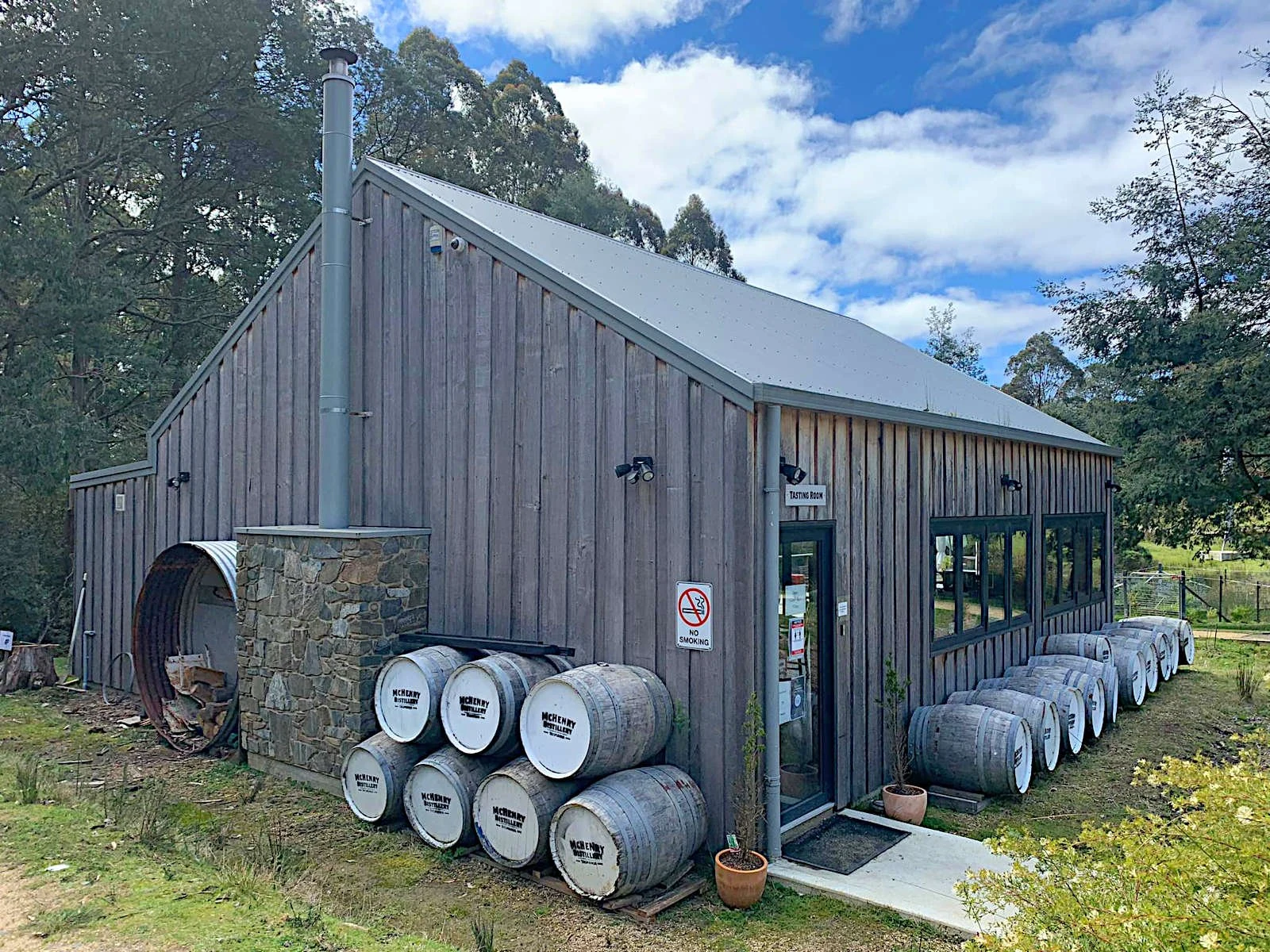
McHenry Distillery sits at 229 Radnor Rd on the Tasman Peninsula, a working distillery in a remote coastal setting rather than an urban tasting room. The environment lends itself to an informal, exploratory visit rather than a structured fine-dining register. Dress for the peninsula's variable weather and expect the focus to be on the spirits themselves.
McHenry Distillery has received recognition including: Pearl 2 Star Prestige (2025).
The distillery holds a Pearl 2 Star Prestige rating for 2025, which places it among Australia's credentialled craft producers. Specific current expressions and tasting menu details are best confirmed directly with the distillery before visiting, as seasonal releases and availability shift. The rating signals that the core range warrants serious attention, not just a casual pour.
McHenry Distillery is located at 229 Radnor Rd, Port Arthur TAS 7182, Port Arthur.
A Pearl 2 Star Prestige rating in 2025 puts McHenry in a small peer group of Australian distilleries recognised for production quality at that level. The location on the Tasman Peninsula adds geographic context that few distilleries can match: the same cool, maritime climate that defines the region's other produce shapes the distilling conditions here. Combined with the proximity to Port Arthur Historic Site, it fits naturally into a dedicated Tasman Peninsula itinerary rather than a detour.
229 Radnor Rd, Port Arthur TAS 7182