Nishiazabutaku
In Residence
Kenji Ishizaka
Chef
- 01CuisineModern Japanese Omakase
- 02CityTokyo, Japan
- 03RecognitionOne Michelin Star
Two vinegars at the counter
- 1 Michelin Star · Michelin Guide
- Opinionated About Dining Top Restaurants in Japan Recommended · 2026
- Michelin 1 Star · 2026
- Opinionated About Dining Top Restaurants in Japan Ranked #361 · 2025
- Opinionated About Dining Top Restaurants in Japan Ranked #330 · 2024
- Opinionated About Dining Top Restaurants in Japan Recommended · 2023
Red rice, white rice, one counter
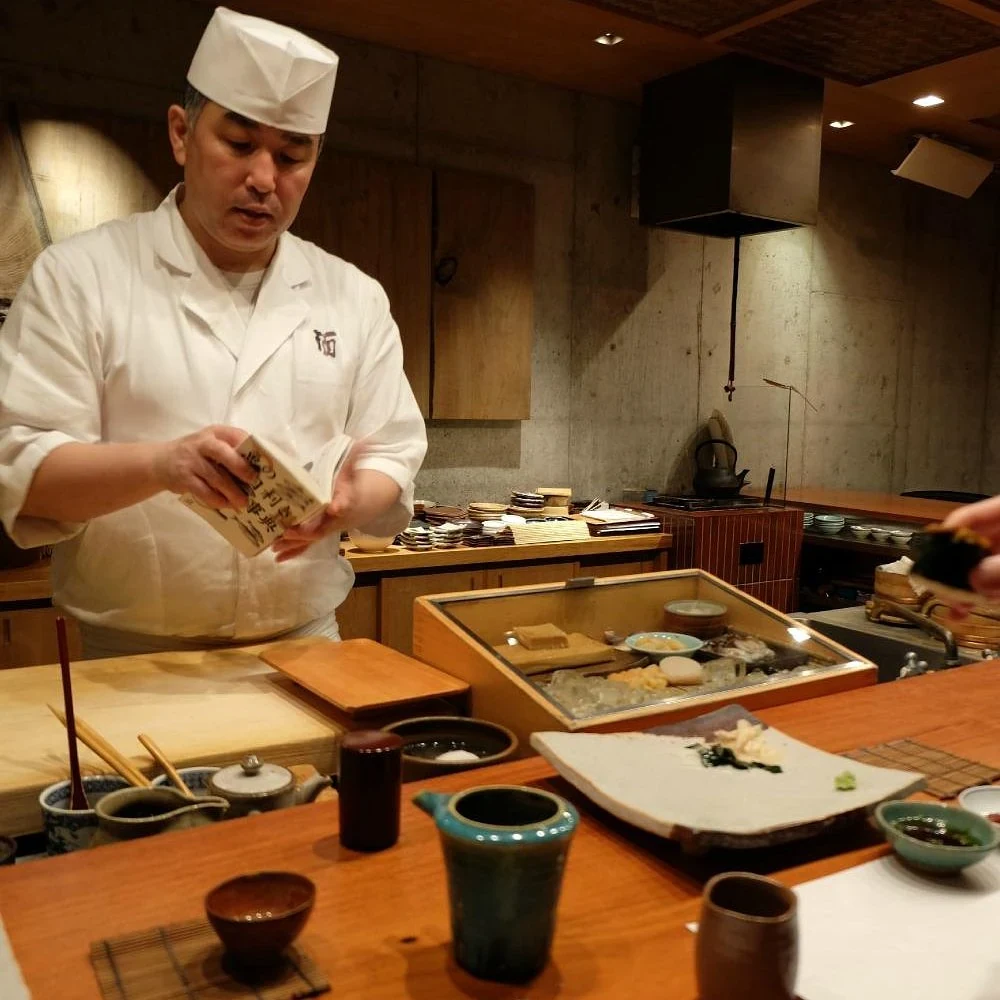
Kenji Ishizaka matches vinegar rice to the fish in front of him, working as Chef at Nishiazabutaku in Nishiazabu, Tokyo. Kenji Ishizaka has held the owner-chef post at Nishiazabu Taku since 2022, after training at Kyubey, working on the Taku team in 2010, and leading Sushi Taku from 2016 to 2022. That path matters here because this restaurant asks a chef to hold several rhythms at once: the quiet repetition of nigiri, the timing of cooked fish, the pacing of snacks, and the exchange across the counter.
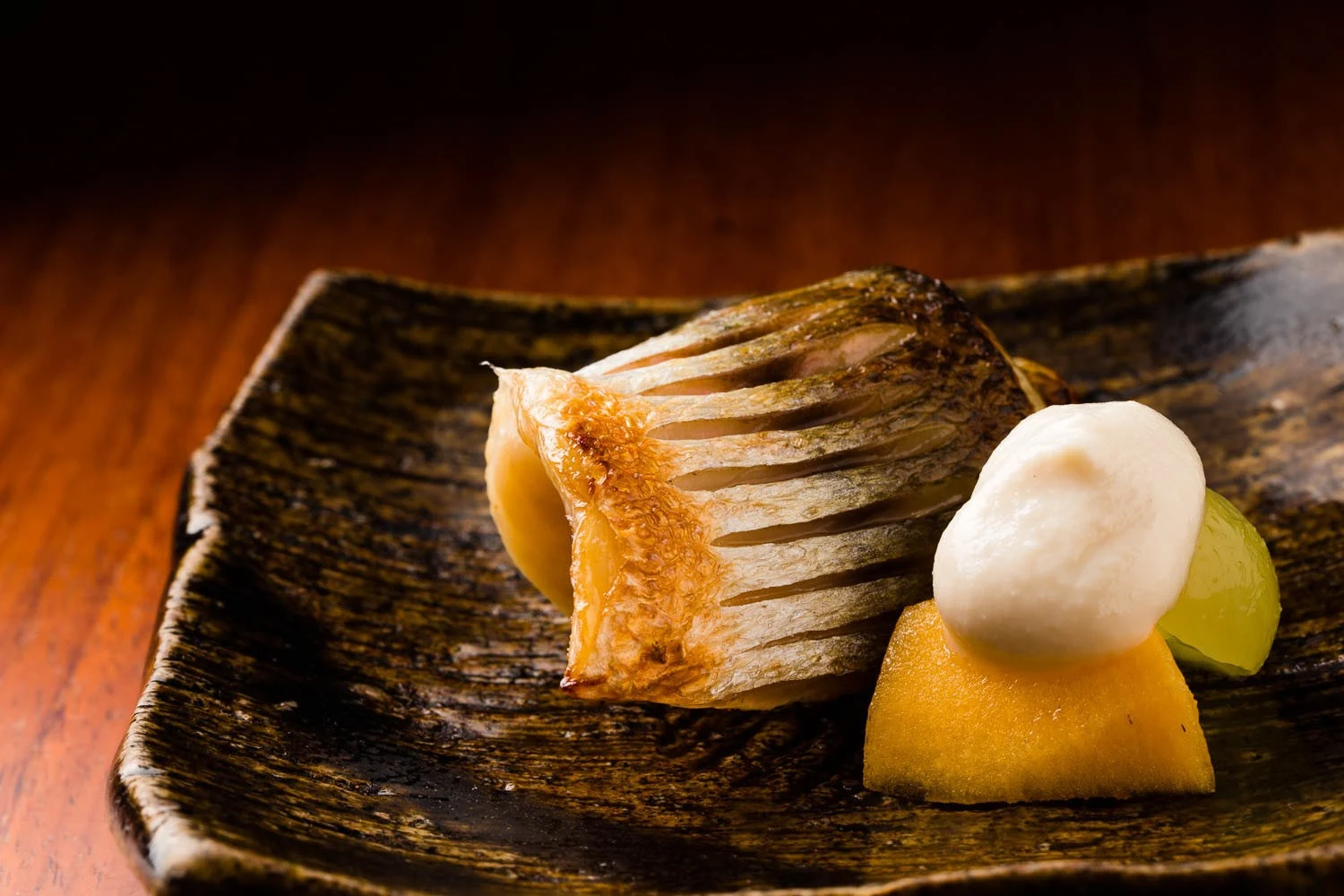
His own line is not built on display. It is built on satisfaction as a craft outcome, a meal that lands with enough breadth and control to feel complete without losing focus. In his hands, grilled Yairo shiitake from Niigata, served with shiso and nori, carries the savor of the grill and the pull of seaweed without pretending to be fish. It also explains the station. Ishizaka works in small adjustments, letting smoke, aroma, rice temperature, and texture do more than decoration could.
An omakase built in alternation
The meal at Nishiazabutaku moves through 30+ items, alternating nigiri with drinking snacks, cooked fish, sashimi, and kaiseki-style small dishes. The format resists the single long climb of nigiri alone. Instead, the pass keeps returning the palate to a new point of attention: vinegar, salt, ponzu, fat, char, shellfish sweetness, the clean edge of wasabi. Red or white vinegar-seasoned rice meets the topping it is meant to carry, not as a house flourish but as a working choice made piece by piece.
That breadth belongs to the restaurant’s method. Guests may meet hirame with wasabi and salt, then ponzu; kohada as sushi rather than sashimi; kamasu with Japanese yam; sea urchin in more than one expression; or cooked preparations placed between raw fish to change the temperature and pace. The beverage program runs beside it with sake and wine, a pairing language that has long been part of this house’s identity. The discipline is in sequence. Nothing needs to shout when the next piece has been set up properly.
The counter keeps the room close
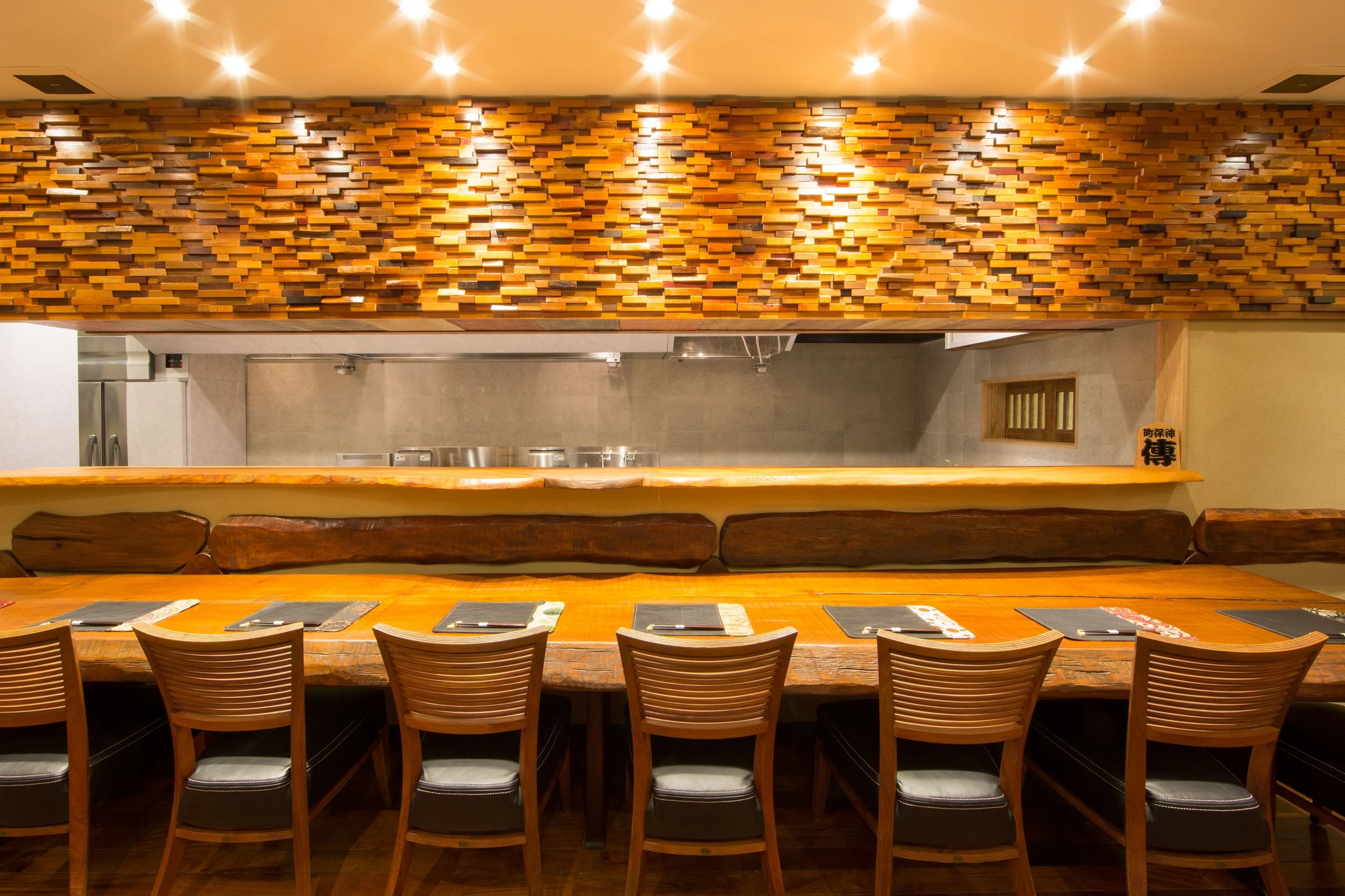
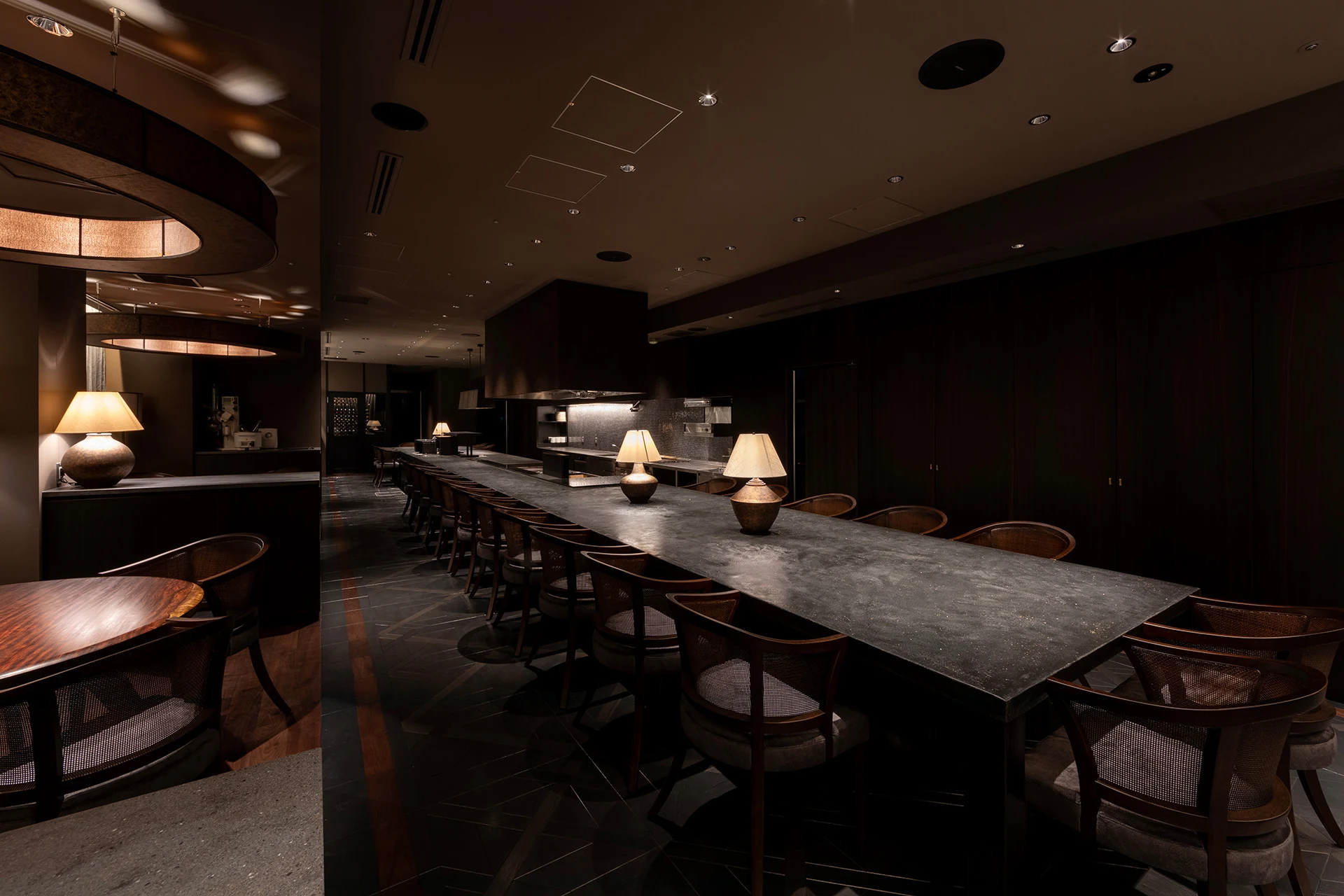
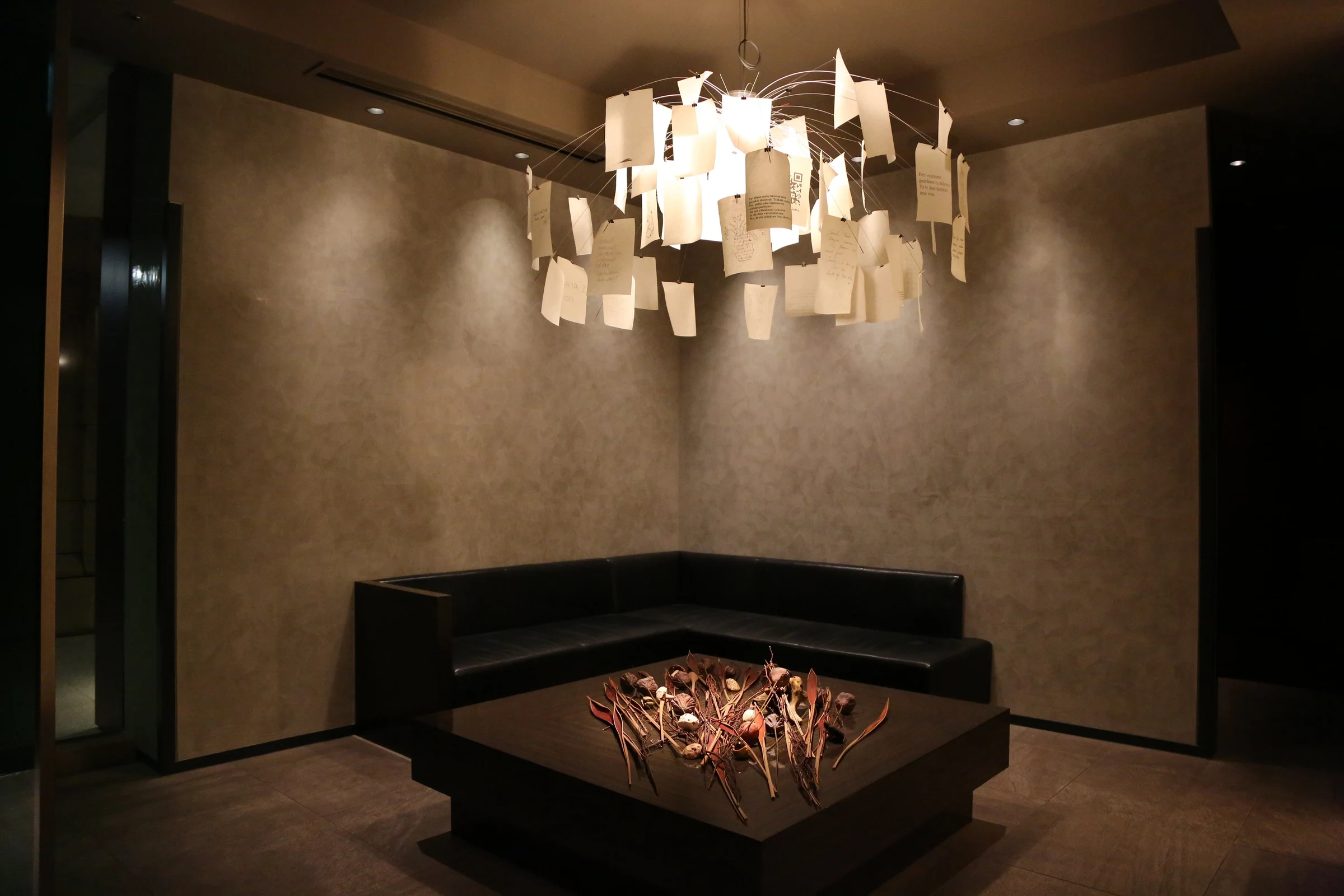
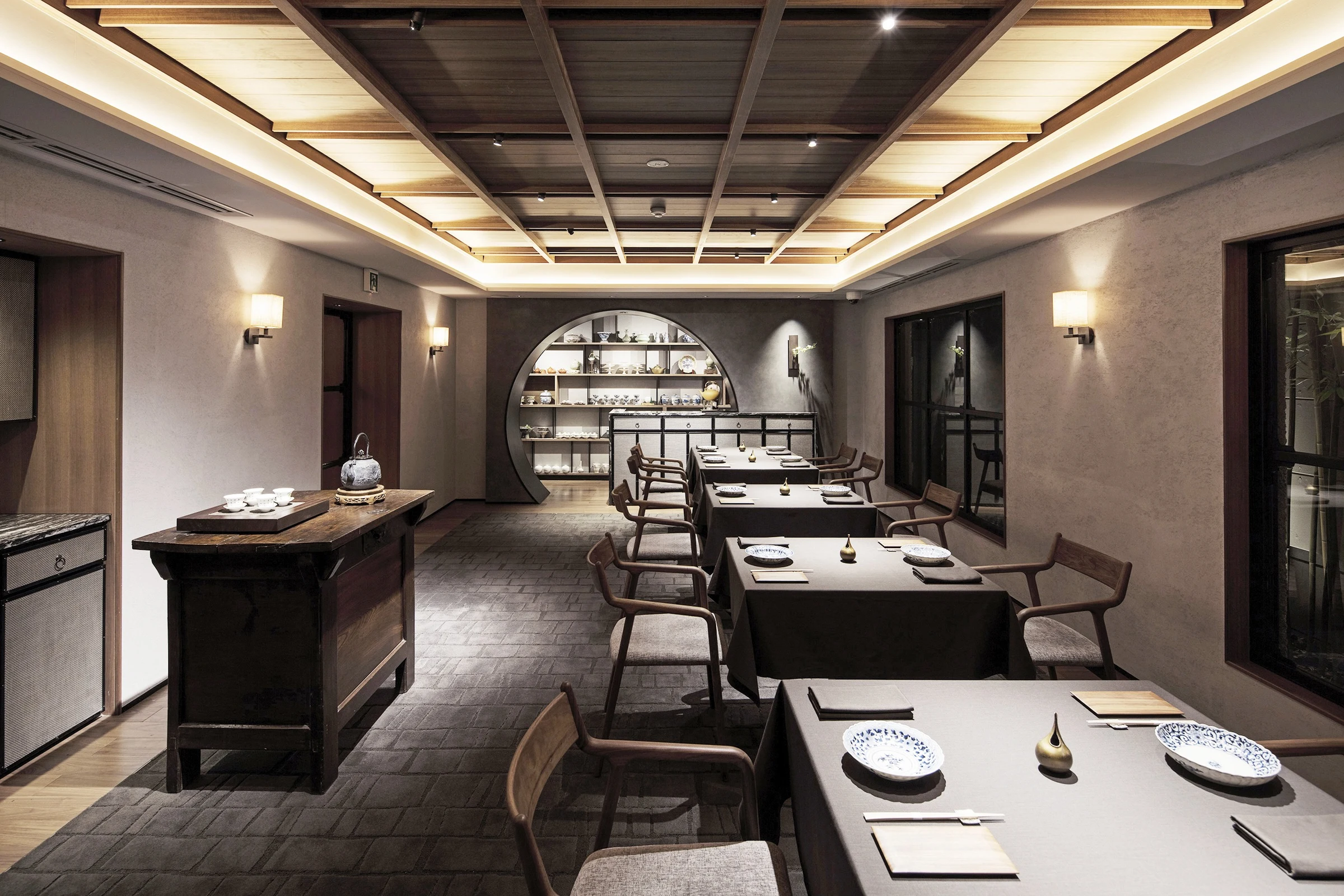
The room is small, quiet, and held around the counter, with private room seating kept in the same restrained register. Minimal surfaces put the attention back on the bench: the cut of fish, the hand forming rice, the plate placed down at the moment it should be eaten. Service stays warm without loosening the concentration of the pass. Conversation can happen, but the counter never becomes casual in the wrong way.
Nishiazabutaku sits in Nishi-Azabu, away from the louder gravity of nearby Roppongi, and the room suits that position. It feels less like a stage than a working sushi-ya with a clear point of view. The Michelin One Star belongs to this address, where the meal itself includes 30+ turns, two vinegars, and Ishizaka’s grilled Yairo shiitake from Niigata.
Questions
Frequently asked
Who is the chef at Nishiazabutaku?
Kenji Ishizaka is the chef at Nishiazabutaku in Nishiazabu, Tokyo. He has held the owner-chef post since 2022, after training at Kyubey, working on the Taku team in 2010, and leading Sushi Taku from 2016 to 2022.
What kind of meal does Nishiazabutaku serve?
The restaurant serves a modern Japanese omakase that moves through 30+ items. The meal alternates nigiri with drinking snacks, cooked fish, sashimi, and kaiseki-style small dishes.
What is Nishiazabutaku known for at the counter?
Kenji Ishizaka matches red or white vinegar-seasoned rice to the fish in front of him. The meal is built around small adjustments in rice temperature, smoke, aroma, and texture rather than display.
What recognition does Nishiazabutaku hold?
Nishiazabutaku holds one Michelin star.
Do I need to book and is there a dress code?
Reservation is essential, and the dress code is smart casual.
The field
How it compares
| Place | Awards | Cuisine | Notes |
|---|---|---|---|
| Nishiazabutaku | Michelin 1 Star | Modern Japanese Omakase | Minato, $$$$ |
| Den | Michelin 2 Stars, World's 50 Best | Modern Japanese Kaiseki | Tokyo |
| Florilège | Michelin 2 Stars, World's 50 Best | Modern French-Japanese Plant-Based Fine Dining | Tokyo |
| Narisawa | Michelin 2 Stars, World's 50 Best | Modern Japanese Satoyama Fine Dining | Tokyo |
| Quintessence | Michelin 3 Stars | Modern French Fine Dining | Tokyo |
| Sazenka | Michelin 3 Stars, World's 50 Best | Modern Chinese Fine Dining | Tokyo |
| Sézanne | Michelin 3 Stars, World's 50 Best | Modern French Fine Dining | Tokyo |
In residence
Similar places
Modern Japanese Kaiseki
Den
Tokyo, Japan
★★ · 50 Best
Modern French-Japanese Plant-Based Fine Dining
Florilège
Tokyo, Japan
★★ · 50 Best
Modern Japanese Satoyama Fine Dining
Narisawa
Tokyo, Japan
★★ · 50 Best
Modern French Fine Dining
Quintessence
Tokyo, Japan
★★★
Modern Chinese Fine Dining
Sazenka
Tokyo, Japan
★★★ · 50 Best
Modern French Fine Dining
Sézanne
Tokyo, Japan
★★★ · 50 Best