Obscura
In Residence
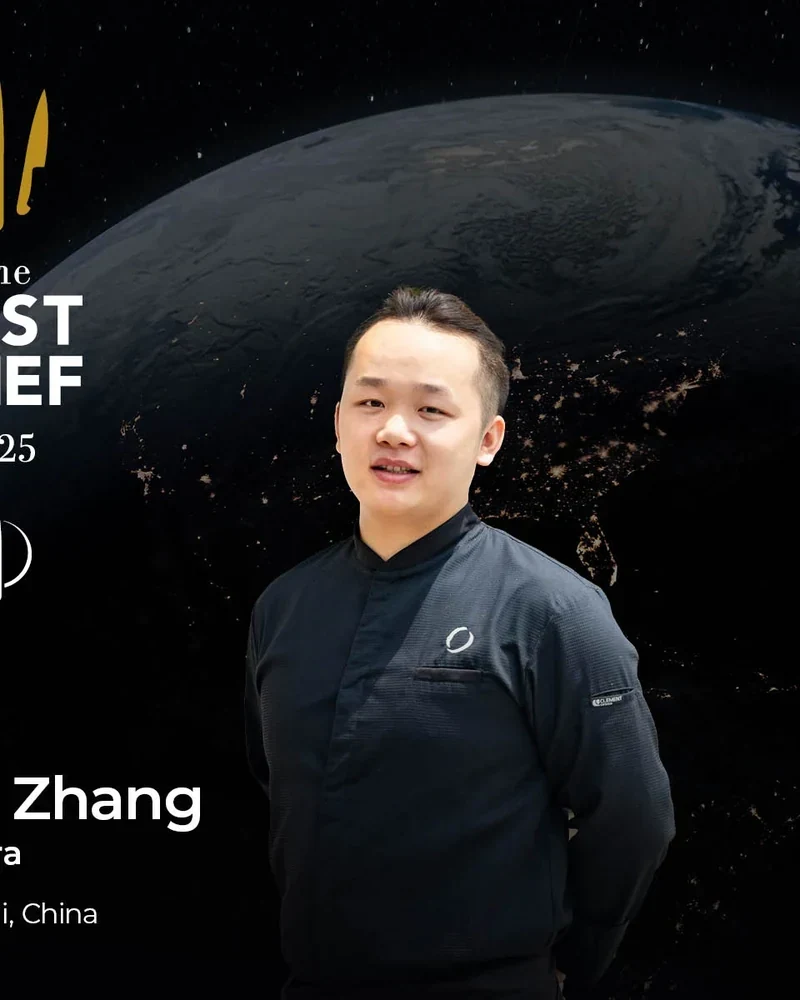
Jian Zhang
Chef
- 01CuisineModern Innovative Chinese
- 02CityShanghai, China
- 03RecognitionOne Michelin Star
- 1 Michelin Star · Michelin Guide
- Opinionated About Dining Top Restaurants in Asia Recommended · 2026
- Michelin 1 Star · 2025
- The Best Chef One Knife · 2025
- Black Pearl 1 Diamond · 2025
- Opinionated About Dining Top Restaurants in Asia Ranked #394 · 2025
- Opinionated About Dining Top Restaurants in Asia Ranked #390 · 2024
- Michelin 1 Star · 2024
- Opinionated About Dining Top Restaurants in Asia Recommended · 2023
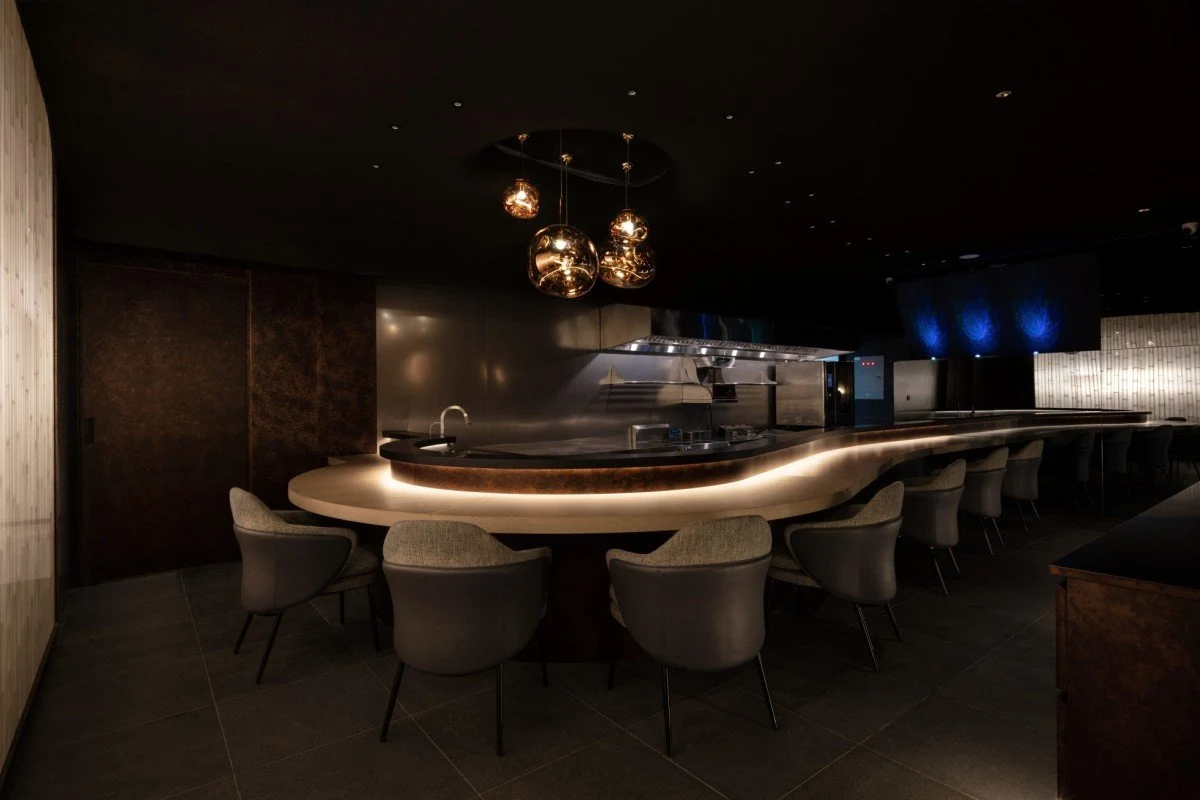
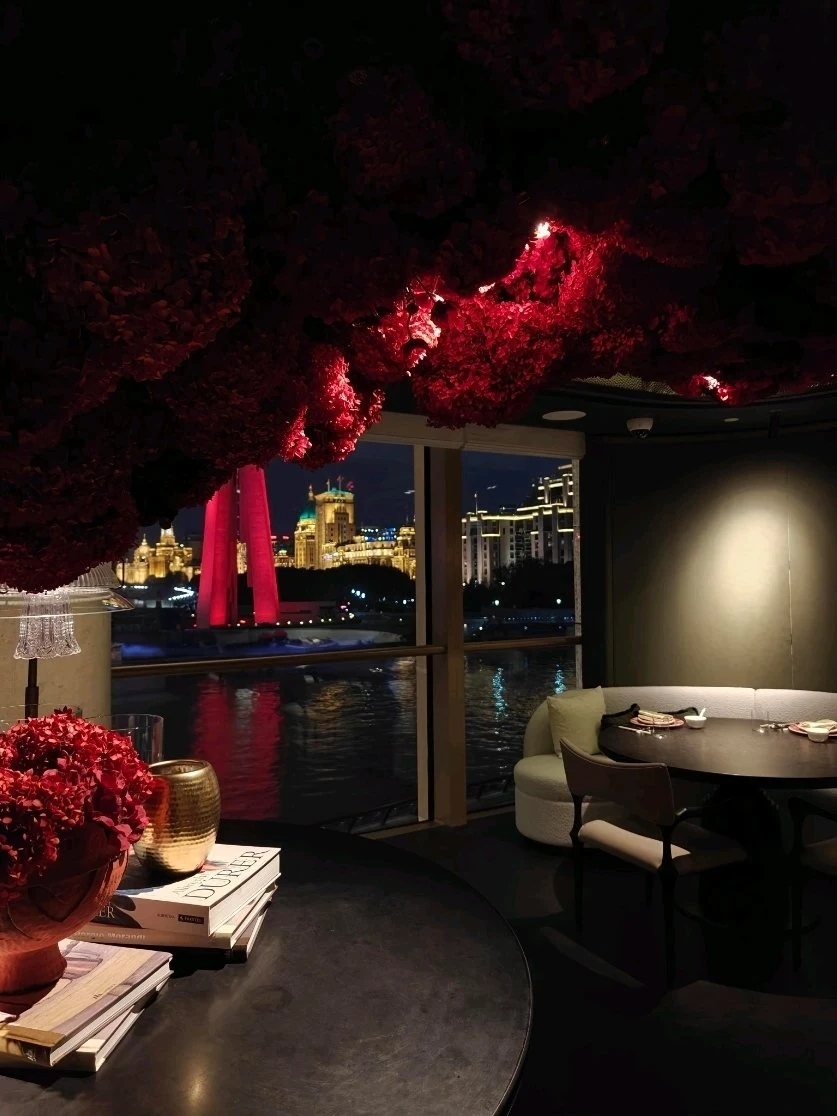
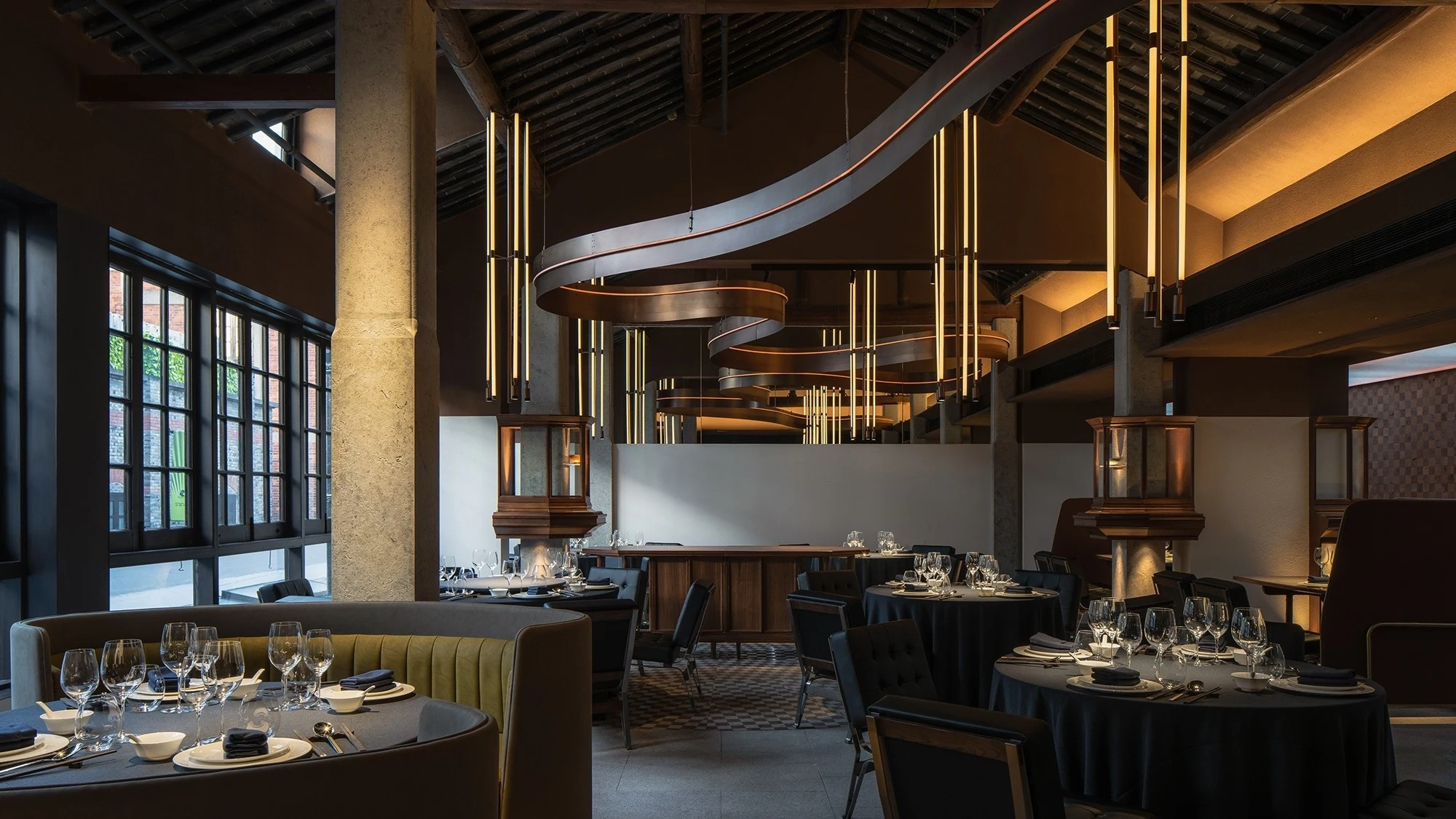
On Middle Sichuan Road in Huangpu, the approach to Obscura sets up exactly what the kitchen intends to do to your expectations: disorient them, then reorder them. The address sits in Huangpu, and the restaurant's chiaroscuro ring logo signals the same duality the food pursues, a tension between light and dark, familiarity and surprise. The name is deliberate. So is everything else.
Where Shanghai's Innovative Dining Has Arrived
Shanghai's top-tier innovative restaurants have, over the past decade, split into two broadly recognisable camps. The first applies continental fine-dining grammar to local ingredients, producing menus that read as European with a Chinese accent. The second, and the more structurally interesting camp, attempts the reverse: Chinese culinary memory as the foundation, Western technique as the instrument. Obscura belongs decisively to the second camp, and in 2025 it holds a Michelin one-star, placing it among technically ambitious Shanghai addresses like Taian Table while operating from a distinctly different cultural departure point.
The movement is incremental rather than meteoric, which tends to be a more durable signal of consistent execution than a sudden spike. That kind of gradual, sustained recognition across multiple independent systems, Michelin, Black Pearl, and OAD, suggests a kitchen that is not optimising for a single evaluative lens.
The Duo Model: How Collaboration Shapes the Menu
The editorial angle that makes Obscura most legible is not any single chef's biography but the structure of how the kitchen is organised. Chef Jian Zhang leads the kitchen. They travel across China regularly, returning with regional references, ingredients, and memories that are then translated into a prix-fixe seasonal format. This is not a token sourcing trip; the travel is the method. The menu exists as a direct output of what the pair find and how they interpret it together.
That collaborative model has specific consequences for what appears on the plate. No single regional Chinese tradition dominates. Instead, dishes move between provinces, drawing on the scent profiles of one region, the texture logic of another, and occasionally recasting a recognisable Chinese reference in a form that initially reads as something else entirely. The example that has entered Obscura's public record is Cantonese roast pork presented in the format of ice cream, a dish that works precisely because both the visual misdirection and the underlying flavour are handled with equal seriousness. The whimsy is structural, not decorative.
For comparison, the duo model at Obscura contrasts with the solo auteur approach more common at internationally recognised innovative restaurants across Asia. MAZ in Tokyo and alla prima in Seoul both operate within the innovative category but are built around individual chef identities. The collective authorship at Obscura produces a different kind of menu coherence, one shaped by dialogue rather than singular vision.
Chef Jian Zhang leads the kitchen. That framing matters for how the menu reads: dishes land as the result of a shared editorial process, tested against two perspectives before they reach the table.
The Prix-Fixe Format and the Case for Non-Alcoholic Pairing
Obscura operates on a prix-fixe seasonal menu, the format that now anchors most serious fine-dining operations across Asia's major cities. The seasonal rotation is not cosmetic. Because the menu content is tied directly to what the chef duo sources during their regional travel, it shifts as their itineraries shift, which means repeat visits across different seasons will produce materially different experiences rather than a stable signature set with rotating garnishes.
The non-alcoholic pairing program is worth treating as the primary pairing option rather than an afterthought. The restaurant's own framing explicitly recommends it, which is an unusual piece of editorial confidence for a fine-dining kitchen to exercise. At the ¥¥¥¥ price tier, most comparable Shanghai addresses build their pairing programs around wine as the default and present non-alcoholic alternatives as a concession. Obscura's inversion of that hierarchy suggests the non-alcoholic pairings have been designed with the same structural intention as the food itself, matched to the flavour logic of dishes that carry Chinese regional references and therefore may not resolve cleanly against a conventional European wine list.
Obscura's recommendation to consider the non-alcoholic route reads as an informed editorial stance from a kitchen that has thought carefully about how the two sides of the table should interact.
Obscura in the Regional Innovative Dining Context
Ru Yuan in Hangzhou and Xin Rong Ji in Chengdu each work within variants of this framework, as does Xin Rong Ji in Beijing. The approaches differ significantly: Xin Rong Ji operates within a recognisable Taizhou seafood tradition, while Ru Yuan works from a Hangzhou-rooted seasonal sensibility. Obscura is the most geographically nomadic of these operations, precisely because the sourcing model is pan-Chinese rather than anchored to a single regional kitchen tradition.
Obscura sits at a different point on that spectrum: its identity is constructed from movement rather than rootedness.
Obscura operates in the opposite direction, which makes it the more distinctive option for a reader whose interest is in understanding how Chinese cuisine is being rethought from the inside out.
Know Before You Go
Planning Details
- Address: 670 Sichuan Rd (M), Waitan, Huangpu, Shanghai 200080
- Price tier: ¥¥¥¥
- Format: Prix-fixe seasonal menu
- Awards: Michelin 1 Star
- Pairing: Non-alcoholic pairing explicitly recommended by the kitchen
- Google rating: 4.7
The Sunday letter
Get new places like Obscura every Sunday.
One email a week with the restaurants, bars and hotels we have just written up, and the people who run them.
One email a week. Unsubscribe from any issue.
Questions
Frequently asked
What recognition does Obscura hold?
Obscura holds 1 Michelin star.
Who works at Obscura?
Made By profiles Jian Zhang (Chef) at Obscura.
How expensive is Obscura?
Obscura is listed at a price level of $$$$.
Where is Obscura and what does it serve?
Obscura is in Hongkou, Shanghai, serving Modern Innovative Chinese.
The field
How it compares
| Place | Awards | Cuisine | Notes |
|---|---|---|---|
| Obscura | Michelin 1 Star | Modern Innovative Chinese | Hongkou, $$$$ |
| 8 1/2 Otto e Mezzo Bombana (Shanghai) | Michelin 2 Stars | Modern Italian Fine Dining | Shanghai |
| Amazing Chinese Cuisine | Michelin 2 Stars | High-end Chaoshan Cuisine | Shanghai |
| Fu He Hui | Michelin 2 Stars, World's 50 Best | Modern Seasonal Vegetarian Fine Dining | Shanghai |
| Ling Long Shanghai | Michelin 1 Star, World's 50 Best | Modern Chinese Fine Dining | Shanghai |
| Meet the Bund | Michelin 1 Star, World's 50 Best | Modern Fujianese Fine Dining | Shanghai |
| Taian Table | Michelin 3 Stars | Modern European with Asian Influences | Shanghai |
In residence
Similar places
Modern Italian Fine Dining
8 1/2 Otto e Mezzo Bombana (Shanghai)
Shanghai, China
★★
High-end Chaoshan Cuisine
Amazing Chinese Cuisine
Shanghai, China
★★
Modern Seasonal Vegetarian Fine Dining
Fu He Hui
Shanghai, China
★★ · 50 Best
Modern Chinese Fine Dining
Ling Long Shanghai
Shanghai, China
★ · 50 Best
Modern Fujianese Fine Dining
Meet the Bund
Shanghai, China
★ · 50 Best
Modern European with Asian Influences
Taian Table
Shanghai, China
★★★
The Sunday letter
Get the next Made By story in your inbox.
We send one email every Sunday morning with the places and people we covered that week.
One email a week. Unsubscribe from any issue.