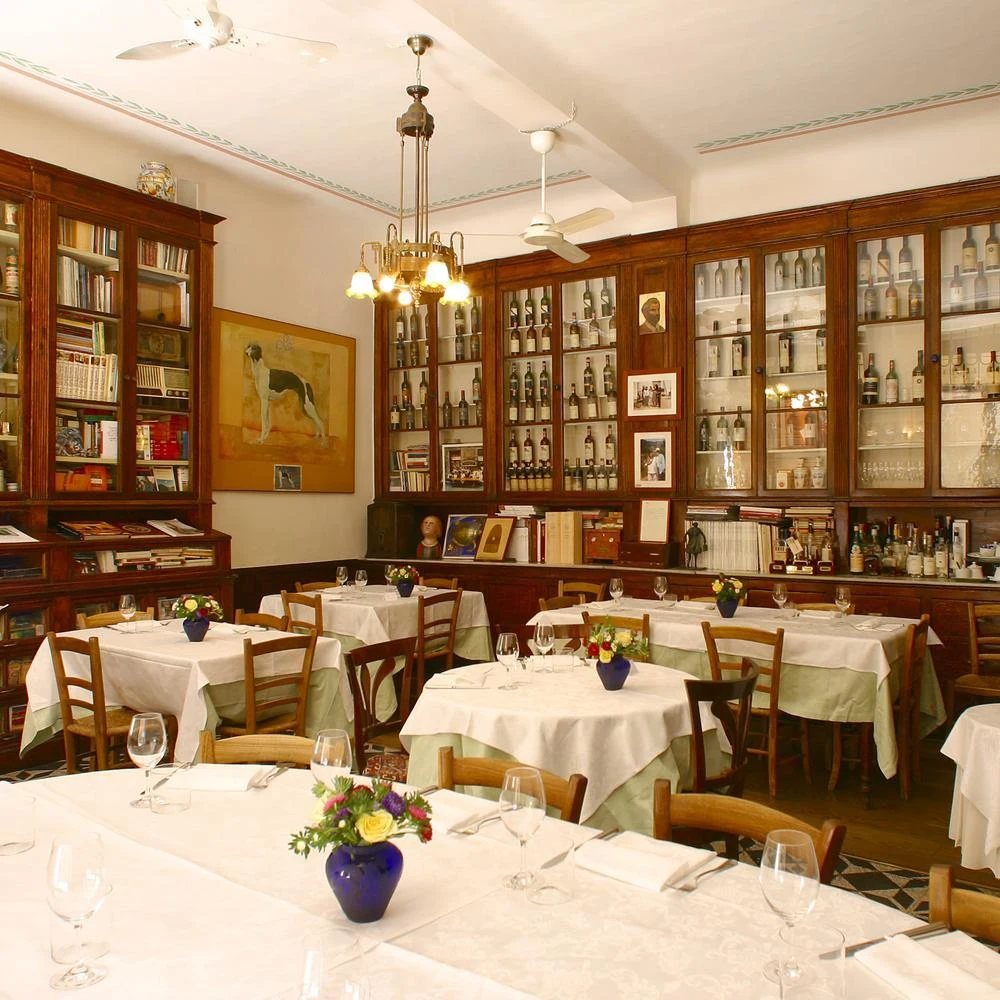
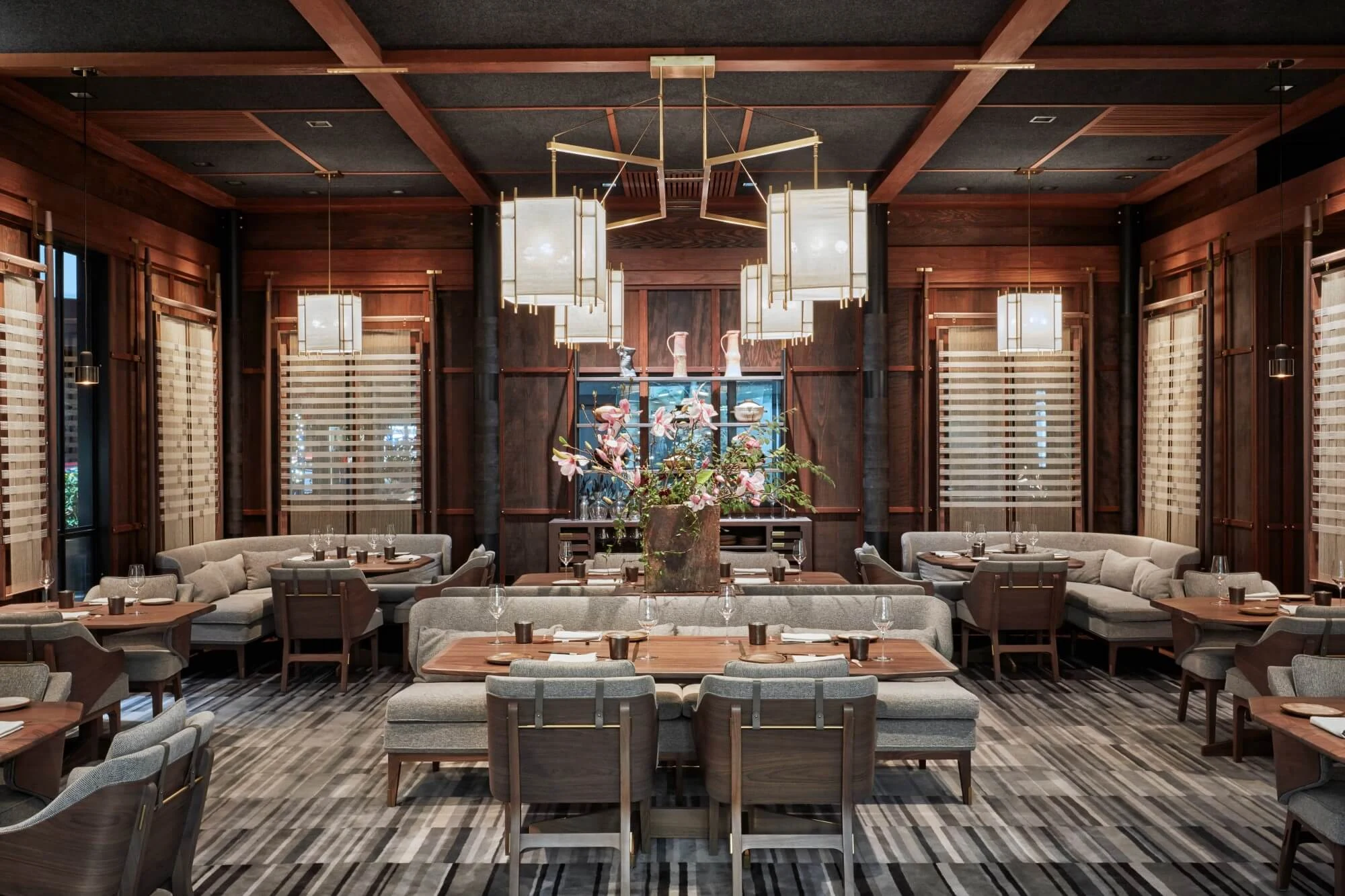
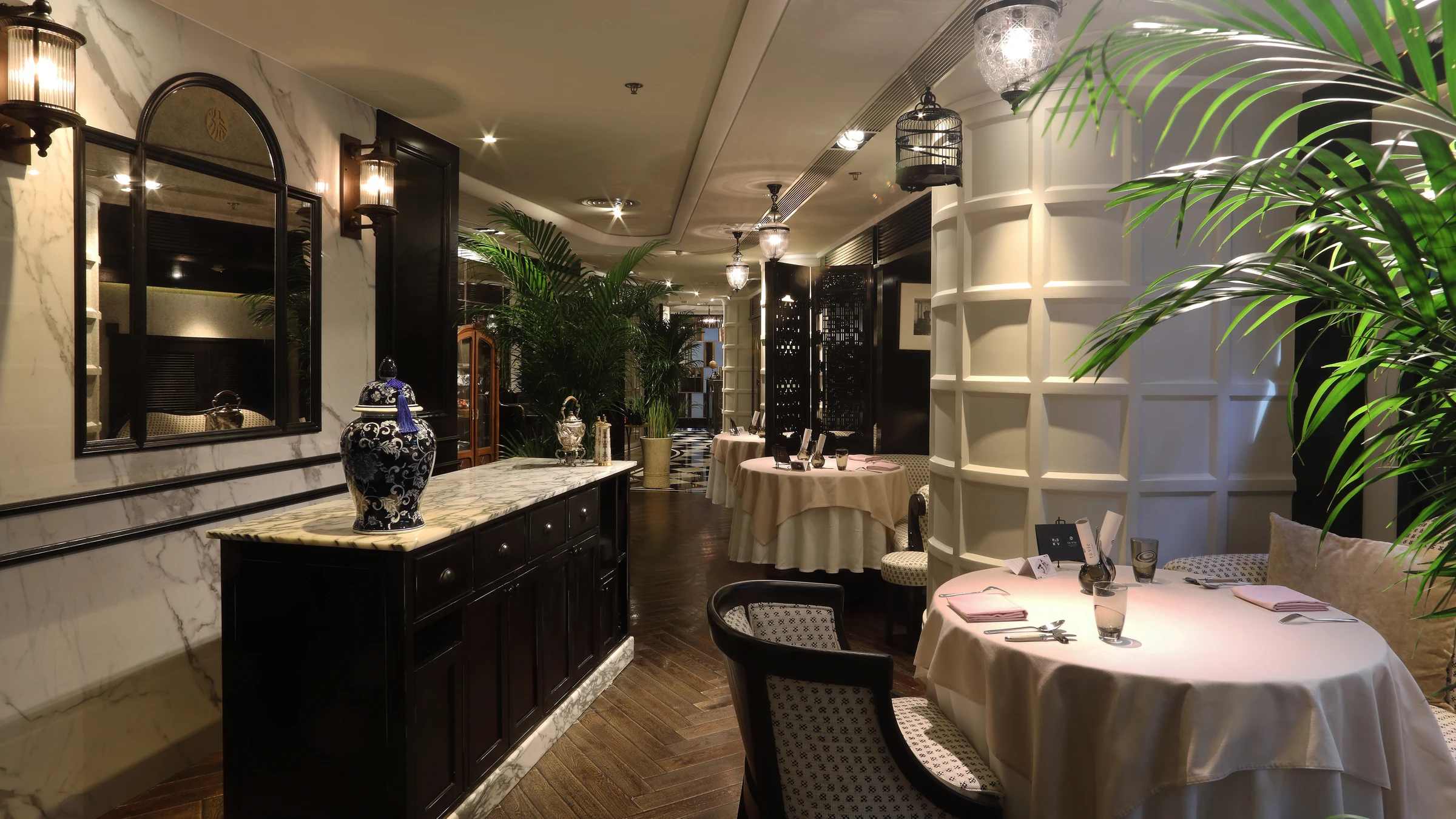
A former grocer's shop on Via del Porrione, Osteria le Logge holds its original shop counter and glass-fronted cabinets as the setting for contemporary Sienese cooking under Chef Maicol Izzo. Michelin Plate recognised in both 2024 and 2025, it sits in the mid-range of Siena's dining scene and draws serious attention for its wine access, including visits to a nearby cellar carved from an Etruscan tunnel.
<h2>A Grocer's Shell, a Living Kitchen</h2><p>In many Italian cities, the conversion of historic commercial spaces into restaurants produces a kind of theme-park nostalgia, original features kept as décor while the cooking pivots toward what tourists expect. Siena operates differently, and Osteria le Logge on Via del Porrione is a useful marker of why. The original shop counter is still there. The glass-fronted display cabinets remain in position. The physical memory of the former grocer's that occupied this space has not been painted over or curated into self-consciousness. What has changed is what the space is asked to do: instead of stocking provisions, it now frames a dining room where contemporary technique operates within Sienese culinary tradition.</p><p>That tension between inherited form and living practice is a recurring condition in Tuscany's smaller cities, where historic centres are protected under UNESCO designation and the built environment changes slowly. Restaurants that choose to preserve rather than renovate carry an implicit obligation to earn that decision with what they serve. At Osteria le Logge, the premise holds: the room provides context, and the kitchen provides the argument for being there.</p><h2>Contemporary Cooking Inside a Tuscan Frame</h2><p>Sienese cuisine sits within the broader Tuscan tradition but carries its own emphases: game, legumes, hand-rolled pasta, the pici that distinguishes local tables from Florentine ones, and a historical preference for density over delicacy. Contemporary cooking in this context does not mean abandoning those materials, it means asking what refined technique can surface in them that a more rustic approach leaves latent.</p><p>Chef Maicol Izzo's approach at Osteria le Logge works within that frame. Recognition from Michelin in both 2024 and 2025 (Michelin Plate in each year) places the restaurant in a visible tier within the city's dining hierarchy. That positioning is significant in Siena, a city where the restaurant density relative to visitor numbers creates genuine competitive pressure. Holding consecutive Plate recognition suggests a consistency of execution that single-year awards do not confirm.</p><p>Pearl's recommendation adds a second external validation from a different critical tradition, giving the restaurant a cross-system credibility that is meaningful for visitors calibrating their options. At the €€€€ price range, Osteria le Logge sits at the mid-point of Siena's contemporary offer.</p><p>Vegetables receive particular attention in the kitchen's output. The artichoke with vermouth and Pan di Spagna illustrates how local produce is being asked to carry more technical complexity than it would in a conventional Sienese setting. The dish is not typical of the region's repertoire, but it is made from ingredients that are, and that calibration between innovation and rootedness defines the broader register of contemporary Tuscan cooking at its more considered end. Osteria le Logge operates at a different scale and ambition level, but the directional logic is consistent.</p><h2>The Wine Dimension</h2><p>Tuscany's wine identity is built on Sangiovese, and Siena sits at the geographic heart of that story, the Chianti Classico zone to the north, Brunello di Montalcino to the south, and Montepulciano's Vino Nobile to the east. Restaurants in this position carry a natural obligation to the region's vineyards, and the better ones treat wine not as a list but as a curatorial act.</p><p>Osteria le Logge's wine programme carries an unusual structural feature: the cellar available for visits is housed in a nearby tunnel of Etruscan origin. This is not merely an aesthetic attraction, it speaks to the depth of the city's material history and the way that depth can be made tangible through the experience of dining here. Guests can arrange to see the cellar, and the programme covers leading regional producers accessible by the glass. In a city where wine tourism is significant, this level of access at the €€ price point is a meaningful differentiator.</p><p>Internationally, the contemporary Italian restaurant form has been shaped by destinations like <a href="https://www.enprimeurclub.com/restaurants/dal-pescatore-runate-restaurant">Dal Pescatore in Runate</a>, <a href="https://www.enprimeurclub.com/restaurants/uliassi-senigallia-restaurant">Uliassi in Senigallia</a>, and <a href="https://www.enprimeurclub.com/restaurants/le-calandre-rubano-restaurant">Le Calandre in Rubano</a>. These are not peer venues for Osteria le Logge in terms of scale or award tier, but they establish the tradition within which Sienese contemporary cooking locates itself.</p><h2>The Space and How to Use It</h2><p>The restaurant operates across two levels: the ground-floor dining room carries the preserved shop fittings and the primary atmosphere; the first floor offers a simpler dining room that suits those who prefer a less charged setting. The distinction matters for planning: the ground floor is the room with the strongest sense of place, and for first visits, it is where the physical argument of the restaurant is made most clearly.</p><p>At 826 Google reviews with a 4.2 average, Osteria le Logge has accumulated enough opinion to be read as genuinely popular rather than a novelty draw. That volume of feedback at a broadly positive average suggests consistent delivery rather than occasional brilliance, a meaningful signal for a city where visitor expectations are high and repeat visits from locals provide the baseline.</p><p>Reservations are advisable, particularly during the Palio season in July and August when Siena operates under significant visitor pressure and tables at recognised restaurants fill quickly. Via del Porrione places the restaurant within the historic centre, walkable from the Campo and well-positioned relative to most accommodation within the city walls.</p><p>For those tracking the contemporary Italian form across other cities and contexts, <a href="https://www.enprimeurclub.com/restaurants/enrico-bartolini-milan-restaurant">Enrico Bartolini in Milan</a>, <a href="https://www.enprimeurclub.com/restaurants/quattro-passi-marina-del-cantone-restaurant">Quattro Passi in Marina del Cantone</a>, and <a href="https://www.enprimeurclub.com/restaurants/atelier-moessmer-norbert-niederkofler-brunico-restaurant">Atelier Moessmer Norbert Niederkofler in Brunico</a> each represent distinct regional expressions of what the tradition can look like at its more developed end. Further afield, <a href="https://www.enprimeurclub.com/restaurants/cesar-new-york-city-restaurant">César in New York City</a> and <a href="https://www.enprimeurclub.com/restaurants/jungsik-seoul-restaurant">Jungsik in Seoul</a> show how the contemporary European restaurant format travels and adapts in different markets.</p>
Osteria le Logge is located at Via del Porrione, 33, 53100 Siena SI, Italy, Sienna.
Osteria le Logge has received recognition including: Having retained its old shop counter and glass - fronted display cabinets, this former grocer’s shop is perfect for anyone in search of old - world charm. However, the cuisine is the real draw with its focus on quality of the highest level.….
No single dish carries official designation as the restaurant's signature. Critical records from Pearl and Michelin assessors single out the artichoke with vermouth and Pan di Spagna as a marker of chef Maicol Izzo's approach: a vegetable preparation given a leading-role treatment at a €€ price point where that kind of ambition is relatively rare.
Via del Porrione, 33, 53100 Siena SI, Italy
Historic Center

Japanese-influenced Californian Kaiseki
Single Thread Farm
Healdsburg, United States
★★★ · 50 Best

French Seafood Fine Dining
Le Bernardin
New York City, United States
★★★ · 50 Best

Modern Korean Tasting Menu
Atomix
New York City, United States
★★ · 50 Best

French
Sézanne
Tokyo, Japan
★★★ · 50 Best

Modern Seafood Fine Dining
Providence
Los Angeles, United States
★★★ · 50 Best

Contemporary Plant-Based Fine Dining
Eleven Madison Park
New York City, United States
★★★ · 50 Best