Pierre Sang in Oberkampf

In Residence
Pierre Sang
Chef
- 01CuisineFrench-Korean Fusion Fine Dining
- 02CityParis, France
Six blind courses near the pass
- Star Wine List · 2026
- Michelin Plate · 2026
- Michelin Plate · 2025
- We're Smart World 2 Radishes · 2025
- Opinionated About Dining Top Restaurants in Europe Ranked #388 · 2025
- Opinionated About Dining Top Restaurants in Europe Ranked #350 · 2024
- Michelin Plate · 2024
- Opinionated About Dining Top New Restaurants in Europe Recommended · 2023
A blind menu at arm's length
The ingredient is held back until the plate has done its work. Pierre Sang, Chef at Pierre Sang in Oberkampf in Paris, built the room around that small delay: the guest tastes first, then guesses, then hears what the kitchen has set in motion. His public path widened after the French version of Top Chef in 2011, but this address has carried his name since 2012, with Pierre Sang on Gambey following in 2014. The lineage here is not presented as a list of masters. It sits in the meeting point of French technique and Korean flavor, in plates that keep each language legible rather than dissolving one into the other.
Sang's stated values are simplicity, generosity, connectivity, gourmandise, well-being, and caring about nature. At this bench they read less like a manifesto than a method. The cooking favors clean lines, bright seasoning, and texture held in tension: sesame against green beans, fennel beside wasabi peas, octopus ragout tempered by vinaigrette and quinoa. The discipline is in restraint. Comfort stays in the room.
The Sunday letter
Find new places through the people who run them.
Our Sunday email brings you the chefs, winemakers and hoteliers behind our newest stories. See a sample before you subscribe.
See a sample of the Sunday emailOne email a week. Unsubscribe from any issue.
Six courses without a printed map
The signature rhythm is a 6-course blind tasting menu, served in a 10-12 seat dining room with open kitchen views. The format asks the table to work a little. Scallops and apple may arrive without announcement; Wagyu beef may carry kimchi; the cheese course may take truffle into a place that still reads as French before the Korean note returns. The point is not concealment for its own sake. It is attention, course by course, before vocabulary rushes in.
The program depends on contrast and arrival. French structure gives the plate its frame, while Korean seasoning, ferments, spice, and acidity alter the pressure inside it. A curated wine program supports that movement rather than flattening it, with the glass expected to follow citrus, sesame, kimchi, vinaigrette, grain, and fat across a set menu. The house works in a modern register, but the more durable gesture is old: cook what is in hand, serve it close, let the diner meet the dish before naming it.
The counter keeps the room close
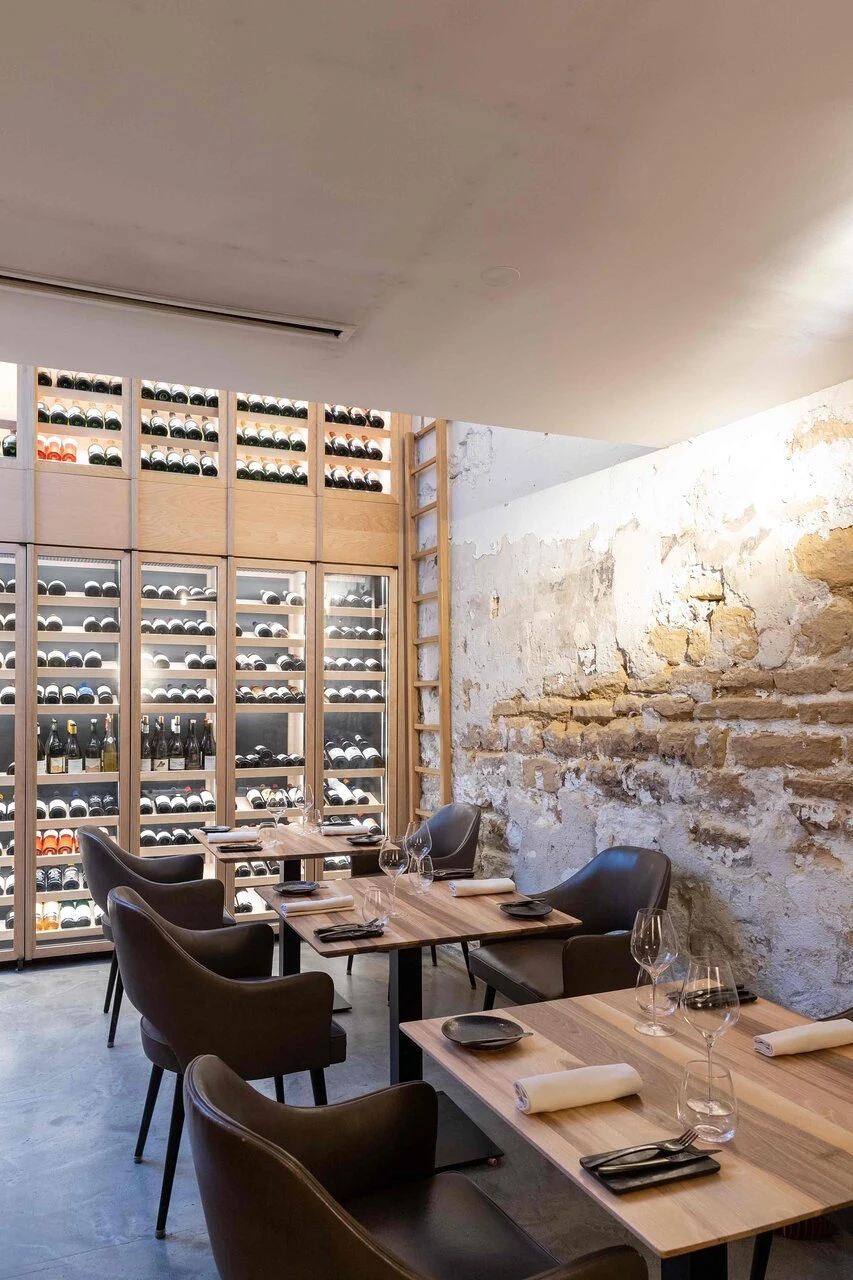
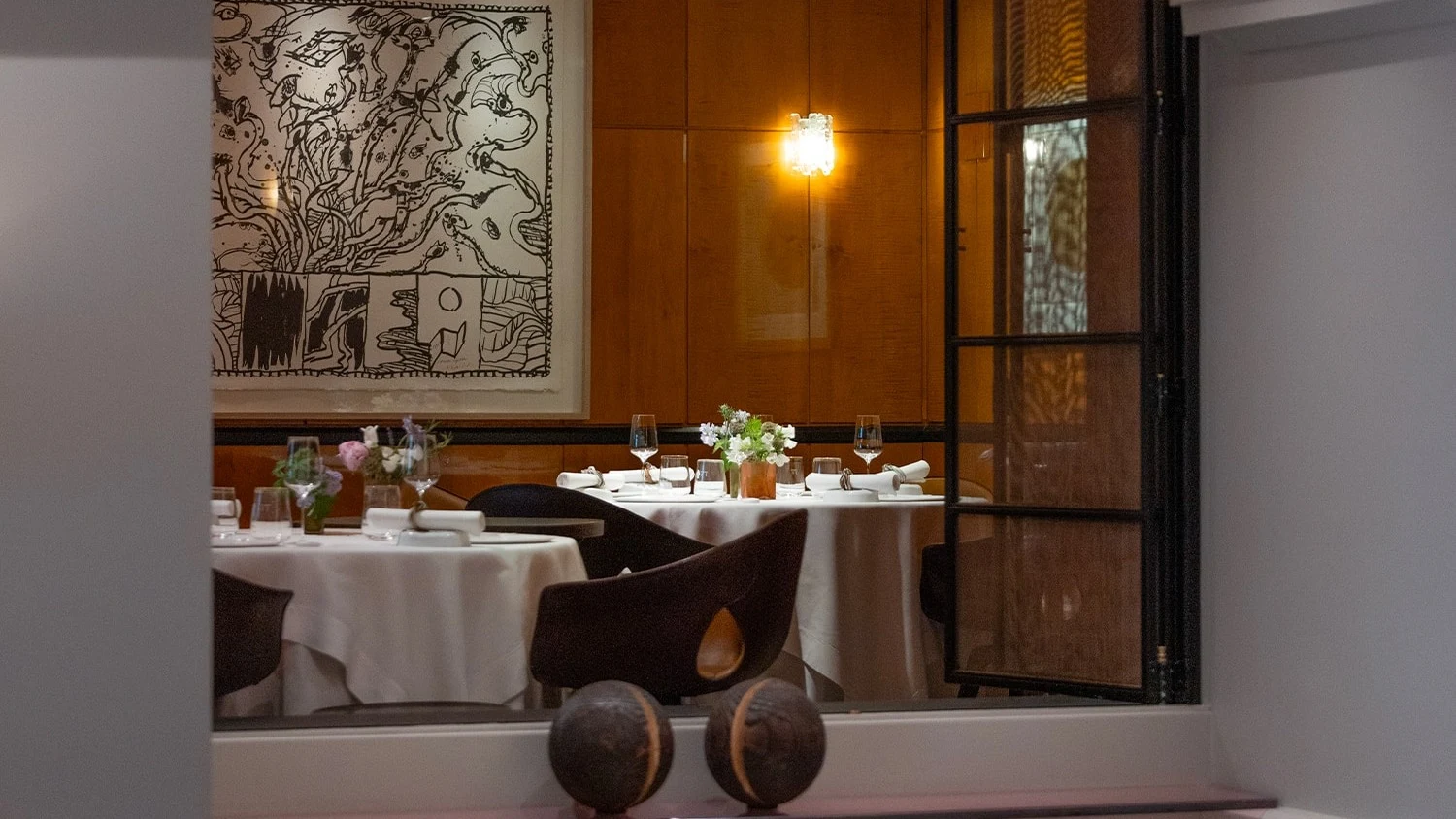
The room is small enough that the pass becomes part of the conversation. Lighted wine storage racks, copper accents, stone walls, and a skylight give the space polish without pushing the kitchen out of sight. The atmosphere is quiet, and that matters for this format. Guessing an ingredient after a course needs a table that can hear itself think.
Service stays formal in bearing, but the room is personal rather than sealed off. The open kitchen changes the scale of the evening: hands move at bench-side distance, plates leave the pass without theatre, and the counter keeps the work visible. For a restaurant built on surprise, Pierre Sang in Oberkampf is unusually direct. The close detail is often the one remembered, a slice of apple beside scallop, or kimchi carrying Wagyu beef into the next bite.
Questions
Frequently asked
What kind of restaurant is Pierre Sang in Oberkampf?
Pierre Sang in Oberkampf is a French-Korean fine dining restaurant in Paris's 11th arrondissement. The cooking brings French technique and Korean flavor together without dissolving either side.
What is the dining format here?
The signature format is a 6-course blind tasting menu. Guests taste before they are told what is on the plate, and the room has open kitchen views.
What dishes or combinations is the menu known for?
The blind menu may include scallops with apple, Wagyu beef with kimchi, and a truffle cheese course. Other plates mentioned in the kitchen's style include sesame with green beans, fennel with wasabi peas, and octopus ragout with vinaigrette and quinoa.
What are the opening hours?
The restaurant opens Monday to Friday from 12:00 PM to 2:30 PM and from 7:00 PM to 11:30 PM. On Saturday and Sunday, it opens from 12:00 PM to 3:00 PM and from 7:00 PM to 11:30 PM.
The field
How it compares
| Place | Cuisine | Notes | Awards |
|---|---|---|---|
| Pierre Sang in Oberkampf | French-Korean Fusion Fine Dining | 11th Arrondissement (Popincourt), $$$$ | · |
| Arpège | Vegetable-Focused French Fine Dining | Paris | Michelin 3 Stars, World's 50 Best |
| Epicure | Contemporary French Fine Dining | Paris | Michelin 3 Stars |
| Guy Savoy | Classic French Fine Dining | Paris | Michelin 2 Stars, World's 50 Best |
| Le Cinq | Modern French Fine Dining | Paris | Michelin 3 Stars, World's 50 Best |
| Le Taillevent | Classic and Modern French Fine Dining | Paris | Michelin 2 Stars, World's 50 Best |
| Pierre Gagnaire | Avant-Garde French Fine Dining | Paris | Michelin 3 Stars, World's 50 Best |
In residence
Similar places
Vegetable-Focused French Fine Dining
Arpège
Paris, France
★★★ · 50 Best
Contemporary French Fine Dining
Epicure
Paris, France
★★★
Classic French Fine Dining
Guy Savoy
Paris, France
★★ · 50 Best
Modern French Fine Dining
Le Cinq
Paris, France
★★★ · 50 Best
Classic and Modern French Fine Dining
Le Taillevent
Paris, France
★★ · 50 Best
Avant-Garde French Fine Dining
Pierre Gagnaire
Paris, France
★★★ · 50 Best
The Sunday letter
Get the next Made By story in your inbox.
We send one email every Sunday morning with the places and people we covered that week.
See a sample of the Sunday emailOne email a week. Unsubscribe from any issue.