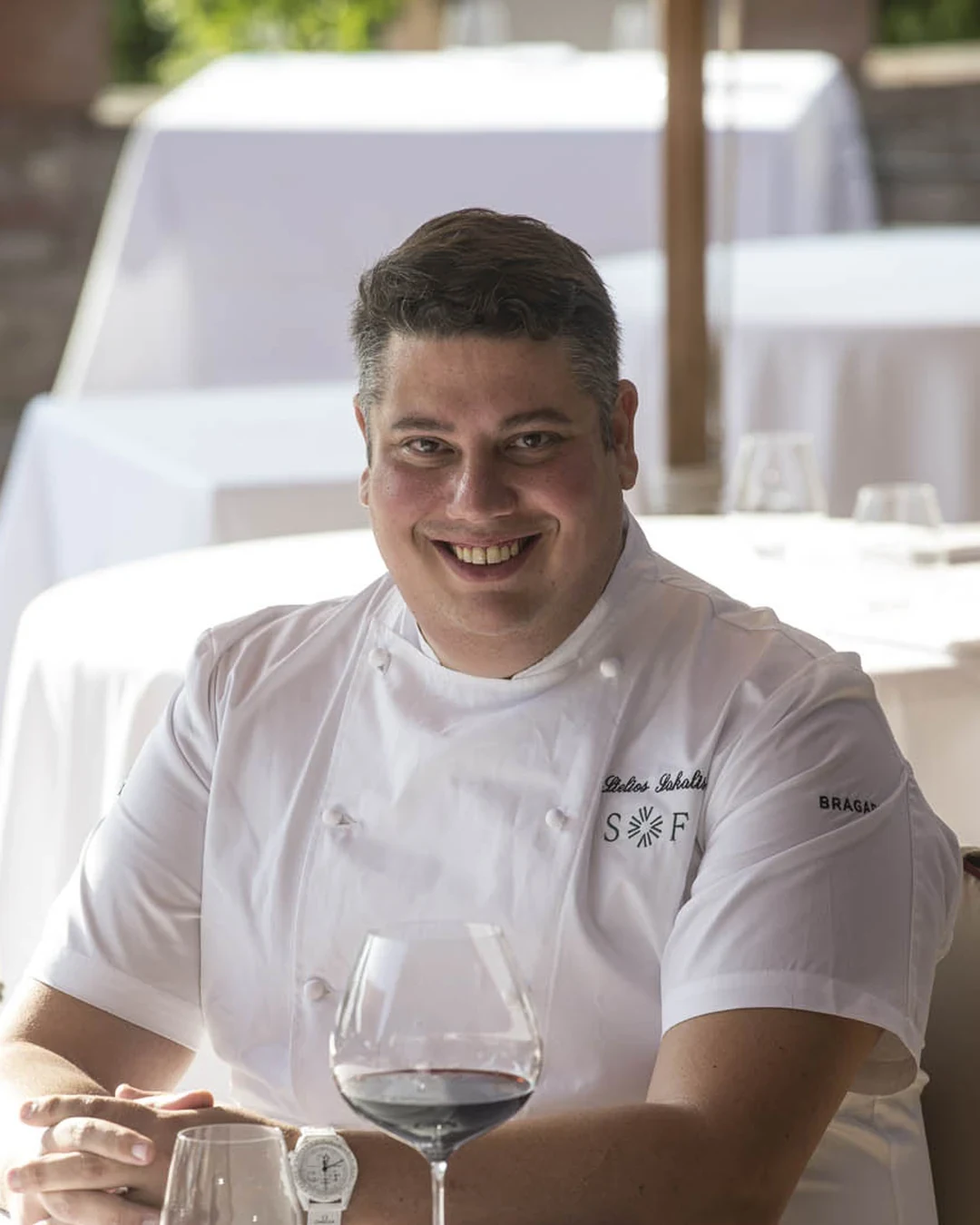
Sakalis Stelios cooks as chef at Poggio Rosso in Milan, giving Tuscan seasonality a Greek and Italian line.
- Opinionated About Dining Top Restaurants in Europe Recommended · 2026
Seasonality before the first cut
Seasonality sets the first cut for Sakalis Stelios, chef at Poggio Rosso in Milan, where the work is tied to the resort hamlet of San Felice near Castelnuovo Berardenga. His cooking begins with proximity: vegetables from l'Orto Felice, estate rhythms, and the human relationships behind an ultra-short supply chain. The plate does not lean on Tuscan scenery as decoration. It takes the place as material, then asks what the hand can do with it. Stelios describes the kitchen through a double inheritance: Greek essentiality, immediacy, and origin on one side; Italian method, structure, and technical precision on the other. That is the useful way to read the room. The cuisine is contemporary by vocation and Mediterranean by nature, but its discipline is not a style note. It is a way of deciding what stays on the plate. At Poggio Rosso, where the restaurant holds a Michelin Star reconfirmed for 2026, his station carries authorship without noise: season, memory, encounter, and a line clean enough to show its decisions.
A menu built from short distance
The program works close to its materials. Poggio Rosso draws on l'Orto Felice, the organic garden within San Felice, and that garden is also a social farming project involving young people with disabilities and elderly people. The Michelin Green Star attached to the restaurant belongs to that practice as much as to any finished dish. In the kitchen, the supply chain narrows until it becomes relationship: grower, garden, cook, guest. The menus move between tasting formats, including a plant-based path, and à la carte choices, but the deeper structure is Sakalis's method. Rice with grilled butter, sage, and cockscombs has been paired with the estate's Vigorello San Felice wine; zucchine à la grecque has appeared with fermented ricotta and alchermes. Those dishes carry the dual identity he names without turning it into a theme. Greek clarity gives the gesture its edge. Italian structure keeps the plate in order. The result is not fusion as ornament, but a kitchen using memory, acidity, fermentation, fat, and garden produce as working parts.
The room beside the hamlet
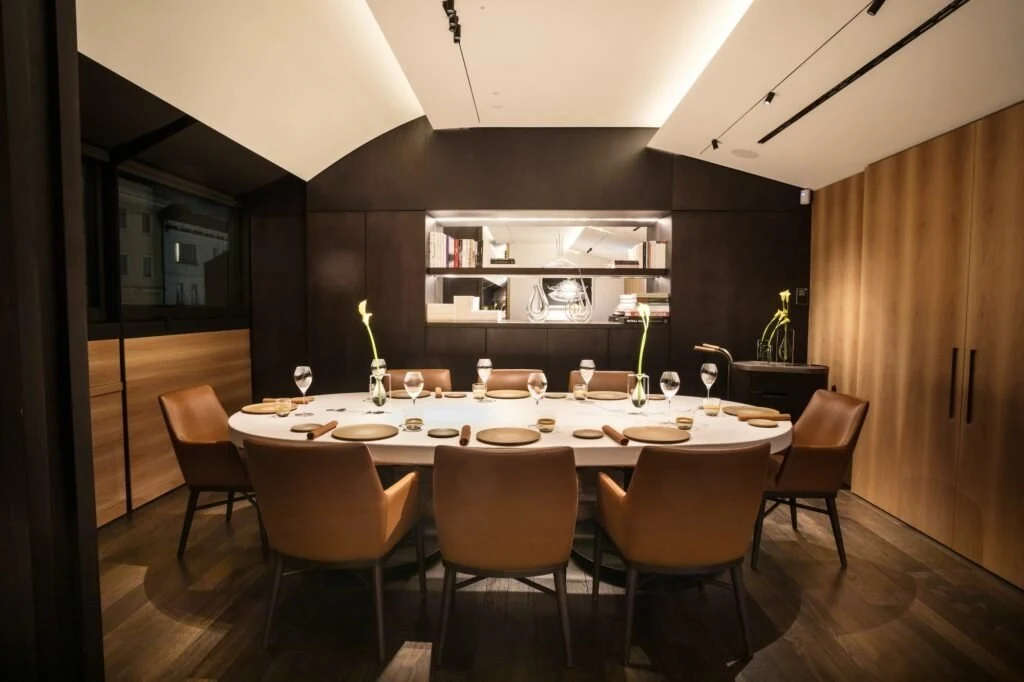
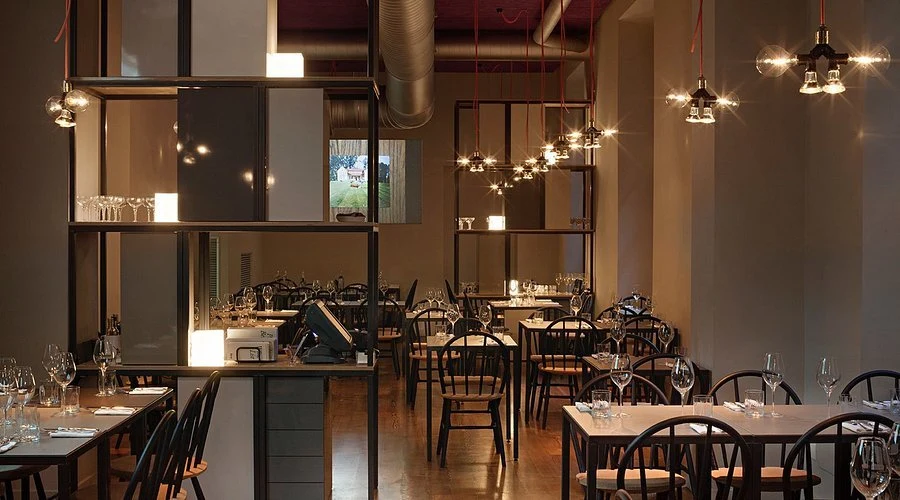
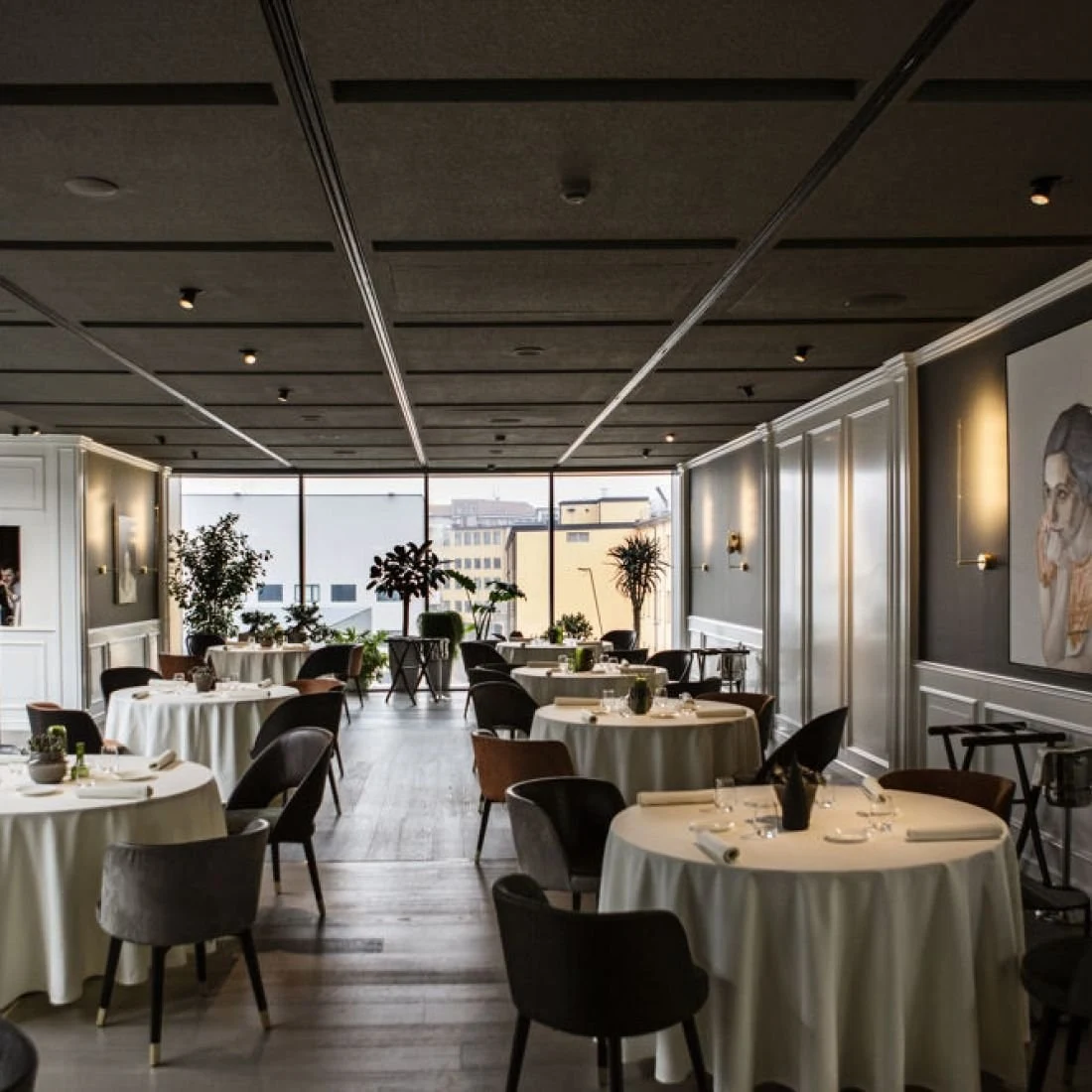
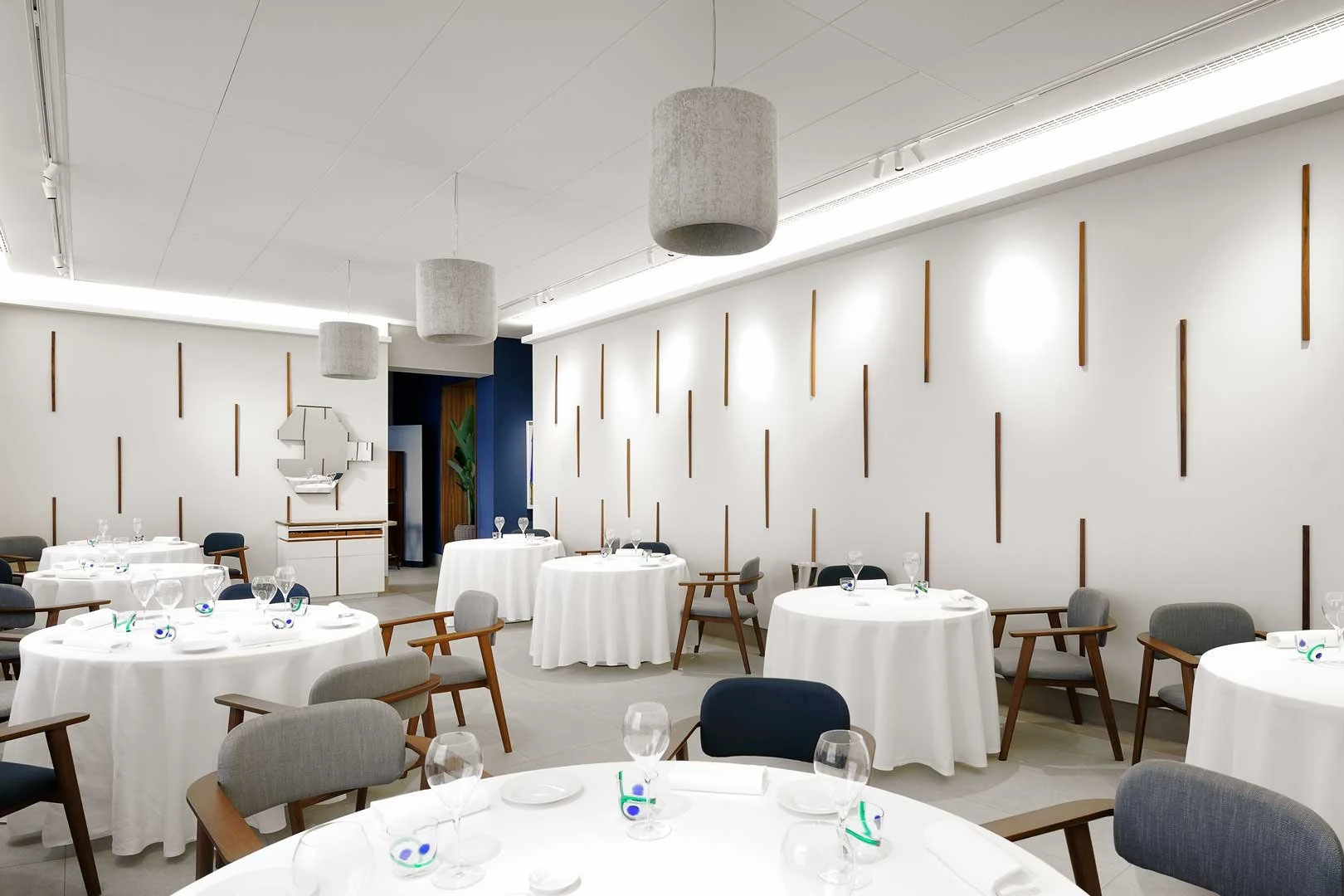
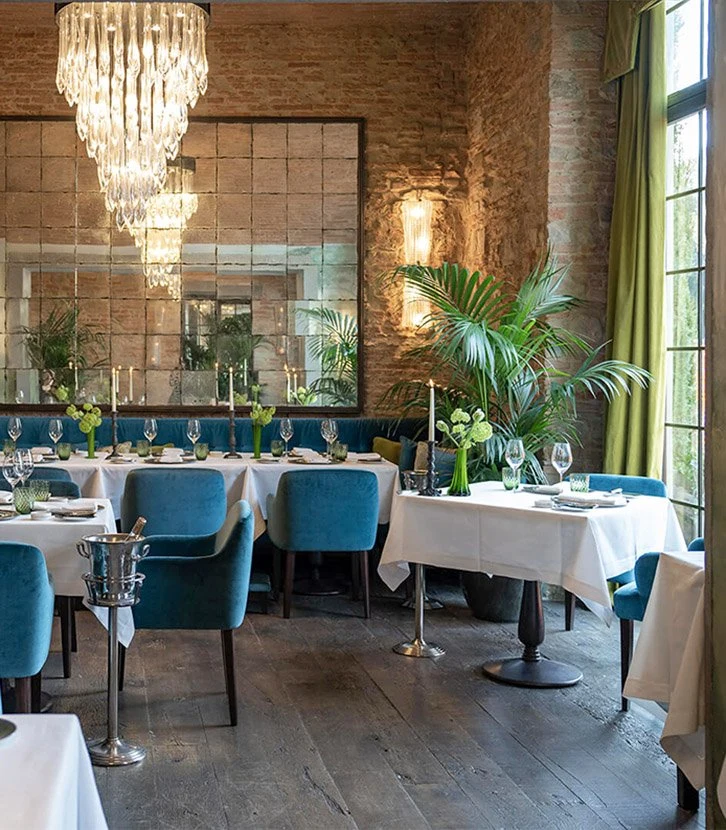
The room at Poggio Rosso sits within Borgo San Felice, a medieval hamlet in Chianti Classico that still reads as a working estate rather than a stage set. The restaurant setting is simple and elegant, with the terrace, garden, and surrounding views held close to the meal. Nothing in that atmosphere needs to be pressed into spectacle. The pass has enough to do. Plates move out of a kitchen whose reference points include the estate garden, the wine property around it, and the Mediterranean memory Sakalis brings to the bench. Service and cellar meet that line with restraint: the wine list matters here because the estate does, and because pairings such as Vigorello San Felice belong to the place rather than to a formula.
What remains on the plate
The reason to keep attention on Poggio Rosso is not the category it occupies, but the way its craft keeps returning to origin. Sakalis does not separate technique from supply, or memory from structure. He lets each menu hold a time, an encounter, and a season, then edits until the dish has form. If there is a next movement here, it will likely come through the same narrow channel: the garden, the cellar, and Sakalis's hand over scampi shabu shabu.
Questions
Frequently asked
Who is the chef at Poggio Rosso?
Sakalis Stelios is the chef at Poggio Rosso in Milan.
What kind of cooking does Poggio Rosso do?
The kitchen is contemporary and Mediterranean in outlook, with Greek essentiality and Italian method, structure, and technical precision shaping the menu.
What recognition does Poggio Rosso hold?
Poggio Rosso holds a Michelin Star, reconfirmed for 2026, and a Michelin Green Star linked to its work with l'Orto Felice.
What does the menu focus on?
The menu is built close to its materials, using vegetables from l'Orto Felice, estate rhythms, and a short supply chain, with tasting formats, a plant-based path, and à la carte choices.
The field
How it compares
| Place | Cuisine | Awards | Notes |
|---|---|---|---|
| Poggio Rosso | Modern Italian | · | · |
| Andrea Aprea | Modern Italian Fine Dining | Michelin 2 Stars | Milan |
| Dry Milano | Neapolitan Pizza & Cocktails | · | Milan |
| Enrico Bartolini | Modern Italian Fine Dining | Michelin 3 Stars, World's 50 Best | Milan |
| Il Luogo di Aimo e Nadia | Modern Italian Regional | · | Milan |
| Seta | Modern Italian Fine Dining | Michelin 2 Stars | Milan |
| Verso Capitaneo | Modern Italian Fine Dining | Michelin 2 Stars | Milan |
In residence
Similar places
Modern Italian Fine Dining
Andrea Aprea
Milan, Italy
★★
Neapolitan Pizza & Cocktails
Dry Milano
Milan, Italy
Modern Italian Fine Dining
Enrico Bartolini
Milan, Italy
★★★ · 50 Best
Modern Italian Regional
Il Luogo di Aimo e Nadia
Milan, Italy
Modern Italian Fine Dining
Seta
Milan, Italy
★★
Modern Italian Fine Dining
Verso Capitaneo
Milan, Italy
★★