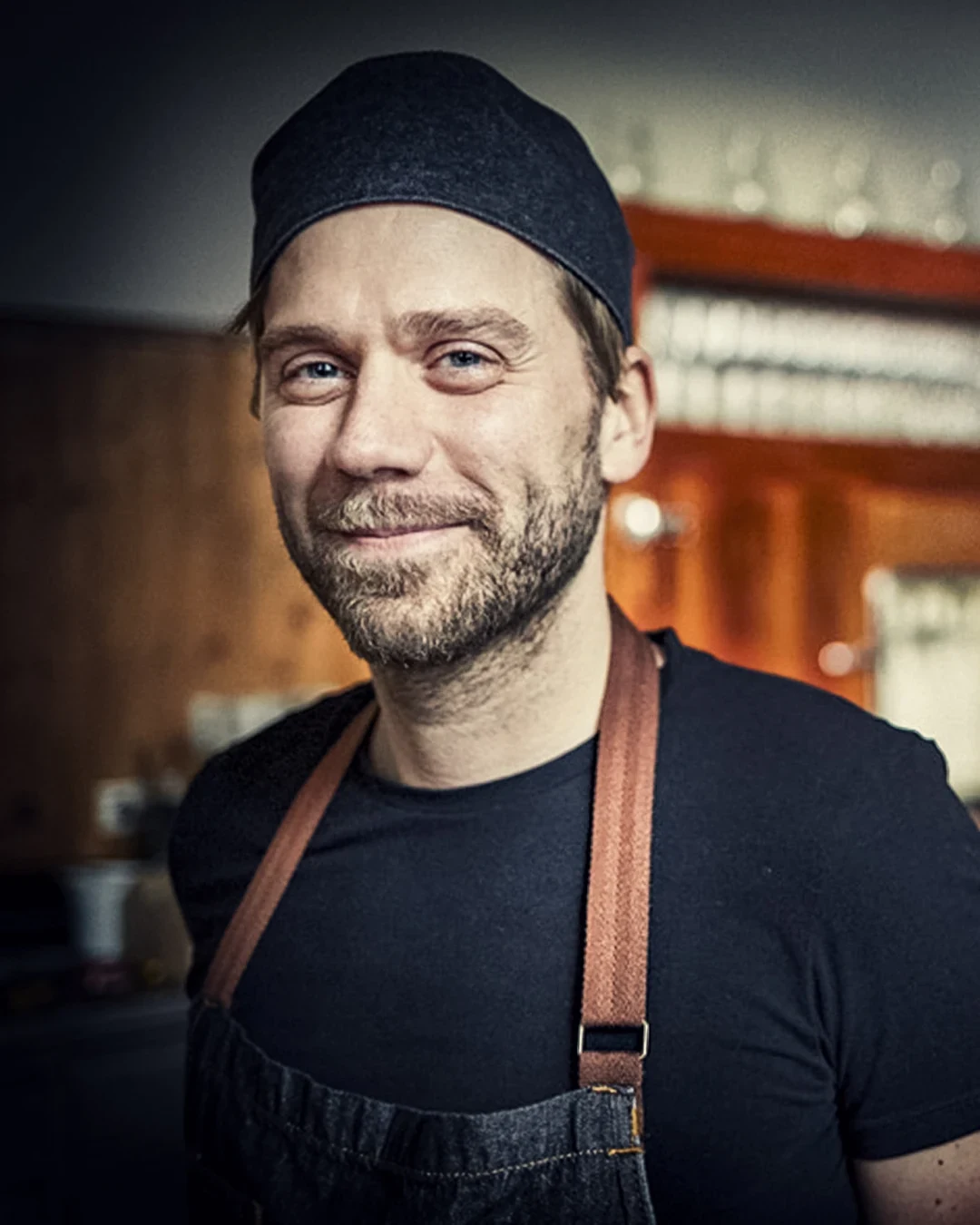
Wolfgang Zankl, chef at Pramerl and the Wolf in Vienna, cooks a seasonal menu shaped by calamari noodles and the market.
- Opinionated About Dining Top Restaurants in Europe Recommended · 2026
Calamari cut into the pasta line
Calamari becomes the noodle before Wolfgang Zankl, chef at Pramerl and the Wolf in Vienna, sends carbonara from the pass. The detail fits inside a forkful, yet gives the room its measure: technique shifting an expected dish without turning it into a demonstration. Zankl is Executive Chef here, working a menu that does not begin with an à la carte list. His kitchen builds from what is available now, “the treasures that Mother Nature is offering us right now.” The plate belongs to the day, not to a fixed sequence preserved for comfort.
No former roles are named by the restaurant in the material it shares about him, so the lineage here is held in the work rather than in a public roll call of mentors. What can be said plainly is that Zankl’s tenure at this address is current, and that the method asks the chef to keep revising the menu against season, supplier and appetite. At Pramergasse 21, in Vienna’s Alsergrund, that discipline lands in a former pub rather than a grand dining room. The craft stays close to the table.
A tasting menu without the à la carte escape
The kitchen’s clearest rule is refusal: no à la carte menu, no separate track of signatures detached from the season. Pramerl and the Wolf works as a surprise tasting menu, with vegetables often allowed to take the centre of the plate and Austrian produce brought into sharper contrast by contemporary technique. Zankl’s calamari carbonara explains the register better than a label can. The “noodles” are made of calamari; a past version joined that cut with smoked eel and Parmesan, keeping the shape of carbonara while moving its starch, fat and smoke into another register.
That kind of substitution only holds if the bench respects texture. Calamari must read as strand, not garnish. Eel must season without flattening the dish. Parmesan has to carry memory without turning the plate back into pasta. The restaurant’s single Michelin star belongs to this house, and the award is less useful as decoration than as a public marker of the kitchen’s standard. More telling at the pass is the discipline of a menu that changes with availability, where each course has to earn its place without the fallback of a familiar order.
Drawers, candlelight and the former pub
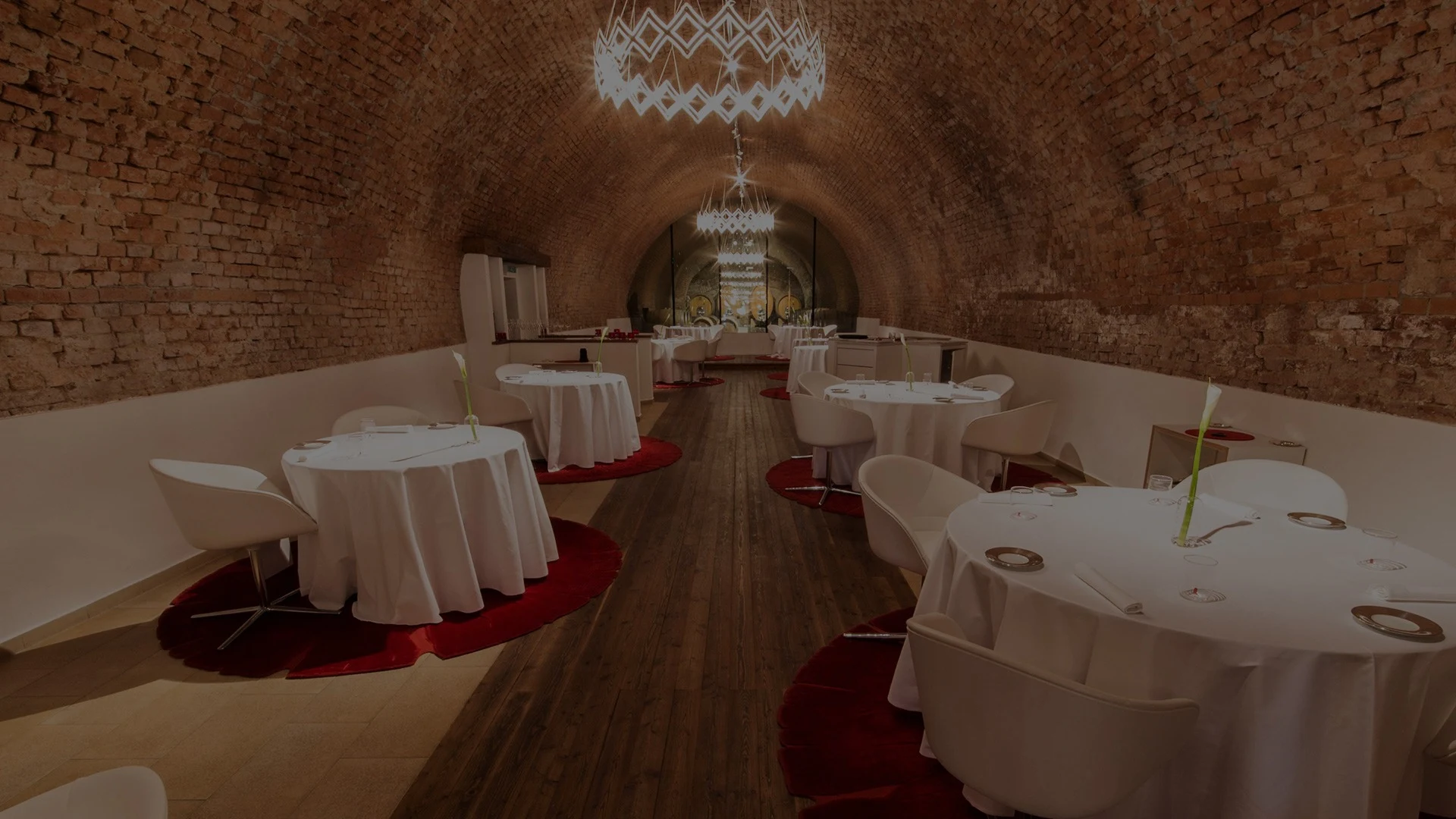
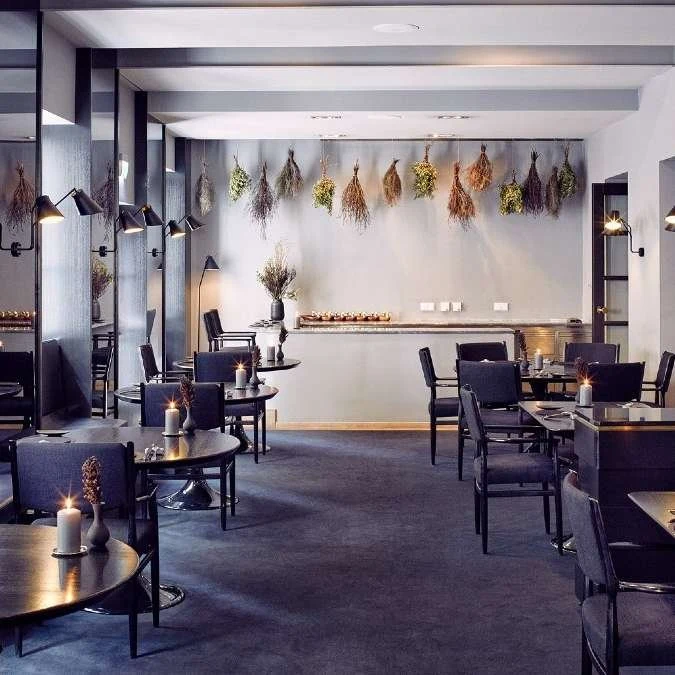
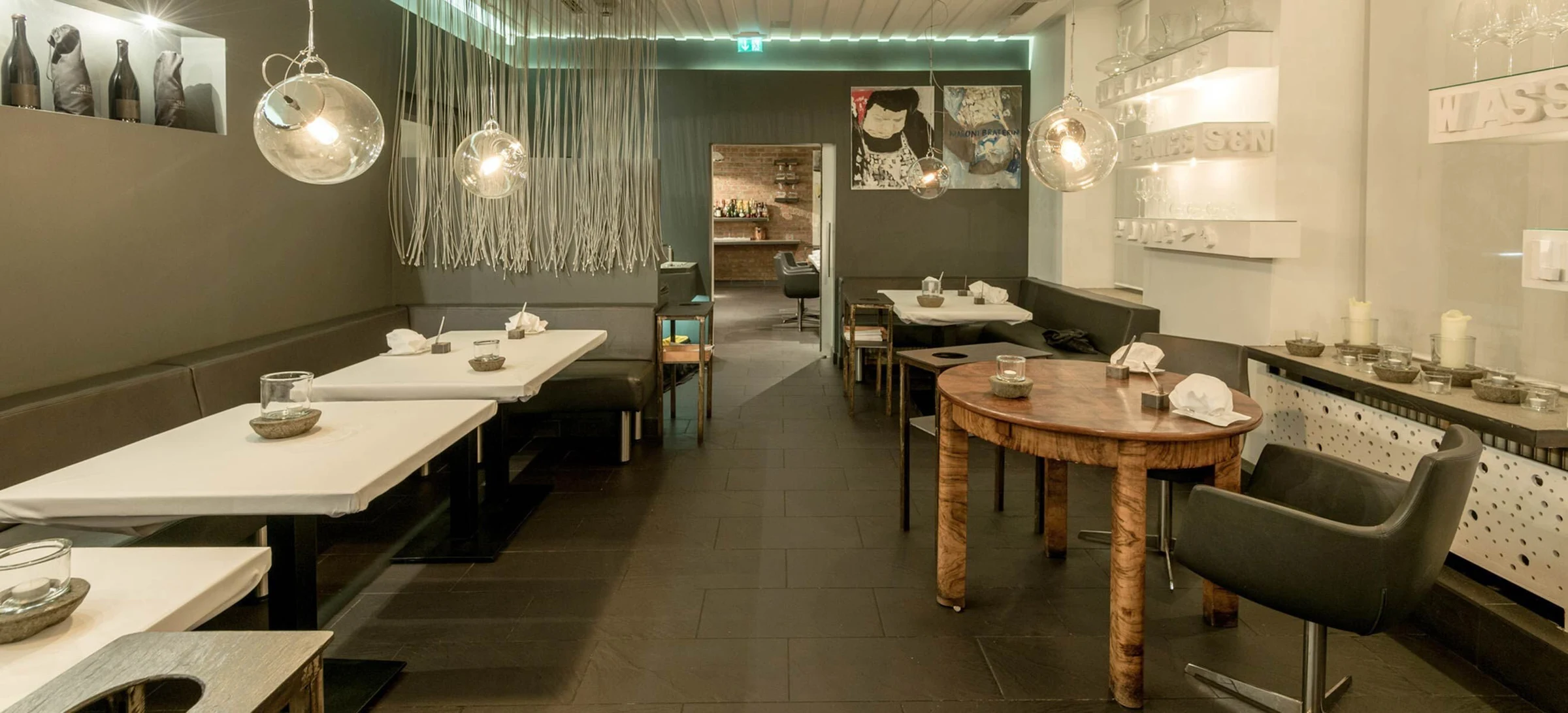
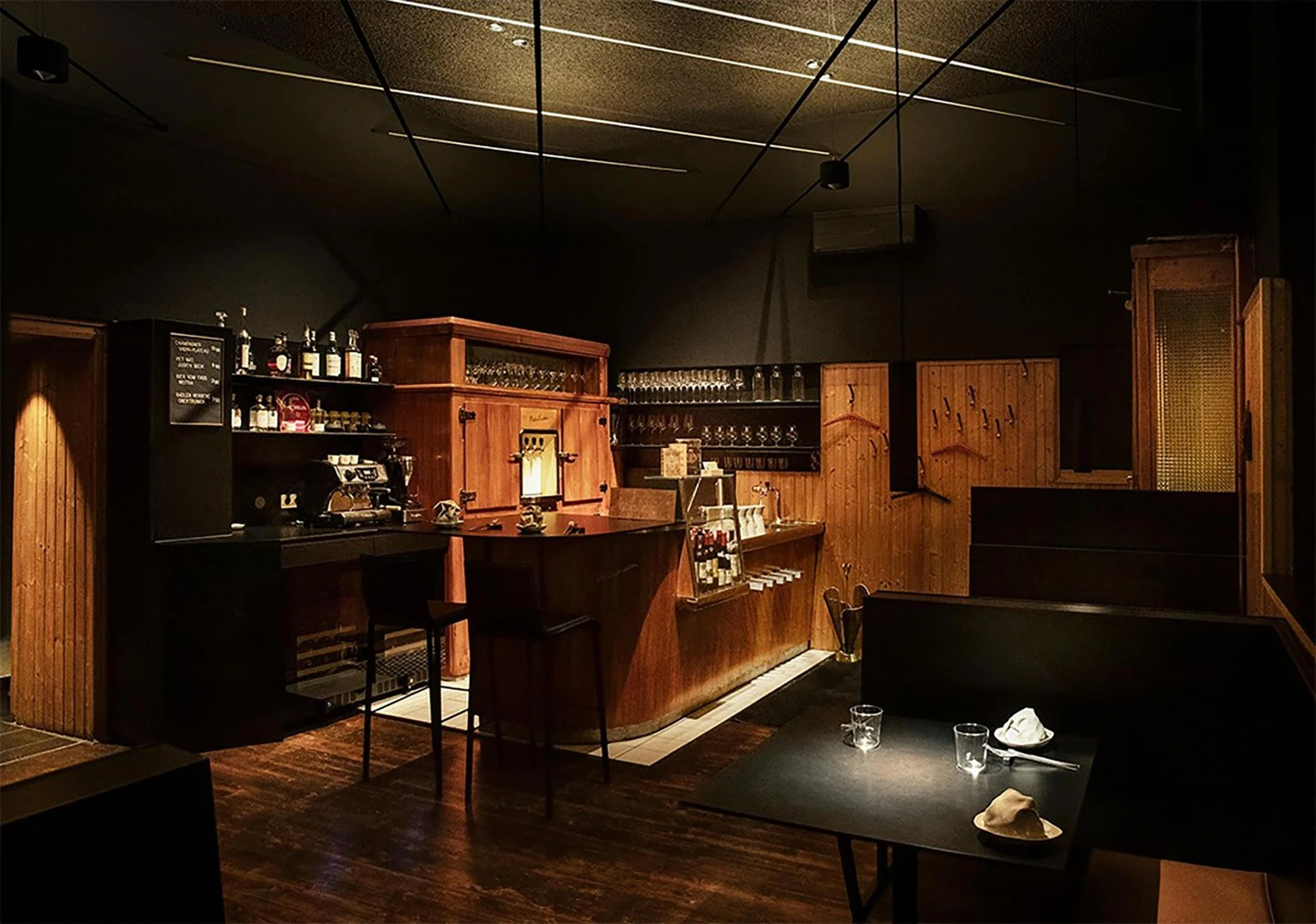
The room keeps its scale low. Warm wood, candlelight and a pared-back former-pub setting hold the evening close, with the counterpoint coming from the plate rather than the architecture. Guests take their own silverware from a table drawer, a small act that changes the rhythm of service. It places the hand in the meal before the next course arrives. The gesture is informal, but not careless; it makes the table feel worked rather than staged.
Service moves conversationally, and the pacing gives the kitchen room to let contrasts arrive without hurry. In a small dining room, that matters. A surprise menu can become theatre if the room insists on explaining itself too loudly. Here, the better moments stay bench-side: the cut of calamari, the smoke of eel, the vegetable held long enough to become the centre of a course. The house also offers wine pairings and alcohol-free pairings, but the lasting impression is not the pairing format. It is the way Zankl’s kitchen keeps returning to the same question: what does the season allow today?
The dish that gives the room its measure
There is no need to make Pramerl and the Wolf sound larger than it is. Its force comes from compression: a handful of tables, a menu without à la carte escape, a chef willing to let one ingredient stand in for another only when the texture survives the idea. It ends on the fork. At this address, the room is best understood through Wolfgang Zankl’s Calamari Carbonara.
Questions
Frequently asked
What kind of restaurant is Pramerl and the Wolf?
Pramerl and the Wolf is a restaurant in Vienna that works as a surprise tasting menu rather than offering à la carte dining. The kitchen builds the menu from what is available in season, with vegetables often at the centre of the plate and Austrian produce used with contemporary technique.
What is the restaurant known for?
The house is known for dishes that shift familiar forms without losing their structure, including Wolfgang Zankl’s calamari carbonara, where calamari is cut into the pasta line and used in place of noodles. The restaurant also works with seasonal surprises rather than a fixed list of signatures.
Does Pramerl and the Wolf have Michelin recognition?
Pramerl and the Wolf has one Michelin star.
What is the dining room like?
The restaurant is set in a former pub in Vienna’s Alsergrund, at Pramergasse 21. The room is low-key, with warm wood and candlelight, and guests take their own silverware from a table drawer.
The field
How it compares
| Place | Cuisine | Awards | Notes |
|---|---|---|---|
| Pramerl and the Wolf | Austrian - Wine Bar | · | · |
| Amador | Avant-Garde European Fine Dining | Michelin 3 Stars | Vienna |
| Konstantin Filippou | Modern Fish-Led Fine Dining | Michelin 2 Stars | Vienna |
| Mraz & Sohn | Contemporary Austrian Fusion | Michelin 2 Stars | Vienna |
| Silvio Nickol Gourmet Restaurant | Modern Austrian Fine Dining | Michelin 2 Stars | Vienna |
| Steirereck im Stadtpark | Modern Austrian Fine Dining | Michelin 3 Stars, World's 50 Best | Vienna |
| TIAN | Modern Vegetarian Fine Dining | Michelin 1 Star | Vienna |
In residence
Similar places
Avant-Garde European Fine Dining
Amador
Vienna, Austria
★★★
Modern Fish-Led Fine Dining
Konstantin Filippou
Vienna, Austria
★★
Contemporary Austrian Fusion
Mraz & Sohn
Vienna, Austria
★★
Modern Austrian Fine Dining
Silvio Nickol Gourmet Restaurant
Vienna, Austria
★★
Modern Austrian Fine Dining
Steirereck im Stadtpark
Vienna, Austria
★★★ · 50 Best
Modern Vegetarian Fine Dining
TIAN
Vienna, Austria
★