Primo Passo
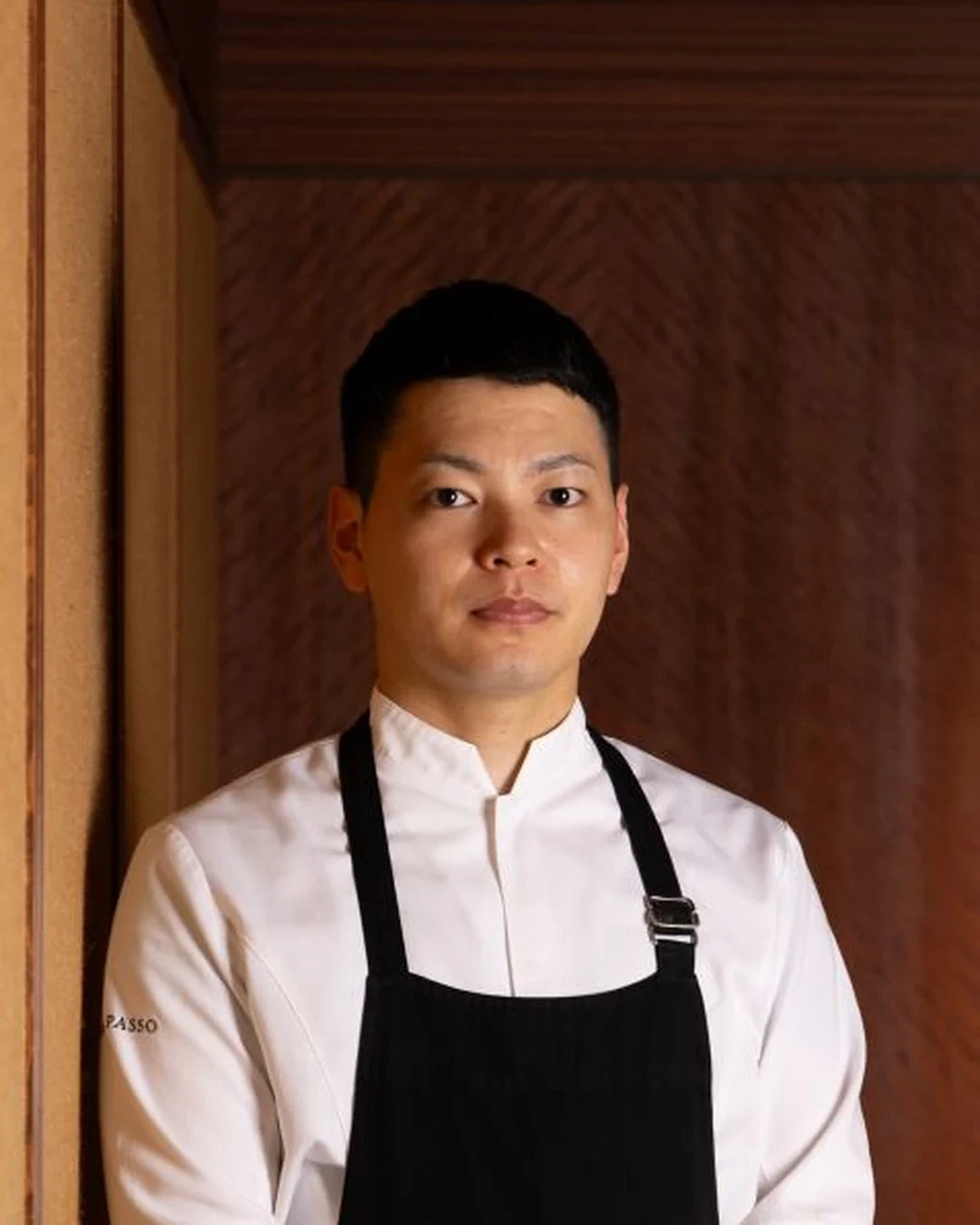
In Residence
Tomoyuki Fujioka
Chef
- 01CuisineModern Italian with Japanese Ingredients
- 02CityTokyo, Japan
- 03RecognitionOne Michelin Star
- 1 Michelin Star · Michelin Guide
- Michelin 1 Star · 2026
- Tabelog Bronze #350: 4.1pts · 2026
- Tabelog 100 #70: 4.1pts · 2025
- Opinionated About Dining Top Restaurants in Japan Ranked #475 · 2025
Tokyo's Italian Crossover: Where Naples Meets Tsukiji
Primo Passo is a one-star restaurant in Tokyo's Tsukiji district serving modern Italian with Japanese ingredients at about ¥20,000 to ¥29,999 per person. When Primo Passo opened on 1 May 2023 in the basement of the ACN Tsukiji Building, it entered a Tokyo Italian scene that had already spent two decades absorbing Japanese technique. The category has matured considerably since the early wave of Roppongi and Shibuya dining rooms that treated Italy as a prestige signal rather than a culinary framework. The more consequential addresses that emerged through the 2010s, and the tier that Primo Passo now occupies, treat the dialogue between Italian tradition and Japanese ingredient culture as the actual content of the cooking, not decoration around it.
That conversation runs deep at this address. Chef Tomoyuki Fujioka spent years at Quattro Passi in Naples, one of the Amalfi Coast's most recognised fine dining establishments, before returning to Japan to open his own room. The kitchen he runs here is shaped by that background in Campanian technique, but the produce list and flavour architecture are firmly rooted in Japan: dashi appears as a structural element rather than a cameo, and locally sourced fish drives the savory courses. The Tabelog listing flags a particular focus on fish, which, given the restaurant's proximity to Tsukiji Market, is a geographic logic as much as a culinary one.
The Sunday letter
Find new places through the people who run them.
Our Sunday email brings you the chefs, winemakers and hoteliers behind our newest stories. See a sample before you subscribe.
See a sample of the Sunday emailOne email a week. Unsubscribe from any issue.
A Pasta-Centred Format in a Counter City
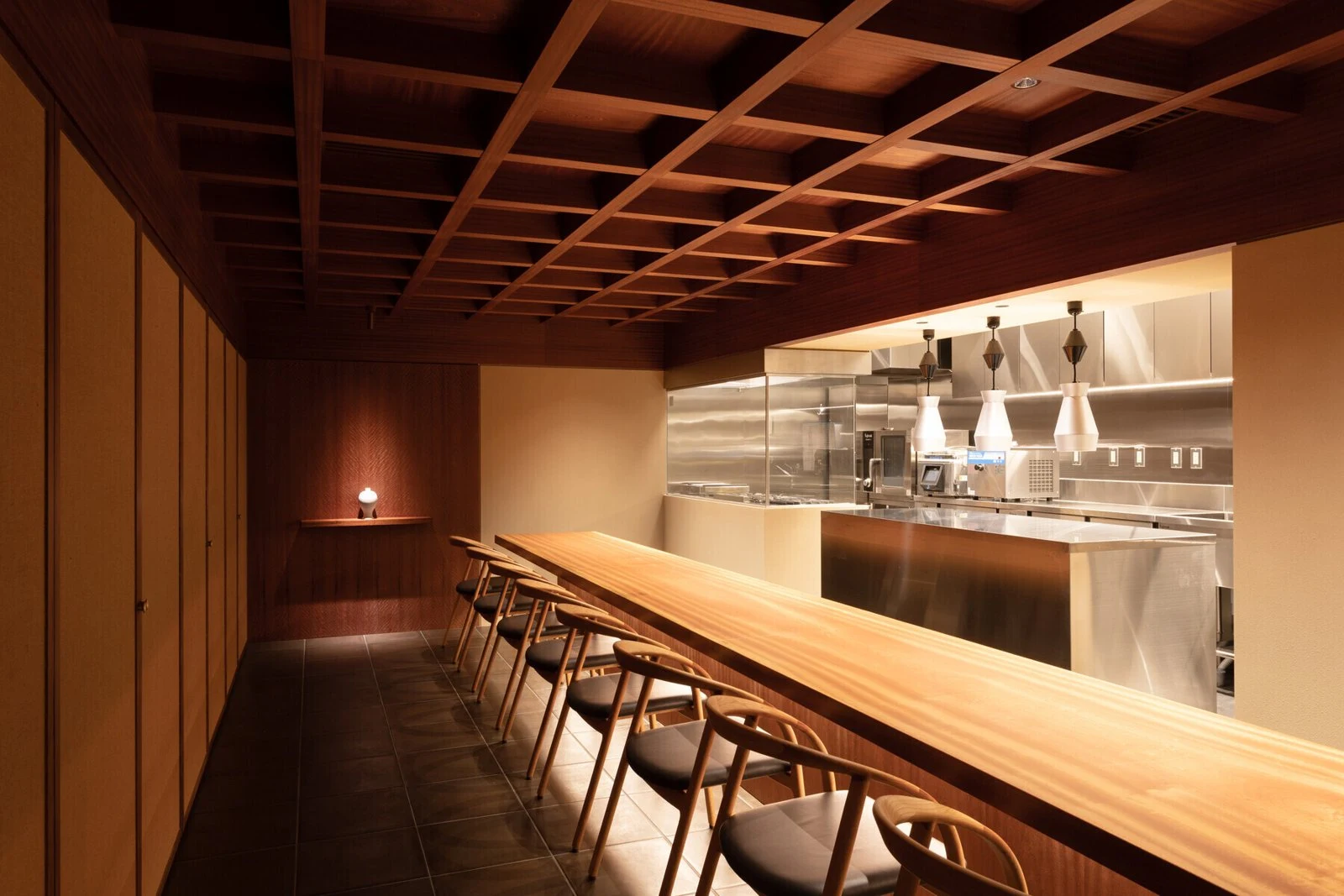
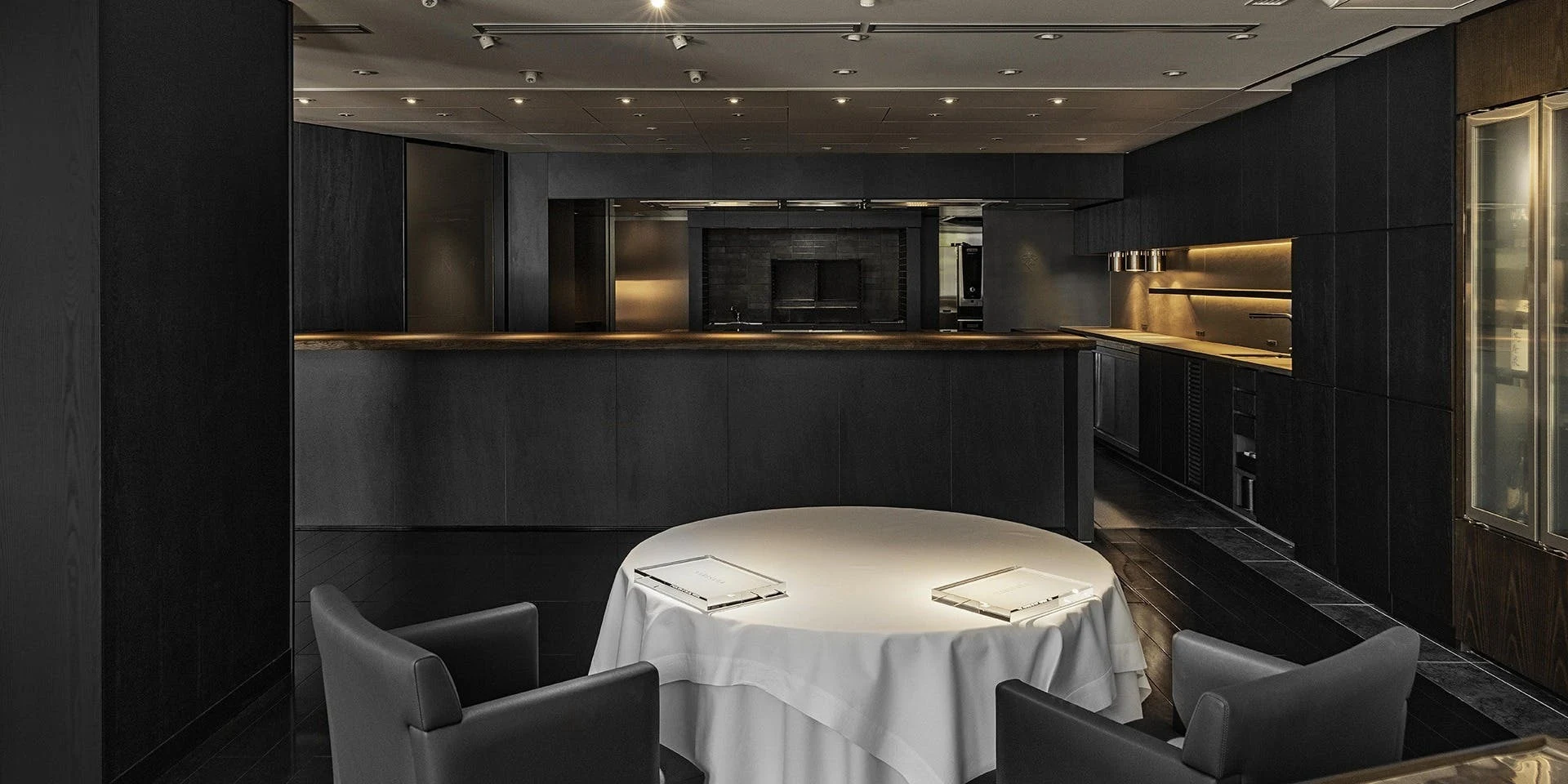
Tokyo has an established grammar for small counter restaurants. Omakase sushi, kaiseki, and tasting-menu kaiseki-influenced French have all normalised the format: intimate room, sequential courses, chef in direct line of sight. Primo Passo applies the same grammar to Italian pasta, which remains a relative rarity at this price point in the city. The room runs to 14 seats total, eight at the counter and six across the private room. That capacity profile places it in a similar bracket to Tokyo's more controlled omakase counters, where the size of the room is itself a statement about price and focus.
The decision to centre the menu on pasta as a primary art form rather than as a course within a broader Italian structure is a deliberate one. In Japan, itamae culture, the idea of a craftsperson developing one discipline to a high level of refinement, maps onto pasta in a way that feels culturally coherent. The several small pasta dishes that appear across the meal allow Fujioka to range across flavour profiles and technique within a single category, something that is harder to achieve if pasta is only one station in a longer sequence of proteins and vegetables.
Awards and Competitive Position
Primo Passo earned a 2026 Michelin One Star less than three years after opening. The Tabelog score sits at 4.10, and the restaurant holds both a Tabelog Award 2026 Bronze and a place on the Tabelog Italian TOKYO 100 for 2025. On Opinionated About Dining's 2025 Japan ranking, it appears at position 475, which places it in the broader field of serious independent restaurants across the country rather than only in the Italian subcategory.
Within the Tokyo Italian peer group, the competitive set is meaningful. Aroma Fresca has held three Michelin stars and defined the upper end of Italian dining in the city for years. Gucci Osteria da Massimo Bottura Tokyo occupies a different position as a brand-affiliated international outpost. Principio and AlCeppo represent other points on the Italian fine dining map. PRISMA approaches the Italy-Japan intersection from a different angle. Primo Passo's positioning, a single-star room with a pasta-centric format and a clear Campanian-Japanese identity, occupies a distinct lane within this group.
The dinner price range of JPY 20,000 to JPY 29,999 fits the restaurant's price tier. A 10% service charge applies on top of the menu price, and the restaurant accepts JCB, AMEX, and Diners cards. Electronic money and QR code payments are not accepted.
The Room and Its Signals
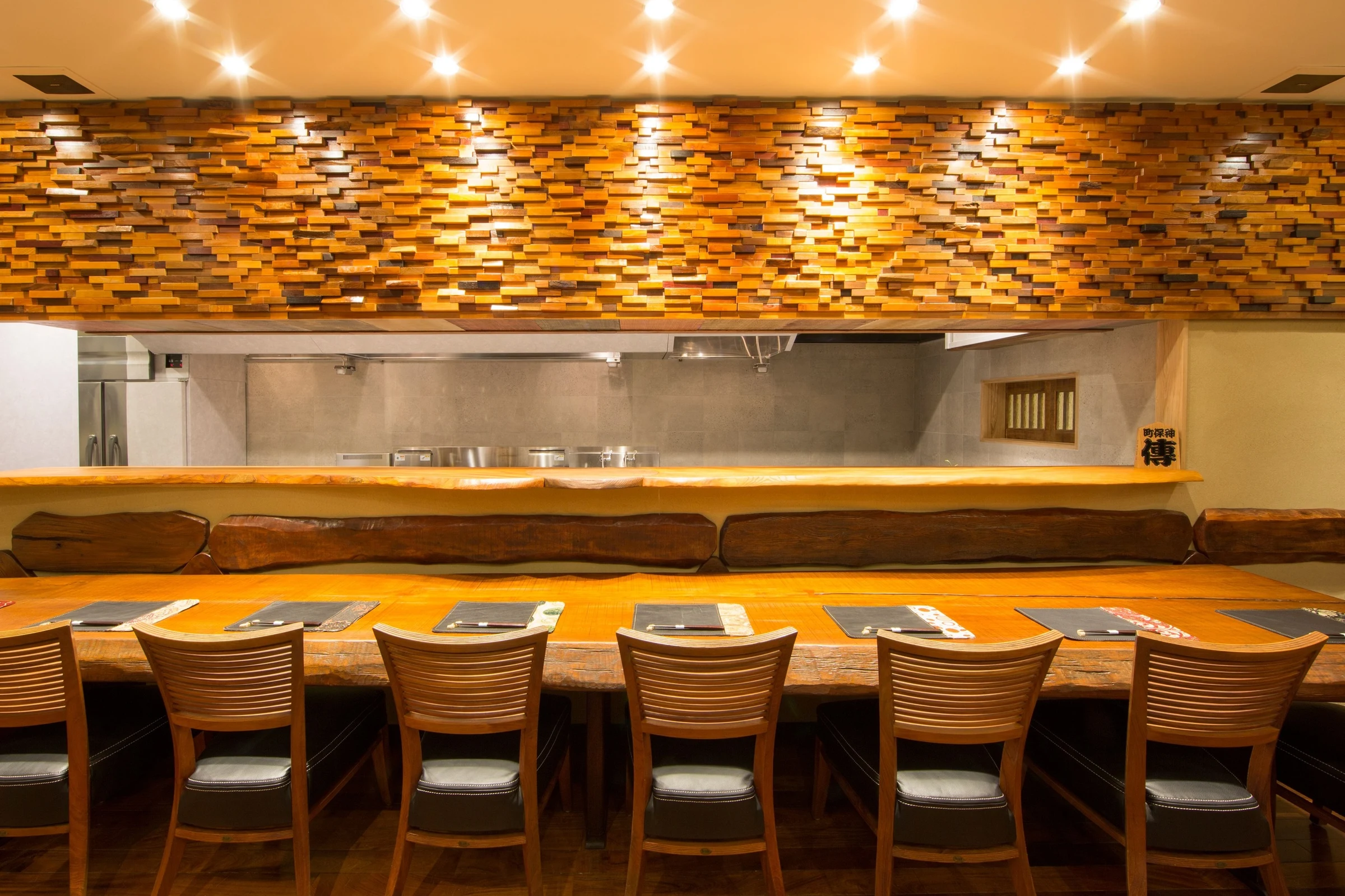
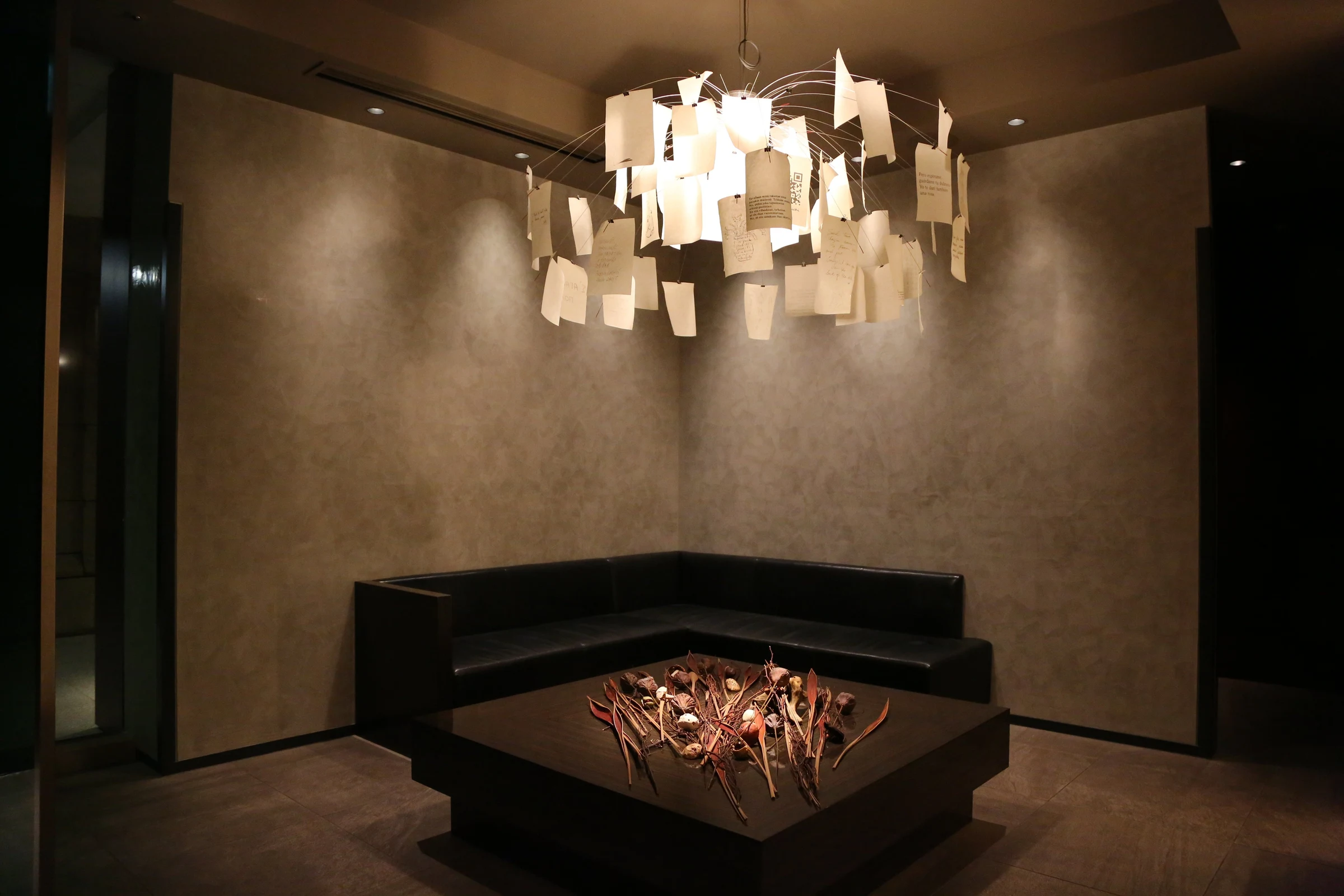
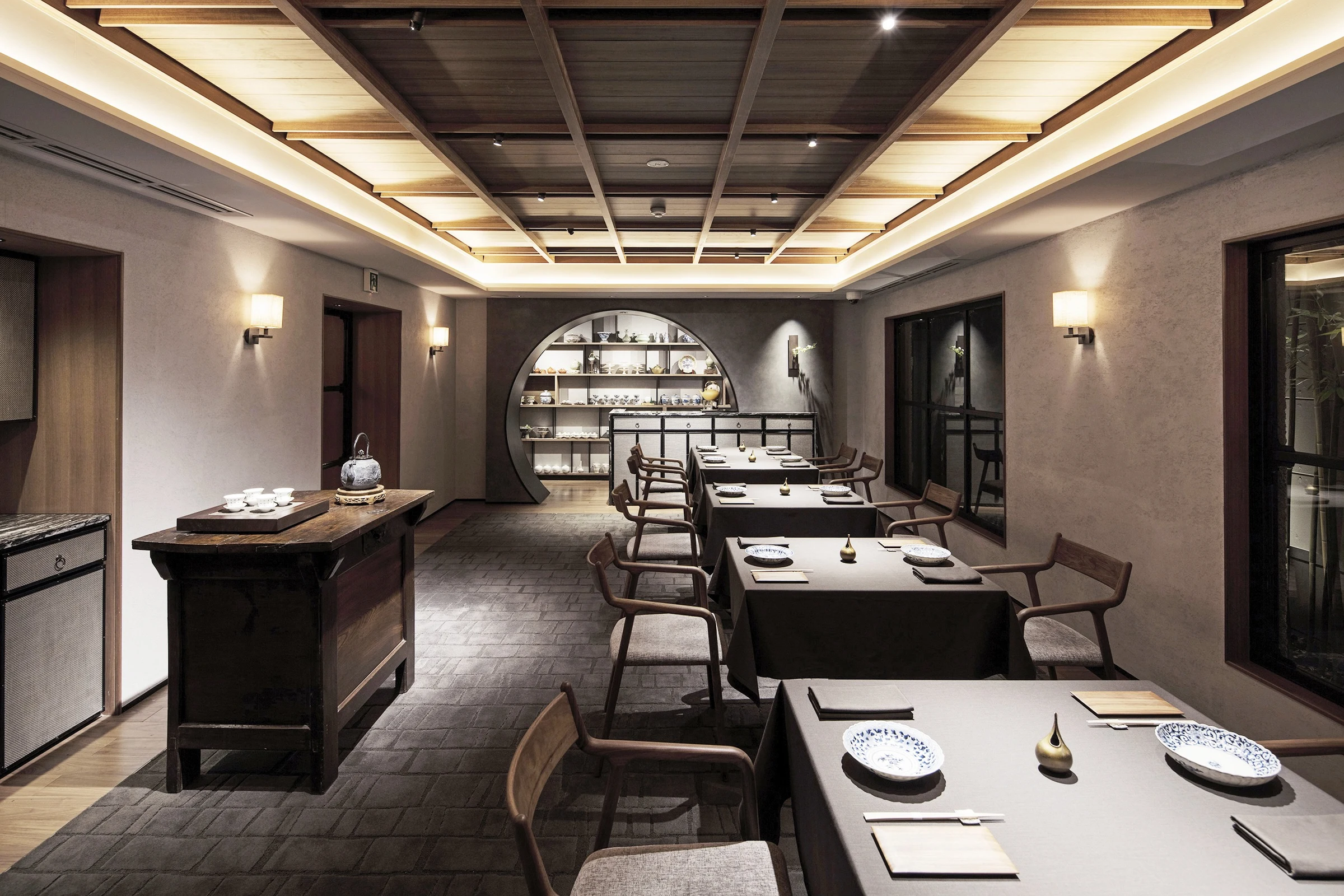
The space occupies a basement floor, a format that Tokyo dining has long associated with concentration and intimacy rather than visibility. The interior carries Japanese design references: a coffered ceiling, mud walls, and a vertically written menu align the room with the ryotei and kappo tradition of considered spatial language. These are not decorative choices made at random. They signal that the experience is calibrated as much for Japanese sensibility as for Italian content, which is consistent with the broader approach in the kitchen.
A sommelier is on site, and the drinks program carries both wine and sake, with the Tabelog listing noting a particular focus on nihonshu alongside the wine list. BYO is permitted. Private rooms accommodate parties of two, four, or six, and the space can be reserved for private use for groups up to 20. The Tabelog listing identifies the restaurant as particularly suited to business occasions, which reflects the neighbourhood: Shintomicho and the surrounding Chuo Ward host a significant concentration of corporate entertaining activity.
Getting There and Planning Your Visit
The restaurant operates Monday, Thursday through Sunday from 17:00, with two seatings per evening. Tuesday and Wednesday are closed. The address is accessible via Tokyo Metro Yurakucho Line from Shintomicho Station (Exit 1, approximately two minutes on foot), Tokyo Metro Hibiya Line from Tsukiji Station (Exit 4, approximately four minutes), or Toei Asakusa Line from Higashi-Ginza Station (Exit A7, approximately six minutes). No parking is available on site.
Reservations are required.
| Venue | Cuisine | Seats | Dinner Price (JPY) | Michelin |
|---|---|---|---|---|
| Primo Passo | Italian / Creative | 14 | 20,000 to 29,999 | 1 Star (2026) |
| Aroma Fresca | Italian | Not listed | Higher tier | 3 Stars |
| PRISMA | Italian / Japanese | Not listed | Not listed | Not listed |
| Principio | Italian | Not listed | Not listed | Not listed |
Italian Fine Dining Across Japan
Tokyo holds the highest concentration of starred Italian restaurants in Japan, but the category has developed with some depth in other cities. cenci in Kyoto approaches Italian technique through a Kyoto ingredient lens, while akordu in Nara applies a European framework to produce from the Yamato region. For readers building a broader Japan itinerary, HAJIME in Osaka, Gion Sasaki in Kyoto, Goh in Fukuoka, 1000 in Yokohama, and 6 in Okinawa represent the range of serious independent dining across the country. Beyond Japan, 8 1/2 Otto e Mezzo Bombana in Hong Kong represents another version of Italian fine dining adapted for an Asian metropolitan context.
Questions
Frequently asked
What recognition does Primo Passo hold?
Primo Passo holds 1 Michelin star.
Who works at Primo Passo?
Made By profiles Tomoyuki Fujioka (Chef) at Primo Passo.
How expensive is Primo Passo?
Primo Passo is listed at a price level of $$$$.
Where is Primo Passo and what does it serve?
Primo Passo is in Chūō, Tokyo, serving Modern Italian with Japanese Ingredients.
The field
How it compares
| Place | Awards | Cuisine | Notes |
|---|---|---|---|
| Primo Passo | Michelin 1 Star | Modern Italian with Japanese Ingredients | Chūō, $$$$ |
| Den | Michelin 2 Stars, World's 50 Best | Modern Japanese Kaiseki | Tokyo |
| Florilège | Michelin 2 Stars, World's 50 Best | Modern French-Japanese Plant-Based Fine Dining | Tokyo |
| Narisawa | Michelin 2 Stars, World's 50 Best | Modern Japanese Satoyama Fine Dining | Tokyo |
| Quintessence | Michelin 3 Stars | Modern French Fine Dining | Tokyo |
| Sazenka | Michelin 3 Stars, World's 50 Best | Modern Chinese Fine Dining | Tokyo |
| Sézanne | Michelin 3 Stars, World's 50 Best | Modern French Fine Dining | Tokyo |
In residence
Similar places
Modern Japanese Kaiseki
Den
Tokyo, Japan
★★ · 50 Best
Modern French-Japanese Plant-Based Fine Dining
Florilège
Tokyo, Japan
★★ · 50 Best
Modern Japanese Satoyama Fine Dining
Narisawa
Tokyo, Japan
★★ · 50 Best
Modern French Fine Dining
Quintessence
Tokyo, Japan
★★★
Modern Chinese Fine Dining
Sazenka
Tokyo, Japan
★★★ · 50 Best
Modern French Fine Dining
Sézanne
Tokyo, Japan
★★★ · 50 Best
The Sunday letter
Get the next Made By story in your inbox.
We send one email every Sunday morning with the places and people we covered that week.
See a sample of the Sunday emailOne email a week. Unsubscribe from any issue.