Provenance

In Residence
Abigail Dahan
Pastry Chef
- 01CuisineModern French-Korean Fine Dining
- 02CityPhiladelphia, United States
- 03RecognitionOne Michelin Star
- 1 Michelin Star · Michelin Guide
- James Beard Winner · James Beard Foundation
- Wine Spectator · Tier 1
- Wine Spectator Award of Excellence · 2026
- Michelin 1 Star · 2025
- James Beard Award Semi Finalist · 2025
- Bon Appétit The 20 Best New Restaurants #5 · 2025
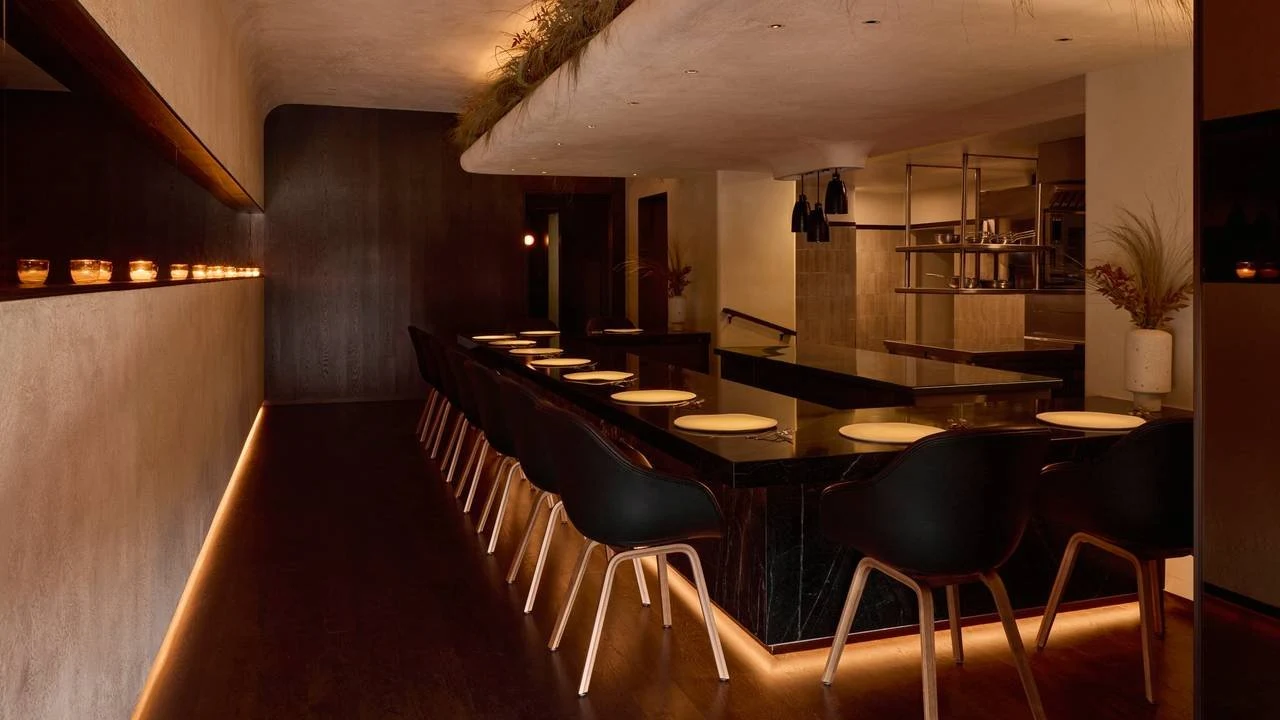
Counter Performance in Queen Village
Philadelphia's tasting-menu scene has quietly expanded beyond the downtown hotel dining rooms and Society Hill institutions that once defined the city's fine-dining ceiling. A younger cohort of counter-format restaurants now operates in residential neighborhoods, where the physical intimacy of the space becomes part of the proposition. Provenance, at 408 S 2nd St in Queen Village, belongs to that cohort: a historic row house converted into an open kitchen counter where the cooking happens in full view and the distance between guest and brigade is measured in feet, not corridors.
That architectural choice is editorial in itself. Counter dining at this level, whether at Lazy Bear in San Francisco or Atomix in New York City, places the kitchen's decision-making on display. There is nowhere to hide a clumsy pass or a broken sauce. The format demands consistency, and Provenance's Michelin recognition confirms the kitchen delivers it.
The Sunday letter
Find new places through the people who run them.
Our Sunday email brings you the chefs, winemakers and hoteliers behind our newest stories. See a sample before you subscribe.
See a sample of the Sunday emailOne email a week. Unsubscribe from any issue.
The Cuisine: French Bones, Korean Texture
The dominant current in American tasting menus over the past decade has been the absorption of East Asian technique and flavor logic into classically French-structured cooking. That conversation runs through some of the country's most discussed programs, from the French-Korean synthesis at Atomix to the farm-driven restraint of Single Thread Farm in Healdsburg. Provenance situates itself within that conversation from a Philadelphia vantage point.
The format is a four-course, seafood-focused tasting menu that expands across 20 to 25 dishes. French technique provides the structural grammar, hollandaise, butter emulsions, the careful management of acidity and fat, while Korean influence surfaces in the condiment layer: special soys, vibrant oils, fermented depth. Michelin's assessors noted Japanese tuna with whipped tofu, puffed sorghum, and chili oil; brown butter hollandaise with country ham, caviar, and cauliflower. These are not fusion compromises but dishes where each influence earns its place through flavor logic rather than novelty signaling.
Protein side of the menu leans on dry-aged technique, which requires both commitment and storage infrastructure from a kitchen operating at this scale. Dry aging at the counter-format level, without the volume economics of a larger brigade, is a meaningful signal of kitchen seriousness. The result is depth of flavor in proteins that complements the bright acidity and umami registers of the seafood courses.
Seasonal discipline governs the menu calendar. Michelin's note that even a salad course can arrive as a revelation suggests the kitchen resists treating vegetable courses as fillers between protein anchors, a tendency at tasting-menu programs that prioritize spectacle over continuity. That evenness across all 20-plus courses is where execution becomes separating: Alinea in Chicago and The French Laundry in Napa built their reputations on exactly that consistent pitch across every dish, not just the marquee proteins.
Where Provenance Sits in Philadelphia's Dining Conversation
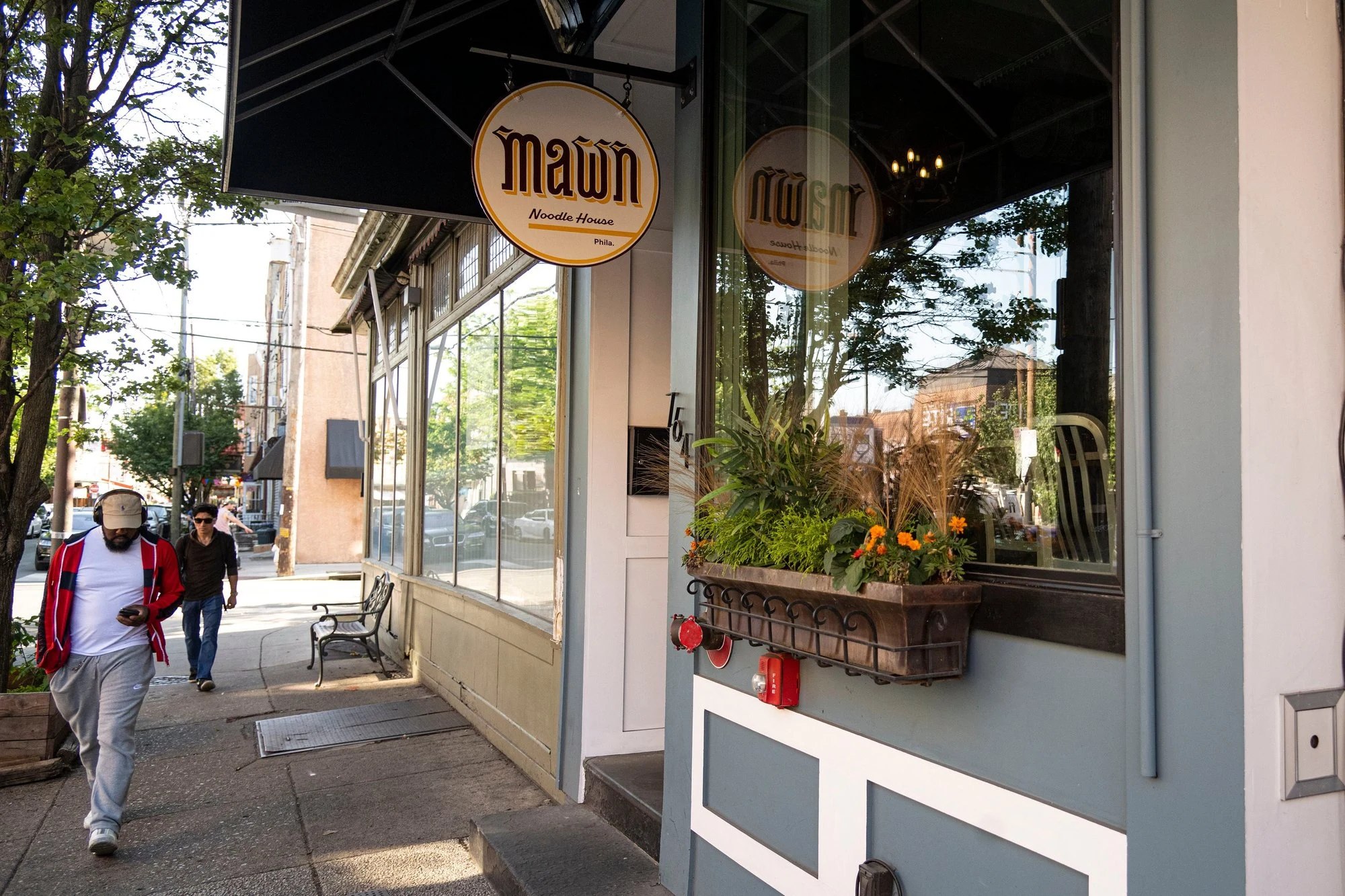
Philadelphia has a number of long-standing programs that anchor the city's fine-dining identity. Fork and Friday Saturday Sunday represent the New American tradition with considerable track records. The city's reach has also widened: Mawn brings Cambodian and pan-Asian perspective, My Loup works a French-inspired register, and South Philly Barbacoa represents the city's deep Mexican cooking tradition. Provenance occupies a distinct position in that field: the counter-format tasting menu with Michelin validation, operating from a neighborhood setting rather than a flagship dining-room address.
That positioning matters for context. The counter format and row-house setting read as deliberate choices within a Philadelphia that has increasingly rewarded specificity over scale. The city's dining recognition has shifted away from the grand dining room toward programs with a clear point of view, and Provenance's Korean-French synthesis on a seafood-led format is a coherent and specific thesis.
The Wine Program and Beverage Logic
The editorial angle most relevant to a program at Provenance's level is what the wine list does with the kitchen's flavor vocabulary. French-Korean hybrid cooking creates particular pairing demands: the fermented and soy-forward notes in Korean condiments push toward mineral whites and oxidative styles, while the French butter and cream structures call for wines with enough texture to hold the conversation. Burgundy and Alsace have obvious relevance; so do the mineral-driven Loire whites and German Riesling that perform well against umami-rich dishes.
The counter format typically enables closer sommelier-to-guest interaction than a full dining room, which means a program at Provenance's price tier should be able to run a pairing sequence that tracks the menu's arc across 20-plus dishes rather than defaulting to a single match-per-course logic. Seafood-focused menus at comparable programs, including Le Bernardin in New York City and 8½ Otto e Mezzo Bombana in Hong Kong, have demonstrated that the cellar needs to work particularly hard across texture and temperature ranges when the protein anchor shifts repeatedly between seafood and dry-aged meat. What the Provenance cellar holds in specific terms is not publicly documented in detail, but the Michelin assessors' citation of service as seamless and warmly choreographed suggests the front-of-house team, which would carry the beverage program, is operating at an appropriate level.
Planning Your Visit
Provenance is at 408 S 2nd St in Queen Village, a walkable South Philadelphia neighborhood.
Reservations are essential, and weekend services tend to fill first. For a 20- to 25-dish menu, allow about two and a half to three hours. The row-house setting and counter format suggest smart-casual dress reads well, though the seriousness of the program warrants consideration.
Questions
Frequently asked
What recognition does Provenance hold?
Provenance holds 1 Michelin star and a James Beard award.
Who works at Provenance?
Made By profiles Abigail Dahan (Pastry Chef/Baker) at Provenance.
How expensive is Provenance?
Provenance is listed at a price level of $$$$.
Where is Provenance and what does it serve?
Provenance is in Society Hill, Philadelphia, serving Modern French-Korean Fine Dining.
The field
How it compares
| Place | Awards | Cuisine | Notes |
|---|---|---|---|
| Provenance | Michelin 1 Star, James Beard | Modern French-Korean Fine Dining | Society Hill, $$$$ |
| Friday Saturday Sunday | Michelin 1 Star, World's 50 Best | Modern American Tasting Menu | Philadelphia |
| Her Place Supper Club | Michelin 1 Star | Seasonal French-Italian Fine Dining | Philadelphia |
| Kalaya | World's 50 Best | Southern Thai | Philadelphia |
| Mawn | · | Modern Cambodian Noodle House | Philadelphia |
| Pizzeria Beddia | · | Exceptional Neapolitan-Style Pizza | Philadelphia |
| Vetri Cucina | · | Modern Italian Fine Dining | Philadelphia |
In residence
Featured in
Similar places
Modern American Tasting Menu
Friday Saturday Sunday
Philadelphia, United States
★ · 50 Best
Seasonal French-Italian Fine Dining
Her Place Supper Club
Philadelphia, United States
★
Southern Thai
Kalaya
Philadelphia, United States
50 Best
Modern Cambodian Noodle House
Mawn
Philadelphia, United States
Exceptional Neapolitan-Style Pizza
Pizzeria Beddia
Philadelphia, United States
Modern Italian Fine Dining
Vetri Cucina
Philadelphia, United States
The Sunday letter
Get the next Made By story in your inbox.
We send one email every Sunday morning with the places and people we covered that week.
See a sample of the Sunday emailOne email a week. Unsubscribe from any issue.