Quedubon
- 01CuisineTraditional French Bistro
- 02CityParis, France
From the people index
Recommended by
One trusted voice points here.

- Michelin Plate · 2025
- Michelin Plate · 2024
Traditional French Cooking in the 19th: What the Neighbourhood Still Asks For
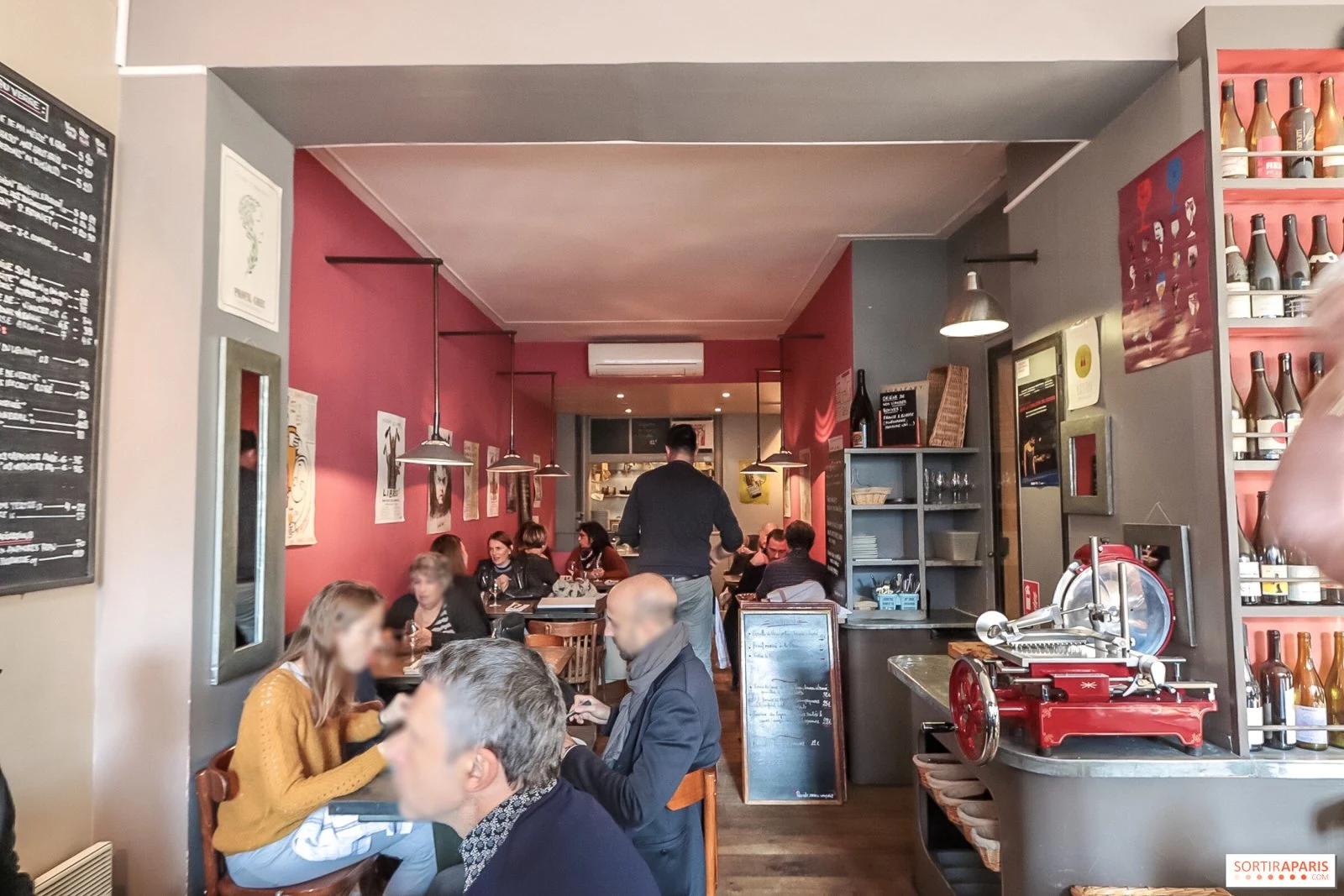
Paris's dining conversation tends to compress around a handful of arrondissements. The 1st, the 6th, the 8th absorb most of the international attention and the €€€€ price brackets that come with it. Places like Allard or the grand rooms around the Champs-Élysées represent one version of what French cuisine means abroad. But the 19th arrondissement, east of Belleville and well north of the Marais, operates on a different economy. The restaurants here are answerable to a local clientele, which is both a constraint and a discipline. Quedubon, at 22 Rue du Plateau, sits inside that discipline.
Michelin awarded the restaurant a Plate in 2024 and retained it in 2025. The Plate designation marks consistent quality without the expectation of innovation that a star would imply, which, in the context of traditional French cooking, is exactly the right register. The cuisine category here is not Modern French or Contemporary Creative. It is traditional, which means the kitchen is being evaluated against a long-established standard rather than a moving one. That is a harder benchmark than it sounds.
The Sunday letter
Find new places through the people who run them.
Our Sunday email brings you the chefs, winemakers and hoteliers behind our newest stories. See a sample before you subscribe.
See a sample of the Sunday emailOne email a week. Unsubscribe from any issue.
What Sustainable Traditional Cooking Actually Looks Like at the Neighbourhood Level
The sustainability conversation in French gastronomy has played out mostly at the high end. Mirazur in Menton built a biodynamic garden around its menu. Bras in Laguiole has spent decades sourcing from the Aubrac plateau with near-obsessive traceability. Flocons de Sel in Megève treats alpine terroir as a defining culinary constraint. These are three-star operations with the margin and visibility to make environmental sourcing a public narrative.
At the €€ level, sustainability does not usually come with a press release. It comes through structure: short supplier lists, menus that rotate with availability rather than anchoring on year-round imports, and kitchen economies that treat waste as a cost problem before it becomes an ethical one. Traditional French cuisine, when practised properly at the bistro scale, already embeds several of these habits by default. Stocks built from bones and trimmings, vegetable-forward garnishes that shift with season, sauces that use what the proteins leave behind, these are not gestures toward sustainability so much as inherited method. The question is whether a given kitchen maintains that method or has cut corners to stabilise labour costs.
Quedubon's sustained Michelin recognition across two consecutive years is a signal that the kitchen has not cut those corners. The Plate is not awarded for ambition; it is awarded for reliability. In a price tier where margins are thinner than at destination restaurants, reliability is its own discipline.
The 19th Arrondissement as a Culinary Reference Point
Understanding where Quedubon sits requires some sense of what the 19th offers as a dining district. It is not a neighbourhood that generates much international editorial coverage, which means the restaurants operating there are not shaped by the expectations of food tourism. The customer base is predominantly local, the repeat-visit rate is high, and the restaurants that endure do so because they serve the neighbourhood's actual appetite rather than a projected version of it.
This distinguishes the 19th's traditional bistros from, say, the kind of traditional-format restaurants that operate near the Eiffel Tower, where proximity to landmarks sets different pressures. You can compare that orbit with what 20 Eiffel or 19.20 by Norbert Tarayre do in that western corridor to see the difference in register. The 19th's restaurants are not trading on a view or a postcode premium. A 4.6 rating across 500 Google reviews points to a kitchen that delivers consistently for the people who actually live nearby.
For context on what traditional French cooking looks like across longer institutional timelines, the multi-generational houses offer a useful frame. Auberge de l'Ill in Illhaeusern and Paul Bocuse's Auberge du Pont de Collonges represent the archival end of that tradition, deeply codified, formally structured. Neighbourhood bistros like Quedubon carry a different strain of the same tradition: less ceremonial, more pragmatic, and in many ways more demanding because there is no occasion dining to cushion inconsistency. Auberge Grand'Maison in Mûr-de-Bretagne and Auga in Gijón represent comparable regional anchors in their own contexts, where traditional cooking serves a local rather than destination audience.
How Quedubon Sits Against the Paris Price Spectrum
The €€ designation places Quedubon in the mid-range of Paris dining, well below the €€€€ tier occupied by rooms like Le Violon d'Ingres in the 7th or the palace dining formats that define the upper bracket. At those heights, traditional French technique becomes a luxury offering, elaborate, sourced to a narrative, priced against experience rather than hunger. At €€, the same culinary tradition operates closer to its original social function: feeding people well, without theatre, at a price that allows return visits. The Michelin Plate at this price point is an argument that quality does not require the leading bracket.
The comparison with contemporary creative formats in Paris is useful here. The €€€€ creative rooms referenced in guides to the city, places operating with extended tasting menus, international sourcing, and modernist technique, are a genuinely different offer, not a superior version of the same one. Quedubon is not trying to compete in that space, and the Michelin recognition it has earned does not ask it to.
What Regulars Order at Quedubon
What the cuisine category and Michelin recognition do allow is a reasonable inference about what the kitchen prioritises. Traditional French cooking at this level tends to anchor on a short, seasonal menu rather than a permanent carte, the kind of structure that lets a small kitchen maintain quality by limiting variables. Dishes will follow French seasonal logic: root vegetables and braises in the colder months, lighter preparations and early-season produce as the year turns. The Michelin Plate signals that execution is the kitchen's primary claim, not novelty.
Regulars at this kind of address typically return for a specific dish that they have found to be consistent across visits, a preparation that the kitchen has clearly run many times and knows how to deliver without variation. That repeatability is the neighbourhood bistro's version of a signature. The 457 reviews and 4.6 rating suggest those regulars are finding what they came for. Anecdote, operating in a similar register in Paris, illustrates how bistro-format consistency builds loyal followings outside the destination-dining circuit.
Planning Your Visit
Quedubon is at 22 Rue du Plateau in the 19th arrondissement. The price range sits at €€, consistent with a mid-range neighbourhood bistro rather than an occasion-dining address. Michelin Plate recognition in 2024 and 2025 confirms kitchen reliability at this tier. The Google rating of 4.6 across 457 reviews reflects repeat-visitor satisfaction rather than tourism-driven enthusiasm.
Questions
Frequently asked
How expensive is Quedubon?
Quedubon is listed at a price level of $$.
Where is Quedubon and what does it serve?
Quedubon is in 19th arrondissement, Paris, serving Traditional French Bistro.
The field
How it compares
| Place | Cuisine | Notes | Awards |
|---|---|---|---|
| Quedubon | Traditional French Bistro | 19th arrondissement, $$ | · |
| Arpège | Vegetable-Focused French Fine Dining | Paris | Michelin 3 Stars, World's 50 Best |
| Epicure | Contemporary French Fine Dining | Paris | Michelin 3 Stars |
| Guy Savoy | Classic French Fine Dining | Paris | Michelin 2 Stars, World's 50 Best |
| Le Cinq | Modern French Fine Dining | Paris | Michelin 3 Stars, World's 50 Best |
| Le Taillevent | Classic and Modern French Fine Dining | Paris | Michelin 2 Stars, World's 50 Best |
| Pierre Gagnaire | Avant-Garde French Fine Dining | Paris | Michelin 3 Stars, World's 50 Best |
Similar places
Vegetable-Focused French Fine Dining
Arpège
Paris, France
★★★ · 50 Best
Contemporary French Fine Dining
Epicure
Paris, France
★★★
Classic French Fine Dining
Guy Savoy
Paris, France
★★ · 50 Best
Modern French Fine Dining
Le Cinq
Paris, France
★★★ · 50 Best
Classic and Modern French Fine Dining
Le Taillevent
Paris, France
★★ · 50 Best
Avant-Garde French Fine Dining
Pierre Gagnaire
Paris, France
★★★ · 50 Best
The Sunday letter
Get the next Made By story in your inbox.
We send one email every Sunday morning with the places and people we covered that week.
See a sample of the Sunday emailOne email a week. Unsubscribe from any issue.