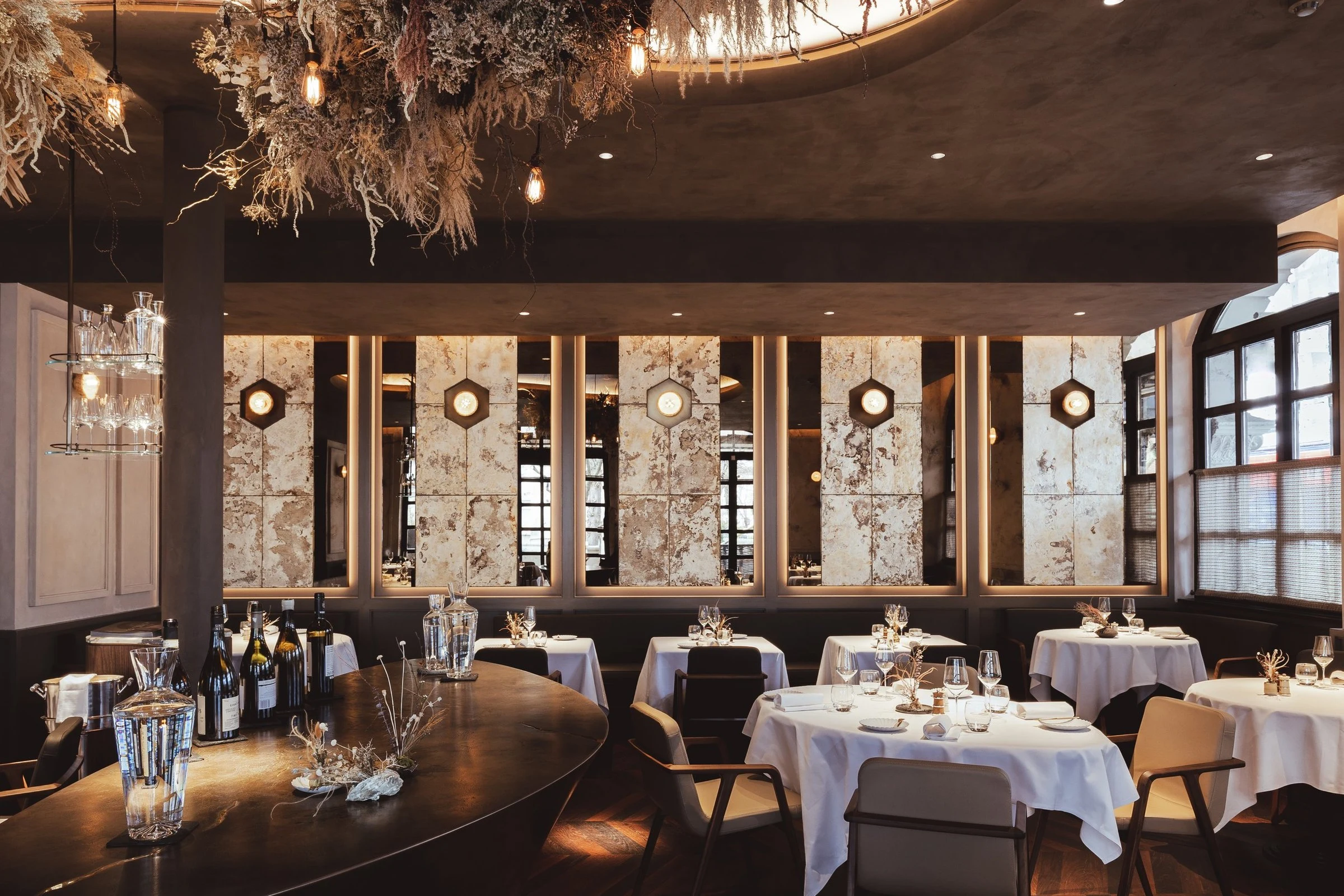
Quillon
In Residence
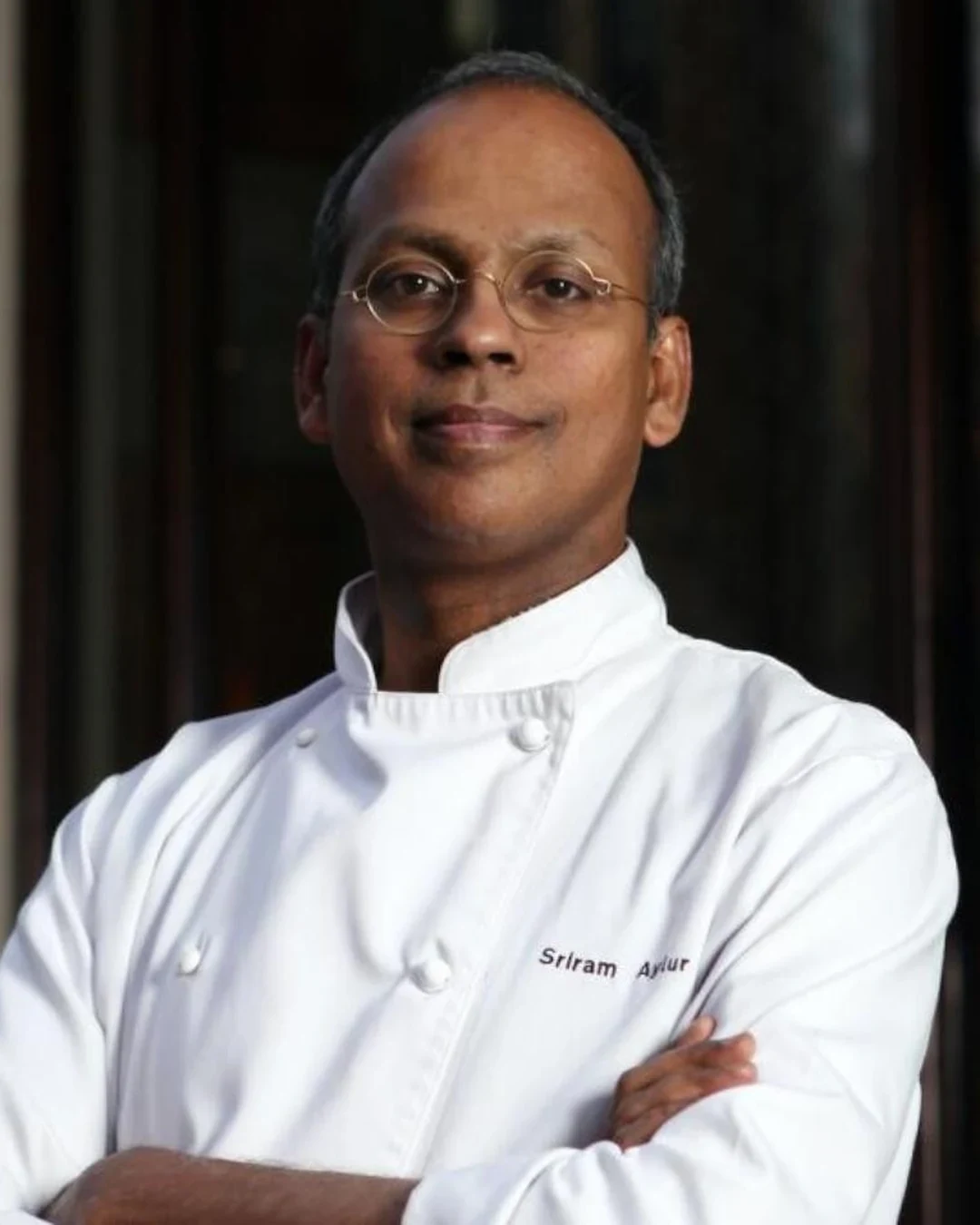
Sriram Aylur
Chef
- 01CuisineModern South Indian Coastal
- 02CityLondon, United Kingdom
- 03RecognitionOne Michelin Star
- 1 Michelin Star · Michelin Guide
- Michelin 1 Star · 2026
- Opinionated About Dining Casual in Europe Recommended · 2026
- Michelin 1 Star · 2025
- Opinionated About Dining Casual in Europe Ranked #362 · 2025
- Opinionated About Dining Casual in Europe Ranked #333 · 2024
- Opinionated About Dining Casual in Europe Recommended · 2023
Southwest India in Westminster: What Quillon Represents in London's Indian Dining Scene
London's serious Indian restaurant tier has expanded considerably over the past decade, but the dominant narrative still favours northern subcontinent cooking, Mughal-influenced dishes, tandoor technique, and the rich, cream-carrying gravies that British audiences have eaten longest. The southwest Indian tradition, particularly the coastal kitchens of Kerala and Karnataka where seafood, coconut, and tamarind set the terms, occupies a smaller and more specialist position in that broader market. Quillon, at 41 Buckingham Gate in Westminster, has held that position consistently, That sustained presence, across three consecutive years, carries more weight than a single-year appearance: it signals a kitchen that operates at a reliable level rather than peaking on the basis of novelty.
The neighbourhood matters for context. Buckingham Gate sits between Victoria and St James's Park, drawing a mix of hotel guests, government-adjacent professionals, and visitors who know where they are going. It is not the kind of address that benefits from passing trade or destination-dining foot traffic in the way that Mayfair or Soho do. That Quillon maintains a Google rating of 4.4 across more than 1,150 reviews from this location says something about repeat custom and deliberate choice rather than tourist volume.
The Malabar Coast on a Plate: Technique and Tradition
The editorial angle on Quillon's menu starts not with the dishes themselves but with the cooking tradition they sit inside. Southwest Indian coastal cuisine operates on a different axis from the tandoor-and-naan framework most London diners know. The Malabar Coast, running along Kerala's western edge, produces a kitchen built around rice, coconut milk, curry leaves, tamarind, mustard seeds, and the whole and ground black pepper that gave this coastline its medieval trade significance. Fish and shellfish are the primary proteins, prepared in techniques that range from the quick-sautéed to the slow-simmered.
Dum method, a slow-cooking technique using sealed vessels to trap steam and concentrate aromatics, is central to the rice tradition that defines Malabar cooking at a deeper level. Biryani from this region sits apart from the Hyderabadi or Lucknowi versions that dominate the northern canon. Where Hyderabadi biryani uses a semi-cooked layering technique and the Awadhi tradition favours the kacchi method with raw meat and long dum times, Malabar biryani works with shorter-grain Jeerakasala or Kaima rice, smaller in size and more fragrant, and tends toward a lighter hand with the spice. The rice absorbs rather than competes. The dum cooking here is less about dramatic aromatics and more about integration, achieving a dish where the seafood or poultry and the rice have become the same thing rather than parallel elements. That discipline of integration, of restraint in layering, runs through coastal Karnataka and Kerala cooking more broadly. The kitchen's discipline is in the balance and timing rather than the spectacle.
The seafood tasting menu showcases dishes including baked black cod with tamarind, jaggery, and fenugreek, a combination that sits squarely in the Malabar pantry. This is the three-note structure that defines much of the leading coastal cooking from this region, and it is a considerably more demanding palette to calibrate than the cream-and-butter combinations that anchor northern Indian cooking in London.
Format, Menu Architecture, and the Beer Pairing Angle
Menu structure at Quillon covers several formats: a seafood tasting menu, a vegetarian tasting menu, and an à la carte that extends the offering to carnivores. The inclusion of a dedicated vegetarian menu reflects both the traditions of south Indian cooking, where vegetarianism has deep roots in Brahmin and temple cooking, and the practical need to serve a London dining public that expects full menu access regardless of dietary pattern. The OAD award text notes that the vegetarian option runs alongside the main tasting menu, which suggests parity of ambition rather than a reduced alternative.
Beer and food tasting menu is worth noting as a structural choice. Wine pairing with Indian food has always been a category-level challenge: the spice levels, coconut-fat richness, and tamarind acidity that characterise Malabar cooking often push against European wine structures in ways that require real programme expertise to manage well. Beer, particularly lager, wheat beer, and certain saison styles, handles those challenges more naturally, and Quillon's decision to formalise a beer pairing tasting menu is a signal of kitchen confidence and a willingness to match the food's logic rather than the format expectations of the European fine-dining template.
Head Chef Sriram Aylur leads the kitchen, with the OAD citations referencing him by name across all three years of recognition.
For comparison within London's Indian restaurant tier, Amaya and Benares operate at a different regional register, Amaya's live grill format and Benares's contemporary Lucknowi approach position them against a distinct set of references. Trishna in Marylebone is the closest direct peer in coastal Indian cooking terms. Ambassadors Clubhouse and Babur occupy different positions in the market by geography and format. Internationally, Trèsind Studio in Dubai and Opheem in Birmingham represent what the Indian fine-dining form is doing outside London, worth reading alongside Quillon for a sense of how the category is developing across markets.
For broader UK dining context, see The Fat Duck in Bray, L'Enclume in Cartmel, Moor Hall in Aughton, Gidleigh Park in Chagford, Hand and Flowers in Marlow, and Le Manoir aux Quat' Saisons in Great Milton, a useful frame for where Quillon sits within the wider rankings conversation, given that it competes on the OAD Europe casual list rather than the fine-dining tier.
Planning Your Visit
Address: 41 Buckingham Gate, London SW1E 6AF. Hours: Tuesday dinner only (5:30 to 10 PM); Wednesday through Friday lunch and dinner; Saturday and Sunday lunch and dinner; closed Monday. Reservations: Recommended. Rating context: Google 4.4 from 1,207 reviews.
Questions
Frequently asked
What recognition does Quillon hold?
Quillon holds 1 Michelin star.
Who works at Quillon?
Made By profiles Sriram Aylur (Chef) at Quillon.
How expensive is Quillon?
Quillon is listed at a price level of $$$$.
Where is Quillon and what does it serve?
Quillon is in Victoria, London, serving Modern South Indian Coastal.
The field
How it compares
| Place | Awards | Cuisine | Notes |
|---|---|---|---|
| Quillon | Michelin 1 Star | Modern South Indian Coastal | Victoria, $$$$ |
| CORE by Clare Smyth | Michelin 3 Stars, World's 50 Best | Modern British Fine Dining | London |
| Ikoyi | Michelin 2 Stars, World's 50 Best | Modern West African Fine Dining | London |
| Kitchen Table | Michelin 2 Stars | Modern British Fine Dining | London |
| KOL | Michelin 1 Star, World's 50 Best | Modern Mexican Fine Dining | London |
| Row on 5 | Michelin 2 Stars | Modern British Fine Dining with Mediterranean & Asian Influences | London |
| The Ledbury | Michelin 3 Stars, World's 50 Best | Modern British Fine Dining | London |
In residence
Similar places
Modern British Fine Dining
CORE by Clare Smyth
London, United Kingdom
★★★ · 50 Best
Modern West African Fine Dining
Ikoyi
London, United Kingdom
★★ · 50 Best
Modern British Fine Dining
Kitchen Table
London, United Kingdom
★★
Modern Mexican Fine Dining
KOL
London, United Kingdom
★ · 50 Best
Modern British Fine Dining with Mediterranean & Asian Influences
Row on 5
London, United Kingdom
★★
Modern British Fine Dining
The Ledbury
London, United Kingdom
★★★ · 50 Best