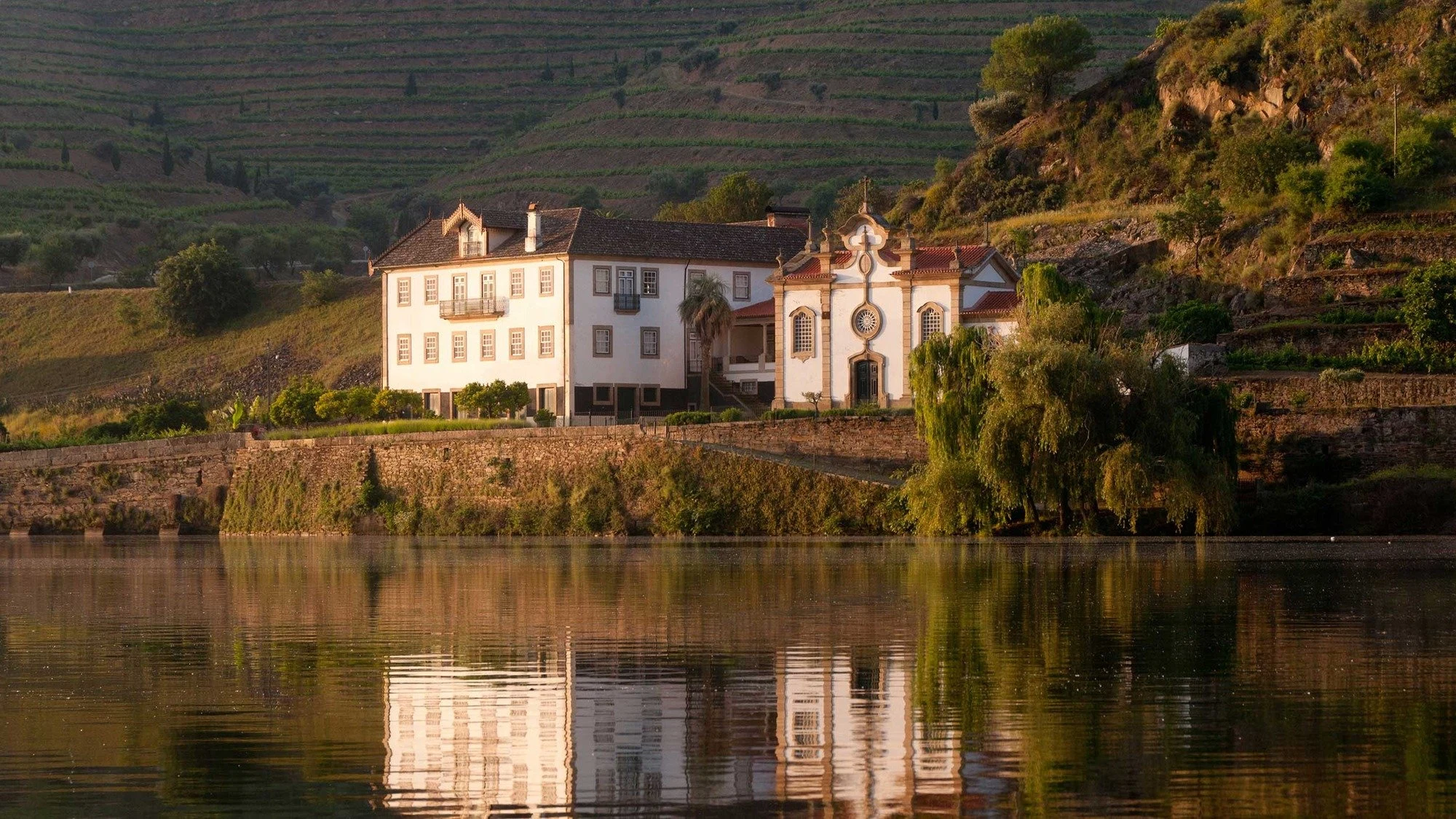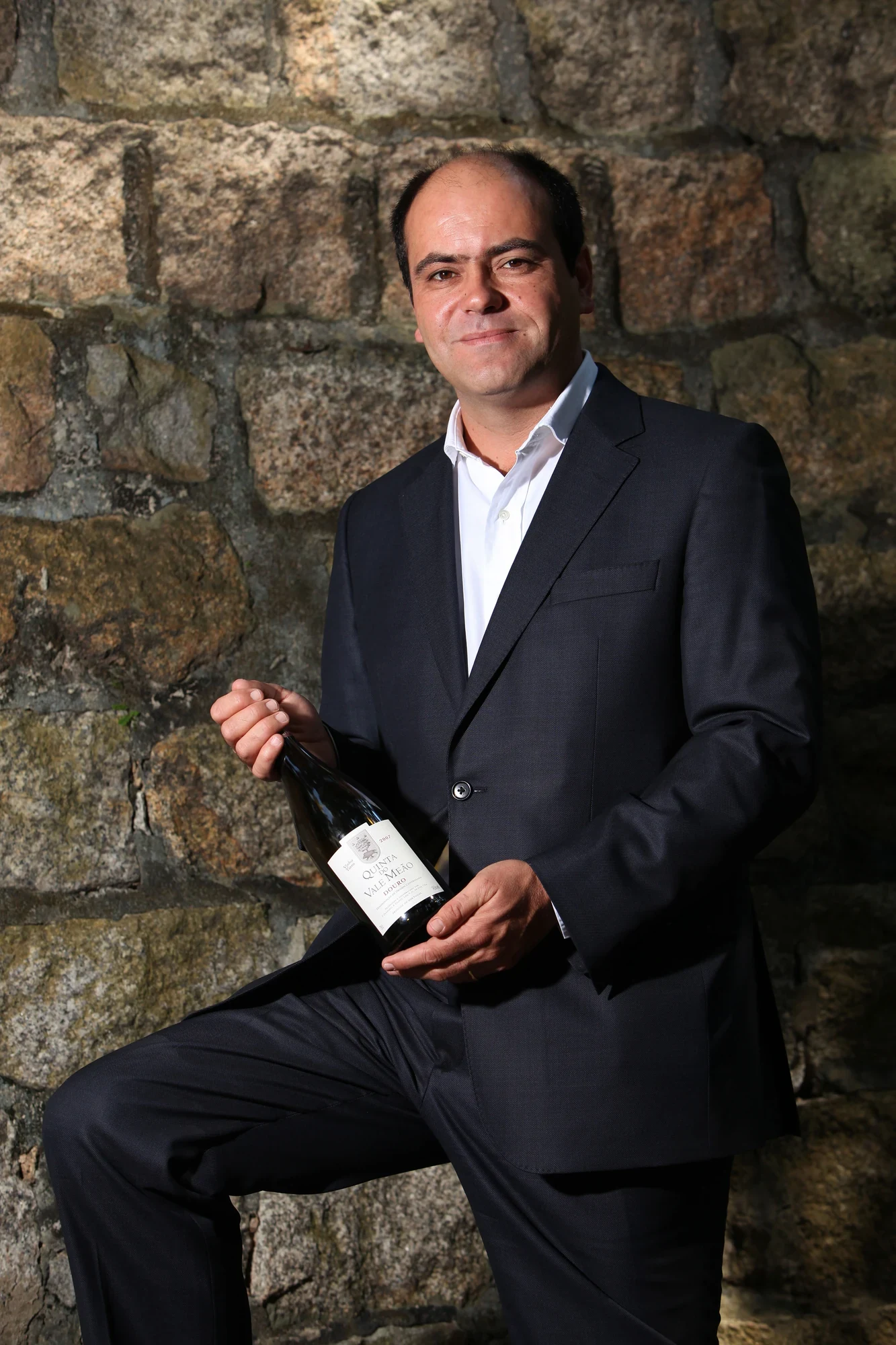
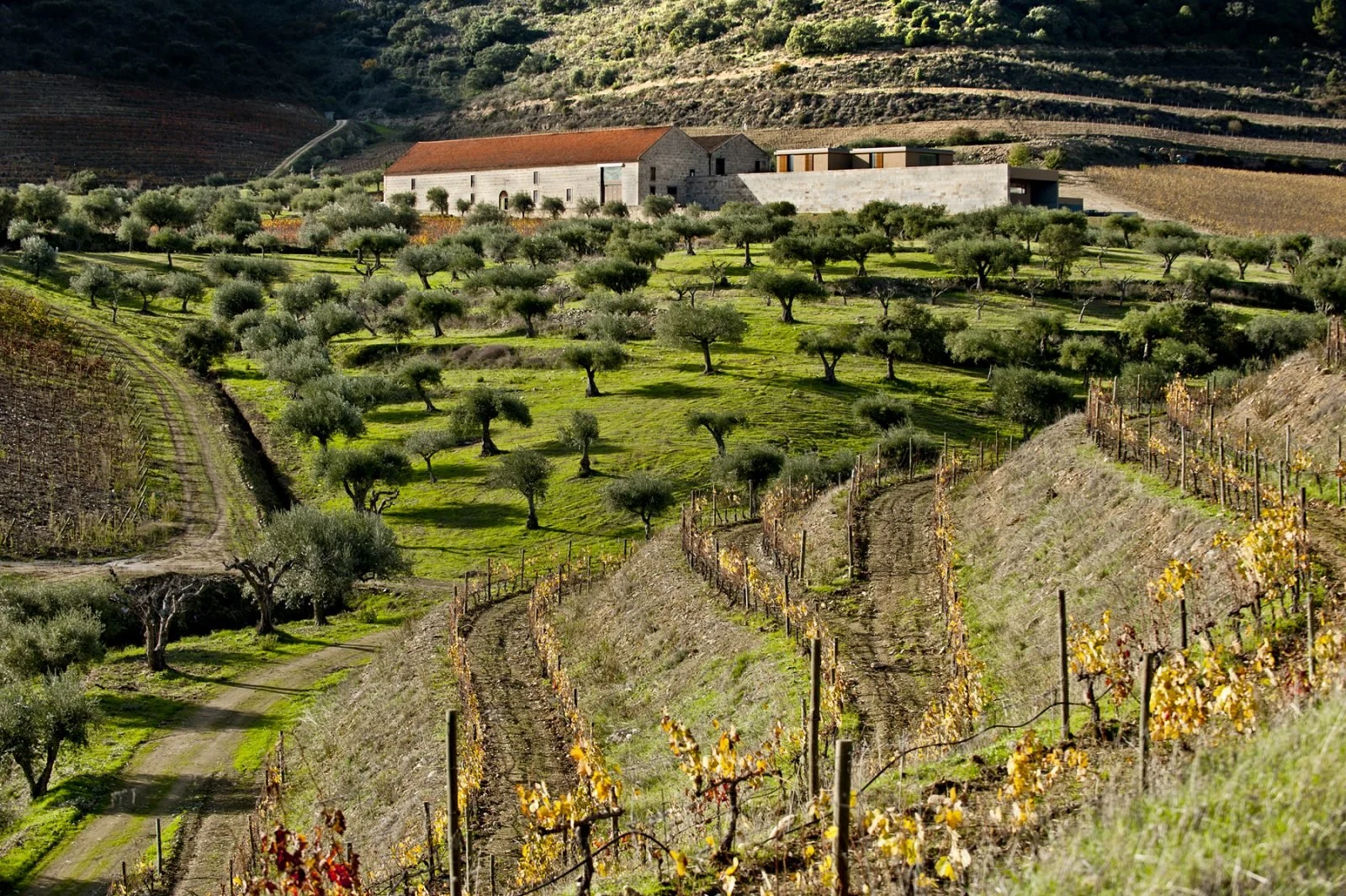
Quinta do Vale Meão occupies the far eastern reaches of the Douro Superior, where the river bends toward Spain and the schist plateaus produce some of Portugal's most structured red wines. Holding a Pearl 2 Star Prestige rating for 2025, the estate sits at the upper tier of Douro winemaking and draws visitors to Vila Nova de Foz Côa for a direct encounter with the region's most demanding terroir.
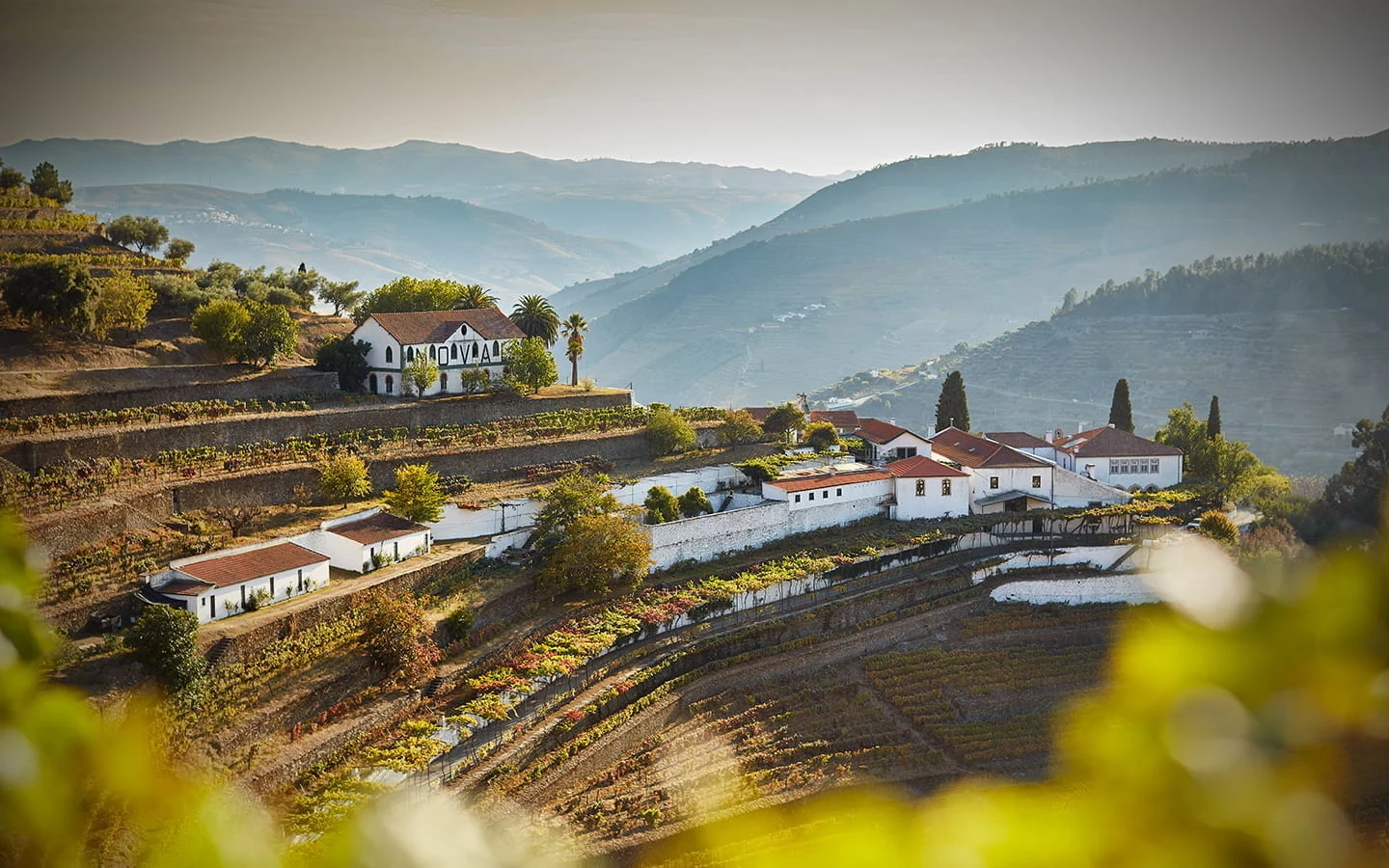
<h2>Where the Douro Runs Dry and the Schist Takes Over</h2><p>Quinta do Vale Meão is a winery in Vila Nova de Foz Côa, eastern Douro. Vineyards become sparser, the river narrows, and the heat, already substantial in the Douro Valley's middle reaches, becomes something more absolute. By the time you arrive in the Douro Superior, the landscape has shed the terraced drama of the Cima Corgo and settled into wide, plateau-style schist formations that bake through summer and freeze in winter. This is the climatic and geological extreme that defines Quinta do Vale Meão's wines: not refinement for its own sake, but the direct imprint of a terroir that gives no quarter.</p><p>The estate holds a Pearl 2 Star Prestige rating for 2025. Within the Douro Superior, a sub-region that has attracted serious attention over the past two decades as producers recognised the altitude and latitude advantages of its oldest vine plots, that recognition carries particular weight. The Douro Superior operates differently from the more tourism-saturated stretches around Régua and Pinhão. Properties here tend to receive visitors by appointment, the pace is slower, and the conversation around wine tends to run deeper.</p><h2>Terroir at the Edge of Portugal</h2><p>To understand what Quinta do Vale Meão produces, you need to understand the Douro Superior's specific conditions. The Atlantic influence that moderates temperatures in the lower Douro diminishes almost entirely here. Annual rainfall can fall below 400mm, making dry-farming not a philosophical stance but a practical necessity for most of the estate's vine stock. The schist, the fractured, heat-retaining metamorphic rock that runs through the Douro's bedrock, forces vine roots down several metres to find water, producing fruit concentration and structural tannins that mark the region's wines regardless of producer.</p><p>What distinguishes the Douro Superior from other Portuguese red wine regions is less a question of grape variety than of intensity management. The same Touriga Nacional, Touriga Franca, and Tinta Roriz that appear in wines from the Baixo Corgo or Bairrada behave differently at this altitude and latitude. Growing seasons are longer, harvest often runs later into October, and the diurnal temperature swings that preserve acidity are more pronounced. Producers working serious vine blocks in this sub-region, including the estate here and neighbours like <a href="https://www.enprimeurclub.com/wineries/quinta-do-vesuvio-vila-nova-de-foz-coa-winery">Quinta do Vesúvio</a>, are making wines that require patience from both winemaker and consumer.</p><p>The contrast with Douro estates positioned further west, such as <a href="https://www.enprimeurclub.com/wineries/quinta-do-bomfim-pinhao-winery">Quinta do Bomfim in Pinhão</a> or <a href="https://www.enprimeurclub.com/wineries/quinta-do-vallado-peso-da-regua-winery">Quinta do Vallado in Peso da Régua</a>, is instructive. Those properties benefit from greater tourist infrastructure and more moderate conditions; their wines can be more immediately approachable. Douro Superior estates are working with rawer material that demands more from the cellar and delivers wines that typically open out over five to fifteen years rather than two to five.</p><h2>A Property Built Around Precision, Not Volume</h2><p>The history of this quinta connects to one of Portugal's most consequential chapters in modern winemaking. The estate was the birthplace of Barca Velha, the wine that effectively established that the Douro could produce age-worthy dry reds of international standing, decades before the region's current profile was even imagined. That lineage shapes how the property is read within the Portuguese wine trade. It sits in a small comparable set of estates whose past validates their present without requiring constant qualification.</p><p>For visitors approaching the property from Vila Nova de Foz Côa, the town that serves as the administrative and logistical base for this part of the Douro Superior, the access question is practical. This is not a drop-in winery. Visits in this sub-region, across properties from the most established to the recently planted, are structured and appointment-driven. The infrastructure around visitor experience at Douro Superior estates has developed more slowly than at properties clustered around the A4 motorway corridor closer to Porto. That's partly geography, partly intention: producers here are not competing on throughput.</p><p>Practical planning for a visit to Quinta do Vale Meão means building a day or more around it rather than treating it as a stop on a circuit. Vila Nova de Foz Côa itself warrants time, particularly for the Côa Valley Archaeological Park, where some of Europe's oldest known rock art, dated to the Upper Palaeolithic, is preserved along the river canyon. The combination of that cultural weight and the surrounding wine estates makes the area a coherent destination for visitors willing to travel past the more obvious Douro waypoints.</p><h2>Where This Estate Sits in the Portuguese Wine Picture</h2><p>Portugal's premium wine geography is more dispersed than its Michelin-star restaurant map, and serious producers exist in several distinct poles. In the Alentejo, estates like <a href="https://www.enprimeurclub.com/wineries/herdade-do-esporao-reguengos-de-monsaraz-winery">Herdade do Esporão in Reguengos de Monsaraz</a> and <a href="https://www.enprimeurclub.com/wineries/adega-cartuxa-fundacao-eugenio-de-almeida-evora-winery">Adega Cartuxa in Évora</a> operate with greater visitor infrastructure and a broader output range. In the Douro, the conversation tends to fracture by sub-region. The fortified wine specialists, such as <a href="https://www.enprimeurclub.com/wineries/churchills-vila-nova-de-gaia-winery">Churchill's in Vila Nova de Gaia</a>, operate from lodges in Gaia rather than from the vineyard itself. Estates like <a href="https://www.enprimeurclub.com/wineries/quinta-do-seixo-sandeman-douro-valley-tabuaco-winery">Quinta do Seixo in Tabuaço</a> blend Port heritage with dry wine ambitions in a more accessible corridor.</p><p>Quinta do Vale Meão, holding its 2025 Pearl 2 Star Prestige designation, is positioned within the tier of Douro dry wine specialists whose reputations are built on single-estate integrity rather than volume or breadth of portfolio. That's a narrower and more demanding positioning than, say, a large cooperative like <a href="https://www.enprimeurclub.com/wineries/adega-cooperativa-de-borba-borba-winery">Adega Cooperativa de Borba</a> or a heritage institution with diverse commercial lines like <a href="https://www.enprimeurclub.com/wineries/bacalhoa-vinhos-azeitao-winery">Bacalhôa Vinhos in Azeitão</a>. It means the wines carry more site-specific risk, and the returns on a good vintage are correspondingly greater.</p><p>For the visiting collector or serious wine traveller, the eastern Douro still rewards the effort of getting there precisely because it hasn't been smoothed down by the tourism trade. The schist, the heat, the old vines, and the latitude all remain legible in the glass in a way that more accessible, more visited estates sometimes obscure through commercial polish. Properties in this tier, whether in the Douro Superior, Madeira with producers like <a href="https://www.enprimeurclub.com/wineries/blandys-wine-lodge-funchal-winery">Blandy's Wine Lodge in Funchal</a>, or international comparisons further afield like <a href="https://www.enprimeurclub.com/wineries/accendo-cellars">Accendo Cellars in St. Helena</a>, share a commitment to place over formula. That commitment is what makes a visit worth the planning.</p><h2>Planning Your Visit</h2><p>Quinta do Vale Meão is located at the address 5150-501 Vila Nova de Foz Côa, within the Douro Superior appellation in northeastern Portugal. Visitors should confirm visit logistics directly with the estate before travelling. The nearest significant town, Vila Nova de Foz Côa, provides accommodation and basic services; the regional city of Vila Real to the west offers broader options for multi-night stays. Visits should be planned accordingly, with time and with advance contact.</p>
Quinta do Vale Meão is located at Quinta do Vale Meão 5150-501 Vila Nova de Foz Côa, 5150-501 Vila Nova de Foz Côa, Vila Nova de Foz Côa.
Quinta do Vale Meão has received recognition including: Pearl 2 Star Prestige (2025).
The estate's own Quinta do Vale Meão red is the reference point — a wine from the Douro Superior appellation where extreme heat and schist soils define the structure. Given the Pearl 2 Star Prestige awarded in 2025, the flagship bottling is the obvious starting point for any serious tasting. Contact the quinta directly to confirm current releases and tasting formats before visiting.
The estate sits at 5150-501 Vila Nova de Foz Côa in the Douro Superior, Portugal's most extreme wine-producing sub-region, where summer temperatures regularly exceed 40°C. It earned a Pearl 2 Star Prestige in 2025, placing it among Portugal's most formally recognised wine properties. The drive from Pinhão takes roughly an hour eastward along increasingly austere terrain, so build time into your itinerary.
Quinta do Vale Meão is a working estate in a remote stretch of the Douro Superior, and visits are not walk-in affairs at properties of this standing. Reaching out in advance is standard practice, particularly given the Pearl 2 Star Prestige recognition in 2025, which has increased attention from serious wine travellers. Phone and web contact details are best confirmed through current trade or tourism channels before travelling to Vila Nova de Foz Côa.
The Douro Superior sits at the eastern extreme of the appellation, beyond the Atlantic moderating influence that tempers conditions in the Cima Corgo around Pinhão. Lower rainfall, higher heat accumulation, and predominantly schist soils produce wines with a different structural profile than western Douro estates. This geographic distinction is part of why the quinta's Pearl 2 Star Prestige (2025) carries weight — the achievement comes from one of Portugal's most demanding viticultural environments.
Quinta do Vale Meão 5150-501 Vila Nova de Foz Côa, 5150-501 Vila Nova de Foz Côa
Vila Nova de Foz Côa