Restaurant Andrew Fairlie
In Residence
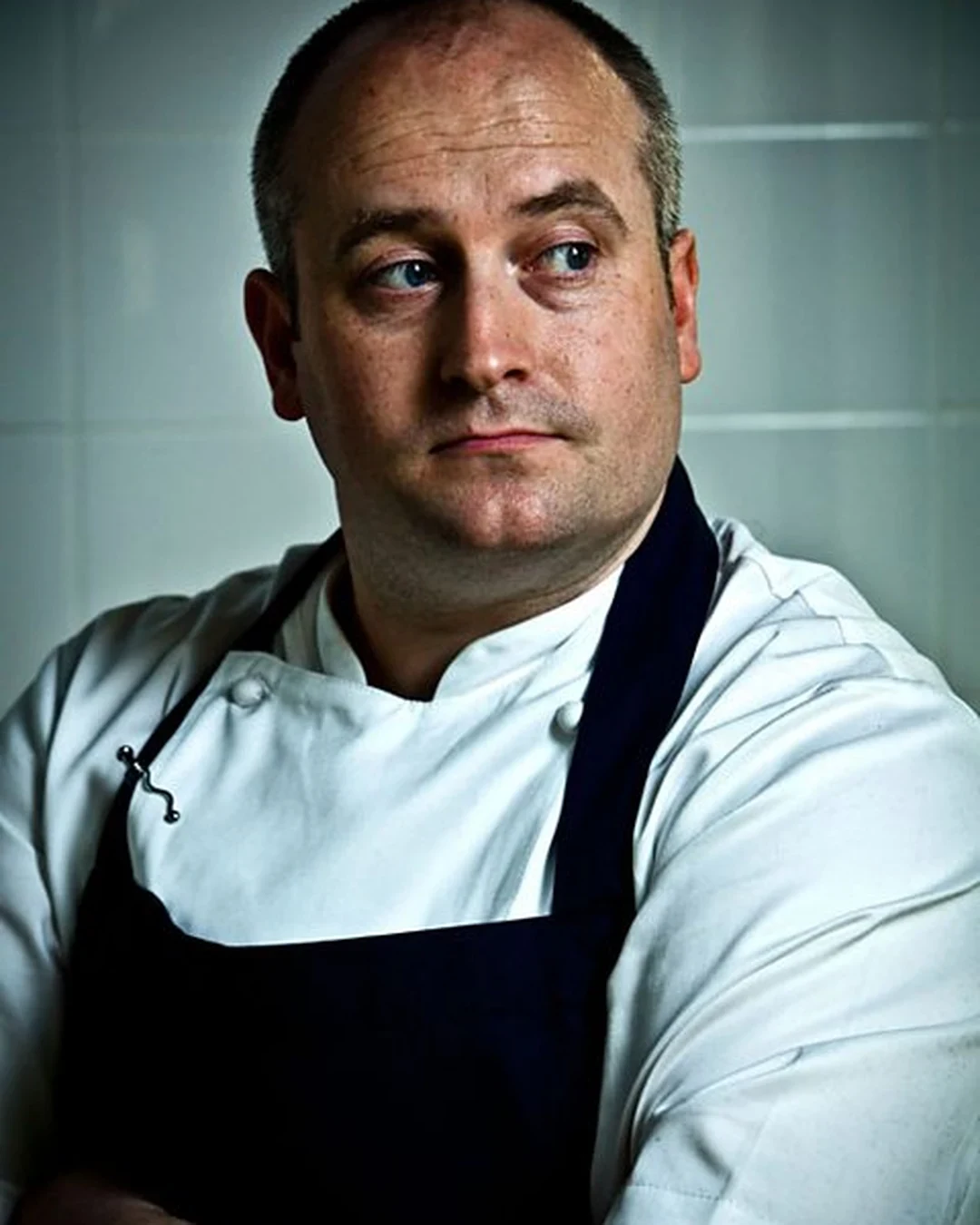
Stephen McLaughlin
Chef
- 01CuisineFrench-Scottish Fine Dining
- 02CityAuchterarder, United Kingdom
- 03RecognitionTwo Michelin Stars
- 2 Michelin Stars · Michelin Guide
- Harden's Top 100 UK Restaurants #17 · 2026
- La Liste Top Restaurants: 87pts · 2026
- Michelin 2 Stars · 2026
- AA Rosettes 4 Rosettes · 2026
- Les Grandes Tables du Monde Member · 2026
- Star Wine List · 2026
- Opinionated About Dining Classical in Europe Ranked #113 · 2026
- La Liste Top Restaurants: 88pts · 2025
- Opinionated About Dining Classical in Europe Ranked #111 · 2025
- Michelin 2 Stars · 2025
- Opinionated About Dining Classical in Europe Ranked #104 · 2024
- Opinionated About Dining Classical in Europe Ranked #91 · 2023
A Room Apart: Setting and Atmosphere
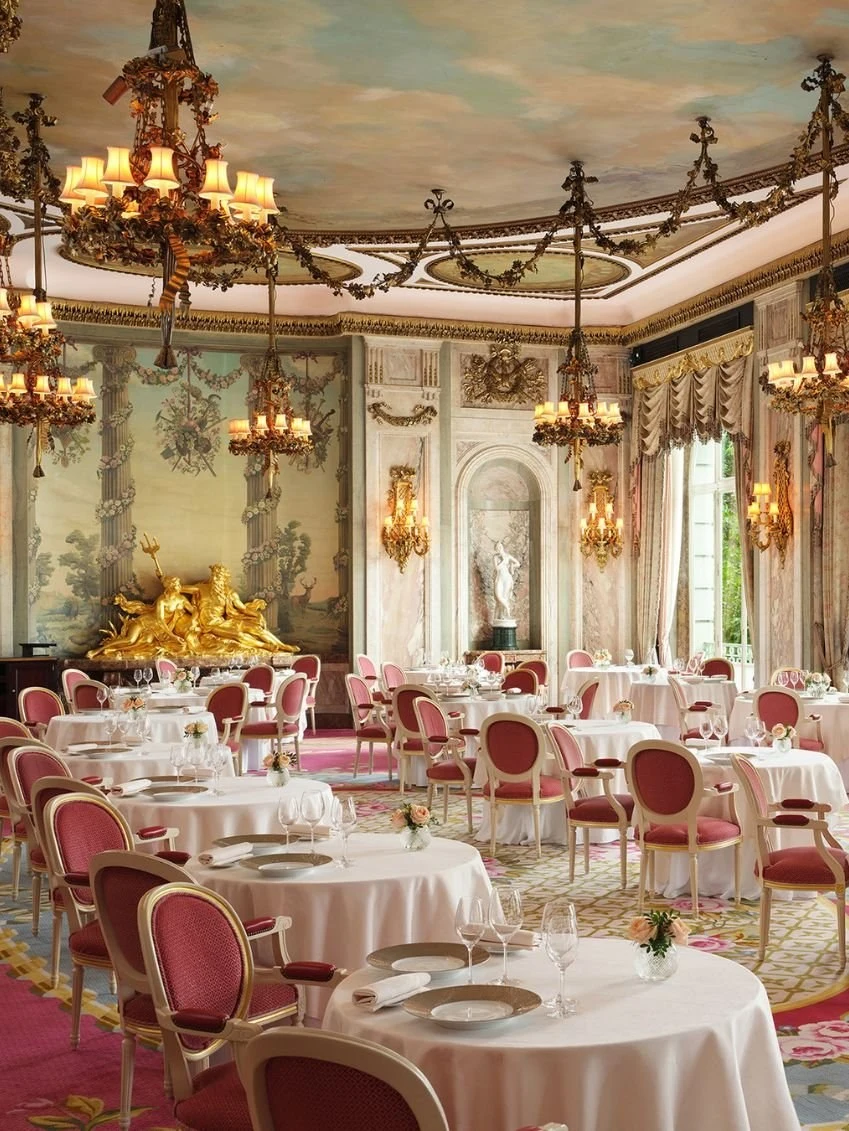
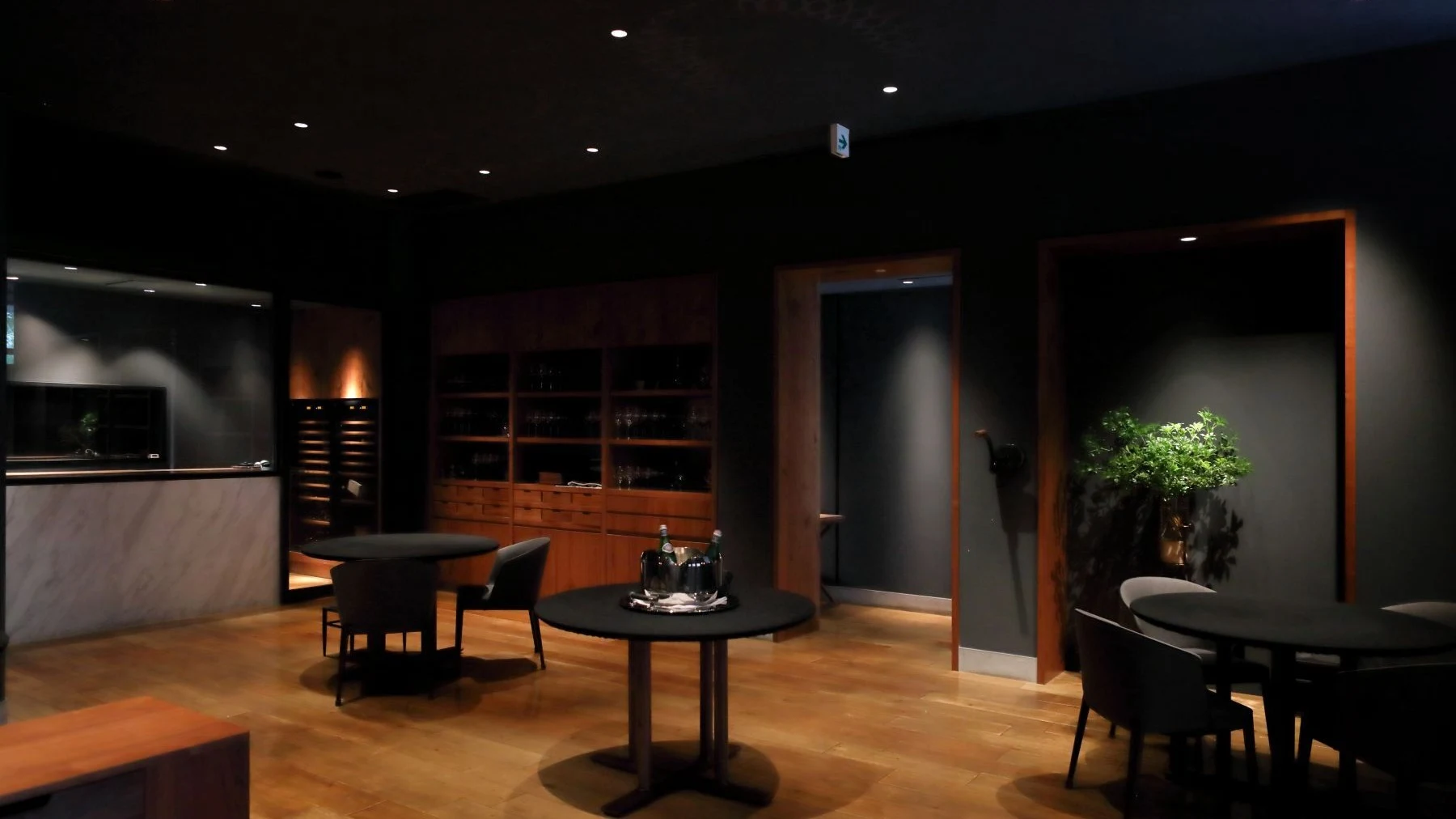
The approach to Restaurant Andrew Fairlie sets the tone before you reach the door. Inside Gleneagles Hotel, one of Perthshire's most storied resort addresses, the restaurant occupies a self-contained space that functions as a separate world from the hotel's broader activity. Dark wood walls, controlled lighting, and a collection of food-themed art create an atmosphere that reads more like a serious Paris dining room than a Scottish country house hotel annexe. There is no natural light, which sounds like a constraint but works as a design choice: time slows, and the meal becomes the entire environment. The space seats an intimate number of covers, and that limited capacity is part of what makes the room feel considered rather than commercial.
Britain's hotel dining has historically oscillated between the grand and the perfunctory, with many resort restaurants coasting on their surroundings. The Fairlie model ran against that tendency from the beginning. The restaurant's separation from the hotel's social spaces was deliberate, a signal that this was a kitchen-led project, not a hospitality amenity. That posture has held. For comparison, properties like Le Manoir aux Quat' Saisons in Great Milton and Gidleigh Park in Chagford occupy a similar category: fine dining rooms embedded in destination hotels, where the kitchen's identity is distinct from the property's broader offer.
The Sunday letter
Find new places through the people who run them.
Our Sunday email brings you the chefs, winemakers and hoteliers behind our newest stories. See a sample before you subscribe.
See a sample of the Sunday emailOne email a week. Unsubscribe from any issue.
French Technique, Scottish Sourcing
The cooking here sits at the intersection of French classical method and Scottish produce, a pairing that sounds direct in principle but demands real discipline in practice. The sauces are the most instructive evidence: a Bordelaise with enough punch to carry the weight of aged beef, a lamb jus reduced to a glossy, concentrated finish. These are not decorative elements. They are the result of classical brigade training applied with rigour, and they place the kitchen in a lineage that connects to the great French houses rather than to contemporary British minimalism.
That lineage matters as a competitive reference point. At the top tier of British fine dining, the dominant conversation over the past decade has moved toward produce-first restraint, kitchens like L'Enclume in Cartmel and Moor Hall in Aughton working in an idiom where the sauce, if it appears at all, is a light emulsion rather than a long reduction. Fairlie's kitchen occupies a different register: one where technique is visible, where the cook's hand is present in every plate, and where French structure is not treated as something to move beyond. That is not a conservative position so much as a deliberate one, and it remains relatively rare in this price bracket in Britain.
Much of the produce comes from the Gleneagles kitchen garden, which supplies the restaurant with vegetables and herbs through the growing season. The sourcing is local in the sense that Perthshire and the surrounding region provide the meat, fish, and dairy that shape the menu's character, Scottish shellfish and game are staples of this kind of cooking in this geography. Chef Stephen McLaughlin has maintained the style and standard that earned the restaurant its two Michelin stars.
The Awards Picture and Where This Sits in British Fine Dining
The credential stack here is among the more complete in British fine dining outside London. Two Michelin stars have been held consistently. The Les Grandes Tables du Monde listing in 2025 places the restaurant in a global network of classically oriented houses, a list that weights French tradition heavily and is selective about admitting kitchens from outside France and Spain. La Liste, which aggregates critical opinion across multiple guides and publications, scored the restaurant at 88 points in 2025 and 87 points in 2026. Opinionated About Dining's Classical in Europe ranking placed it at 91st in 2023, 104th in 2024, and 111th in 2025, a slight descent in the ranking but within a broader pool that expands each year.
The comparable set implied by those credentials is informative. Les Grandes Tables du Monde membership in the UK is held by a small number of kitchens; The Ledbury in London operates in a broadly comparable register of technically serious European cooking, though with a different stylistic emphasis. At the two-star level in Britain, Fairlie sits alongside London rooms like Restaurant Sat Bains in Nottingham and Midsummer House in Cambridge, but with a distinctly different culinary DNA. The classical French orientation puts it closer, in spirit if not in geography, to the tradition represented by Le Bernardin in New York City, kitchens where technique is the point, not the starting point.
For a room operating outside any major city, those are meaningful numbers. Scotland has no three-star Michelin restaurant. At two stars, in a hotel setting, in Perthshire, Fairlie carries the weight of representing a different model entirely: fine dining as a destination in itself, not a product of urban density or media concentration.
The Editorial Angle: Hotel Dining That Earns Its Standing
Britain's gastropub revolution of the late 1990s and early 2000s made it possible to eat seriously almost anywhere, but it also created a generation of chefs who defaulted to informality as a marker of quality. The countercurrent, formal rooms in hotel settings that chose to compete on classical terms, produced a smaller cohort, and that cohort includes this restaurant. The argument made by kitchens like this one is that formality and rigour are not in tension with warmth; service that balances ceremony with ease is a skill, not a style choice.
The broader pattern worth tracking is what happens to hotel fine dining when the founding chef's identity has to be preserved and extended by a successor. At The Fat Duck in Bray, the chef's personal brand is the product. At Fairlie, the transition from founder to successor tested whether the kitchen had built something transferable, a philosophy, a standard, a method, or whether it had built a personality cult. The evidence from the awards record since 2019 suggests the former. Michelin retained two stars. La Liste and Les Grandes Tables du Monde have continued to recognise the restaurant. That kind of institutional continuity after a founding chef's death is not automatic, and it is worth noting explicitly. Comparable questions have played out at other European houses, and the results are not always this consistent.
Planning Your Visit
Restaurant Andrew Fairlie is open Tuesday through Sunday for dinner, with service running from 6 to 10 pm. The restaurant is closed on Mondays. At the ££££ price range, this is London-grade fine dining pricing in a Scottish context, expect a tasting menu format at a level comparable to two-star rooms in the capital. Gleneagles Hotel is in Auchterarder, accessible by road from Edinburgh (roughly an hour) or from Glasgow (slightly less). Booking well in advance is essential. The room's size and reputation create demand at peak times.
Questions
Frequently asked
What recognition does Restaurant Andrew Fairlie hold?
Restaurant Andrew Fairlie holds 2 Michelin stars.
Who works at Restaurant Andrew Fairlie?
Made By profiles Stephen McLaughlin (Chef) at Restaurant Andrew Fairlie.
How expensive is Restaurant Andrew Fairlie?
Restaurant Andrew Fairlie is listed at a price level of $$$$.
Where is Restaurant Andrew Fairlie and what does it serve?
Restaurant Andrew Fairlie is in Gleneagles, Auchterarder, serving French-Scottish Fine Dining.
The field
How it compares
| Place | Awards | Cuisine | Notes |
|---|---|---|---|
| Restaurant Andrew Fairlie | Michelin 2 Stars | French-Scottish Fine Dining | Gleneagles, $$$$ |
| Atelier Crenn | Michelin 3 Stars, World's 50 Best | Contemporary French Fine Dining | San Francisco |
| Kabawa | World's 50 Best | Modern Caribbean Prix Fixe | New York City |
| La Cime | Michelin 2 Stars, World's 50 Best | Modern French with Japanese Ingredients | Osaka |
| Pujol | Michelin 2 Stars, World's 50 Best | Modern Mexican Fine Dining | Mexico City |
| Ynyshir Hall | Michelin 2 Stars | Modern Fusion Fine Dining | Machynlleth |
| Zén | Michelin 3 Stars, World's 50 Best | Neo-Nordic with Japanese Influences | Singapore |
In residence
Similar places
Contemporary French Fine Dining
Atelier Crenn
San Francisco, United States
★★★ · 50 Best
Modern Caribbean Prix Fixe
Kabawa
New York City, United States
50 Best
Modern French with Japanese Ingredients
La Cime
Osaka, Japan
★★ · 50 Best
Modern Mexican Fine Dining
Pujol
Mexico City, Mexico
★★ · 50 Best
Modern Fusion Fine Dining
Ynyshir Hall
Machynlleth, United Kingdom
★★
Neo-Nordic with Japanese Influences
Zén
Singapore, Singapore
★★★ · 50 Best
The Sunday letter
Get the next Made By story in your inbox.
We send one email every Sunday morning with the places and people we covered that week.
See a sample of the Sunday emailOne email a week. Unsubscribe from any issue.