Rote Wand Chef's Table
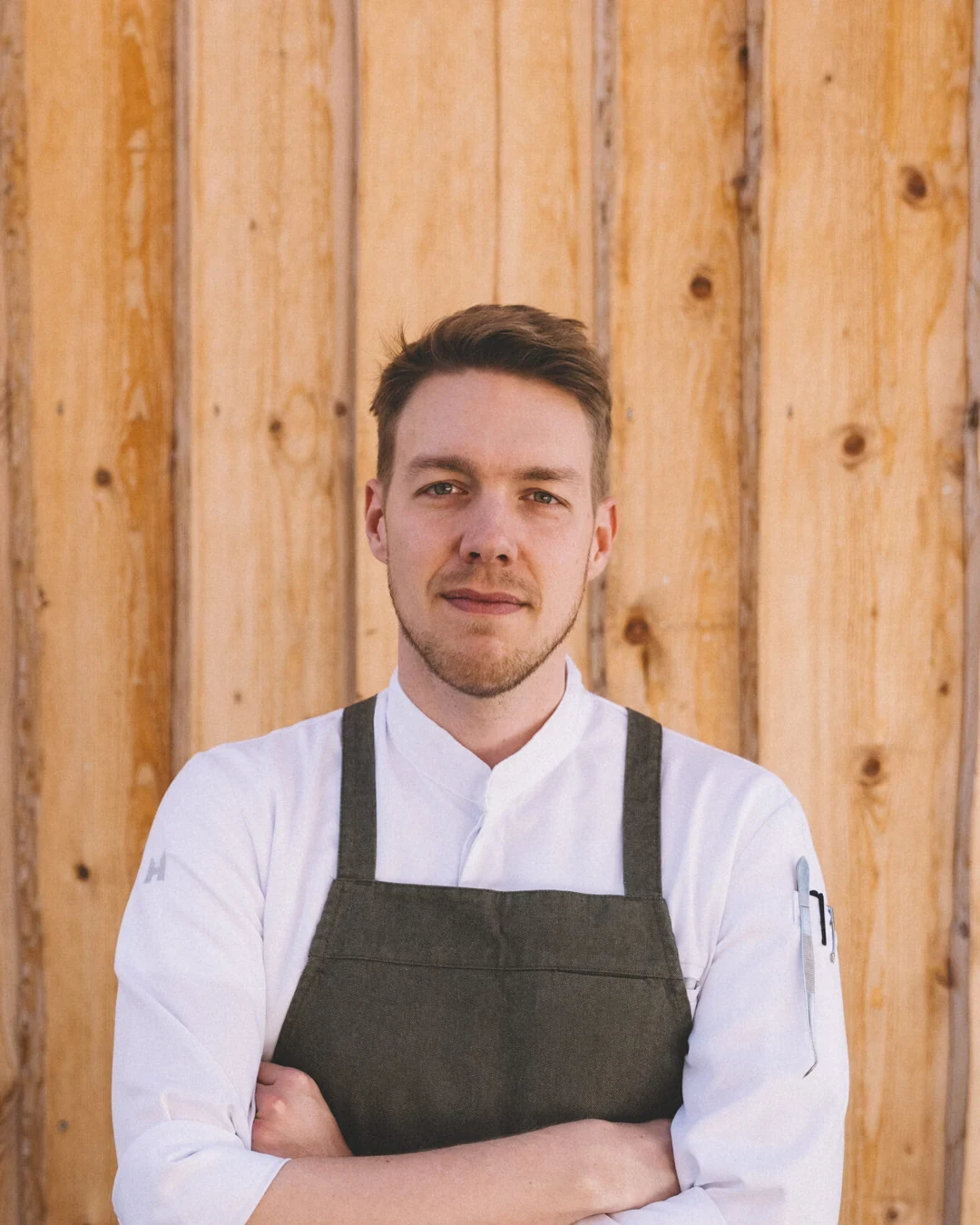
In Residence
Julian Stieger
Chef
- 01CuisineModern Alpine Fine Dining
- 02CityLech am Arlberg, Austria
- 03RecognitionTwo Michelin Stars
- 2 Michelin Stars · Michelin Guide
- Opinionated About Dining Top Restaurants in Europe Ranked #138 · 2026
- Michelin 2 Stars · 2026
- Falstaff Restaurant - 98 Falstaff Points · 2026
- La Liste Top Restaurants: 94pts · 2026
- Opinionated About Dining Top Restaurants in Europe Ranked #171 · 2025
- Michelin 2 Stars · 2025
- La Liste Top Restaurants: 94pts · 2025
- Michelin 2 Stars · 2024
- Opinionated About Dining Top Restaurants in Europe Ranked #290 · 2024
- Opinionated About Dining Top New Restaurants in Europe Highly Recommended · 2023
A Room Designed to Concentrate Attention
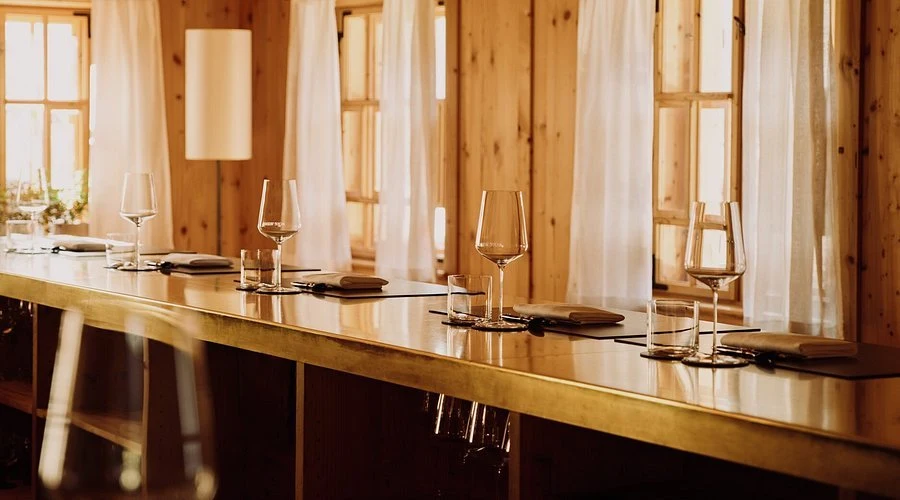
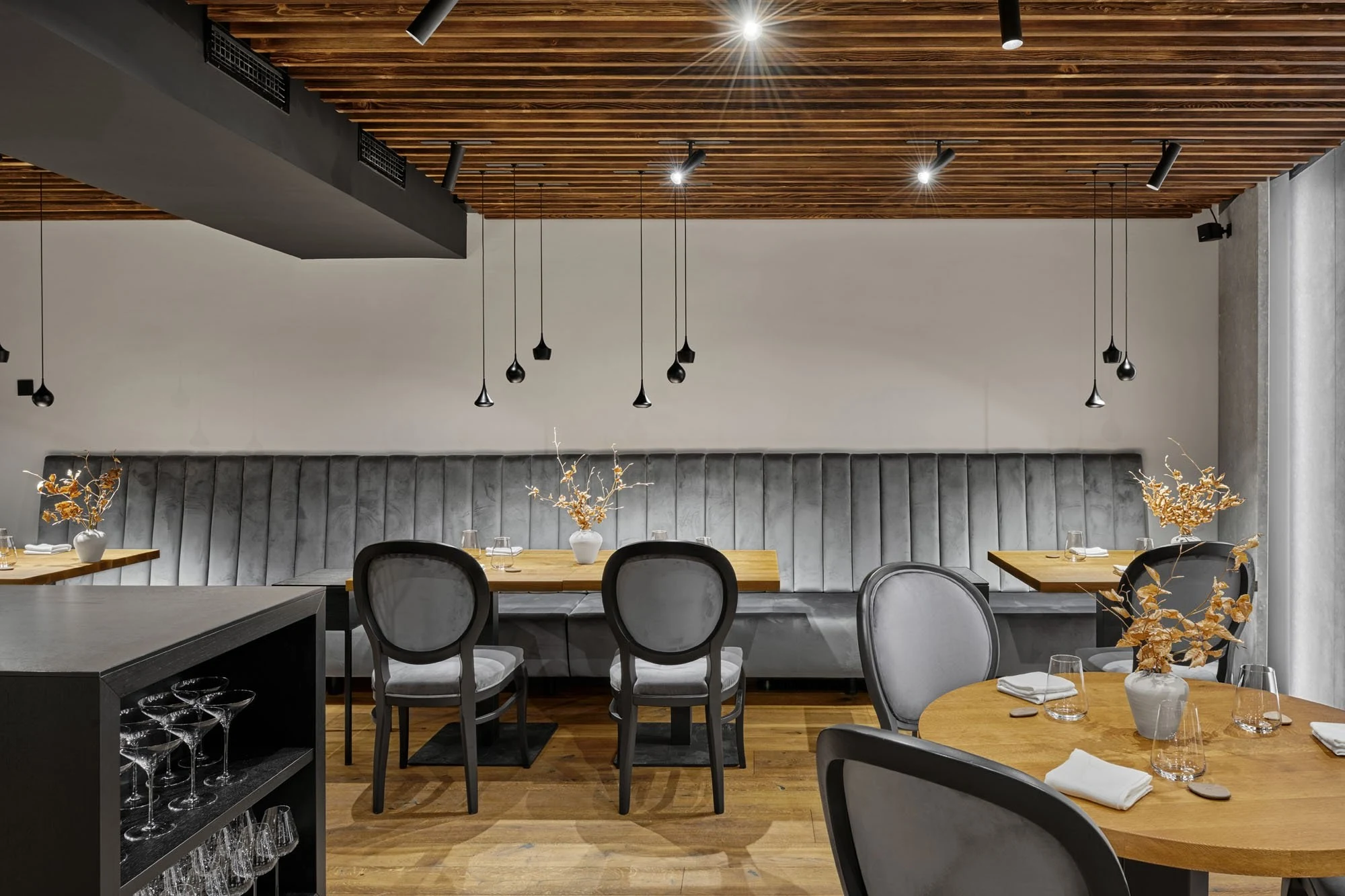
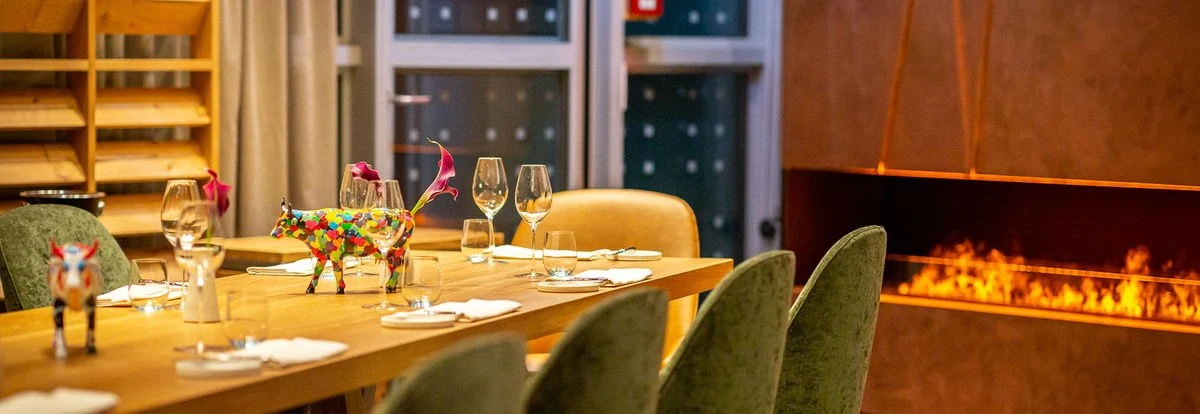
Rote Wand Chef's Table is a two-Michelin-star restaurant in Lech, Austria, serving Modern Alpine Fine Dining under chef Julian Stieger. The Chef's Table format at Rote Wand belongs to neither category entirely. The physical container here is calibrated around intimacy rather than spectacle. A dedicated chef's table setting, by definition, reduces the distance between kitchen and guest to almost nothing. The architecture of the experience is the seating arrangement itself: fewer covers, closer proximity to preparation, a format where the room becomes a frame for the cooking rather than a destination in its own right.
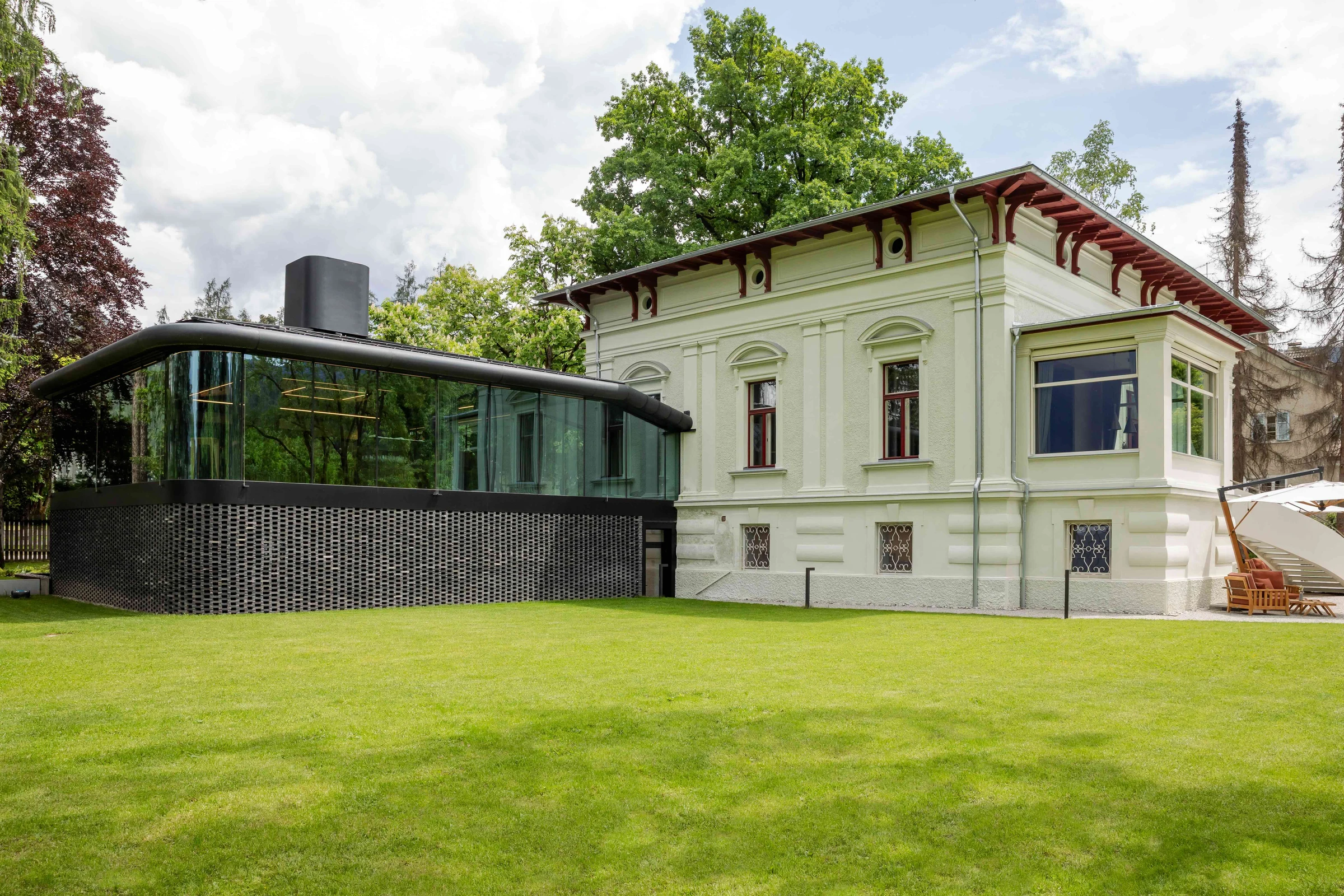
This spatial logic matters in a village like Lech, where the dining options split sharply between large hotel restaurants serving a broad ski-resort clientele and a smaller tier of serious kitchens with genuine creative programs. Rote Wand's Chef's Table sits firmly in the latter cohort. Its address in Zug, a small hamlet adjacent to Lech proper, adds a layer of remove that is itself a signal: this is not a restaurant positioned to catch passing foot traffic.
The Sunday letter
Find new places through the people who run them.
Our Sunday email brings you the chefs, winemakers and hoteliers behind our newest stories. See a sample before you subscribe.
See a sample of the Sunday emailOne email a week. Unsubscribe from any issue.
Where Rote Wand Sits in the Lech Fine Dining Tier
Lech has a concentration of high-end kitchens that is disproportionate to its size as a ski resort. Griggeler Stuba and Jägerstube & Walserstube operate at the €€€€ price point alongside Rote Wand Chef's Table, representing the upper bracket of resort dining in the village. Aurelio sits at €€€, offering a contemporary alternative at a slightly lower price ceiling. Fux brings a fusion perspective at €€€€, while Klösterle takes a progressive Austrian approach. Within this comparable set, Rote Wand Chef's Table carries the most decorated award profile: two Michelin stars held consecutively in 2024 and 2025, a 94-point La Liste score sustained across both 2025 and 2026 editions, and a ranking of #171 in Opinionated About Dining's Leading Restaurants in Europe for 2025, up from #290 in 2024.
That upward OAD trajectory is worth noting. Moving from #290 to #171 in a single year in a ranking driven by professional diner votes reflects a kitchen that is gaining traction with a well-travelled audience rather than coasting on established reputation. The La Liste score of 94 points places Rote Wand in a tier of European restaurants where competition is dense and incremental improvements register against a very high baseline. For context within Austria's broader fine dining scene, this positions Rote Wand Chef's Table in conversation with Steirereck im Stadtpark in Vienna and Döllerer in Golling an der Salzach, two of the country's most consistently recognised kitchens.
Julian Stieger and the Modern Cuisine Category
The classification of Rote Wand Chef's Table as Modern Alpine Fine Dining reflects its cooking style and setting. Modern Cuisine, as a category, signals a kitchen that draws on international technique and a range of ingredient references rather than anchoring its identity to local tradition. In the Alps, this puts a restaurant in a different competitive frame than, say, Kräuterreich by Vitus Winkler in Sankt Veit im Pongau, which operates with a more explicit regional-herb identity, or Obauer in Werfen, whose roots in Austrian culinary tradition are central to its identity.
Chef Julian Stieger holds the kitchen here, and the consecutive two-star Michelin recognition under his tenure confirms a program that is consistent and technically disciplined. At the level where La Liste is awarding 94 points, consistency is not a given: the score reflects both the cooking and the overall experience, including service cadence and the coherence of the setting. The chef's table format is, from a technical standpoint, one of the more demanding service models because every element of the meal is visible and the margin for imprecision narrows considerably.
Frantzén in Stockholm and FZN by Björn Frantzén in Dubai, though the alpine resort context gives Rote Wand a distinct seasonal dimension those city-based peers do not share.
The Resort Context and Its Demands
Cooking at two-star level in a ski resort introduces operational demands that urban fine dining restaurants do not face. Lech is a winter destination, so the restaurant's busiest period follows the ski season. The fact that Rote Wand Chef's Table has sustained Michelin recognition through this environment is an indicator of a kitchen that maintains standards under conditions of high seasonal turnover.
The Arlberg corridor has developed its own cluster of serious kitchens in recent years. Gourmetrestaurant Tannenhof in Sankt Anton am Arlberg operates just over the mountain from Lech, and the overall quality concentration in this part of western Austria is notable for a region whose international reputation rests primarily on skiing. Ikarus in Salzburg represents a different model of Alpine fine dining, with its rotating guest chef format, but the sustained single-kitchen commitment at Rote Wand is a different kind of achievement.
Planning a Visit
Rote Wand Chef's Table is located at Zug 6, 6764 Lech, Austria, in the hamlet of Zug rather than the main village centre. Given the format and the venue's award profile, reservations should be treated as essential and made well in advance of the ski season, when demand across Lech's fine dining tier is at its highest. The €€€€ price designation places this in the top tier of resort dining expenditure in the region. Guests should plan ahead, especially in peak winter weeks.
Questions
Frequently asked
What recognition does Rote Wand Chef's Table hold?
Rote Wand Chef's Table holds 2 Michelin stars.
Who works at Rote Wand Chef's Table?
Made By profiles Julian Stieger (Chef) at Rote Wand Chef's Table.
How expensive is Rote Wand Chef's Table?
Rote Wand Chef's Table is listed at a price level of $$$$.
Where is Rote Wand Chef's Table and what does it serve?
Rote Wand Chef's Table is in Zug, Lech am Arlberg, serving Modern Alpine Fine Dining.
The field
How it compares
| Place | Awards | Cuisine | Notes |
|---|---|---|---|
| Rote Wand Chef's Table | Michelin 2 Stars | Modern Alpine Fine Dining | Zug, $$$$ |
| Atelier Moessmer Norbert Niederkofler | Michelin 3 Stars, World's 50 Best | Modern Alpine Fine Dining | Brunico |
| Griggeler Stuba | Michelin 2 Stars | Modern Alpine Cuisine with Japanese Influences | Lech am Arlberg |
| Milka | Michelin 2 Stars | Modern Alpine Fine Dining | Kranjska Gora |
| Mountain Hub Gourmet | Michelin 1 Star | Modern Alpine Fine Dining | Munich |
| Restaurant Tim Raue | Michelin 2 Stars, World's 50 Best | Asian-German Fine Dining | Berlin |
| Saison | Michelin 2 Stars, World's 50 Best | Modern Fire-Forward Fine Dining | San Francisco |
In residence
Similar places
Modern Alpine Fine Dining
Atelier Moessmer Norbert Niederkofler
Brunico, Italy
★★★ · 50 Best
Modern Alpine Cuisine with Japanese Influences
Griggeler Stuba
Lech am Arlberg, Austria
★★
Modern Alpine Fine Dining
Milka
Kranjska Gora, Slovenia
★★
Modern Alpine Fine Dining
Mountain Hub Gourmet
Munich, Germany
★
Asian-German Fine Dining
Restaurant Tim Raue
Berlin, Germany
★★ · 50 Best
Modern Fire-Forward Fine Dining
Saison
San Francisco, United States
★★ · 50 Best
The Sunday letter
Get the next Made By story in your inbox.
We send one email every Sunday morning with the places and people we covered that week.
See a sample of the Sunday emailOne email a week. Unsubscribe from any issue.