- Wine Spectator · Tier 1
- Wine Spectator Award of Excellence · 2026
- La Liste Top Restaurants: 95pts · 2026
- The Best Chef One Knife · 2025
Where the Bay Sets the Tempo
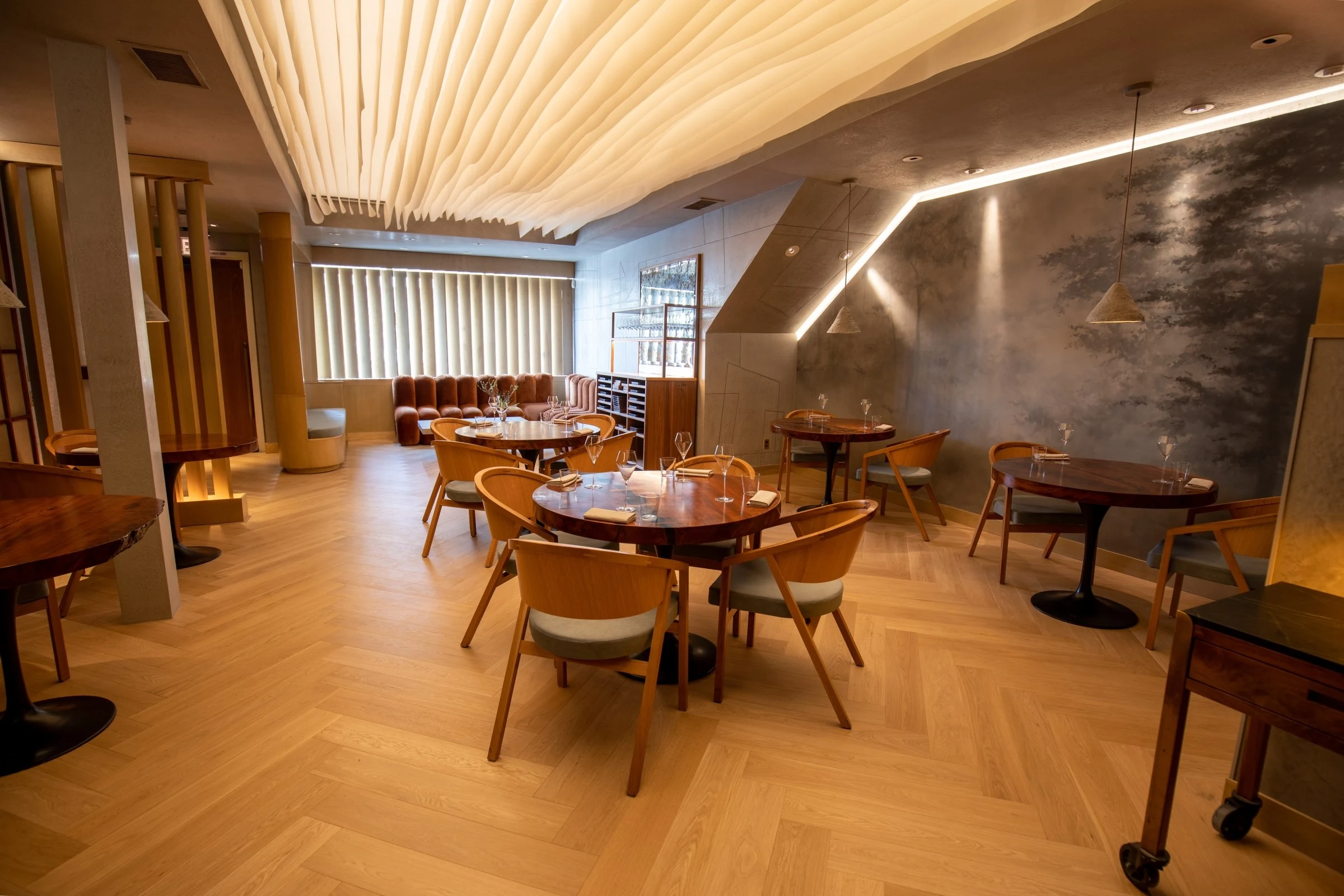
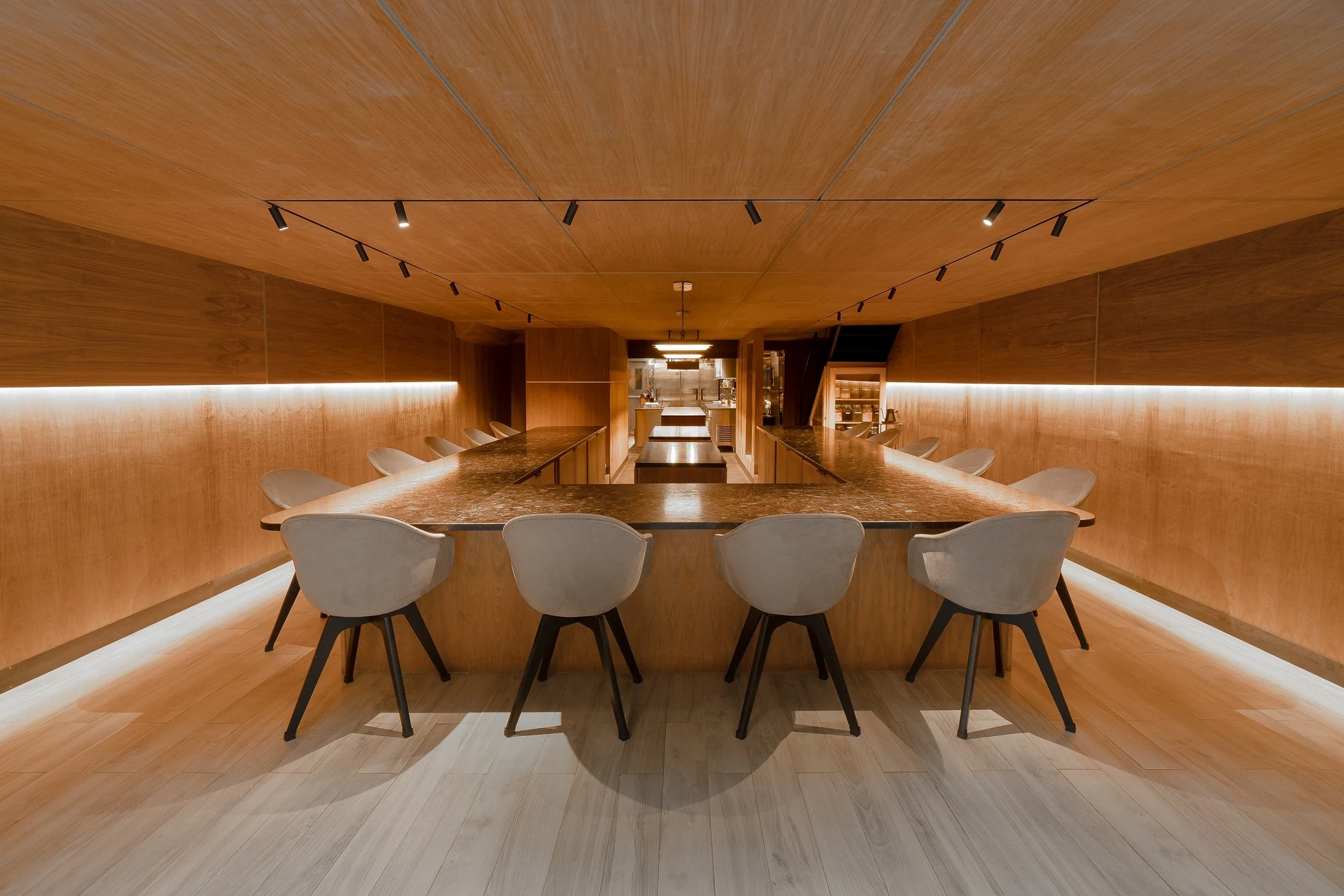
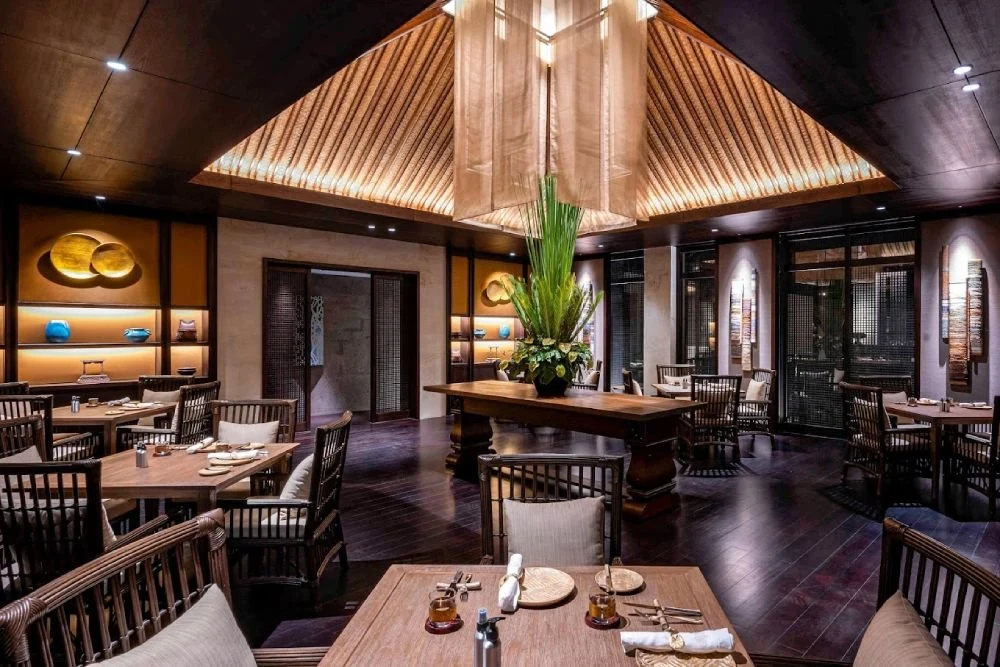
Jimbaran's dining identity has long been shaped by its geography: a curved bay facing the Indian Ocean that turns amber at dusk and silver at dawn. The village built its reputation on grilled seafood served at tables pressed into the sand, a format that dominated the area for decades. What has shifted more recently is the arrival of formal fine dining that uses that same coastal orientation as a structural element rather than a backdrop. Rumari, a Modern Indonesian Fine Dining restaurant in Jimbaran, works within that shift, operating a single address across two very different dining registers depending on when you arrive. Morning service frames Jimbaran Bay from sunrise, while the evening pivots to a structured degustation that reads as one of the more considered expressions of archipelago cooking in the south of Bali.
A Score That Places It in Regional Context
La Liste's 2026 global restaurant ranking awarded Rumari 95 points, a score that positions the restaurant inside a competitive tier occupied by a small number of addresses in Southeast Asia. For context, that ranking system aggregates critical assessments from across international food media and places significant weight on culinary consistency and ambition. At 95 points, Rumari sits well above casual fine dining and alongside properties that define the premium end of the regional category. Within Bali specifically, that places it in a comparable set that includes Locavore NXT in Ubud, which has similarly built its recognition on Indonesian sourcing and structured tasting formats. The comparison is instructive: both addresses are arguing for the same core thesis, that Indonesian ingredients, treated with precision and discipline, belong at the top of any regional hierarchy.
That argument is being made with increasing force across the country. Kaum in Jakarta and Kahyangan in Gondangdia represent different registers of that same conversation: formal programs anchored in Indonesian culinary history rather than imported technique. Rumari's degustation joins that lineage while operating from a coastal position that gives it a distinct product advantage in seafood sourcing.
The Kitchen's Direction
Chef Gaetan Biesuz leads the kitchen. In the context of the editorial angle here, what matters is less his biographical arc and more what his background signals about the kitchen's competitive positioning. European-trained chefs working with Indonesian ingredients have become a recognizable format across Bali's premium dining circuit, the tension between classical technique and highly specific local produce generates a style of cooking that reads differently from either pure French cuisine or traditional Balinese preparation. Biesuz's presence at Rumari places the restaurant inside that format, where the productive friction between training and terroir is the engine of the menu rather than a compromise.
That positioning has clear precedents globally. French technique applied to coastal seafood with absolute ingredient fidelity is the underlying grammar of addresses like Le Bernardin in New York City, where restraint and sourcing define the critical identity more than any single technique. In the Indonesian context, the same logic applies but with a far wider ingredient vocabulary: the archipelago offers regional variation across thousands of islands, and a kitchen that draws from that breadth rather than defaulting to Balinese convention makes a different kind of argument about Indonesian cuisine as a whole.
The Menu's Geography
The six and nine-course degustation formats at Rumari are built around 80 percent locally sourced ingredients, a figure that carries more weight than it might initially appear. At that sourcing level, the menu is structurally dependent on what the archipelago can deliver rather than what a global supply chain can supplement. West Sumatran mud crab appears as a dish reference in the restaurant's documented record, alongside Betutu, the Balinese slow-cooked poultry preparation that involves a spice paste of considerable complexity. The presence of both in a degustation context suggests a menu that moves geographically across Indonesia rather than confining itself to a single regional tradition.
That archipelago-spanning approach places Rumari in a different category from restaurants that localize their sourcing to Bali alone. The culinary distance between a West Sumatran mud crab preparation and a Betutu-derived course is substantial, different spice traditions, different protein categories, different textural registers. A kitchen that can hold those contrasts within a coherent tasting sequence is making an argument about the breadth of Indonesian cooking rather than simply executing one version of it. For diners who have eaten their way through Bali's more established fine dining addresses, including Sarong Bali in Canggu and The Legian in Seminyak, Rumari's geographic ambition across the archipelago represents a distinct editorial position.
The Wine Program
A wine list exceeding 250 labels is a substantial cellar for any fine dining address in Southeast Asia, where import duties make wine pricing a significant operational consideration and where many competitors maintain lists in the 80 to 120 label range. The Krug collection referenced in the restaurant's documented record is described as exclusive, and its pairing orientation toward lobster dishes signals a kitchen that builds the beverage program in deliberate dialogue with the protein-heavy elements of the degustation rather than treating wine as a parallel track. Krug's champagne house occupies a specific prestige tier, its non-vintage Grande Cuvée is among the most recognized multi-vintage blends in the category, and its presence in the Rumari cellar at volume implies a commitment to the premium end of the sparkling wine market that few regional competitors match.
For comparison, wine programs of this scale at fine dining addresses more commonly appear at city-centre properties in Hong Kong or Singapore rather than coastal Bali resort restaurants. 8½ Otto e Mezzo Bombana in Hong Kong maintains a cellar of comparable ambition, and the contrast in context is useful: what reads as expected in a major financial centre requires a distinct level of operational commitment in a beach destination. The 250-plus label count at Rumari is a signal about the seriousness of the beverage program relative to regional norms.
Planning a Visit
Rumari's dual-register format, breakfast service with bay views, evening degustation, gives it practical utility across two different trip needs. Guests staying in Jimbaran or travelling from Seminyak and Canggu for a destination dinner should plan for the evening degustation format, which operates across six or nine courses and represents the more considered expression of what the kitchen does. The address on Jl. Karang Mas Sejahtera positions the restaurant close to the bay, with the geographical logic of Jimbaran's seafood tradition working in its favor for ingredient access. Reservations should be treated as essential rather than optional for evening service.
For those building a broader Bali itinerary, our full Jimbaran restaurants guide covers the range from beachside seafood to structured fine dining. The Jimbaran hotels guide maps accommodation within proximity of the restaurant, and if you are extending into the wider south Bali area, the bars guide, wineries guide, and experiences guide cover adjacent programming. Chef Biesuz's work at Rumari positions the restaurant inside a wider archipelago-first conversation that is being argued simultaneously from multiple addresses, from Locavore NXT in Ubud to Kaum in Jakarta, and Jimbaran's specific geography gives Rumari a coastal sourcing advantage that neither of those addresses can replicate.
Questions
Frequently asked
Who works at Rumari?
Made By profiles Gaetan Biesuz (Chef) at Rumari.
How expensive is Rumari?
Rumari is listed at a price level of $$$.
Where is Rumari and what does it serve?
Rumari is in Jimbaran, Jimbaran, serving Modern Indonesian Fine Dining.
The field
How it compares
| Place | Cuisine | Notes | Awards |
|---|---|---|---|
| Rumari | Modern Indonesian Fine Dining | Jimbaran, $$$ | · |
| Atelier Crenn | Contemporary French Fine Dining | San Francisco | Michelin 3 Stars, World's 50 Best |
| Atomix | Modern Korean Tasting Menu | New York City | Michelin 2 Stars, World's 50 Best |
| Kitchen Table | Modern British Fine Dining | London | Michelin 2 Stars |
| MAZ | Innovative Peruvian-Japanese Fusion | Tokyo | Michelin 2 Stars, World's 50 Best |
| Potong | Progressive Thai-Chinese Fine Dining | Bangkok | Michelin 1 Star, World's 50 Best |
| Smyth | Modern American Tasting Menu | Chicago | Michelin 3 Stars, World's 50 Best |
In residence
Similar places
Contemporary French Fine Dining
Atelier Crenn
San Francisco, United States
★★★ · 50 Best
Modern Korean Tasting Menu
Atomix
New York City, United States
★★ · 50 Best
Modern British Fine Dining
Kitchen Table
London, United Kingdom
★★
Innovative Peruvian-Japanese Fusion
MAZ
Tokyo, Japan
★★ · 50 Best
Progressive Thai-Chinese Fine Dining
Potong
Bangkok, Thailand
★ · 50 Best
Modern American Tasting Menu
Smyth
Chicago, United States
★★★ · 50 Best