Sadler
In Residence
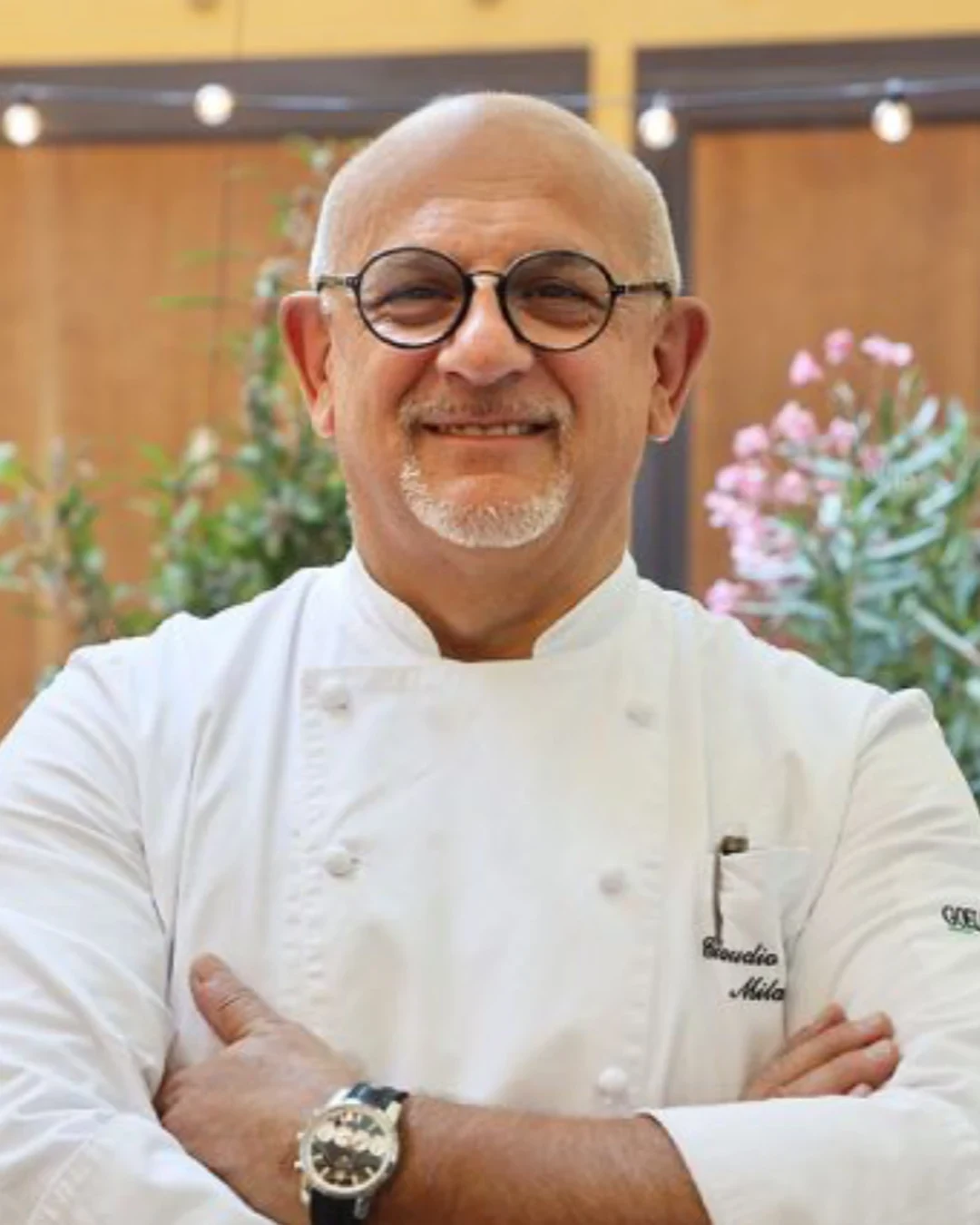
Claudio Sadler
Chef
- 01CuisineModern Italian Fine Dining
- 02CityMilan, Italy
- 03RecognitionOne Michelin Star
- 1 Michelin Star · Michelin Guide
- Michelin 1 Star · 2026
- Michelin 1 Star · 2025
- We're Smart World 2 Radishes · 2025
- Opinionated About Dining Classical in Europe Ranked #195 · 2025
- Michelin 1 Star · 2024
- Opinionated About Dining Classical in Europe Ranked #196 · 2024
- Opinionated About Dining Classical in Europe Recommended · 2023
The Sunday letter
Find new places through the people who run them.
Our Sunday email brings you the chefs, winemakers and hoteliers behind our newest stories. See a sample before you subscribe.
See a sample of the Sunday emailOne email a week. Unsubscribe from any issue.
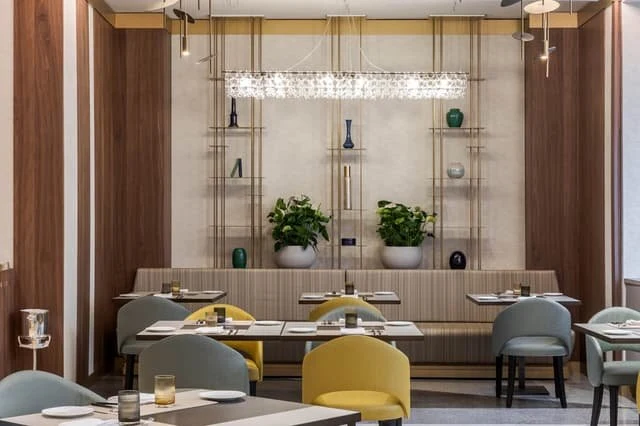
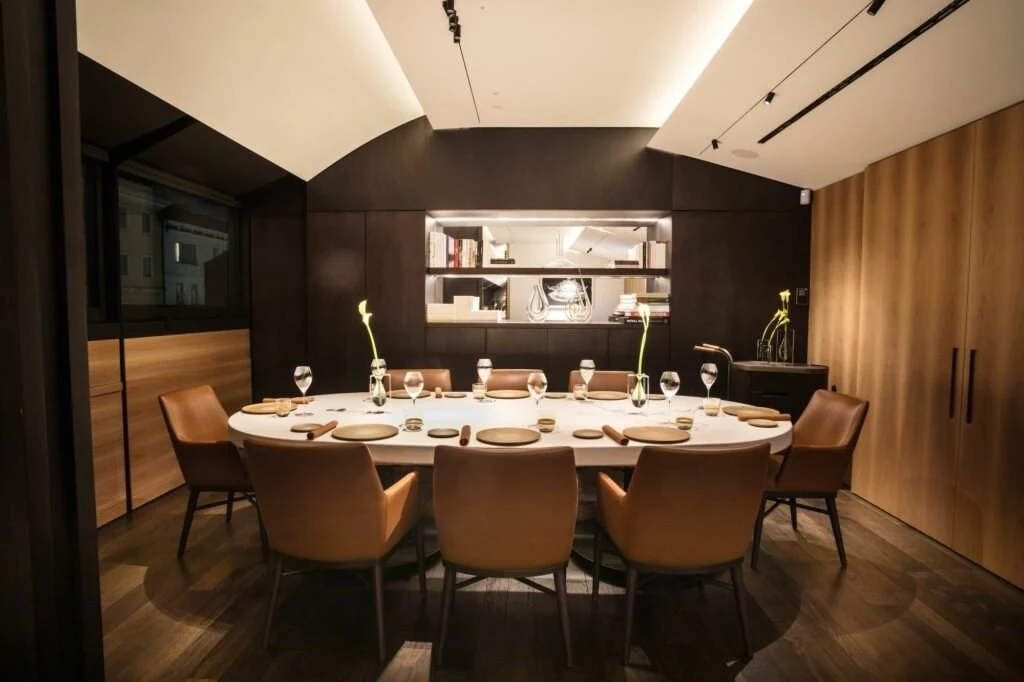
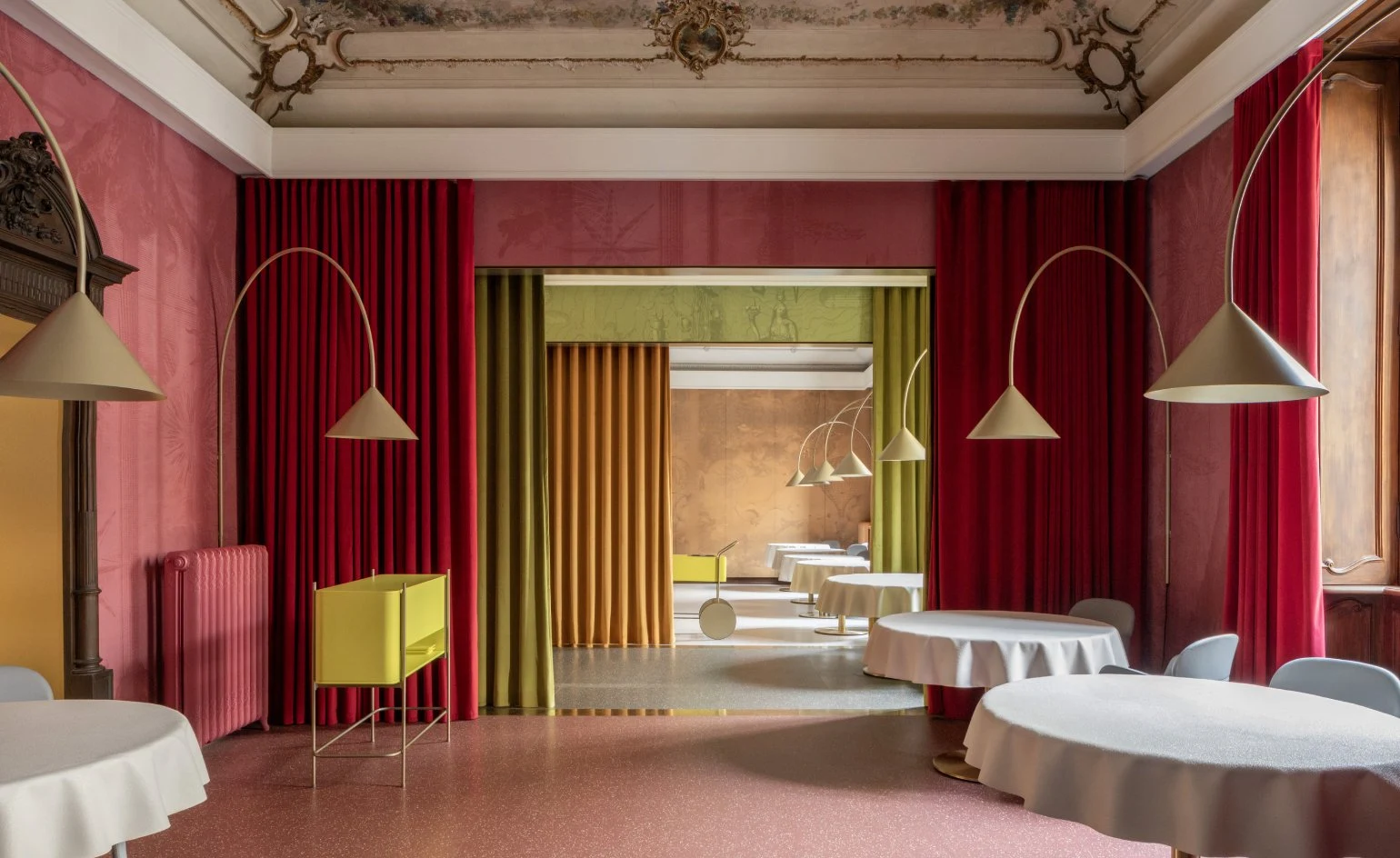
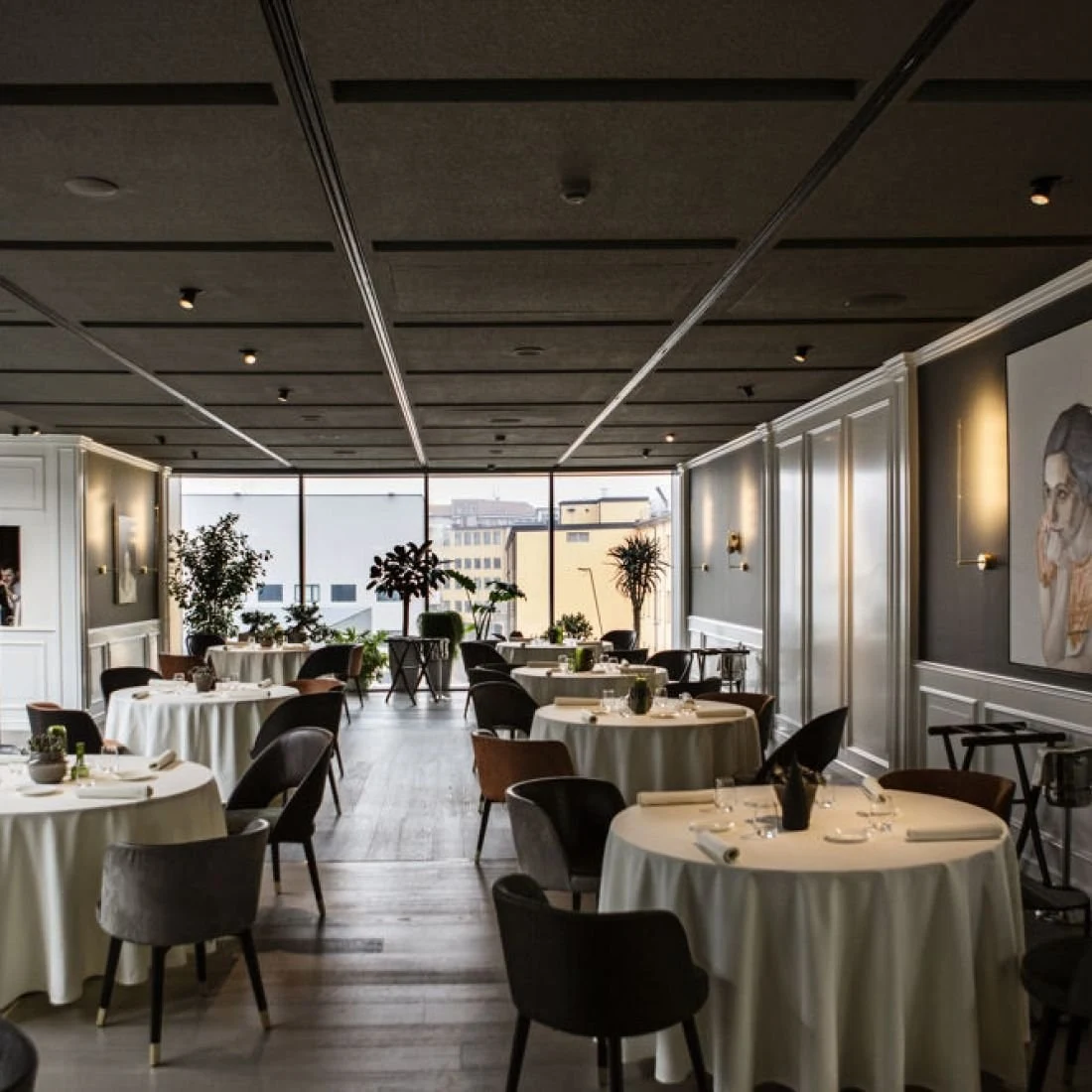
Sadler is a one-star Michelin restaurant in Milan serving Modern Italian Fine Dining, with dishes by Claudio Sadler and a price point around $150 per person. Via dell'Annunciata is a quiet address by Milan's standards, sitting between the fashion district and the Brera neighbourhood in a part of the city where the pace drops and the buildings hold their age well. Casa Baglioni, which dates from 1913, is one of the finer Art Nouveau structures in this zone: the kind of building where the proportions still do most of the work before you reach the door. The dining room inside carries that character forward without reproducing it literally. Colourful armchairs read against an otherwise composed interior, warm without tipping into the overwrought comfort-signalling that plagues hotel restaurants at this price point. Entering, the effect is closer to a well-kept private room than a hotel annex.
Classical Cooking in a City That Often Prefers the New
The dominant story has been creative Italian: technically ambitious menus, international reference points, kitchens that treat classical technique as a starting point to be interrogated rather than honoured. Venues like Nebbia and Spore represent one direction; Rovello another. Against that grain, Sadler has maintained a commitment to what Opinionated About Dining classifies as the Classical tradition in Europe, a designation that covers restaurants where the cooking derives its authority from precision and ingredient quality rather than conceptual novelty.
That positioning is neither nostalgia nor conservatism. The cuisine here is described consistently as precise and distinctive, with a balance between traditional and innovative that leans on top-quality ingredients as its primary differentiator. There are no sous-vide theatrics or deconstructed pastas performing cleverness. What the kitchen demonstrates instead is a version of the trattoria ethos scaled up: the belief that the leading product, correctly handled, makes the argument on its own terms.
This is not the dominant mode among Milan's comparable addresses. The city's other €€€€ Italian houses, Enrico Bartolini, Cracco in Galleria, Andrea Aprea, Seta, Contraste, each tend toward modern or progressive Italian, with tasting menus that foreground the chef's conceptual framework. Sadler occupies a different register, closer in spirit to the Italian classical canon as practised at Dal Pescatore in Runate or Enoteca Pinchiorri in Florence than to the experimental current that Osteria Francescana in Modena helped set in motion.
The Ingredients Argument
Claudio Sadler has been cooking in Milan long enough to have shaped part of the city's culinary record rather than simply responding to it. His kitchen's orientation toward white and black truffle, fresh herbs, and courgette in its various forms gives some indication of where the seasonal emphasis falls. These are not obscure ingredients. They are, by definition, the Italian larder at its most legible, which is precisely the point. The quality of a truffle preparation depends almost entirely on the truffle itself and the restraint of everything around it. That is a harder argument to win than it sounds.
The broader Italian fine-dining context is worth noting here. Across the country's leading classical addresses, from Quattro Passi in Marina del Cantone to Uliassi in Senigallia, the most persuasive cooking tends to resist the temptation to over-engineer what the season has already provided. Sadler's kitchen operates from a similar premise. Vegetables appear on the plate, but in a supporting rather than starring role, a detail that places this firmly in the classical Italian idiom rather than the vegetable-forward direction that some of its contemporaries have adopted.
For a different expression of how classical Italian technique translates outside Italy entirely, the comparison with 8½ Otto e Mezzo Bombana in Hong Kong or cenci in Kyoto is instructive. Both operate from the same foundational grammar while adapting to their local context. Sadler, by contrast, remains rooted in the Milanese setting, which is itself a kind of discipline.
The Wine List and What It Signals
Wine lists at this level function as a secondary argument about the kitchen's seriousness. Sadler's list is described as covering excellent Italian and international bottles, with rare and exclusive labels present in meaningful numbers. That configuration, Italian spine, international depth, allocation-tier inclusions, is the standard model for a leading Milanese fine-dining cellar, but the rare-label presence suggests a commitment that goes beyond sourcing a competent selection. It also creates a useful pairing logic for a menu that relies on ingredient quality: the wines need to amplify rather than compete.
Lunch, the Rooftop, and the Rhythm of the Week
Sadler runs a business lunch format at midday that offers a different point of entry than the evening tasting experience. In a city where the lunch hour still carries genuine weight as a professional and social ritual, a Michelin-starred kitchen offering a structured midday menu at presumably different economics is a practical opportunity that does not exist at all of Milan's comparable addresses. It is also, arguably, the format closest to the trattoria tradition the restaurant's ethos echoes: good cooking, proper timing, minimum ceremony.
The rooftop bar on the seventh floor operates separately from the restaurant, running daily from 6pm to 1am with aperitifs developed by the kitchen team. The 360-degree city view is the structural draw; the aperitif programme, designed specifically for the space rather than sourced generically, means the two offerings share a culinary authorship even if they operate as distinct experiences. This is not unusual in hotel-restaurant combinations at this level, but the kitchen's direct involvement in the aperitivo selection is worth noting for those who want a lower-commitment introduction to the address.
Sunday service is lunch only, from 12:30pm to 2:30pm. The Monday-to-Saturday schedule runs both lunch and dinner across consistent slots. For comparative context on Milan's broader restaurant options at different price tiers and formats, see our full Milan restaurants guide; BistRo Aimo e Nadia and Locanda Perbellini represent adjacent positions in the city's contemporary Italian tier.
comparable set and Critical Standing
The Michelin star places Sadler in a specific tier of Milan's fine-dining ecosystem. This is a restaurant that has earned its place steadily rather than through a moment of critical spectacle.
That trajectory matters for the reader making a booking decision. Sadler is not a table you secure because it is currently generating buzz. It is a table you secure because the cooking has been consistently recognised over multiple years across two distinct critical frameworks: the Michelin quality assessment and the OAD peer-survey model, which draws on a different evaluator base. Consistency across those two systems is its own form of argument.
Know Before You Go
| Address | Via dell'Annunciata, 14, 20121 Milano MI, Italy |
|---|---|
| Setting | Inside Casa Baglioni hotel, Art Nouveau building (1913) |
| Price tier | €€€€ |
| Awards | Michelin 1 Star |
| Lunch hours | Monday–Sunday, 12:30pm–2:30pm |
| Dinner hours | Monday–Saturday, 7:30pm–10:30pm (no dinner Sunday) |
| Rooftop bar | Daily, 6pm–1am (aperitifs designed by the kitchen team) |
| Chef | Claudio Sadler |
| Google rating | 4.6 (694 reviews) |
Questions
Frequently asked
What recognition does Sadler hold?
Sadler holds 1 Michelin star.
Who works at Sadler?
Made By profiles Claudio Sadler (Chef) at Sadler.
How expensive is Sadler?
Sadler is listed at a price level of $$$$.
Where is Sadler and what does it serve?
Sadler is in Brera, Milan, serving Modern Italian Fine Dining.
The field
How it compares
| Place | Awards | Cuisine | Notes |
|---|---|---|---|
| Sadler | Michelin 1 Star | Modern Italian Fine Dining | Brera, $$$$ |
| Andrea Aprea | Michelin 2 Stars | Modern Italian Fine Dining | Milan |
| Contraste | Michelin 1 Star | Modern Italian Fine Dining | Milan |
| Dry Milano | · | Neapolitan Pizza & Cocktails | Milan |
| Enrico Bartolini | Michelin 3 Stars, World's 50 Best | Modern Italian Fine Dining | Milan |
| Il Luogo di Aimo e Nadia | · | Modern Italian Regional | Milan |
| Seta | Michelin 2 Stars | Modern Italian Fine Dining | Milan |
In residence
Similar places
Modern Italian Fine Dining
Andrea Aprea
Milan, Italy
★★
Modern Italian Fine Dining
Contraste
Milan, Italy
★
Neapolitan Pizza & Cocktails
Dry Milano
Milan, Italy
Modern Italian Fine Dining
Enrico Bartolini
Milan, Italy
★★★ · 50 Best
Modern Italian Regional
Il Luogo di Aimo e Nadia
Milan, Italy
Modern Italian Fine Dining
Seta
Milan, Italy
★★
The Sunday letter
Get the next Made By story in your inbox.
We send one email every Sunday morning with the places and people we covered that week.
See a sample of the Sunday emailOne email a week. Unsubscribe from any issue.