Extended aging in palace stables
- Pearl 2 Star Prestige · 2025
Time held in the cellar
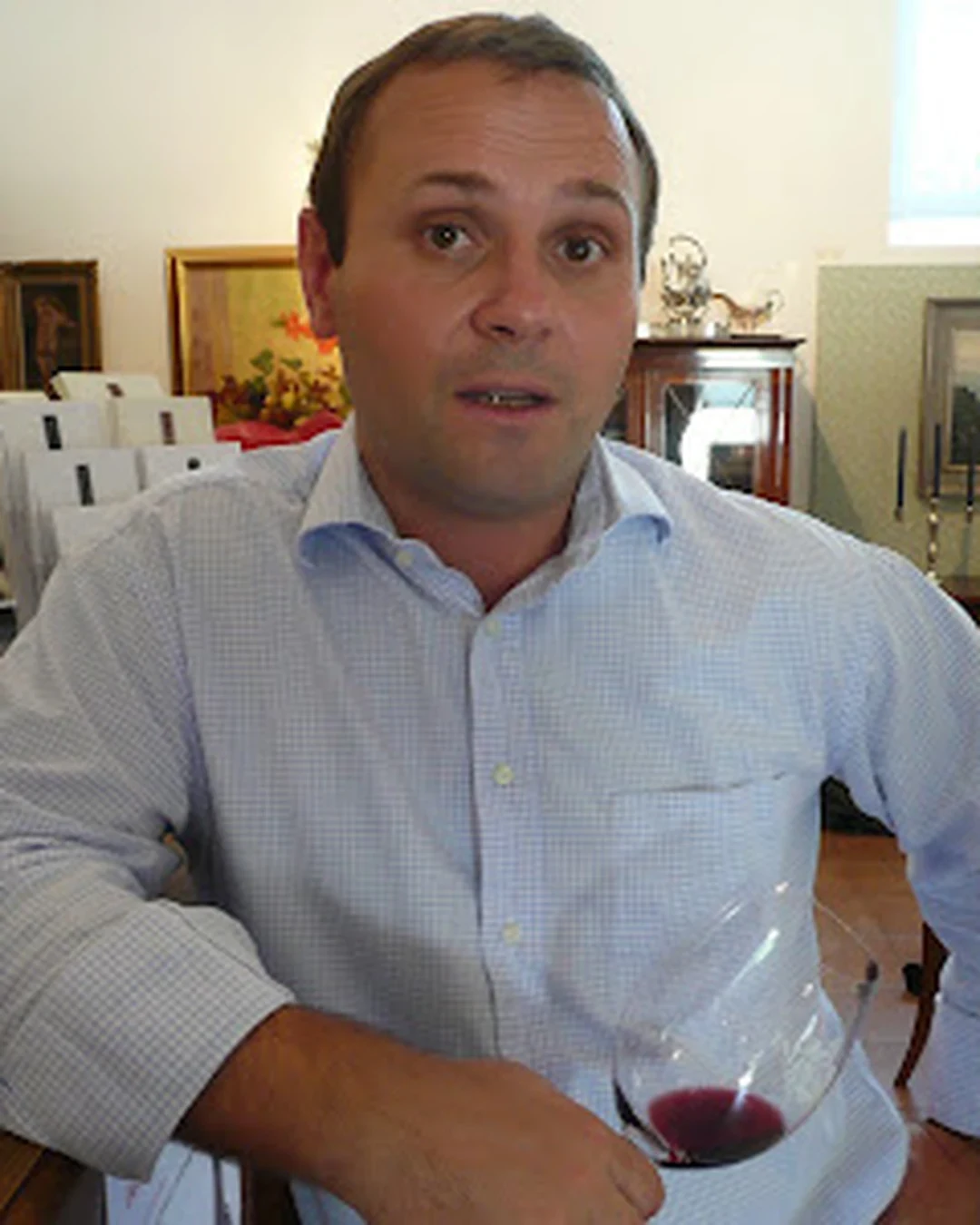
Markus Sieben keeps time as a cellar material, working as winemaker at Schloss Halbturn Winery in Halbturn before a portfolio built for patience. Markus Sieben names that patience plainly: “We give the wines the most expensive thing there is — and that is time.” At this Baroque palace estate in Burgenland, the work happens in former stables once built for imperial Lipizzaner horses, now turned toward wine rather than movement. The setting gives the cellar a particular gravity, but Sieben’s language stays close to the tools. His signature wines include Pinot-noir-Abfüllungen, Cuvée Impérial, Grand Vin TBA, and Chardonnay 2012, a set that asks for different kinds of attention: the line of Pinot Noir, the blend logic of Cuvée Impérial, the held tension of Grand Vin TBA, the directness of Chardonnay. Follow the wines and the method appears: structure, waiting, and release only when the cellar has finished its part.
Forty eight hectares under a practical hand
The estate works with 48 hectares in the Neusiedlersee appellation, large contiguous vineyards in the Pannonian lowlands around Halbturn. Its scale is medium, with production given as 120,000 bottles a year, and the range moves through Pinot Noir, Blaufränkisch, Sankt Laurent, Zweigelt, Merlot, Chardonnay, Sauvignon Blanc, and Riesling. Sieben’s vineyard line is not dressed up as doctrine. “We use biological pest control but conventional spraying against oidium, botrytis, and powdery mildew.” That sentence carries the discipline of the place: biological control where it fits, conventional spraying where disease pressure asks for it, no romance added to the season. In the cellar, the stated focus is still red and still white wine, with extended aging part of the estate’s identity. Cuvée Impérial and Grand Vin TBA sit in that longer arc, wines made less by haste than by the decision to keep watching.
Former stables, quiet cellar
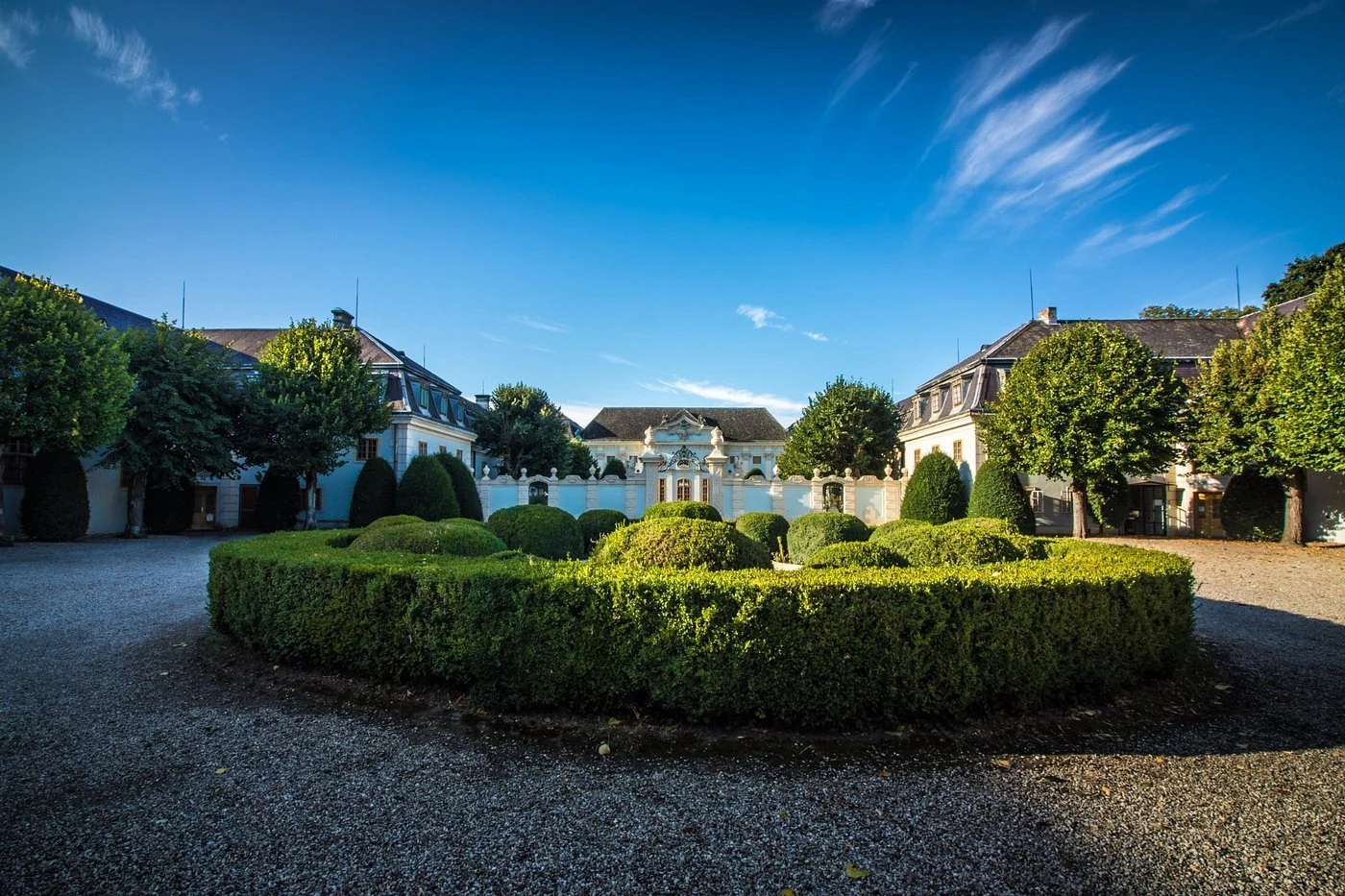
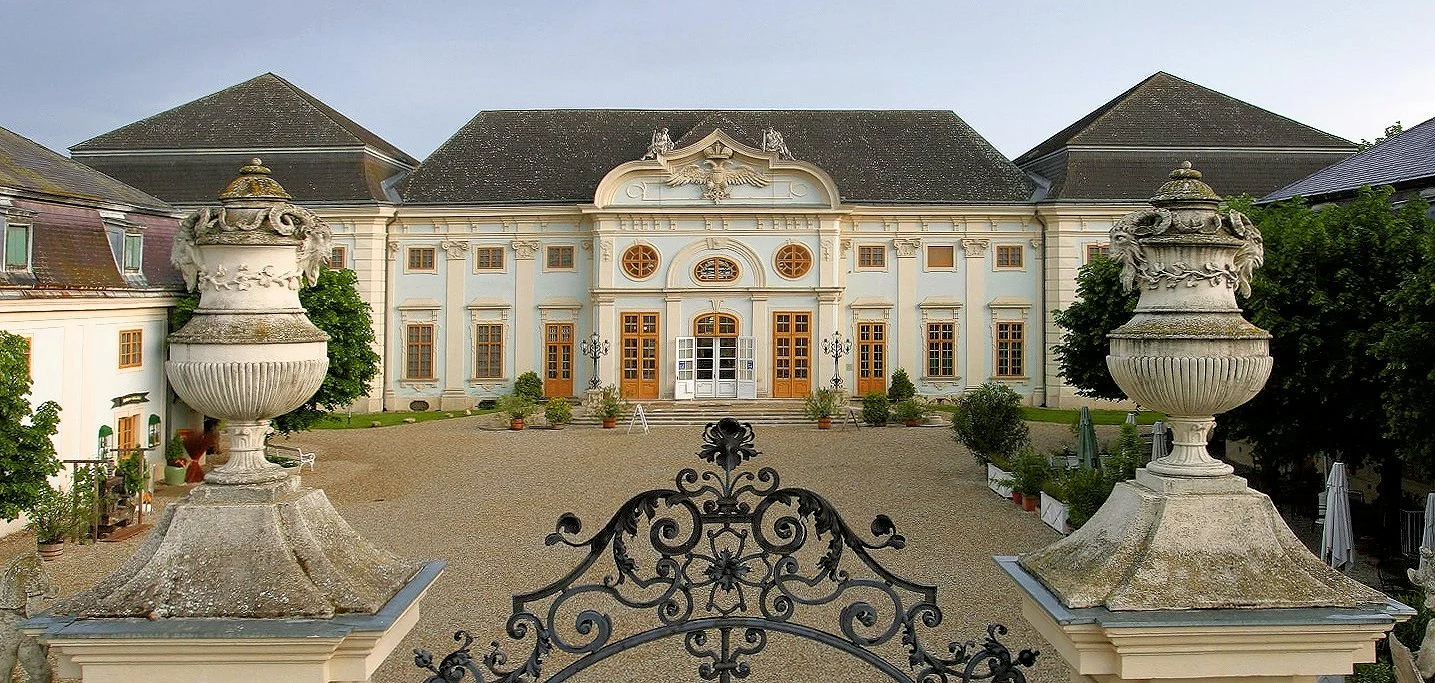
The cellar sits inside the former palace stables, and that fact changes the room before a glass is poured. This is not a neutral shed built around tanks and throughput. It is a working wine space held within a Baroque estate, amid vineyards that run together across the lowland. The atmosphere is quiet, more polished than rustic, with tasting shaped around the cave and private cellar rather than a crowded counter. The refinement here comes from proportion: palace walls, stable volume, matured wines, and a program that does not need to shout its age. In that setting, the pass is the cellar door, the station is the row of bottles ready for time to be judged by hand, glass, and finish.
What the next glass asks of the hand
The house has one current award attached to the place, but the more durable substance is still the work Sieben describes: the choice to protect the vineyard pragmatically, then give the wine time after harvest. The venue is about the bottle rather than the medal. Grand Vin TBA is the clue to the cellar’s patience at Schloss Halbturn Winery.
Questions
Frequently asked
Who makes the wine at Schloss Halbturn Winery?
Markus Sieben is the winemaker at Schloss Halbturn Winery in Halbturn.
What is the estate known for?
The winery is known for patient aging and extended cellar time, with wines such as Pinot-noir-Abfüllungen, Cuvée Impérial, Grand Vin TBA, and Chardonnay 2012.
What kind of vineyards and grapes does the estate work with?
Schloss Halbturn Winery works with 48 hectares in the Neusiedlersee appellation and grows Pinot Noir, Blaufränkisch, Sankt Laurent, Zweigelt, Merlot, Chardonnay, Sauvignon Blanc, and Riesling.
What is the setting like?
The cellar is set inside former palace stables at a Baroque estate in Burgenland, which gives the tasting space a quiet and polished character.
Is booking recommended?
Reservation is recommended at Schloss Halbturn Winery.
The field
How it compares
| Place | Notes |
|---|---|
| Schloss Halbturn Winery | Halbturn, $$$ |
| Artisan Wines | Halbturn |
| Biohof Josef Grösz | Halbturn |
| Biohof Lang | Halbturn |
| Weingut Heinrich und Elisabeth Thury | Halbturn |
| Weingut Silvia und Gerhard Pitzer | Halbturn |
| Weingut Unger | Halbturn |