Made ByRestaurant
Sea Front Di Martino Pasta Bar
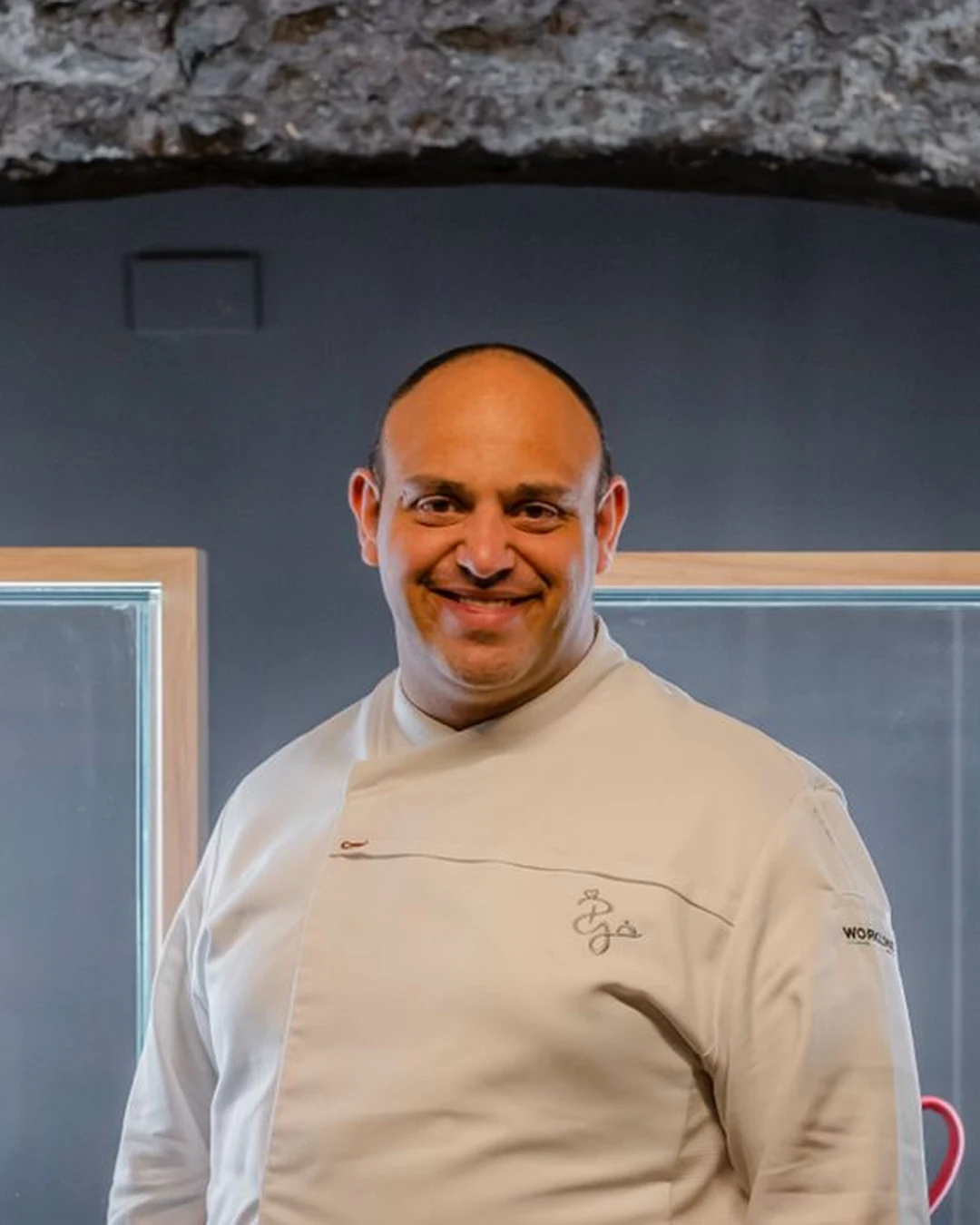
Chef in Residence
Pierpaolo Giorgio
Chef
- 01CuisinePasta Bar
- 02CityNaples, Italy
Pierpaolo Giorgio, Chef at Sea Front Di Martino Pasta Bar in Naples, leads a pasta counter shaped by Gragnano I.G.P. craft.
At a glance
- Cuisine
- Pasta Bar
The hand at the pasta counter
At the counter, Pierpaolo Giorgio checks texture before the pass, Chef at Sea Front Di Martino Pasta Bar in Naples, where pasta sets the discipline of the room. His post is stated plainly, Executive Chef, and the clarity suits the place. There is no public trail of prior houses or named mentors to lean on, so the work here has to be read at the bench: timing, restraint, the decision to let a shape hold a sauce rather than cover it. The restaurant sits above a Pastificio Di Martino boutique, tying the kitchen to a pasta house founded by Giuseppe Di Martino, a third-generation pasta maker. That lineage matters because it changes the center of gravity. Pasta is not one section of the menu, nor a familiar comfort added to a broader Italian program. It is the whole argument. Giorgio leads a kitchen where the smallest choices carry weight, from the bite of dried Gragnano I.G.P. pasta to the moment a pan leaves the flame and meets the plate. In Naples, that is a narrow path. Too much polish and the dish loses its ease; too little control and the pasta gives up its shape.
Gragnano shapes on the pass
The program is built around Gragnano I.G.P. pasta, with more than 120 to 126 varieties in the house’s orbit. That range is not a display case. It gives Giorgio and the kitchen a vocabulary of cut, hollow, ridge, and surface, each shape chosen for what it can hold and what it should leave behind. Ziti alla Genovese takes dried pasta from the Gragnano factory and asks for patience from onion, meat, and time. Spaghetti with clams depends on tension, the strand carrying salinity without turning slick. Bucatini with rabbit Ischia style works differently again, the tube doing its own quiet work at the center of the dish. Even the pastamisù, made with pasta fragments, keeps the idea inside the method rather than treating it as a joke from the pastry station. A sushi bar-style counter lets guests watch the hands at work, close enough to see how the kitchen treats pasta as a material with limits, not a blank carrier for sauce.
The room around the bench
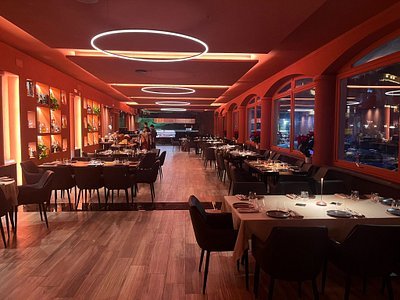
The room has the restraint of a counter built for observation: open kitchen, pale surfaces, a Scandinavian spareness that keeps the eye on the pass. It is casual in the way a working room can be casual, with the stations visible and the rhythm of service doing the decorating. The address faces Maschio Angioino, yet the pull inside is bench-side rather than panoramic. Plates move from pan to counter without ceremony. A guest can read the craft in small sequences, water, pan, bowl, pass; the gestures stay close to the material. The boutique below adds another layer, not as backdrop, but as a reminder that the kitchen is working with a maker’s product before it becomes a restaurant dish.
One menu, one language
The restaurant’s current recognition includes a place in the MICHELIN Guide and a New York Times mention among five unmissable restaurants in Naples, but those labels are lighter than the daily repetition of the pasta program. Giorgio’s station is still the pass, and the house continues to return to the same grammar: Gragnano shapes, Neapolitan appetite, and dishes that keep their nerve. The plate reads ziti alla Genovese.
Address
P.za Municipio, 1, 80133 Napoli NA, Italy
In residence
Similar places
Italian
George Restaurant
Naples, Italy
★★
Modern Neapolitan Pizza
50 Kalò di Ciro Salvo
Naples, Italy
French-Italian Fine Dining
Il Ristorante Alain Ducasse Napoli
Naples, Italy
★
Modern Italian Fine Dining
Veritas
Naples, Italy
★
Authentic Neapolitan Pizza
La Notizia 53
Naples, Italy
Authentic Neapolitan Pizza
Gino Sorbillo
Naples, Italy