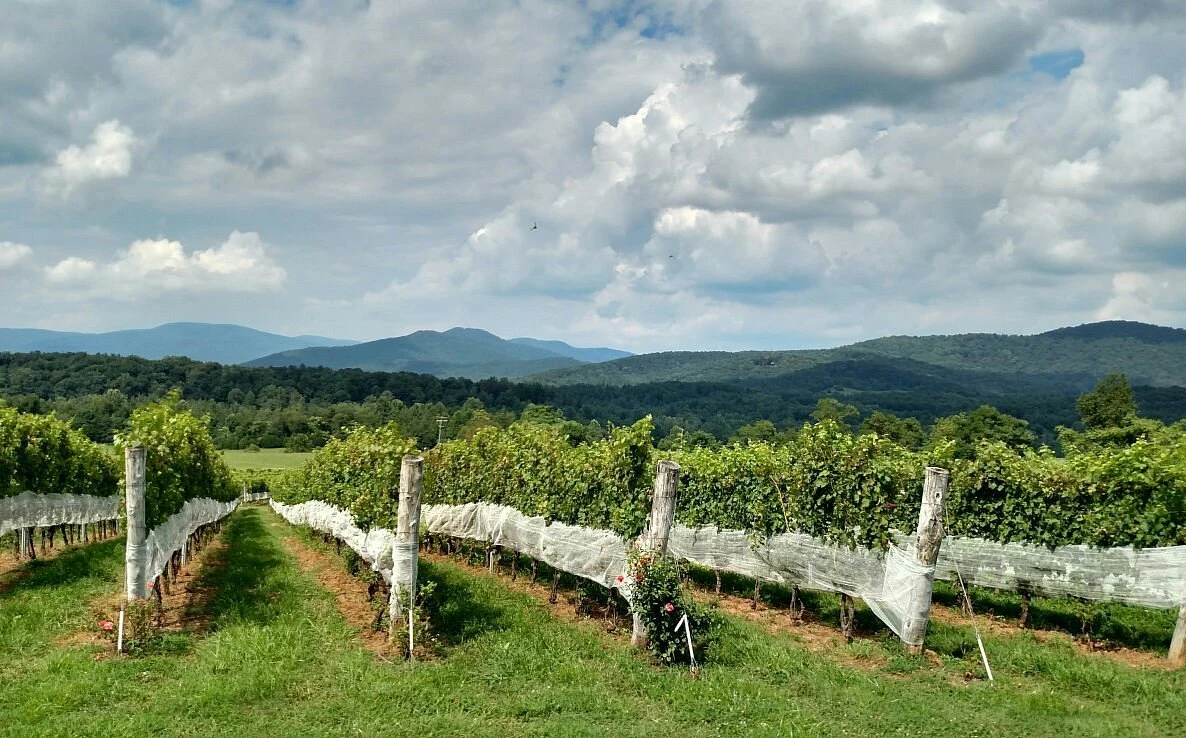
Stinson Vineyards sits along Sugar Hollow Road in White Hall, Virginia, at the foot of the Blue Ridge Mountains, where the interplay of elevation, mountain air, and cool-season soils shapes wines of genuine regional character. The property holds a Pearl 2 Star Prestige rating from EP Club (2025), placing it among the more recognized addresses in Virginia's growing fine wine tier.
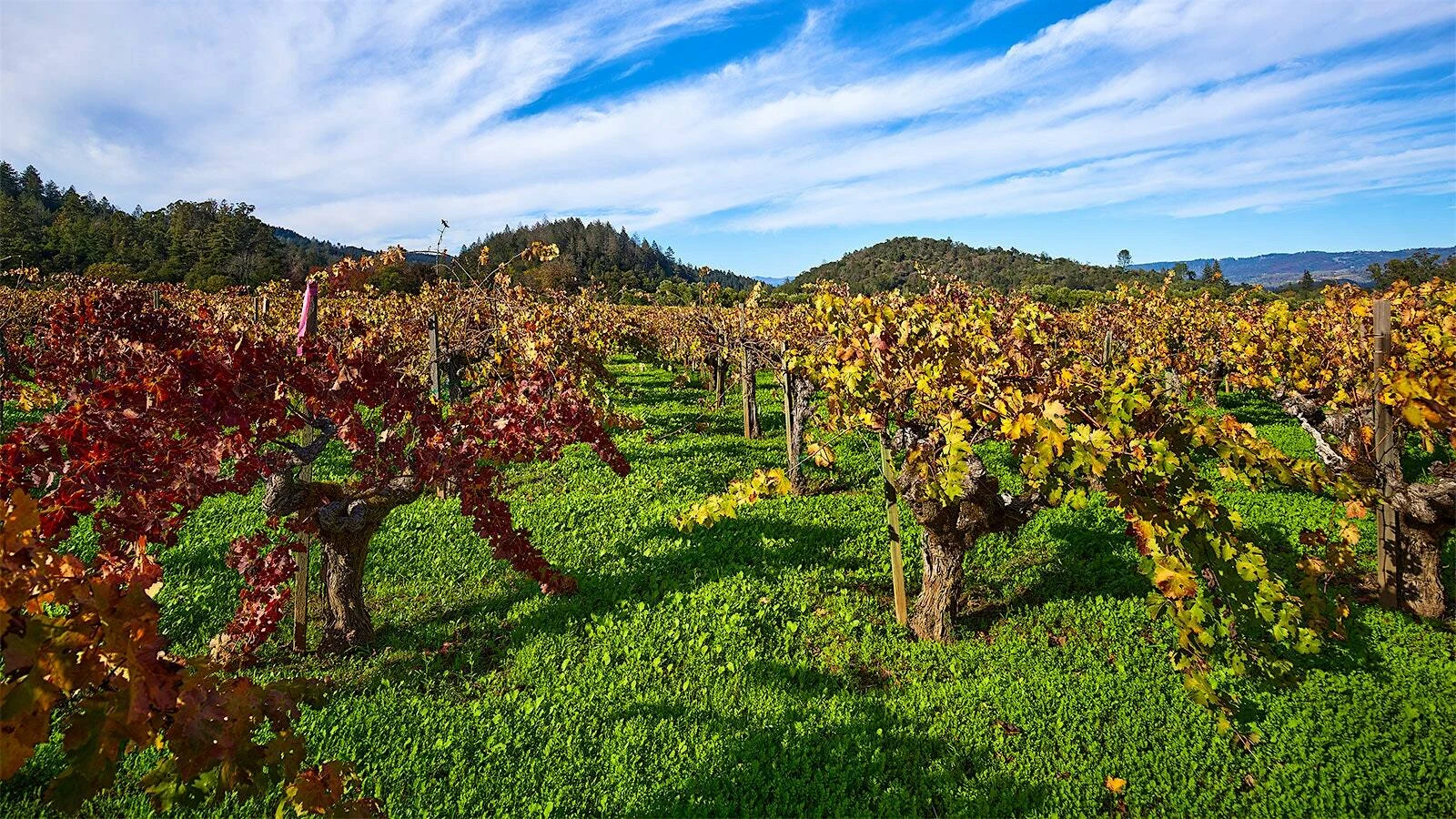
<h2>Where the Blue Ridge Shapes the Wine</h2><p>Virginia's wine country does not present itself uniformly. The Shenandoah Valley floor, the eastern Piedmont plateaus, and the Blue Ridge foothills each produce a distinct thermal and hydrological environment, and Sugar Hollow Road in White Hall sits at a particularly consequential convergence of those forces. The Blue Ridge Mountains rise sharply to the west, channeling cool air down through hollow passages at night and providing afternoon shade that extends the growing season's effective temperature window. For a grape variety trying to hold acidity while ripening phenolics, this kind of site-specific climate behavior is worth more than any winemaking intervention applied later in the cellar.</p><p>Stinson Vineyards is a winery in Crozet, Virginia, recognized with Pearl 2 Star Prestige in 2025. Stinson Vineyards occupies this terrain at 4744 Sugar Hollow Rd, Crozet, and the address alone tells experienced Virginia wine followers something meaningful. The Crozet corridor has emerged as one of the state's more studied sub-zones precisely because properties here benefit from Appalachian granite and schist-derived soils, moderating elevations, and orographic lift effects that reduce the humidity and disease pressure endemic to Virginia's warmer lowland appellations. The Pearl 2 Star Prestige recognition awarded in 2025 reflects the recognition that the leading Virginia producers are now earning from systematic quality evaluation, and Stinson sits within that tier.</p><h2>Reading the Terroir of the Blue Ridge Foothills</h2><p>The broader context for understanding what Stinson Vineyards represents is the longer arc of Virginia viticulture as it has progressively moved from novelty toward serious appellation identity. For most of the state's modern wine history, the conversation centered on whether Virginia could produce anything worth comparing to established American appellations. That conversation has shifted. The question now is which specific sites, and which specific soil profiles, express something genuinely local rather than merely competent.</p><p>Sugar Hollow's geological character tends toward residual soils derived from metamorphic and igneous parent material, a profile that promotes natural drainage, restricts vine vigor, and in cooler vintages produces the kind of mineral tension that registers in the glass as precision rather than weight. This is the same general logic that explains why Burgundy's limestone-clay variations produce such different wines across a single hillside, applied to the Appalachian context. The vine roots' interaction with fractured rock substrate at depth, combined with the thermal oscillation produced by mountain proximity, creates conditions where grape chemistry develops incrementally rather than rushing to ripeness under uniform heat accumulation.</p><p>Virginia's most cited challenge has historically been the humid continental climate, which brings late-season rainfall, botrytis pressure, and the kind of inconsistent vintage quality that makes building a reliable reputation difficult. Sites like Sugar Hollow mitigate that risk through altitude and aspect, and producers who have planted specifically for those conditions, rather than simply farming whatever variety was fashionable at a given moment, have built the credibility the region's fine wine tier now holds. Stinson's 2025 Pearl 2 Star Prestige status signals membership in that group.</p><h2>Virginia's Fine Wine Positioning and How Stinson Fits</h2><p>The Pearl 2 Star Prestige designation places Stinson Vineyards within a specific tier of EP Club-recognized producers, one that includes properties operating at a level of consistency and site expression that separates them from the broader Virginia winery population. That population has grown significantly over the past two decades, with the state now home to well over 300 licensed wineries, a number that reflects both favorable tax policy and genuine consumer enthusiasm. Within that large and varied group, properties earning formal prestige recognition represent a smaller cohort where the combination of site selection, viticultural discipline, and cellar decision-making produces wines worth tracking over multiple vintages.</p><p>For comparison, the kind of terroir-led focus that characterizes serious Blue Ridge appellation producers in Virginia echoes approaches taken at properties like <a href="https://www.enprimeurclub.com/wineries/adelaida-vineyards">Adelaida Vineyards in Paso Robles</a>, where limestone-influenced soils and coastal air interact to produce wines of measurable structural distinction, or <a href="https://www.enprimeurclub.com/wineries/alban-vineyards">Alban Vineyards in Arroyo Grande</a>, where a committed focus on site-appropriate varieties built a reputation well before the surrounding area attracted wider attention. The common thread across these recognized producers is not marketing positioning but rather a documented commitment to farming practices and varietal selection that respect what the site actually offers rather than what the market currently rewards.</p><p>In Virginia, Viognier holds particular significance as a variety that the state has formally adopted as its signature white, and Cabernet Franc has proven more consistently reliable than Cabernet Sauvignon across the state's variable vintage conditions. Producers in cooler, higher-elevation sites like Stinson's Sugar Hollow location have the climatic bandwidth to work with varieties that require longer hang time without sacrificing freshness, a balance that warmer Virginia sites often cannot achieve. That terroir calculus, rather than any single winemaking philosophy, is what distinguishes the Blue Ridge foothills tier from the broader market.</p><h2>Getting There and Planning Your Visit</h2><p>White Hall sits in Albemarle County, roughly fifteen miles northwest of Charlottesville, making it accessible as a day trip from that city's airport (CHO) or as a stop on a broader Blue Ridge wine itinerary. Sugar Hollow Road runs west from the Route 240 corridor toward the mountain, and the drive itself offers a useful geographic orientation to the terrain discussed above: the road climbs gradually, the valley narrows, and the orchard and vineyard plots visible from the car reflect the agricultural character of a working agricultural landscape rather than a resort corridor.</p><p> If the Blue Ridge foothills' mountain-influenced viticulture interests you as a category, the contrast with Pacific Coast producers like <a href="https://www.enprimeurclub.com/wineries/adelsheim-vineyard-newberg-winery">Adelsheim Vineyard in Newberg</a>, where Willamette Valley soils and marine influence govern a different kind of cool-climate precision, or <a href="https://www.enprimeurclub.com/wineries/au-bon-climat-santa-barbara-winery">Au Bon Climat in Santa Barbara</a>, where fog-driven sites produce restrained California Burgundian styles, provides a useful frame for understanding what Virginia's better producers are attempting and where they succeed. Further afield, properties like <a href="https://www.enprimeurclub.com/wineries/accendo-cellars">Accendo Cellars in St. Helena</a>, <a href="https://www.enprimeurclub.com/wineries/alpha-omega-winery-rutherford-winery">Alpha Omega Winery in Rutherford</a>, <a href="https://www.enprimeurclub.com/wineries/aubert-wines">Aubert Wines in Calistoga</a>, <a href="https://www.enprimeurclub.com/wineries/artesa-vineyards-and-winery">Artesa Vineyards and Winery in Napa</a>, and <a href="https://www.enprimeurclub.com/wineries/alexander-valley-vineyards-geyserville-winery">Alexander Valley Vineyards in Geyserville</a> each represent how site-specific thinking operates within larger, better-documented American wine regions, providing a calibration point for assessing where Virginia's fine wine tier currently sits and where it is headed.</p><p> <a href="https://www.enprimeurclub.com/wineries/andrew-murray-vineyards">Andrew Murray Vineyards in Los Olivos</a>, <a href="https://www.enprimeurclub.com/wineries/babcock-winery-vineyards-lompoc-winery">Babcock Winery and Vineyards in Lompoc</a>, <a href="https://www.enprimeurclub.com/wineries/br-cohn-winery-glen-ellen-winery">B.R. Cohn Winery in Glen Ellen</a>, <a href="https://www.enprimeurclub.com/wineries/aberlour-aberlour-winery">Aberlour in Aberlour</a>, and <a href="https://www.enprimeurclub.com/wineries/achaia-clauss-patras-winery">Achaia Clauss in Patras</a>, each operating within their own geographic and stylistic logic.</p>
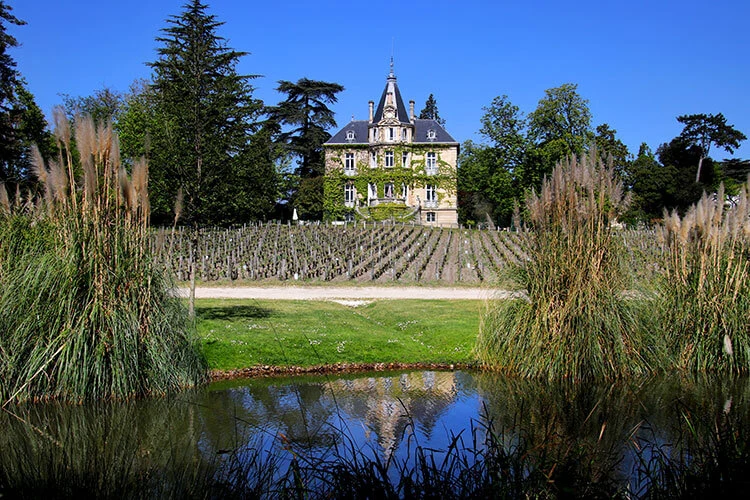
Stinson Vineyards occupies the Blue Ridge foothills along Sugar Hollow Road in White Hall, Albemarle County, roughly fifteen miles northwest of Charlottesville. The setting is agricultural and intentional rather than resort-polished, consistent with the properties EP Club recognises at the Pearl 2 Star Prestige tier. That designation, awarded in 2025, signals a producer operating with clear terroir focus rather than broad commercial appeal.
Stinson Vineyards is located at 4744 Sugar Hollow Rd, Crozet, VA 22932, White Hall.
Stinson Vineyards has received recognition including: Pearl 2 Star Prestige (2025).
Specific bottle names and current release details are not listed in public sources for Stinson Vineyards.Given the Pearl 2 Star Prestige recognition (2025) and the Blue Ridge foothill terroir, the winery sits within a tier where Albemarle County producers have historically found strength in Bordeaux varietals and Viognier.Contacting the estate directly via 4744 Sugar Hollow Rd, Crozet, VA 22932 is the most reliable route to current availability.
4744 Sugar Hollow Rd, Crozet, VA 22932
White Hall