Made ByRestaurant
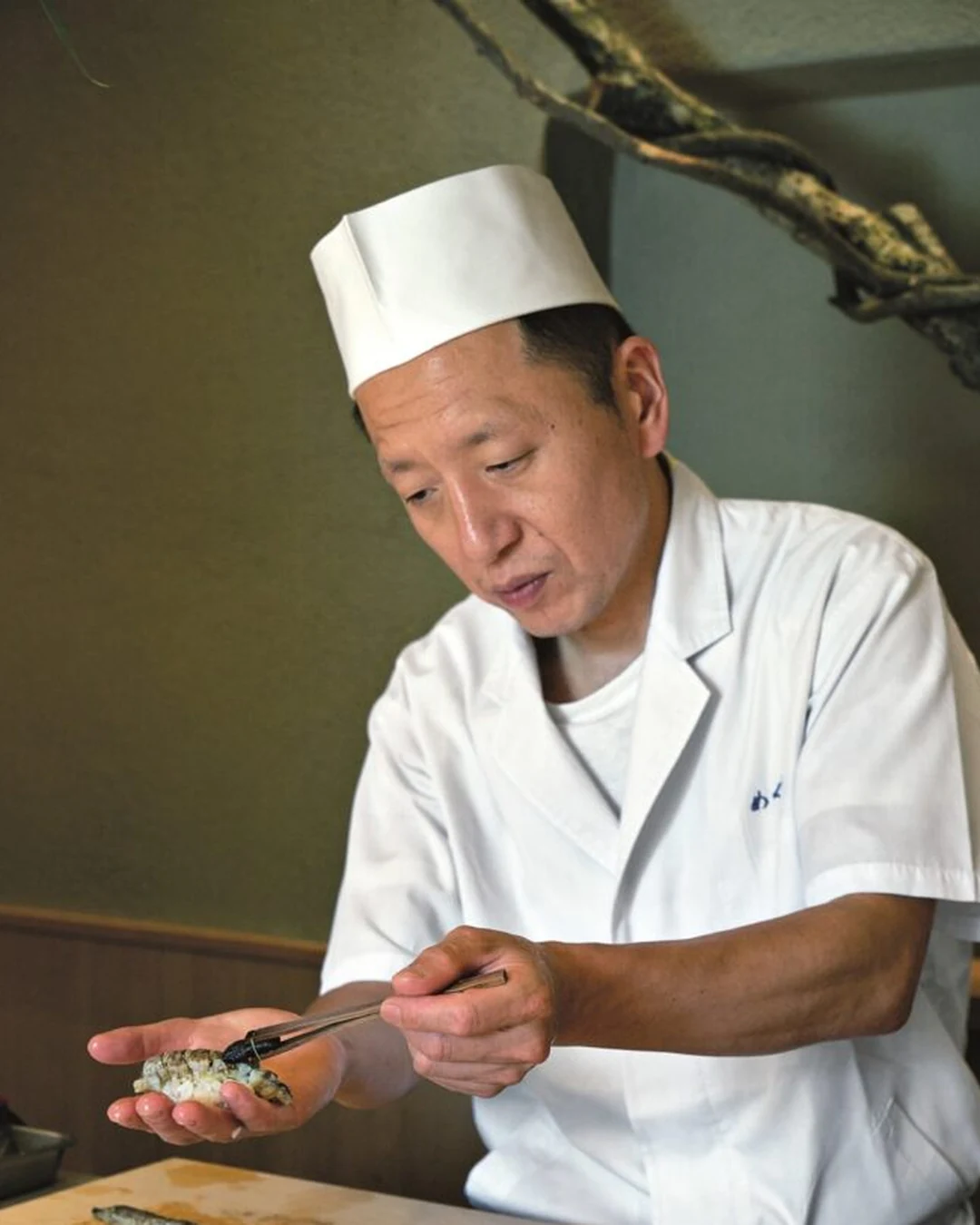
Takayoshi Yamaguchi, Chef at Sushidokoro Mekumi in Kanazawa, works Noto-mae nigiri through fish selection, warm shari, and restraint.
At a glance
- Cuisine
- Sushi
Warm shari under the fish
Takayoshi Yamaguchi presses warm shari directly onto the neta, his work as Chef at Sushidokoro Mekumi in Kanazawa beginning before the piece reaches the counter. The house stands in Shimobayashi, Nonoichi, outside central Kanazawa, and its sushi is framed by Noto-mae nigiri: fish from the Noto Peninsula and the Hokuriku coast, chosen with the same seriousness as the cut, the seasoning, and the final pressure of the hands. Yamaguchi’s role is not described as performance. It is a station of selection, where judgment at the market and at the bench belongs to one continuous method.
How long Yamaguchi has held this station is not something the restaurant states. What it does make visible is the discipline around him. The omakase moves by what the coast gives, with Noto-style sushi as the house language and crab given its own gravity in season. His reputation rests on choosing fish with rigor, then giving each serving only the intervention it needs. At Mekumi, sourcing is not background labor. It is part of the craft.
Noto-mae nigiri, measured by restraint
The technique most closely associated with Yamaguchi here is the way he forms nigiri: the rice is shaped directly onto the neta, rather than treated as a separate base waiting to be capped. That small reversal changes the gesture. The hands read temperature, moisture, grain, and flesh together, so the final piece arrives as one decision rather than two assembled parts. The shari is served warm, seasoned with akazu and sake kasu, carrying a deeper vinegar tone and a yeasty lift against the fish.
Mekumi’s program is also unusually explicit about study. Yamaguchi is known for working with university researchers on aging periods for fish, looking at diet and fatty acid composition as part of the question of umami and freshness. The method does not make the counter clinical. It gives the restraint a reason. Botan ebi, buri, uni, nodoguro, hairy crab chirashi, Kano-gani, and Kōbako-gani appear as the season allows, each one held within the same brief: local waters first, handling second, display last.
The counter in Nonoichi
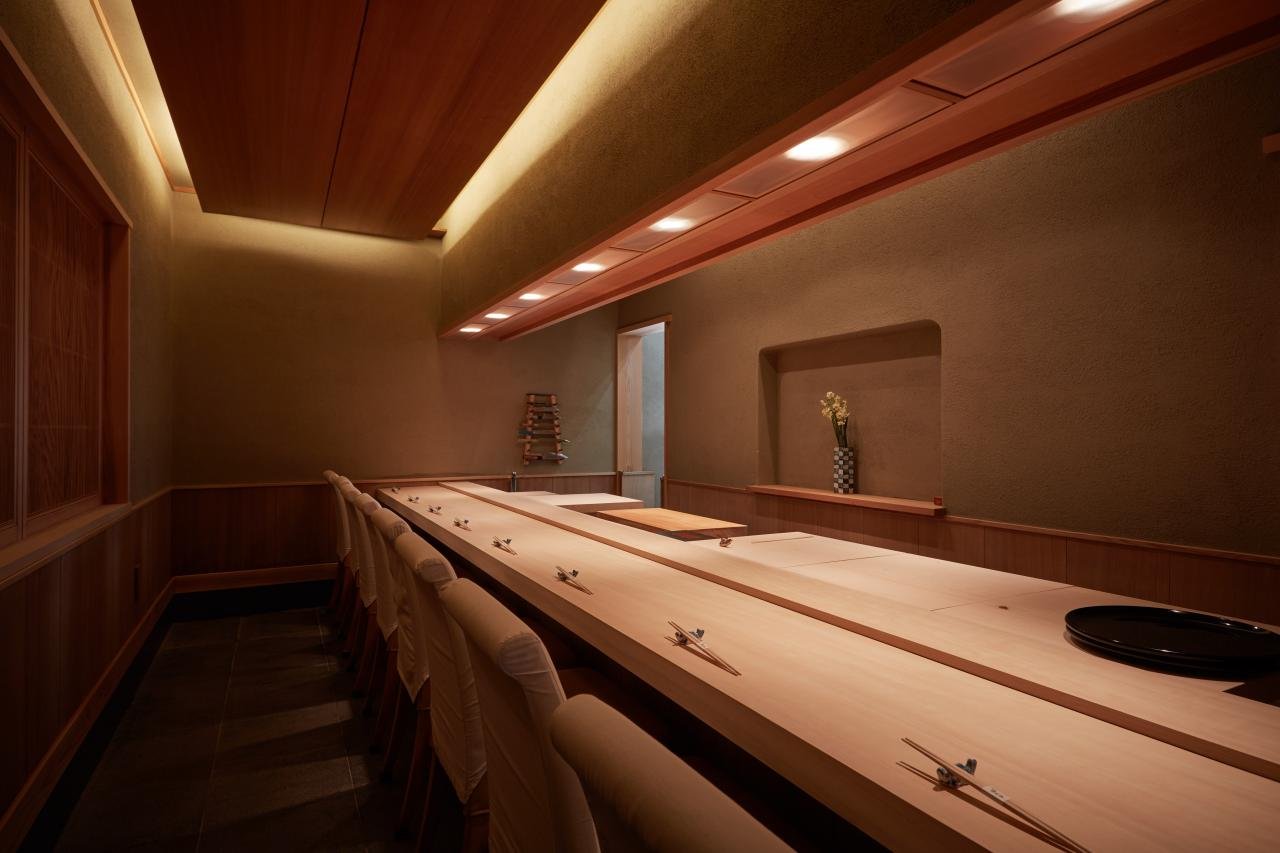
The room narrows attention. Mekumi’s counter is cut from a single piece of 400-year-old hinoki, a material with its own quiet authority, and the walls use diatomaceous earth from the Noto Peninsula. There are eight seats at the counter, close enough for the sequence to feel bench-side rather than staged. The setting does not ask for distance. It asks for concentration.
That concentration suits Yamaguchi’s craft. The pass between chef and guest is short, but the route to each piece is long: coast, season, selection, aging, rice, hand. In a suburban room in Nonoichi, the meal keeps returning to the same concrete question, how much can be decided before the knife even touches the fish. The answer arrives in the warm shari and the Noto-mae nigiri.
Address
Japan, 〒921-8831 Ishikawa, Nonoichi, Shimobayashi, 4 Chome−48
In residence
Similar places
Hyperseasonal Hokuriku Kaiseki Omakase
Kataori
Kanazawa, Japan
50 Best
Modern Spanish with Kanazawa Ingredients
Respiracion
Kanazawa, Japan
50 Best
Modern French with Local Japanese Influences
Makinonci
Kanazawa, Japan
Kaga-Style Kaiseki
Zeniya
Kanazawa, Japan
Edomae-Style Hokuriku Omakase
Sushi Kibatani
Kanazawa, Japan
Michelin-Starred Tempura Omakase
Tempura Koizumi
Kanazawa, Japan