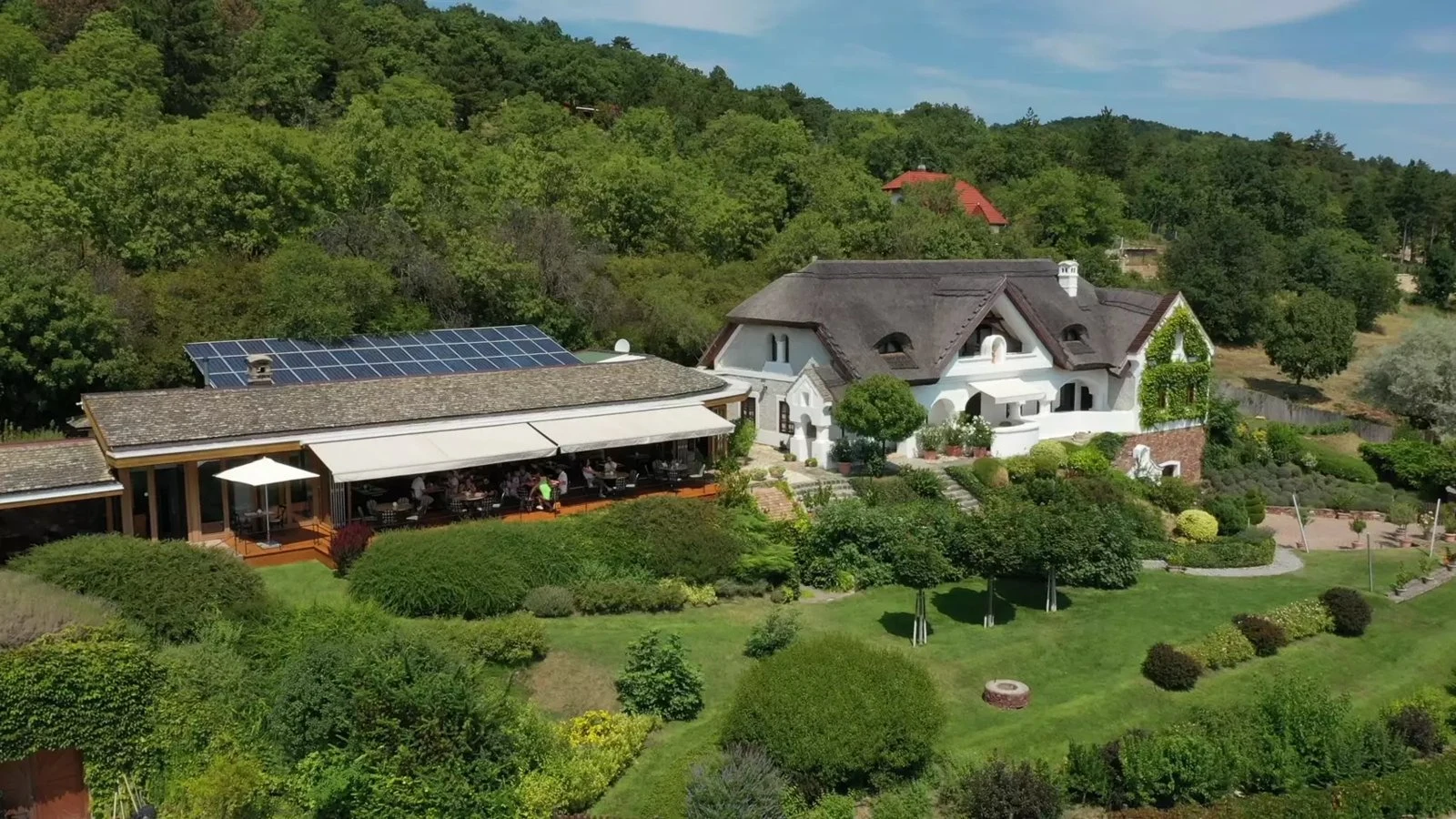
Szent Donát Winery sits on the volcanic hillsides above Csopak, one of Lake Balaton's most tightly focused Olaszrizling villages. The estate earned a Pearl 2 Star Prestige award in 2025, placing it within a select tier of Hungarian producers recognised for consistent quality. Visitors find a winery shaped by the discipline of a specific terroir rather than broad regional ambition.
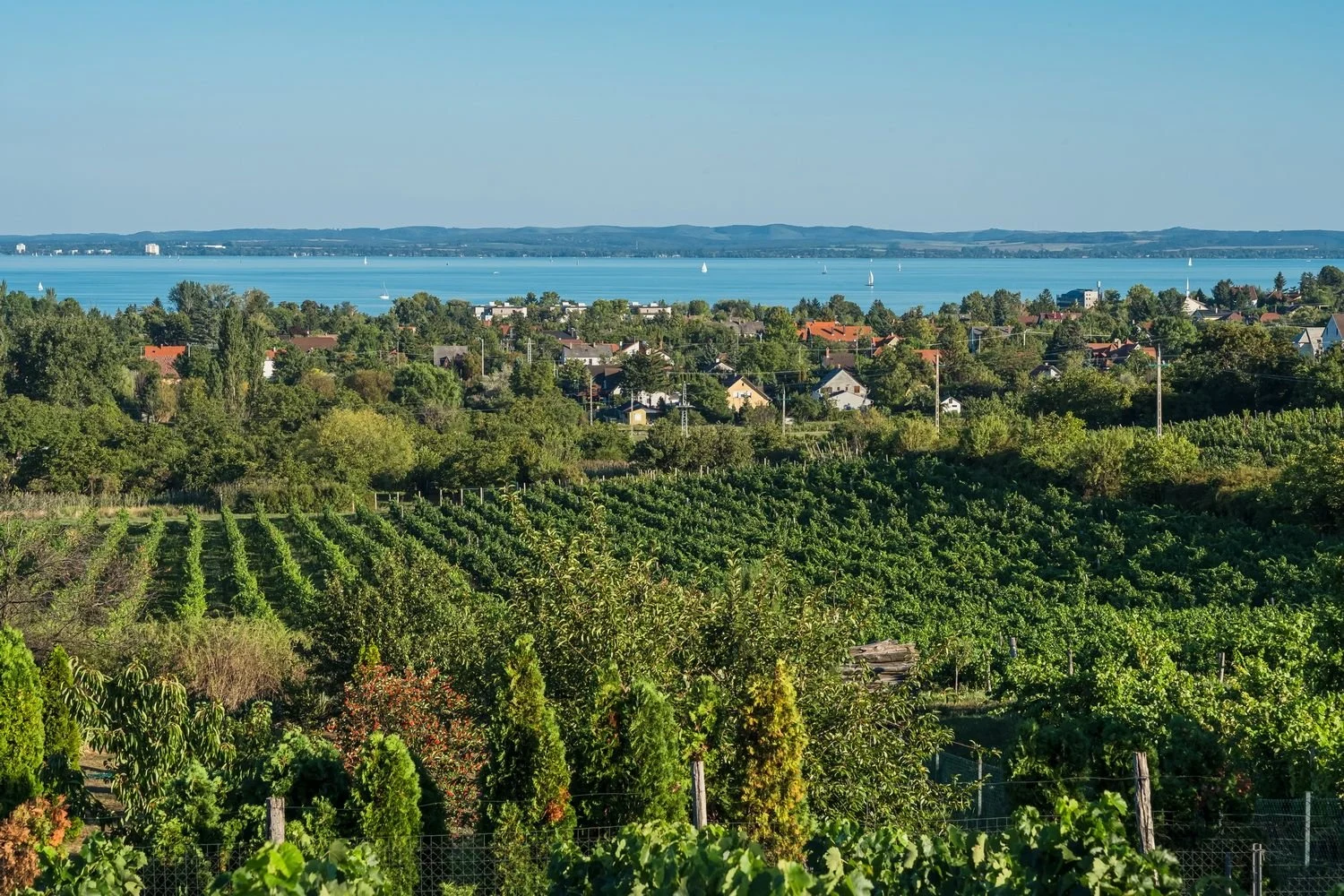
<h2>Csopak, Olaszrizling, and the Discipline of a Single Hill</h2><p>The north shore of Lake Balaton produces some of Hungary's most geographically specific whites, and Csopak sits at the sharpest point of that argument. The village's basalt and red sandstone soils, warmed by the lake's reflective surface and sheltered by the Balaton Uplands, give Olaszrizling a structural tension here that it rarely achieves elsewhere in the country: acidity that holds line, texture that builds slowly, and a mineral thread that resists easy description. Szent Donát Winery, addressed at Szitahegyi utca 28 in Csopak, operates inside this precise frame. The hill named in its street address is not incidental, in a region where slope, aspect, and subsoil composition shift meaningfully within a few hundred metres, the Szitahegy site is itself an argument about where the leading Csopak fruit comes from.</p><p>Approaching the winery from the village, the surrounding vineyard rows make the orientation clear before you arrive: this is a working estate oriented toward the lake, with elevation giving both drainage and the kind of diurnal temperature variation that preserves aromatic precision in warm growing seasons. The physical environment sets expectations that the wines are then asked to meet.</p><h2>What a Pearl 2 Star Prestige Award Signals in the Hungarian Context</h2><p>In 2025, Szent Donát received a Pearl 2 Star Prestige designation, a recognition that places the estate within a defined quality bracket among Hungarian producers. For readers unfamiliar with Hungarian wine award structures, the Pearl system functions as a tiered credential, with Prestige-level recognition indicating sustained performance rather than a single standout vintage. The 2 Star level within that system suggests the winery is evaluated as operating above baseline quality thresholds across its range, not simply producing one exceptional cuvée.</p><p>This matters for context because the Balaton wine scene contains a wide spread of producers, from large cooperative-scale operations to small, allocation-driven estates. The recognition at Prestige level places Szent Donát closer to the latter group: producers whose output is tracked by buyers and collectors rather than tourists looking for a casual pour. Nearby, <a href="https://www.enprimeurclub.com/wineries/jasdi-winery-csopak-winery">Jásdi Winery</a> also works Csopak terroir with similar seriousness, giving the village two credentialed producers whose work can be compared in the glass. See our full Csopak restaurants and producers guide for broader orientation across the village.</p><h2>The Winemaking Philosophy Behind the Terroir Argument</h2><p>The winemaking philosophy here is legible through decisions: the choice to operate in Csopak specifically, the address on Szitahegy, the pursuit of a Prestige-level designation. The winemaking philosophy here is legible through decisions: the choice to operate in Csopak specifically, the address on Szitahegy, the pursuit of a Prestige-level designation. Each of these is a statement about prioritising terroir specificity over commercial breadth.</p><p>Wineries that elect to anchor their identity to a single village on the Balaton north shore are making a bet that the site is interesting enough to carry the argument across vintages. In regions where branding often relies on grape variety alone, this kind of geographical commitment is a meaningful differentiator. The closest international analogy is a grower-producer in Burgundy who names their domaine after a specific climat rather than their family name: the place, not the person, is the primary claim.</p><p>For Hungarian white wine more broadly, the winemaking conversation in Csopak tends to centre on how to handle Olaszrizling's naturally high acidity and moderate aromatics. The two schools that have emerged across the north shore are a reductive, tank-fermented style that preserves freshness and primary fruit, and an oxidative or barrel-influenced approach that trades brightness for weight and complexity.</p><h2>Csopak in the Wider Hungarian Wine Picture</h2><p>Hungary's wine identity is dominated internationally by Tokaj, where <a href="https://www.enprimeurclub.com/wineries/disznoko-mezozombor-winery">Disznókő in Mezőzombor</a>, <a href="https://www.enprimeurclub.com/wineries/royal-tokaji-mad-winery">Royal Tokaji in Mád</a>, <a href="https://www.enprimeurclub.com/wineries/tokaj-hetszolo-tokaj-winery">Tokaj Hétszőlő in Tokaj</a>, <a href="https://www.enprimeurclub.com/wineries/tokaj-oremus-tolcsva-winery">Tokaj Oremus in Tolcsva</a>, <a href="https://www.enprimeurclub.com/wineries/arvay-winery-ratka-winery">Árvay Winery in Rátka</a>, and <a href="https://www.enprimeurclub.com/wineries/beres-winery-erdobenye-winery">Béres Winery in Erdőbénye</a> collectively constitute the country's most recognised export tier. Balaton producers operate in a different register: less globally traded, more dependent on domestic tourism and the Budapest restaurant market, but increasingly tracked by European importers interested in authentic central European whites.</p><p>The shift in that importer attention over the past decade has been real. Sommeliers in London, Vienna, and Copenhagen who once dismissed Hungarian dry whites as thin or poorly made have reconsidered as producers like those in Csopak demonstrated that the volcanic soils and lake climate produce wines with genuine ageing potential. This is the environment in which a Pearl 2 Star Prestige credential carries weight: it signals to a trade buyer that the producer has been assessed by Hungarian specialists and found consistently capable, not simply lucky in a single year.</p><p>Elsewhere in Hungary, the conversation about wine quality is moving in similar directions. <a href="https://www.enprimeurclub.com/wineries/bock-winery-villany-winery">Bock Winery in Villány</a> has made the southern red wine case for decades, while <a href="https://www.enprimeurclub.com/wineries/bolyki-winery-eger-winery">Bolyki Winery in Eger</a> works the Egri Bikavér frame in the north. <a href="https://www.enprimeurclub.com/wineries/bodri-winery-szekszard-winery">Bodri Winery in Szekszárd</a> represents another serious approach to Hungarian reds, and <a href="https://www.enprimeurclub.com/wineries/babarczi-winery-gyor-winery">Babarczi Winery in Győr</a> and <a href="https://www.enprimeurclub.com/wineries/bussay-pince-csornyefold-winery">Bussay Pince in Csörnyeföld</a> extend the quality argument westward. Against that field, Csopak's white wine producers occupy a specific and somewhat under-served niche in the international market. For collectors building exposure to central European whites, the timing is still early enough to matter.</p><p>For international reference points, the ambition that defines quality-oriented Olaszrizling from Csopak is not unlike the precision demanded of Welschriesling in Austria's Steiermark or Muscadet in its more serious, sur lie expressions. These are variety-and-place combinations where the wine's interest comes from what the site adds to a grape that, grown carelessly, produces nothing memorable.</p><h2>Planning a Visit to Csopak</h2><p>Csopak is reachable from Budapest by rail in approximately two hours, with Balatonfüred serving as the closest larger hub before the shorter transfer to the village. The north shore road between Balatonfüred and Csopak is well-serviced in summer but can slow with weekend tourist traffic in July and August. Spring and autumn visits allow closer access to harvest activity and cellar tastings without the peak-season crowding that the Balaton lakefront attracts.</p><p>Reservations are recommended. The winery's address at Szitahegyi utca 28 gives a clear anchor for navigation once arrival in the village is confirmed. Tastings and bottles are typically around $25 per person.</p><p>For international visitors with broader Hungarian wine itineraries that extend to the Tokaj region, <a href="https://www.enprimeurclub.com/wineries/accendo-cellars">Accendo Cellars in St. Helena</a> and <a href="https://www.enprimeurclub.com/wineries/aberlour-aberlour-winery">Aberlour</a> offer useful comparisons in how single-estate producers build identity through terroir specificity in very different international contexts.</p>
Low-key, by every available measure. Csopak is a small north Balaton village, and a Pearl 2 Star Prestige-credentialled estate at Szitahegyi u. 28 operates in a world of cellar appointments and focused tastings rather than festival-style throughput. Visitors come for the wine, not the spectacle.
Szent Donát Winery is located at Csopak, Szitahegyi u. 28, 8229, Csopak.
Szent Donát Winery has received recognition including: Pearl 2 Star Prestige (2025).
No confirmed cuvée data is on record, so naming a specific label would be speculation. Given the estate's location in Csopak and its 2025 Pearl 2 Star Prestige standing, the range almost certainly centres on the area's defining grape: Olaszrizling grown on volcanic north Balaton slopes. Ask directly when booking.
Place-specific white wine production above the Balaton tourist baseline. The 2025 Pearl 2 Star Prestige designation puts the estate within a recognised quality tier among Hungarian producers, which in Csopak's context means wines that argue for the hill rather than for easy drinkability.
No website or phone number is currently confirmed in the available record. The Hungarian Wine Academy's producer directory and Borászportál.hu are the two most reliable starting points for current contact details. Balatonfüred-based wine tour operators also maintain working relationships with Csopak estates at this credentialling level.
Csopak, Szitahegyi u. 28, 8229
Csopak
Pannonhalmi Apátsági Pincészet