Made ByRestaurant
Tensuke
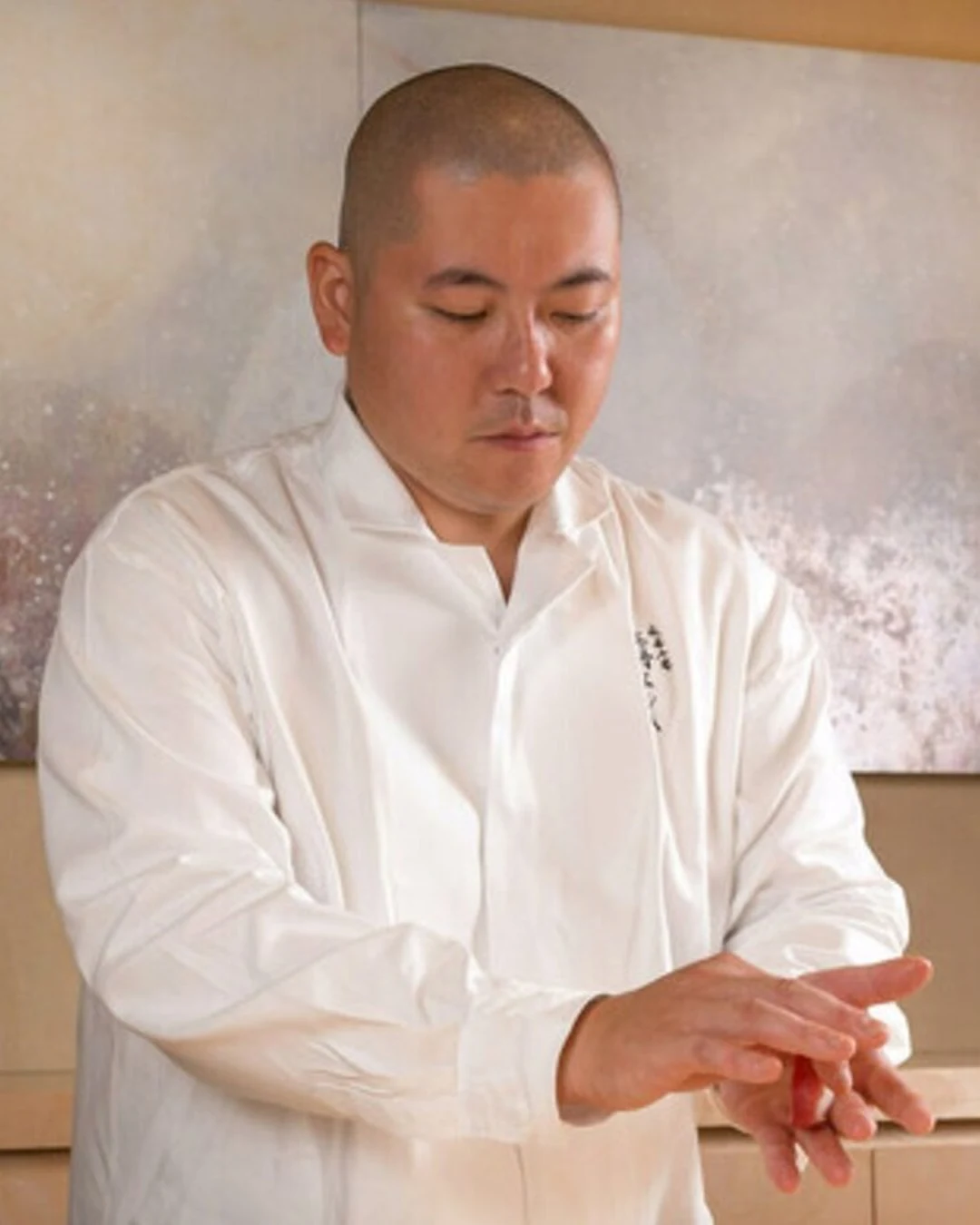
Chef in Residence
Hatano Yoshiki
Chef
- 01CuisineSpecialty Tempura with Egg Tempura
- 02CityTokyo, Japan
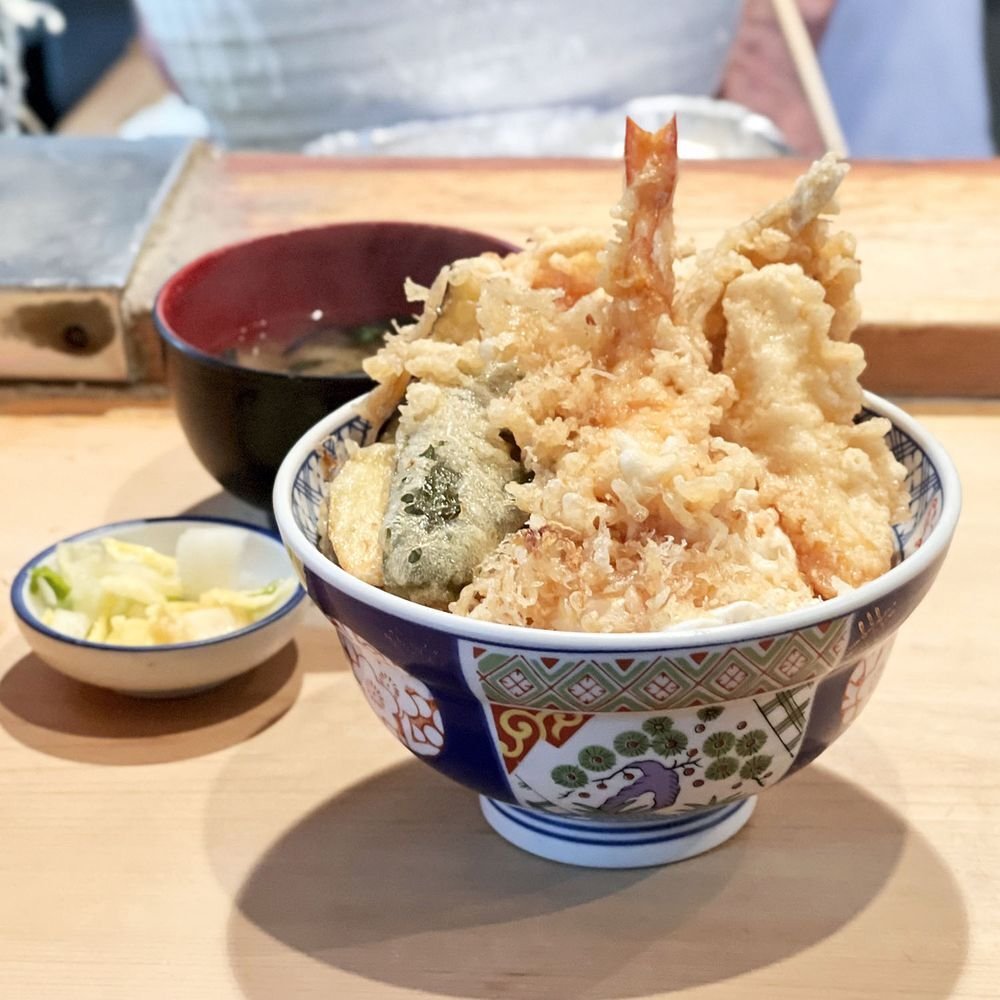
A Michelin Bib Gourmand counter in Koenji where the lunchtime queue is a neighbourhood institution and the Egg Lunch, deep-fried egg over rice, tempura served in sequence, is the only order worth making. Chef Hatano Yoshiki's theatrical eggshell tosses keep the line moving and the mood high. Tokyo tempura at its most accessible and most committed.
- Michelin Bib Gourmand
At a glance
- Cuisine
- Specialty Tempura with Egg Tempura
- Price
- $$
- Per person
- $15
- Hours
- Mon: Closed; Tue: 12–2 PM; Wed: 12–2 PM; Thu: 12–2 PM; Fri: 12–2 PM; Sat: 12–3 PM; Sun: 12–3 PM
- Neighborhood
- Koenji
- Rating
- 4.5 (1,280)
<h2>The Queue as Opening Act</h2><p>At the mid-range end of Tokyo's tempura spectrum, the Bib Gourmand tier occupies a specific cultural position: affordable enough for daily repetition, disciplined enough to earn Michelin's attention. Tensuke, on a residential stretch of Koenjikita in Suginami, sits squarely in that category, with a 4.5-star average across more than 1,200 Google reviews confirming what the lunchtime line outside already suggests. This is not a destination restaurant in the sense that <a href="https://www.enprimeurclub.com/restaurants/tempura-kondo-tokyo-restaurant">Tempura Kondo</a> or <a href="https://www.enprimeurclub.com/restaurants/tempura-motoyoshi-tokyo-restaurant">Tempura Motoyoshi</a> are destinations. It is something the city arguably needs more of: a neighbourhood counter where the same faces return week after week, and where the kitchen's job is to maintain a ritual rather than reinvent one.</p><p>The queue itself is part of the experience in a way that matters to Koenji regulars. It is visible enough to function as advertising, and short enough, on most days, that it registers as anticipation rather than inconvenience. The area around Koenji station has long supported this kind of committed local dining: independent, priced at street level, and resistant to the homogenisation that has shifted so much of central Tokyo's food culture toward the polished and the Instagrammable.</p><h2>What the Regulars Actually Order</h2><p>The anchor of the menu here is the Egg Lunch: a deep-fried egg served over rice, accompanied by tempura items fried in a set sequence. For the returning customer, this format removes all decision-making. You sit, you order the Egg Lunch, and the kitchen delivers in the order it has always delivered. That predictability is precisely the point. Tokyo's most loyal dining regulars often gravitate toward counters where the menu is not a list of options but a fixed performance, and Tensuke operates on that principle at the accessible end of the price range.</p><p>Deep-fried egg itself deserves a moment of attention as a category choice. Egg tempura, where the goal is a fully cooked white around a still-molten yolk, requires controlled oil temperature and timing. Done correctly, it collapses in the mouth with the yolk still liquid. Done incorrectly, you have a hard-boiled egg in batter. That the dish has become the signature here, rather than a rotation item, reflects a kitchen confident enough in the execution to stake its reputation on a single, technically demanding speciality.</p><p>Tempura sequence that accompanies the egg follows the logic of most serious tempura counters: the order of frying is not incidental but considered, moving from lighter to more substantial, so that each piece arrives at the optimal moment. This structural logic is shared across the category from neighbourhood counters to the three-Michelin-star rooms of <a href="https://www.enprimeurclub.com/restaurants/tempura-ginya-tokyo-restaurant">Tempura Ginya</a>, even if the ingredients, price, and formality differ significantly.</p><h2>The Performance Inside the Counter</h2><p>What distinguishes Tensuke's service rhythm from other Bib Gourmand tempura counters is the kabuki-inflected theatrics from Chef Hatano Yoshiki, specifically the tossing of eggshells in poses drawn from classical Japanese stage performance. This is not gimmickry in the way that, say, tableside pyrotechnics at a high-end French room might be. It is closer to a tradition of making the wait, and the watching, part of the value proposition. The idea, stated plainly in how the kitchen operates, is that the time spent queuing and sitting should carry its own entertainment, separate from the eating.</p><p>This approach places Tensuke in a particular sub-genre of Tokyo dining that sits outside the obvious omakase-and-kaiseki circuit. The theatrics here serve a democratic function: they give every customer at every price point a story to carry away. Comparable logic operates at certain ramen counters and standing sushi bars across the city, where the chef's personality and physical performance are as much the product as the food itself. For a broader sense of how Tokyo restaurants across categories balance craft and character, our <a href="https://www.enprimeurclub.com/restaurants/-tokyo-restaurant">full Tokyo restaurants guide</a> maps the range from street-level counters to multi-Michelin rooms.</p><h2>Koenji as Context</h2><p>Suginami's Koenji neighbourhood occupies a different register from the areas where most internationally recognised Tokyo dining is concentrated. It is not Ginza, not Roppongi, not Shinjuku. The area has a history shaped by vintage shops, independent music venues, and a residential density that keeps rents low enough to support small, owner-operated kitchens. That economic reality produces a specific kind of restaurant: deeply local, not designed for tourist discovery, and priced for repetition rather than occasion.</p><p>Tensuke fits that profile. The address on Koenjikita, a quiet residential street running north of the station, places it away from the main shopping drag, which means the customers walking through the door have generally made a deliberate trip. That self-selection produces a regular clientele with a different relationship to the space than the casual foot-traffic crowd. When the Michelin Bib Gourmand designation arrived for 2024, it added a layer of external validation without visibly altering the kitchen's relationship to its neighbourhood base.</p><p>For visitors building a wider Tokyo itinerary, the city's dining options extend well beyond tempura. <a href="https://www.enprimeurclub.com/restaurants/edomae-shinsaku-tokyo-restaurant">Edomae Shinsaku</a> and <a href="https://www.enprimeurclub.com/restaurants/fukamachi-tokyo-restaurant">Fukamachi</a> represent other points on the traditional Japanese dining map, while regional comparisons further afield include <a href="https://www.enprimeurclub.com/restaurants/hajime-osaka-restaurant">HAJIME in Osaka</a>, <a href="https://www.enprimeurclub.com/restaurants/gion-sasaki-kyoto-restaurant">Gion Sasaki in Kyoto</a>, and <a href="https://www.enprimeurclub.com/restaurants/goh-fukuoka-restaurant">Goh in Fukuoka</a>. For tempura specifically, the regional picture extends to <a href="https://www.enprimeurclub.com/restaurants/numata-osaka-restaurant">Numata in Osaka</a> and, across the water, <a href="https://www.enprimeurclub.com/restaurants/mudan-tempura-taipei-city-restaurant">Mudan Tempura in Taipei</a>. For those planning a full stay, our <a href="https://www.enprimeurclub.com/restaurants/-tokyo-restaurant">Tokyo hotels guide</a>, <a href="https://www.enprimeurclub.com/restaurants/-tokyo-restaurant">bars guide</a>, and experiences guide cover the wider picture, with additional stops in <a href="https://www.enprimeurclub.com/restaurants/1000-yokohama-restaurant">Yokohama</a>, <a href="https://www.enprimeurclub.com/restaurants/akordu-nara-restaurant">Nara</a>, and <a href="https://www.enprimeurclub.com/restaurants/6-okinawa-restaurant">Okinawa</a> for those extending beyond the capital. The <a href="https://www.enprimeurclub.com/restaurants/-tokyo-restaurant">Tokyo wineries guide</a> rounds out the full picture for those with an interest in the city's wine scene.</p><h2>Planning a Visit</h2><p>Tensuke is a lunch counter, and the queue dynamic means arriving close to opening time gives you the best chance of a short wait. The price range sits at the lowest tier on Tokyo's dining scale, making it one of the few Michelin-recognised rooms in the city that requires no booking infrastructure, no advance planning beyond timing your arrival, and no outlay that would require a second thought. The address is 3 Chome-22-7 Koenjikita, Suginami City, Tokyo. Koenji station on the JR Chuo line is the access point; from there, the walk north is short. No booking is available or necessary: the queue is the system.</p>
Know before you go
- Dress code
- casual
- Reservations
- walk_in_friendly
- Parking
- street
Frequently asked
Who's behind the kitchen at Tensuke?
The chef associated with Tensuke is Hatano Yoshiki.
Has Tensuke won any awards?
Tensuke has received recognition including: The lines that form outside Tensuke at lunchtime are a part of the Koenji landscape. Inside, one voice after another calls for the ‘Egg Lunch’. Accompanying the speciality of deep-fried egg on rice, tempura items are fried in a set order. A….
What should I eat at Tensuke?
Order the Egg Lunch: a deep-fried egg over rice accompanied by tempura items fried in a set sequence by the kitchen. It is the dish that draws the lunchtime queues along Koenjikita and accounts for the bulk of repeat visits. Chef Hatano Yoshiki punctuates service by tossing eggshells in kabuki-style poses, so the dish arrives with a side of counter theatre. Tensuke holds a Michelin Bib Gourmand (2024), and at the ¥ price tier it represents one of the more characterful value propositions in Tokyo's tempura scene.
Address
Japan, 〒166-0002 Tokyo, Suginami City, Koenjikita, 3 Chome−22−7 プラザ高円寺
Koenji
How it compares
- Notes
- Suginami, Specialty Tempura with Egg Tempura
- Price
- $$
- Notes
- Taitō, Traditional Japanese Unagi
- Price
- $$
- Notes
- Kōtō, Japanese Coffee Shop & Souffle Pancakes
- Price
- $$
- Notes
- Minato, Shio Ramen
- Price
- $$
- Notes
- Setagaya, Tonkatsu
- Price
- $$
- Notes
- Shibuya, Traditional Japanese Kaiseki and Oden
- Price
- $$
In residence
Similar places
French
Sézanne
Tokyo, Japan
★★★ · 50 Best
Modern Chinese Fine Dining
Sazenka
Tokyo, Japan
★★★ · 50 Best
Modern Japanese Satoyama Fine Dining
Narisawa
Tokyo, Japan
★★ · 50 Best
Modern French-Japanese Plant-Based Fine Dining
Florilège
Tokyo, Japan
★★ · 50 Best
Modern Japanese Kaiseki
Den
Tokyo, Japan
★★ · 50 Best
Modern French Fine Dining
Quintessence
Tokyo, Japan
★★★