Made ByRestaurant
The Little Nell

Chef in Residence
Keith Theodore
Chef
- 01CuisineColorado Contemporary Fine Dining
- 02CityAspen, United States
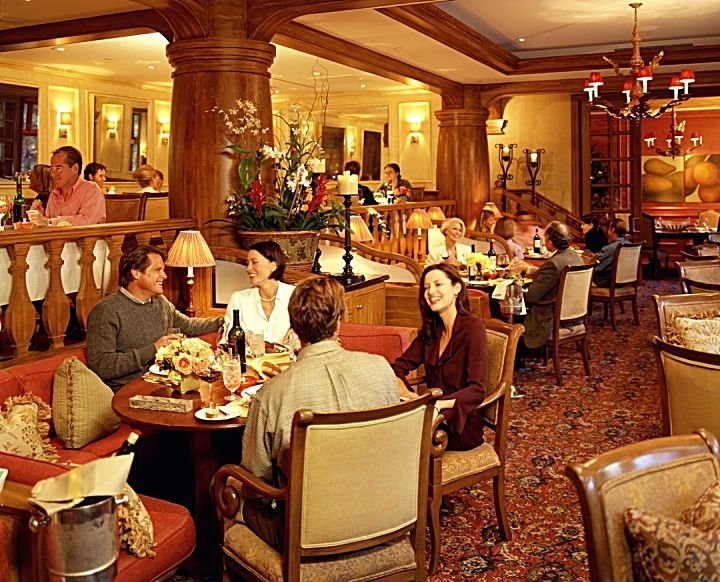
At the base of Aspen Mountain, The Little Nell occupies a position that few American ski resort hotels can match, slope-side access, a 4.7/5 EP Club member rating, and American cuisine under Chef Keith Theodore. The combination of Aspen Mountain adjacency, jet-set clientele, and year-round programming across skiing, hiking, and cycling makes it the reference point for high-altitude Rocky Mountain hospitality.
At a glance
- Cuisine
- Colorado Contemporary Fine Dining
- Price
- $$$$
- Neighborhood
- Aspen core
- Rating
- 4.7 (615)
<h2>Where the Mountain Meets the Table</h2><p>Arrive at 675 East Durant Avenue on a clear Colorado morning and the geometry of the place makes immediate sense. Aspen Mountain rises directly behind the property, close enough that ski runs are visible from the terrace. The property is built around slope-side access, with the mountain functioning as both backdrop and organizing principle. The Little Nell sits at the base of the gondola, which means that for skiers, the distance between a warm room and a groomed run is measured in steps, not shuttle rides.</p><p>That physical positioning defines the experience here in ways that no amount of interior design can replicate. Rocky Mountain ski resort hotels generally divide into two camps: large lodge-style properties with broad amenity footprints but generic mountain aesthetics, and smaller boutique properties with character but limited ski-in, ski-out convenience. The Little Nell operates in a third, smaller category, properties where both conditions are met simultaneously.</p><h2>Rocky Mountain Hospitality as a Regional Tradition</h2><p>American high-altitude resort hospitality has its own distinct tradition, one that diverges sharply from coastal luxury. The reference points here are not the white-tablecloth formality of <a href="https://www.enprimeurclub.com/restaurants/le-bernardin">Le Bernardin in New York City</a> or the tasting-menu precision of <a href="https://www.enprimeurclub.com/restaurants/the-french-laundry">The French Laundry in Napa</a>. The Mountain West operates on different terms: terrain, altitude, and season drive the rhythm of the day, and a hotel's quality is measured in part by how well it transitions guests between the physical demands of the outdoors and the comfort of a table or a room.</p><p>Aspen in particular occupies a specific position within that tradition. It draws a clientele, skiers, summer hikers, cycling enthusiasts, and the broader jet-set cohort that treats it as a seasonal anchor, that expects a level of service and cuisine sophisticated enough to hold its own against major urban dining rooms. The city's restaurant scene reflects that expectation: <a href="https://www.enprimeurclub.com/restaurants/element-47-aspen-restaurant">Element 47</a> operates within The Little Nell itself as a focused contemporary American program, while properties like <a href="https://www.enprimeurclub.com/restaurants/bosq-aspen-restaurant">Bosq</a> and the <a href="https://www.enprimeurclub.com/restaurants/french-alpine-bistro">French Alpine Bistro</a> represent the broader ambition of Aspen's dining tier. The <a href="https://www.enprimeurclub.com/restaurants/hotel-jerome-century-room-aspen-restaurant">Hotel Jerome Century Room</a> provides the most direct historical comparison, another hotel dining room serving American cuisine, though the Little Nell's mountain-base position gives it a different operational and atmospheric context.</p><h2>The Dining Program</h2><p>American cuisine at altitude is a category that has matured considerably over the past two decades. Where mountain resort dining once defaulted to aprés-ski comfort food, thick stews, red meat, heavy sauces, the better programs now apply the same product-sourcing discipline and technical range found in major city restaurants. Chef Keith Theodore leads the culinary program at The Little Nell, and the broader positioning of the hotel places that program within Aspen's upper dining tier rather than the mid-market resort category.</p><p>The Little Nell's version of the category is shaped by its mountain context, the guest arriving from a morning on the slopes has different needs than the urban diner, but the expectation of quality remains consistent.</p><p>Aspen's dining scene extends beyond hotel programs. <a href="https://www.enprimeurclub.com/restaurants/matsuhisa-aspen-aspen-restaurant">Matsuhisa Aspen</a> represents a notable departure from the American-cuisine dominant pattern, bringing Japanese-Peruvian technique to a mountain town with a clientele that travels widely enough to recognise the reference. The range of formats across the city, from hotel dining rooms to independent contemporary programs, means visitors have meaningful options at each meal.</p><h2>Beyond the Slopes: Year-Round Programming</h2><p>The hotel's highlight tags, Aspen Mountain, ski resort, jet set, hiking and cycling, signal a programming approach that spans both the winter ski season and the summer outdoor season. That dual-season model is increasingly important in Rocky Mountain resort hospitality, where properties that depend exclusively on ski revenue face compressed booking windows. Aspen's summer season, anchored by hiking, cycling, and a dense calendar of cultural events, draws a different but overlapping clientele to the winter crowd.</p><p>For summer visitors, the mountain access that defines the ski season converts into trail access, the same gondola that delivers skiers to the leading in winter provides hikers and mountain bikers with elevation gain in summer. The Little Nell's position at the gondola base means this transition is as seamless in July as it is in January. This geographic consistency across seasons is a meaningful operational advantage in a market where many properties feel purpose-built for one season and retrofitted for the other.</p><p></p><h2>Getting There and Practical Planning</h2><p>Access to Aspen runs through two realistic options. Aspen/Pitkin County Airport sits approximately 7 kilometres from the property, a short transfer that makes arrival straightforward for those who can reach it directly. For those flying into Denver or other regional hubs, the drive follows Highway 82 through the Roaring Fork Valley, with Glenwood Springs about 59 kilometres out serving as a notable waypoint. GPS coordinates 39.1869, -106.8175 place the hotel precisely at the mountain base, which is useful for confirming approach routes during winter conditions when road closures can affect timing.</p><p>Aspen's shoulder seasons, late spring and early November, represent the valley's quieter periods, when the ski season has either not yet begun or has just closed and the summer hiking calendar has not fully opened. Visitors with schedule flexibility who prioritise access over peak-season atmosphere will find both pricing and availability shift meaningfully during those windows. Peak season in both winter and summer requires advance planning, particularly for dining reservations across the city's upper-tier programs.</p><p> The same principle of place-specificity applies at altitude, and The Little Nell's dining program operates within that logic.</p>
Know before you go
- Dress code
- smart_casual
- Reservations
- essential
- Parking
- valet
- Payment
- credit_card
- Outdoor seating
- Yes
Frequently asked
Is The Little Nell award-winning?
The Little Nell has received recognition including: HIGHLIGHTS: • ASPEN MOUNTAIN • SKI RESORT • JET SET • HIKING & CYCLING DIRECTIONS & ACCESS: Directions By car Via Highway 82 to Aspen By plane Aspen 7 km By train Glenwood Springs 59 km GPS coordinates 39.1869 -106.8175 MEMBER SINCE: 4.7/5.
What should I order at The Little Nell?
The dining program operates under Element 47, the hotel's principal restaurant, where chef Keith Theodore shapes a contemporary American menu drawing on Rocky Mountain regional produce. Given the altitude and the resort calendar, the kitchen has historically leaned into Colorado-sourced proteins and seasonal ingredients, though specific current dishes should be confirmed directly with the restaurant before your visit. Element 47 also maintains one of the more serious wine programs in the Colorado mountain resort circuit.
What's The Little Nell's location?
The Little Nell is located at 675 E Durant Ave, Aspen, CO 81611, Aspen.
Address
675 E Durant Ave, Aspen, CO 81611
Aspen core
How it compares
- Cuisine
- Colorado Contemporary Fine Dining
- Price
- $$$$
- Awards
- 8 recognitions
- Notes
- Aspen Flyover 1/4 Section Grid
- Cuisine
- Regional American Fine Dining
- Price
- $$$$
- Awards
- 3 recognitions
- Notes
- Aspen Flyover 1/4 Section Grid
- Cuisine
- Seasonal American Bistro
- Price
- $$$$
- Awards
- Michelin Plate
- Notes
- Aspen Flyover 1/4 Section Grid
Meat & Cheese Restaurant and Farm Shop
- Cuisine
- World Farmhouse
- Price
- $$$
- Awards
- —
- Notes
- Aspen Flyover 1/4 Section Grid
- Cuisine
- Afro-Caribbean French Fusion
- Price
- $$$
- Awards
- Michelin Plate
- Notes
- Aspen Flyover 1/4 Section Grid
- Cuisine
- Colorado Contemporary Fine Dining
- Price
- $$$$
- Awards
- Michelin Plate
- Notes
- Aspen Flyover 1/4 Section Grid