The Swag
In Residence
Jake Schmidt
Chef
- 01CuisineMountain Farm-to-Table Fine Dining
- 02CityWaynesville, United States
Four courses at 5,000 feet
- Wine Spectator · Tier 1
- Relais Chateaux Award · 2026
- Wine Spectator Award of Excellence · 2026
- Relais Chateaux Award · 2025
- Wine Spectator Award of Excellence · 2025
Salt, timing, and the mountain pass
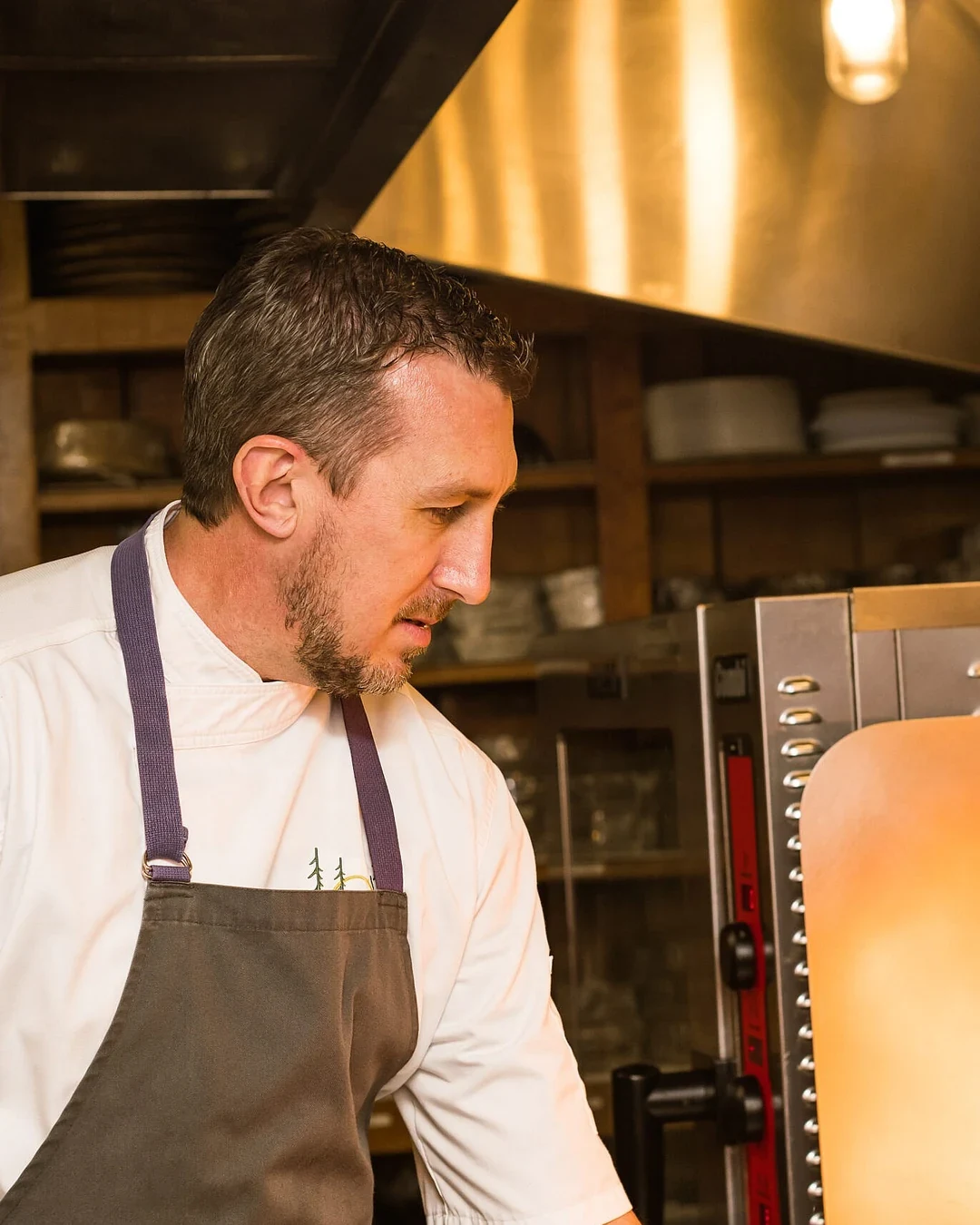
Pole beans and heirloom tomatoes sit close to the way Jake Schmidt, Chef at The Swag in Waynesville, thinks at the stove. His own test is plain: eat the bean from the vine, salt the tomato when it is ready, then stop before the cook gets louder than the crop. At this mountain-top dining room, that discipline meets Southern produce in a narrow seasonal window, with the kitchen reading what local farms and the property garden can give before it writes the plate. Schmidt’s route to this pass did not begin in a kitchen. He played senior safety and cornerback at Bemidji State University until 2011, work built on timing, stamina, and pressure held without fuss. Hospitality gave that same discipline another field. He later worked as Executive Chef at The Omni Grove Park Inn, then as Executive Chef of The Swag Country Inn, where the method is controlled, seasonal, and direct. The lineage here is not presented as a named apprenticeship. It is carried through practice: Midwestern structure, Southern ingredients, and a preference for letting peak produce set the terms.
Four courses from the garden’s pace
The Swag’s dining program moves in a fixed rhythm, with a nightly four-course prix fixe shaped around beef, seafood, another protein, and a vegetarian path. The kitchen’s vocabulary is mountain produce, coastal fish, and Southern comfort pulled into finer register: filet mignon with pommes pave, buttered radishes, glazed carrots, caramelized onion jus, and fried onion strings; duck breast with sweet potato layers, Romanesco cauliflower, local kale, and miso gastrique; broccolini soup with dukkah, chili oil, coconut milk, coriander, cumin, and toasted nuts. There is a garden logic to the details. Butternut squash can become soup; local squash can meet blue cheese, toasted pecans, roasted beets, and cider vinaigrette. Sunday brunch shifts the bench toward shrimp and grits, egg dishes, a carving station, apple wood-smoked bacon, sausages, and cast-iron cinnamon rolls. On Gooseberry Knob, the cooking loosens into picnics with cast-iron fried chicken, bison burgers, grilled coastal fish, garden vegetables, and seasonal desserts. The same hand governs both modes: feed the hike, then return to the pass with restraint.
A log room above the trees
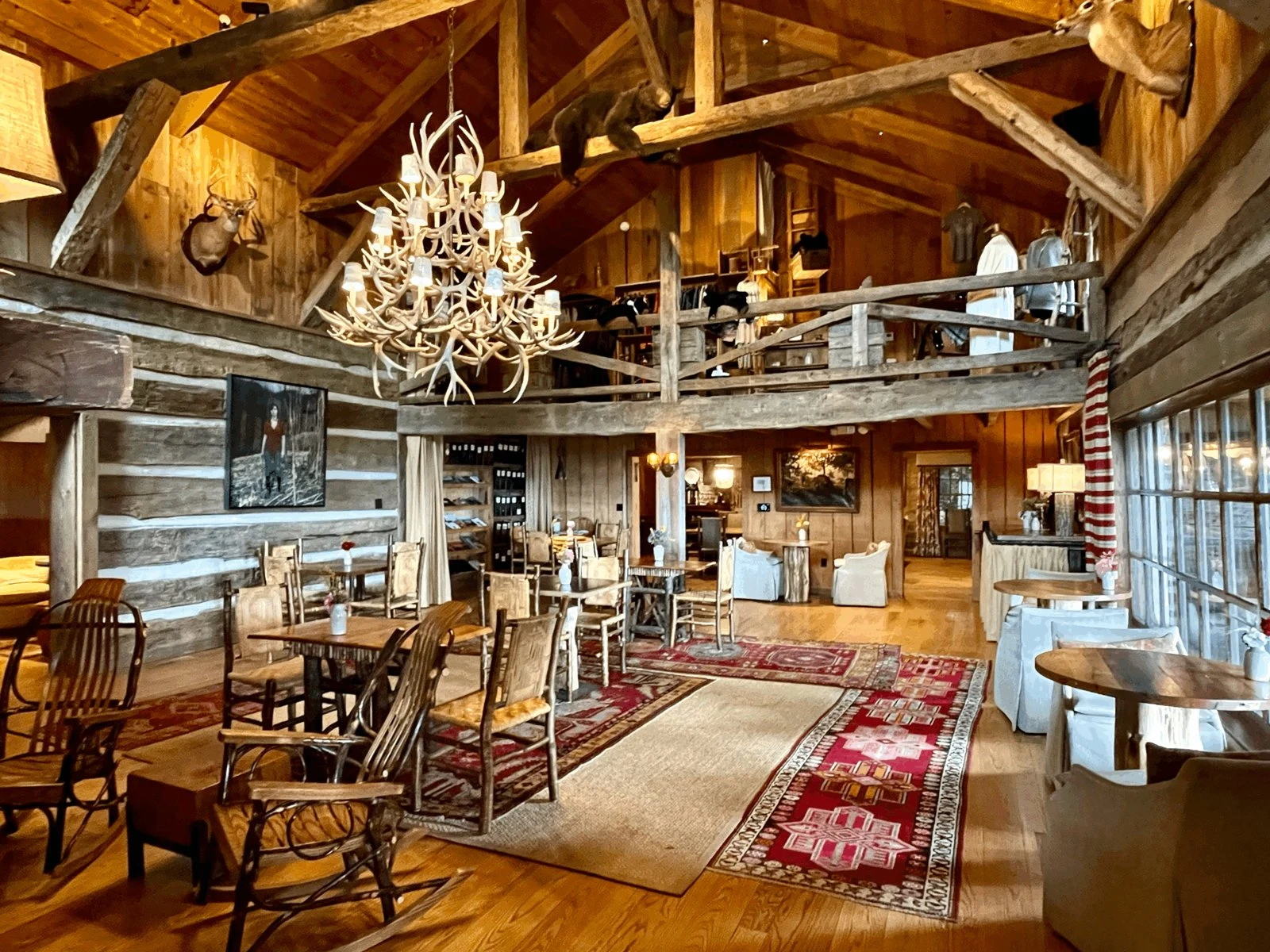
The room sits nearly 5,000 feet up on 250 acres bordering Great Smoky Mountains National Park, and that elevation changes the meal before the first plate lands. The dining room is log cabin, quiet by nature rather than design theater, with fireplaces, antler chandeliers, bear motifs, and mountain vistas doing what decoration often tries to do. Since its founding in 1982, The Swag has treated food as part of the retreat rather than an amenity beside it. The property joined Relais & Châteaux in 2020, yet the clearest luxury here remains physical: a warm plate, a high ridge, and the hush around Gooseberry Knob.
Questions
Frequently asked
Who cooks at The Swag?
Jake Schmidt is the chef at The Swag in Waynesville. His cooking is described as Southern produce with mountain restraint, built around timing, seasonal produce, and a fixed four-course rhythm.
What is the dining format?
The Swag serves a nightly four-course prix fixe, shaped around beef, seafood, another protein, and a vegetarian path. Sunday brunch and Gooseberry Knob picnics are also part of the program.
What is the restaurant known for?
The kitchen works with mountain produce, coastal fish, and Southern comfort in a finer register. Dishes mentioned include filet mignon, duck breast, and Sunday brunch, along with preparations such as shrimp and grits and cast-iron cinnamon rolls at brunch.
Is booking required?
Reservations are essential.
What should guests know about visiting?
The Swag is in the Great Smoky Mountains at 2300 Swag Rd, Waynesville, NC 28785. The venue has on-site parking and a smart casual dress code.
The field
How it compares
| Place | Cuisine | Notes | Awards |
|---|---|---|---|
| The Swag | Mountain Farm-to-Table Fine Dining | Great Smoky Mountains, $$$$ | · |
| Alkimia | Modern Catalan Fine Dining | Barcelona | Michelin 1 Star |
| Atrio | Modern Spanish Fine Dining with Iberian Pork Focus | Cáceres | Michelin 3 Stars |
| CORE by Clare Smyth | Modern British Fine Dining | London | Michelin 3 Stars, World's 50 Best |
| Florilège | Modern French-Japanese Plant-Based Fine Dining | Tokyo | Michelin 2 Stars, World's 50 Best |
| Forest Side | Modern British Fine Dining | Grasmere | Michelin 1 Star |
| Potong | Progressive Thai-Chinese Fine Dining | Bangkok | Michelin 1 Star, World's 50 Best |
In residence
Similar places
Modern Catalan Fine Dining
Alkimia
Barcelona, Spain
★
Modern Spanish Fine Dining with Iberian Pork Focus
Atrio
Cáceres, Spain
★★★
Modern British Fine Dining
CORE by Clare Smyth
London, United Kingdom
★★★ · 50 Best
Modern French-Japanese Plant-Based Fine Dining
Florilège
Tokyo, Japan
★★ · 50 Best
Modern British Fine Dining
Forest Side
Grasmere, United Kingdom
★
Progressive Thai-Chinese Fine Dining
Potong
Bangkok, Thailand
★ · 50 Best