Via Veneto
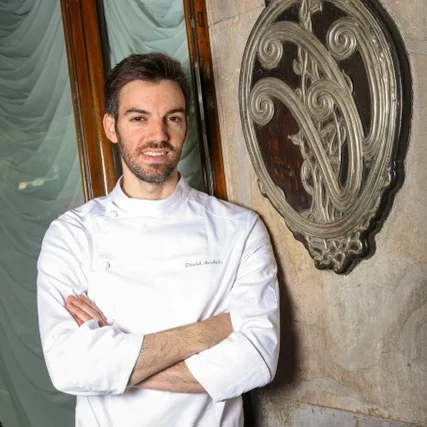
In Residence
David Andrés
Chef
- 01CuisineClassic Mediterranean Fine Dining
- 02CityBarcelona, Spain
- 03RecognitionOne Michelin Star
From the people index
Recommended by
One trusted voice points here.
- 1 Michelin Star · Michelin Guide
- Macarfi 9.3 Food Rating · 2026
- Falstaff Restaurant - 94 Falstaff Points · 2026
- La Liste Top Restaurants: 77pts · 2026
- Guía Repsol 2 Soles · 2026
- Opinionated About Dining Classical in Europe Ranked #102 · 2026
- Michelin 1 Star · 2026
- Michelin 1 Star · 2025
- La Liste Top Restaurants: 91pts · 2025
- Opinionated About Dining Classical in Europe Ranked #112 · 2024
- Michelin 1 Star · 2024
- Opinionated About Dining Classical in Europe Ranked #127 · 2023
A Different Kind of Seriousness
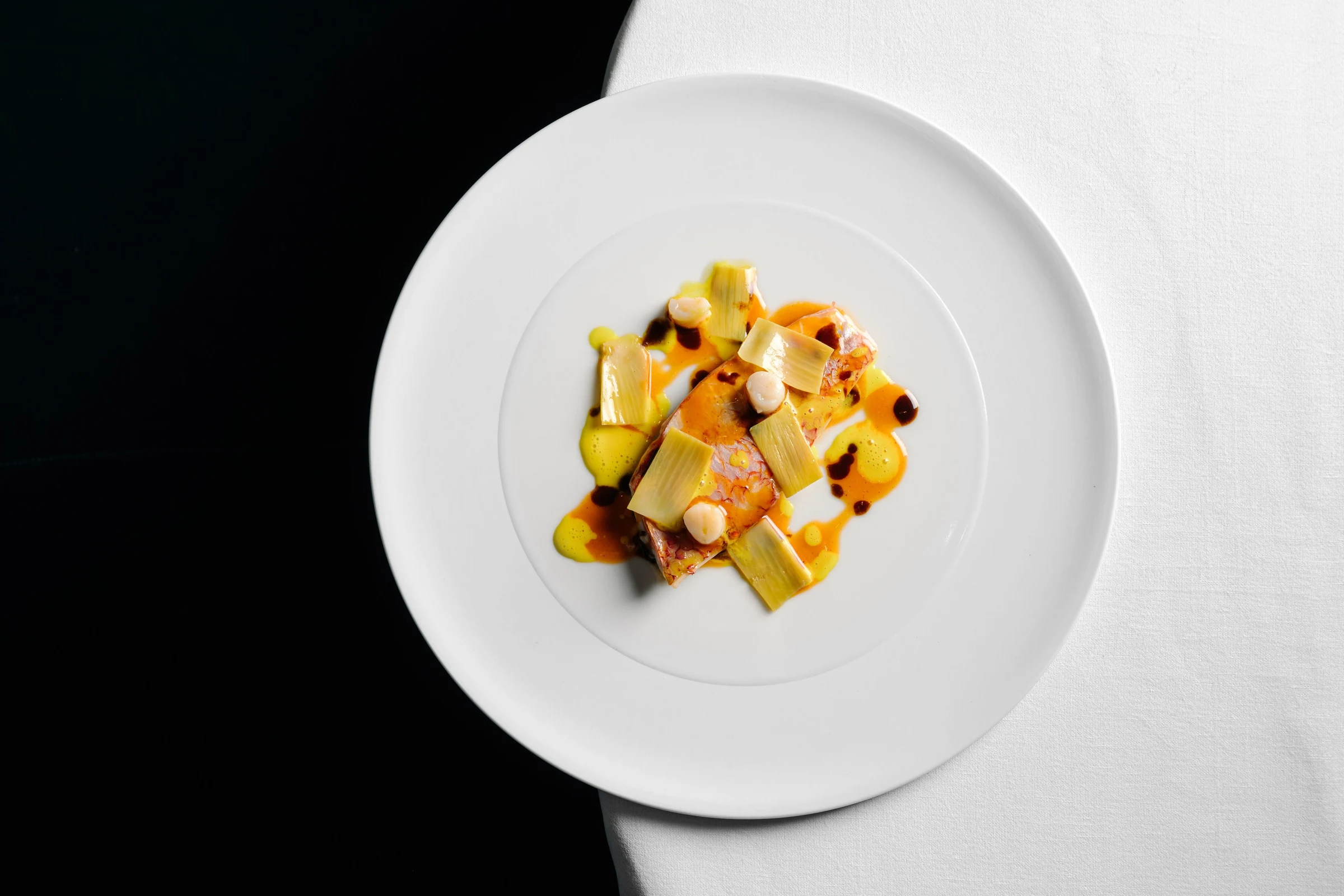
Barcelona's premium dining conversation tends to cluster around the technically adventurous end of the spectrum. Via Veneto is a Michelin-starred restaurant in Barcelona serving Classic Mediterranean Fine Dining at Carrer de Ganduxer, 10, Sarrià-Sant Gervasi. Disfrutar, Cocina Hermanos Torres, and Enigma have shaped the city's international reputation as a laboratory for progressive cooking. Against that backdrop, Via Veneto's insistence on classical European and Italian foundations reads not as conservatism but as a deliberate counter-position: the argument that restraint, continuity, and the quality of individual ingredients constitute their own form of ambition.
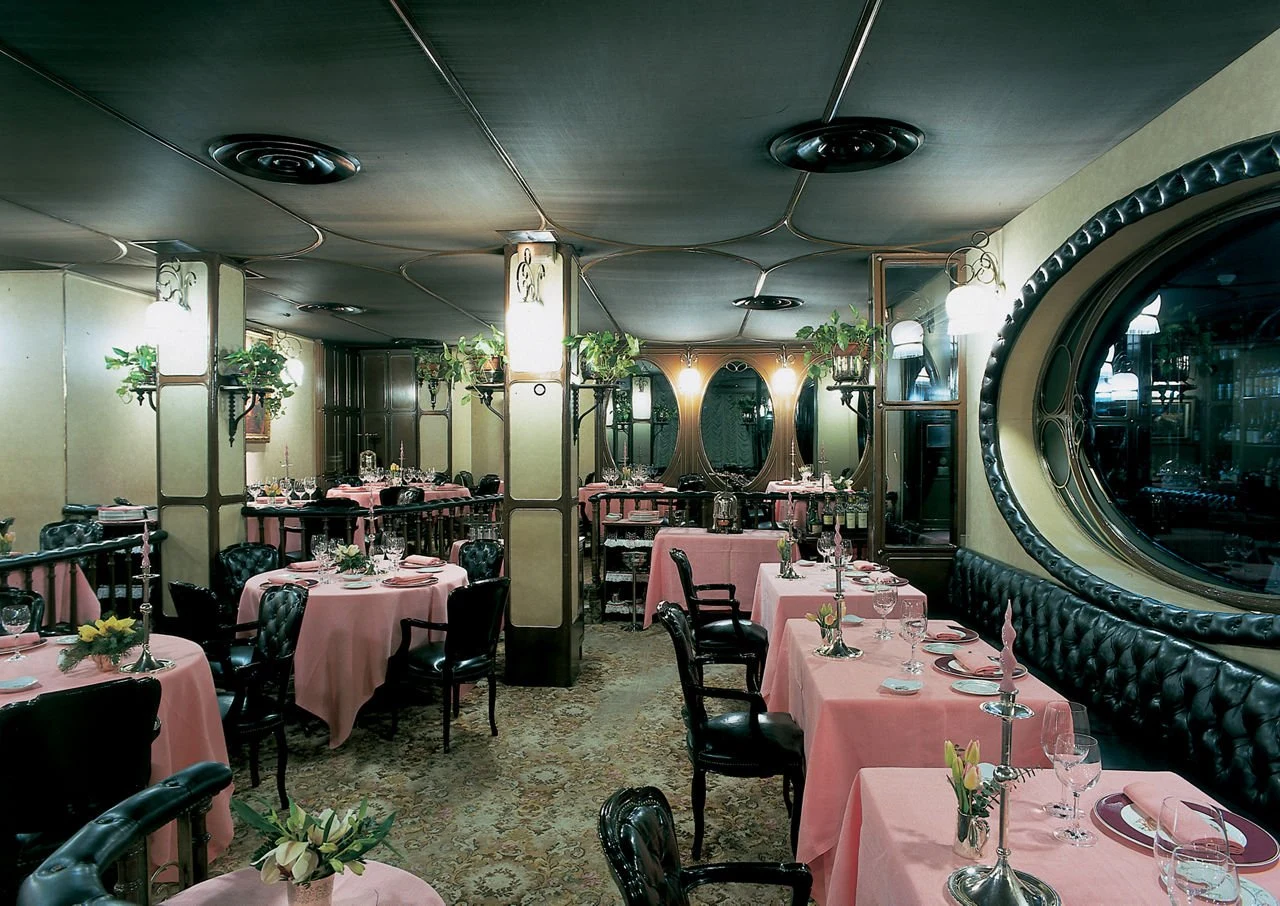
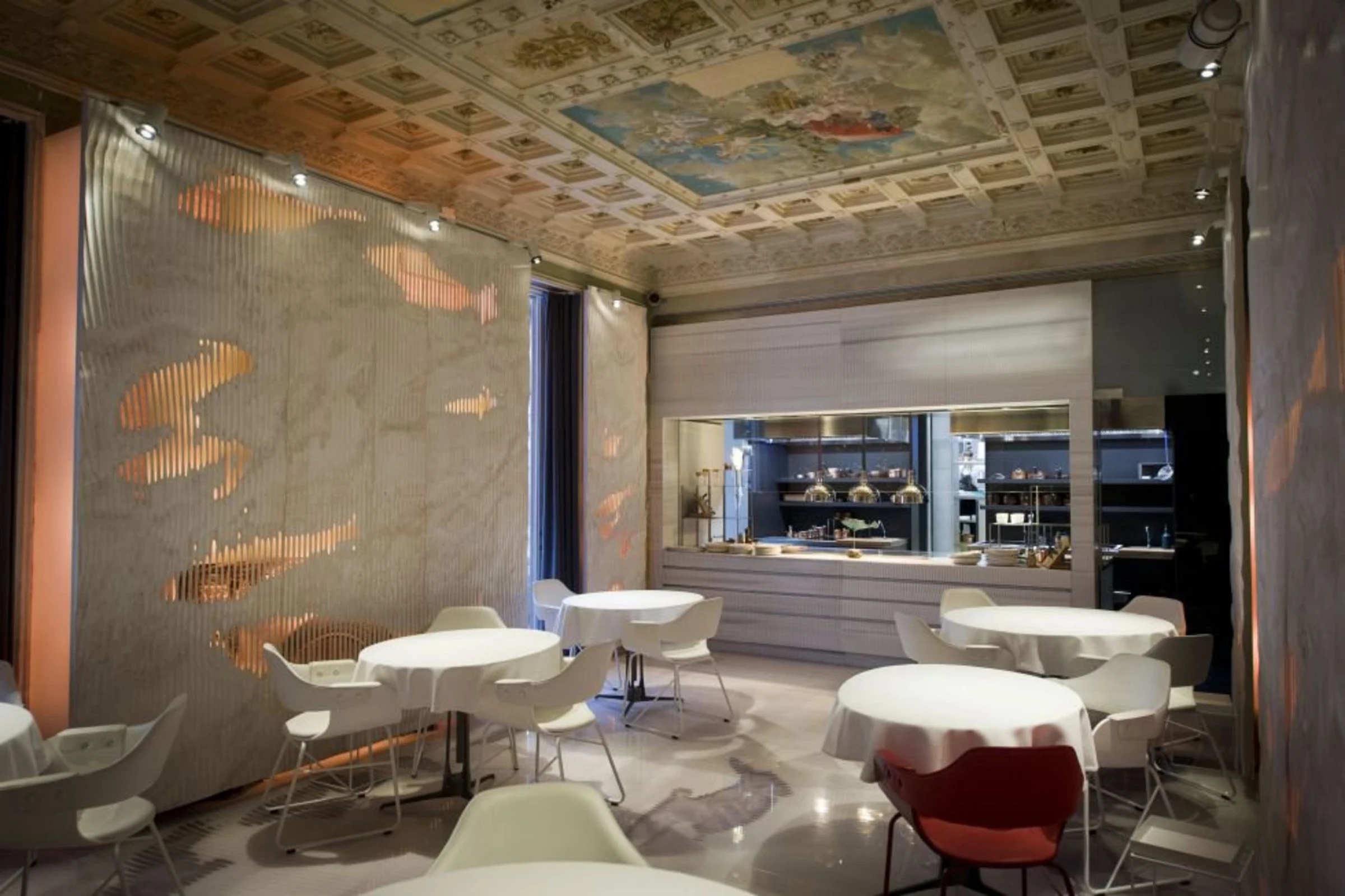
That argument has held for more than fifty years. The Monje family has operated the restaurant since it opened, and the through-line from its founding to the present remains legible. The Belle Époque interior on Carrer de Ganduxer in the Sarrià-Sant Gervasi district, a residential neighbourhood well north of the tourist belt, was not a revival or a design exercise, it is the original room, maintained rather than reconstructed. Arriving here feels less like entering a stage set and more like stepping into a space that has earned its atmosphere through accumulation.
The Sunday letter
Find new places through the people who run them.
Our Sunday email brings you the chefs, winemakers and hoteliers behind our newest stories. See a sample before you subscribe.
See a sample of the Sunday emailOne email a week. Unsubscribe from any issue.
Classical Cuisine as a Position, Not a Default
In cities where fine dining has largely reorganised around tasting menus, fermentation programs, and theatrical service formats, restaurants that hold to classical European technique occupy a smaller, more contested niche than they did a generation ago. Via Veneto sits at the credentialled end of that niche. Its current Michelin star, sustained recognition in the Opinionated About Dining Classical in Europe rankings (ranked 112th in 2024, 127th in 2023), and La Liste scores of 91 points in 2025 and 77 points in 2026 place it in a comparable set that looks less like Lasarte or ABaC and more like the classical grand restaurants of Paris or the long-running formal houses of northern Spain.
The editorial angle for Via Veneto is not technique for its own sake but the Italian and broader European principle that fewer, better ingredients executed with discipline will always outlast novelty. That philosophy has a natural expression in game cookery, which is inherently seasonal, ingredient-led, and resistant to substitution. Hare royale, red partridge with stewed cabbage, loin of venison, dishes that appear in season and disappear again, are the kitchen's clearest statement of intent. There is no way to fake these dishes with inferior product, and no amount of technique compensates for a bad bird or a poorly hung loin. The menu's dependence on seasonal game is, in effect, a quality wager placed twice a year.
The Duck That Predates the Competition
Any honest account of Via Veneto has to address the pressed roast duck served in its own jus, available for a minimum of two guests and on the menu in its current form since 1967. A dish that has survived this long at a restaurant still attracting serious critical attention is not a legacy curio, it is evidence of something more interesting: that the dish is correctly conceived and continues to hold its standard. In classical European cooking, pressed duck (canard à la presse in its French form) is among the most demanding preparations, requiring a specific piece of equipment, careful timing, and confidence in the primary ingredient. The fact that this preparation has been the restaurant's representative dish across multiple generations of diners and critics tells you something about how the kitchen prioritises its identity.
This is the dish that best represents the restaurant's identity. It rewards consistency, technique, and the integrity of classical traditions. Via Veneto's repeated presence in that ranking, in a category where Spanish restaurants compete against long-established French and Italian houses, is a more meaningful credential for this style of cooking than a direct restaurant guide position would be.
The Wine Cellar as an Argument
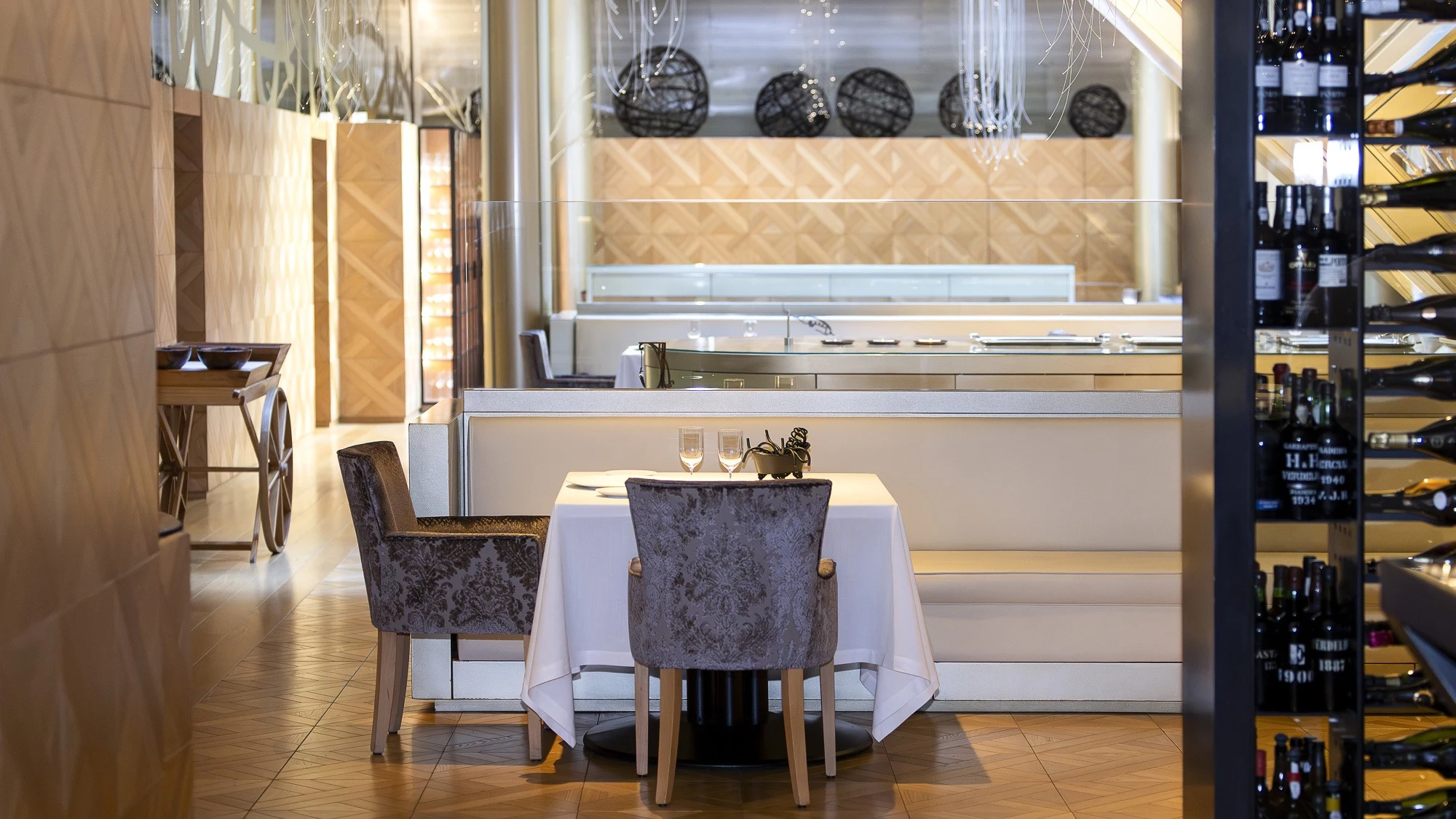
Six metres underground, Via Veneto's wine cellar holds a collection that spans Spanish and French bottles, accessible to guests as part of the dining experience. In the context of a restaurant that has operated continuously since the late 1960s, the cellar is not a marketing feature, it is a by-product of time. Aged Spanish wines, particularly older Rioja and Ribera del Duero, and mature Bordeaux or Burgundy require the kind of relationship with producers and négociants that only comes through decades of consistent purchasing. The cellar's depth is a direct expression of the restaurant's longevity.
For diners who approach a restaurant visit as a wine occasion first, this matters considerably. The pairing possibilities with game dishes, particularly older Rioja with hare or venison, are the sort of combinations that require a cellar with genuine age to realise properly. Barcelona's newer creative restaurants, however technically accomplished, cannot offer this. El Celler de Can Roca in Girona is the obvious Spanish peer in terms of cellar depth and longevity, though its cooking sits in an entirely different register.
Where Via Veneto Sits in Barcelona's Dining Structure
Barcelona's €€€€ tier is dominated by the creative-progressive axis: Disfrutar and Cocina Hermanos Torres at the technically intensive end, Lasarte and ABaC in the modern Spanish creative middle ground. Via Veneto does not compete within that axis. Its competitive set is defined by classical European houses, which means it is being evaluated against different criteria: how faithfully and skillfully classical European traditions are sustained, not how inventively they are reimagined.
This distinction matters for the reader deciding where to book. If the purpose of the evening is to encounter contemporary Spanish cooking at its most technically ambitious, Via Veneto is not the right choice. If the purpose is a formal, classically grounded European meal in a room with genuine history, with game cookery executed at a recognised level and a wine list with real depth, it is essentially without peers in the city. The comparison venues are not other Barcelona restaurants but classical European houses in other cities, places like Le Bernardin in New York, where classical French foundations define a distinct identity within a city otherwise preoccupied with novelty.
Sarrià-Sant Gervasi itself reinforces the positioning. This is a quieter, wealthier residential district compared to the Eixample or the old town, and its dining scene reflects that: fewer tourist-facing venues, a higher proportion of long-running neighbourhood institutions. Via Veneto at Carrer de Ganduxer, 10 is the most formally credentialled address in the area, but the neighbourhood context is coherent. You are not going to a destination parachuted into an incongruous setting; the restaurant and its surroundings have grown up together.
For diners building a Barcelona itinerary across multiple days, Via Veneto fits naturally as the formal classical anchor alongside more progressive choices. Pair it with Disfrutar or Enigma for range, and the contrast between the two registers becomes part of the argument for what makes Barcelona's dining scene coherent rather than homogeneous.
Within Spain's wider fine dining map, Via Veneto occupies a different lane from the ambitious modern houses: Arzak in San Sebastián, DiverXO in Madrid, Quique Dacosta in Dénia, Azurmendi in Larrabetzu, and Aponiente in El Puerto de Santa María all pursue innovation as their primary brief. Via Veneto and El Celler de Can Roca are among the very few Spanish addresses where accumulated time and classical discipline constitute the identity rather than the innovation program. That is a smaller and more specific offer, but for the right kind of evening, it is the only offer that matters.
Know Before You Go
- Address: Carrer de Ganduxer, 10, Sarrià-Sant Gervasi, 08021 Barcelona
- Price range: €€€€
- Service: Lunch and dinner Tuesday through Saturday; closed Sunday and Monday
- Lunch: 1 PM – 3 PM
- Dinner: 8 PM – 11 PM
- Awards: Michelin 1 Star (2024); OAD Classical in Europe #112 (2024); La Liste 91pts (2025)
- Wine cellar: Available for guest visits; Spanish and French collection, 6 metres underground
- Note on game dishes: Seasonal availability; confirm in advance if this is a priority
- Pressed duck: Available for a minimum of two guests
Questions
Frequently asked
What recognition does Via Veneto hold?
Via Veneto holds 1 Michelin star.
Who works at Via Veneto?
Made By profiles David Andrés (Chef) at Via Veneto.
How expensive is Via Veneto?
Via Veneto is listed at a price level of $$$$.
Where is Via Veneto and what does it serve?
Via Veneto is in Sant Gervasi - Galvany, Barcelona, serving Classic Mediterranean Fine Dining.
The field
How it compares
| Place | Awards | Cuisine | Notes |
|---|---|---|---|
| Via Veneto | Michelin 1 Star | Classic Mediterranean Fine Dining | Sant Gervasi - Galvany, $$$$ |
| ABaC | Michelin 3 Stars | Modern Catalan Fine Dining | Barcelona |
| Alkimia | Michelin 1 Star | Modern Catalan Fine Dining | Barcelona |
| Cocina Hermanos Torres | Michelin 3 Stars, World's 50 Best | Modern Spanish Fine Dining | Barcelona |
| Disfrutar | Michelin 3 Stars, World's 50 Best | Avant-Garde Catalan Fine Dining | Barcelona |
| Lasarte | Michelin 3 Stars | Modern Basque-Mediterranean Fine Dining | Barcelona |
| Moments | Michelin 1 Star | Modern Catalan Fine Dining | Barcelona |
In residence
Similar places
Modern Catalan Fine Dining
ABaC
Barcelona, Spain
★★★
Modern Catalan Fine Dining
Alkimia
Barcelona, Spain
★
Modern Spanish Fine Dining
Cocina Hermanos Torres
Barcelona, Spain
★★★ · 50 Best
Avant-Garde Catalan Fine Dining
Disfrutar
Barcelona, Spain
★★★ · 50 Best
Modern Basque-Mediterranean Fine Dining
Lasarte
Barcelona, Spain
★★★
Modern Catalan Fine Dining
Moments
Barcelona, Spain
★
The Sunday letter
Get the next Made By story in your inbox.
We send one email every Sunday morning with the places and people we covered that week.
See a sample of the Sunday emailOne email a week. Unsubscribe from any issue.