Weingut Dr. Heger sits in Ihringen at the southern edge of the Kaiserstuhl, one of Germany's warmest and most volcanic wine-growing zones. Awarded Pearl 2 Star Prestige in 2025, the estate has long been associated with Pinot Noir and Pinot Gris from basalt-rich soils that distinguish this corner of Baden from the rest of the country. It is a reference point for understanding what the Kaiserstuhl's extreme terroir actually tastes like in the glass.
<h2>Where Volcanic Soil Meets the Southern Rhine Valley</h2><p>The village of Ihringen sits at the foot of the Kaiserstuhl, a compact volcanic massif that rises from the Rhine plain between Freiburg and the Alsatian border. The climate here is Germany's warmest by recorded average temperature, shaped by basalt and loess soils that retain heat through cold nights and channel drainage in ways that clay-heavy sites never could. This is the physical context in which Weingut Dr. Heger operates. The address, Bachenstraße 19/21, 79241 Ihringen, places it at the center of the zone.</p><p>In 2025, the estate was awarded Pearl 2 Star Prestige. That distinction matters in Baden, a region that has historically operated somewhat outside the marketing infrastructure that has made the Mosel and Rheingau more legible to international buyers.</p><h2>The Kaiserstuhl Argument for Pinot</h2><p>Germany's Pinot Noir conversation has accelerated considerably over the past decade. Where Pfalz and Ahr once dominated critical discussion of Spätburgunder, the Kaiserstuhl has built an increasingly credible case based on its volcanic terroir, extended sunshine hours, and a diurnal temperature shift that preserves acidity within grapes that would otherwise tip toward overripeness. Ihringen is at the core of that argument. The basalt-rich soils around the Winklerberg, one of Germany's most warmly classified vineyard sites, produce fruit with a density and mineralic backbone that separates Kaiserstuhl Pinot from the lighter, more transparent styles emerging from cooler German regions.</p><p>Weingut Dr. Heger's position within this context reflects the same balance serious Pinot producers seek between warmth and restraint. The Kaiserstuhl's answer, at this level of winemaking, tends toward restraint in the cellar precisely because the vineyard provides so much.</p><p>Pinot Gris, locally known as Grauburgunder, deserves equal attention in this corner of Baden. The same volcanic warmth that drives Pinot Noir concentration here also produces Grauburgunder of uncommon texture, fuller and more structured than versions from the Rhine's cooler northern reaches, closer in register to Alsatian Pinot Gris than to the neutral, high-volume styles that populate German supermarket shelves. This is the white wine argument for the Kaiserstuhl, and it is a strong one.</p><h2>Baden in the German Wine Hierarchy</h2><p>Baden's relationship with German wine's broader prestige economy has always been slightly peripheral. The region produces roughly eight percent of Germany's wine output across a geographically sprawling area, and its diversity, while genuine, has made it harder to market through a single flagship variety the way that Riesling anchors the Mosel's identity. Estates operating at the level that Pearl 2 Star Prestige implies exist within a niche within that niche: producers whose reputation travels internationally despite the region's lower overall name recognition among non-specialist buyers.</p><p>For comparison, estates in more institutionally recognized regions like the Rheingau benefit from infrastructure that has been communicating quality signals for over a century. <a href="https://www.enprimeurclub.com/wineries/kloster-eberbach-eltville-winery">Kloster Eberbach in Eltville</a> and <a href="https://www.enprimeurclub.com/wineries/schloss-vollrads-oestrich-winkel-winery">Schloss Vollrads in Oestrich-Winkel</a> carry institutional prestige that predates modern wine criticism by centuries. Baden's leading estates carry credibility of a different kind: earned through critical recognition against a comparable set that includes producers across Germany and, increasingly, across Europe. <a href="https://www.enprimeurclub.com/wineries/weingut-bassermann-jordan-deidesheim-winery">Weingut Bassermann-Jordan in Deidesheim</a> and <a href="https://www.enprimeurclub.com/wineries/schlossgut-diel-rummelsheim-winery">Schlossgut Diel in Rümmelsheim</a> occupy analogous positions in their respective regions, recognized critically but not yet fully absorbed into international wine tourism's primary circuits.</p><h2>Visiting Ihringen: What the Town Offers</h2><p>Ihringen is a small agricultural commune of roughly four thousand residents. It functions as a working wine village rather than a tourist destination, which means that the experience of visiting is shaped more by the landscape and the producers than by any hospitality infrastructure built around visitor expectations. The Kaiserstuhl itself is walkable, with marked paths through the vineyards that reward visitors who arrive with an interest in understanding how the landscape actually produces what ends up in the bottle.</p><p>The broader Baden-Württemberg region offers substantial support for anyone building a longer itinerary around wine. Freiburg, approximately twenty kilometers to the east, provides accommodation, restaurants, and a transportation hub that makes the Kaiserstuhl accessible without requiring a car, though having one expands movement considerably across the region's dispersed vineyard villages. For anyone planning a wine-focused stay in southwestern Germany, Ihringen fits naturally into a route that takes in multiple Baden producers across two or three days.</p><p></p><h2>Planning Your Visit</h2><p>Weingut Dr. Heger is located at Bachenstraße 19/21 in Ihringen. As a working estate, visiting arrangements typically require advance contact. The most practical approach is to reach out directly before travelling.</p>
Weingut Dr. Heger operates as a working agricultural estate in Ihringen, a village of roughly four thousand residents at the foot of the Kaiserstuhl. The setting is production-focused rather than hospitality-theatrical — visits are grounded in the winery itself, not a curated tasting room experience. A Pearl 2 Star Prestige rating (2025) signals a serious house operating at the top tier of the German wine hierarchy.
Weingut Dr. Heger has received recognition including: Pearl 2 Star Prestige (2025).
The estate is positioned within the Kaiserstuhl, the compact volcanic massif in Baden whose loess and volcanic soils are Germany's strongest argument for Spätburgunder at the prestige level. Baden accounts for roughly eight percent of German wine production, and the Kaiserstuhl's southern exposure and heat retention distinguish its reds from the cooler Ahr and Pfalz benchmarks. Dr. Heger's Pearl 2 Star Prestige recognition (2025) places it among the region's leading producers.
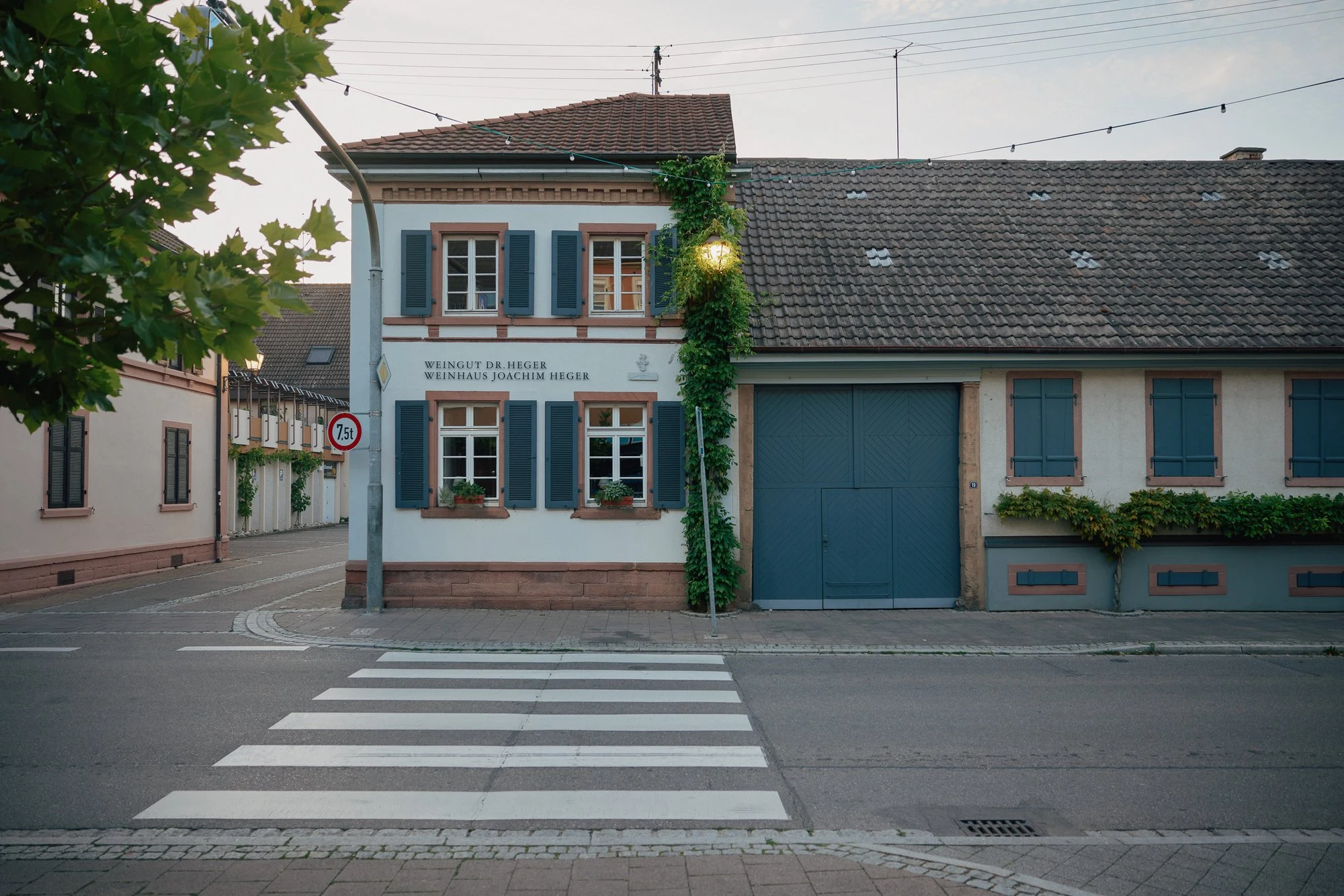
Weingut Dr. Heger is located at Bachenstraße 19/21, 79241 Ihringen, Ihringen.
The core draw is terroir specificity: the Kaiserstuhl's volcanic substrate produces Spätburgunder with a character not replicated elsewhere in Germany. Ihringen sits at the foot of this massif, giving Dr. Heger direct access to some of Baden's most sought-after vineyard land. The estate's Pearl 2 Star Prestige award (2025) confirms its standing in Germany's prestige wine tier.
At a Pearl 2 Star Prestige estate in Ihringen, visiting arrangements typically require advance contact rather than walk-in access. Planning ahead is particularly relevant during harvest season, when production activity takes priority.
The Kaiserstuhl is a volcanic island rising from the Rhine plain, and its soils — a combination of loess and volcanic basalt — generate warmth retention and mineral complexity that define Ihringen as one of Germany's hottest and sunniest wine communes. This thermal advantage allows Spätburgunder to achieve full phenolic ripeness, which is why a Pearl 2 Star Prestige estate like Dr. Heger draws serious attention from collectors looking beyond the Ahr. The geographic specificity of Bachenstraße 19/21 places the estate at the productive core of this sub-regional argument.
Bachenstraße 19/21, 79241 Ihringen
Ihringen