Biodynamic Blaufränkisch from border vineyards
- Falstaff Winery - Listed · 2026
- Pearl 2 Star Prestige · 2025
Blaufränkisch before ornament
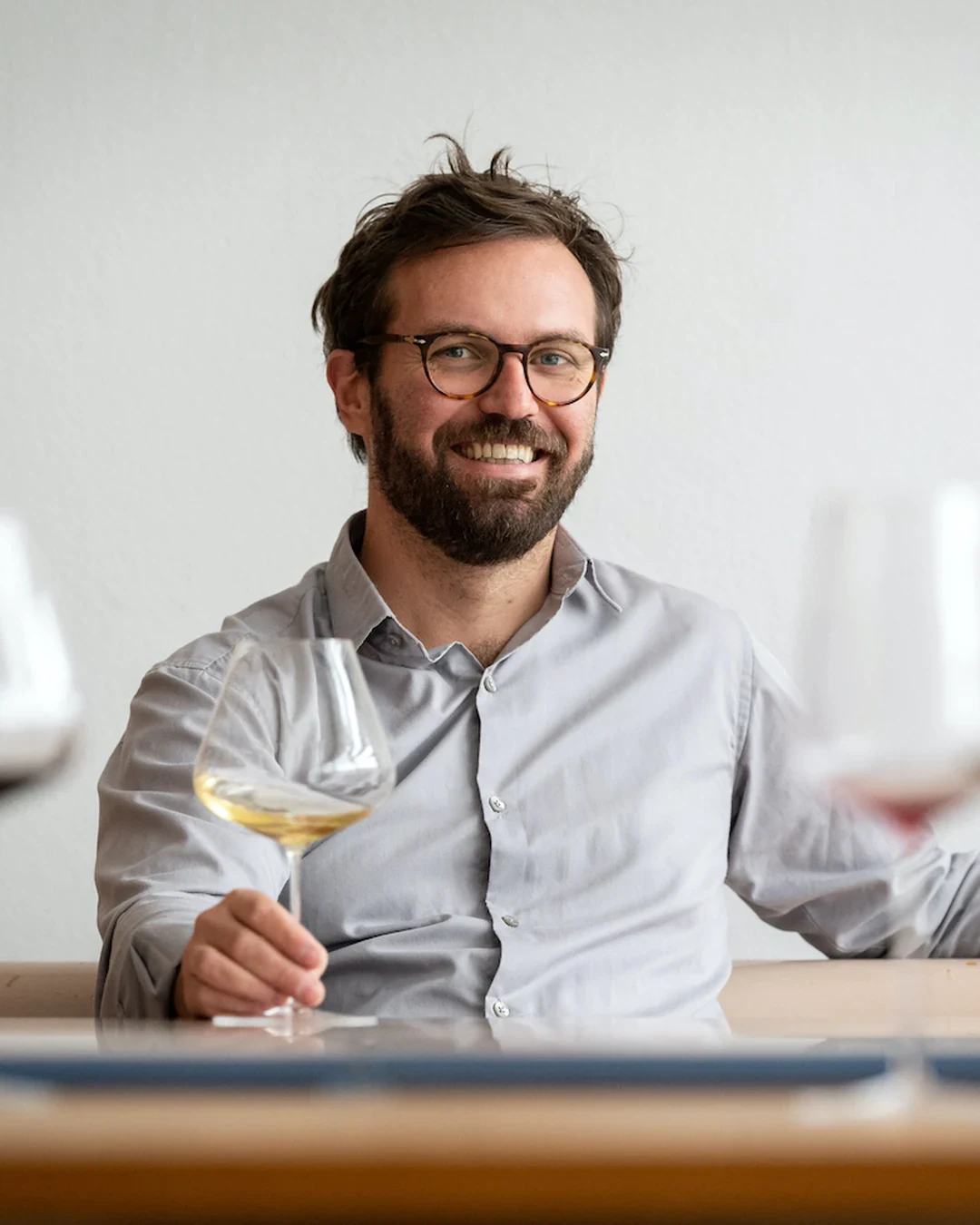
Blaufränkisch sets the work in motion for Franz Weninger, winemaker at Weingut Franz Weninger in Horitschon. He treats the grape less as a signature to be enlarged than as a discipline to be kept clear, with drinkability held close to the center of the cellar. The family turn toward biodynamics has a precise early marker: in 1997, his father came back from Alsace with wines from Pierre Frick and the news of a farming method that asked different questions of soil, vine, and grower. Franz finished his viticultural training and internships in 1999, then recognized that parts of conventional farming no longer sat right with him. That sequence matters here because it keeps the philosophy from feeling decorative. The method arrived through family conversation, training, and dissatisfaction with received practice. At the bench-side of this winery, Blaufränkisch remains the steady instrument, not a costume for the estate.
Stable acidity as a working measure
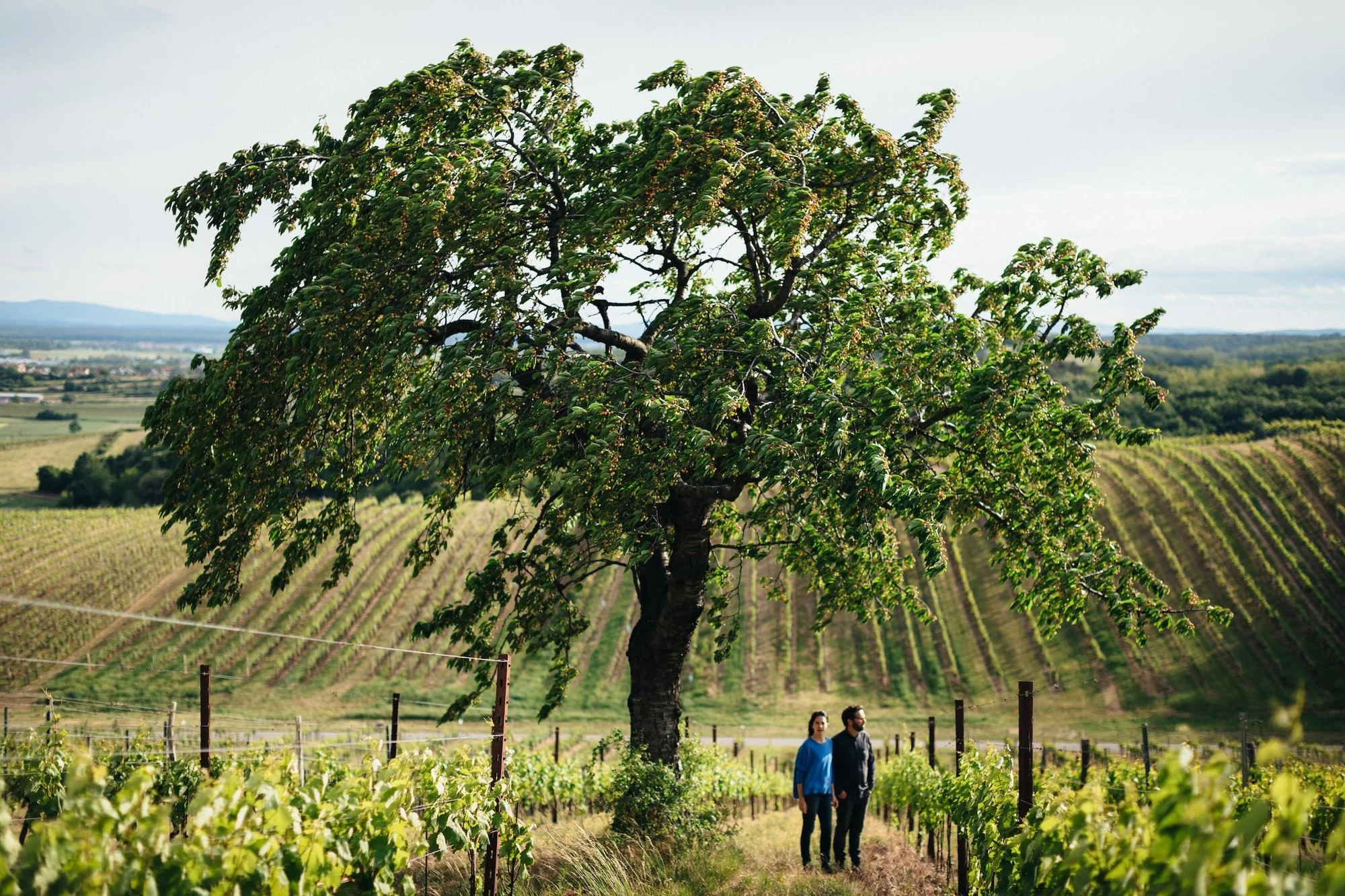
The program is biodynamic and small in scale, with regional varieties leading the work: Blaufränkisch, Furmint, Pinot Noir, Zweigelt, and Pinot Blanc. The vineyards sit in Mittelburgenland, with sites crossing the Austria-Hungary border and soils named here as loam, gneiss, limestone, and slate. Those materials give the place its working vocabulary before the wine reaches glass or table. Franz frames the wines through stable acidity and ease of drinking, a practical standard rather than a tasting-room flourish. In his own food language, fried fish, pasta with olive oil, and a lard sandwich of Mangalitza pig with onions all sit within range because the regional varieties can carry oil and fat. The named bottles widen the picture: PONZICHTER, KEKBURGUNDI 2022, HOCHÄCKER 2023, FEHÉRBURGUNDI 2023, and A GLIMMER OF HOPS 2021. Read together, they suggest a cellar more interested in timing, place, and the hand than in polish for its own sake.
The Sunday letter
Find new places through the people who run them.
Our Sunday email brings you the chefs, winemakers and hoteliers behind our newest stories. See a sample before you subscribe.
See a sample of the Sunday emailOne email a week. Unsubscribe from any issue.
The quiet of border vineyards
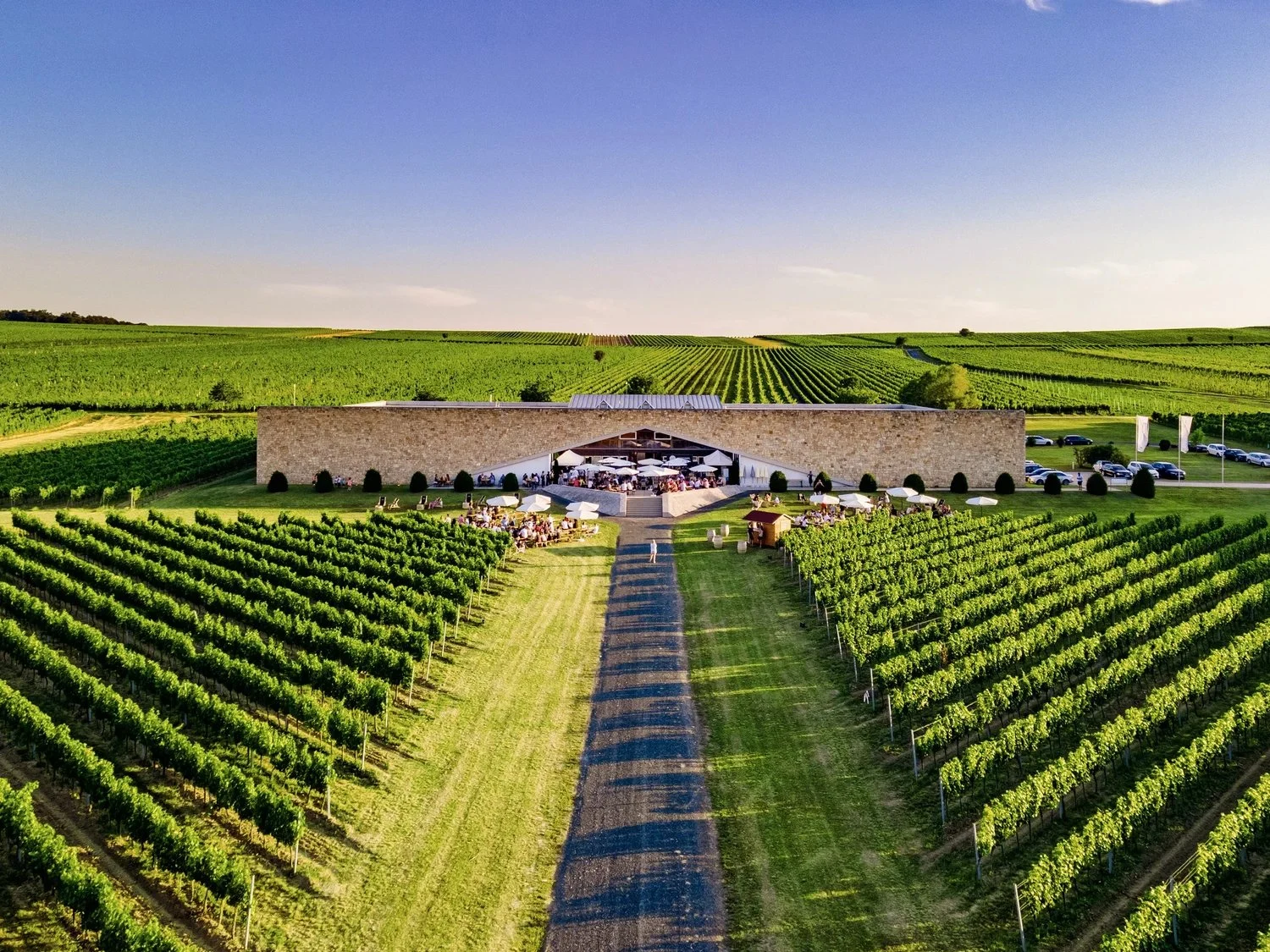
The atmosphere at Weingut Franz Weninger is described without theatre: rustic, quiet, intimate, with the work centered on traditional winemaking and historic vineyard settings. The cellar and tasting room belong to a landscape of border vineyards, where loam, gneiss, limestone, and slate are not scenery but the ground of the program. There is no need to overstate the room. Its character comes from the scale of the estate, the biodynamic farming, and the varieties that return to the glass year after year. In Horitschon, the experience is less about display than proximity to the method: fruit from Austrian and Hungarian ground, handled by a winemaker who keeps acidity, drinkability, and soil in the same conversation.
What remains in the glass
The house keeps in circulation the wines Franz chooses to name. Follow the bottles that keep the border in view: Blaufränkisch for the central line, Furmint for another register, and PONZICHTER for the estate’s plainspoken sense of place.
Questions
Frequently asked
What kind of place is Weingut Franz Weninger?
It is a small, biodynamic winery in Horitschon, with work centered on traditional winemaking and historic vineyard settings.
What grapes and wines does the winery focus on?
Blaufränkisch is the main grape in the cellar, alongside Furmint, Pinot Noir, Zweigelt, and Pinot Blanc. Named wines include PONZICHTER, KEKBURGUNDI 2022, HOCHÄCKER 2023, FEHÉRBURGUNDI 2023, and A GLIMMER OF HOPS 2021.
How would you describe the atmosphere there?
The atmosphere is described as rustic, quiet, and intimate.
Is a reservation needed to visit?
Visits are appointment only.
What should visitors know about getting there and the practicalities?
The winery is at Florianigasse 11, 7312 Horitschon, and there is an on-site parking lot. The dress code is casual.
The field
How it compares
| Place | Notes |
|---|---|
| Weingut Franz Weninger | Horitschon, $$ |
| Der Bader | Horitschon |
| Eichenwald Weine | Horitschon |
| Weinbau Familie Lehrner | Horitschon |
| Weingut Anton und Gabriele Gober | Horitschon |
| Weingut Kerschbaum | Horitschon |
| Weingut Paul Lehrner | Horitschon |
In residence
Similar places
The Sunday letter
Get the next Made By story in your inbox.
We send one email every Sunday morning with the places and people we covered that week.
See a sample of the Sunday emailOne email a week. Unsubscribe from any issue.