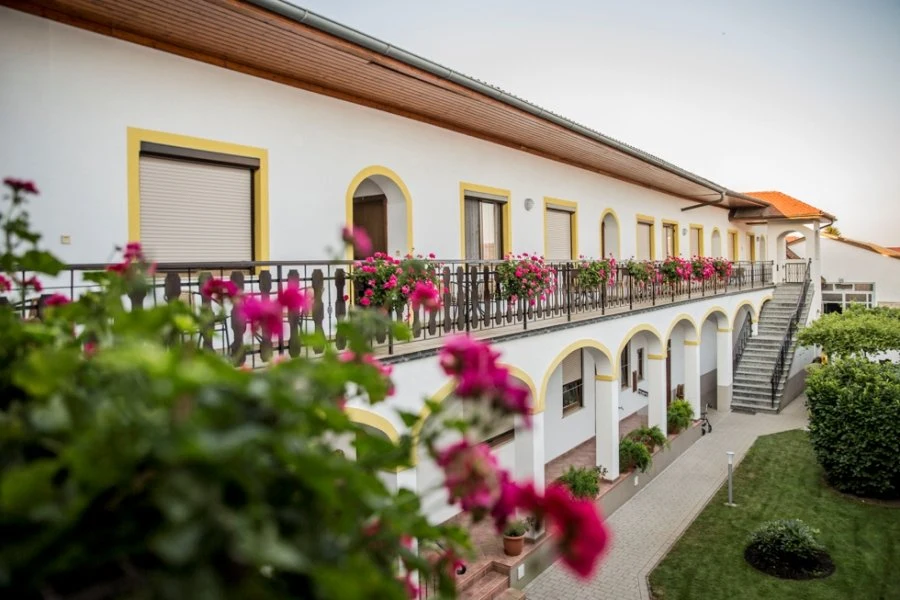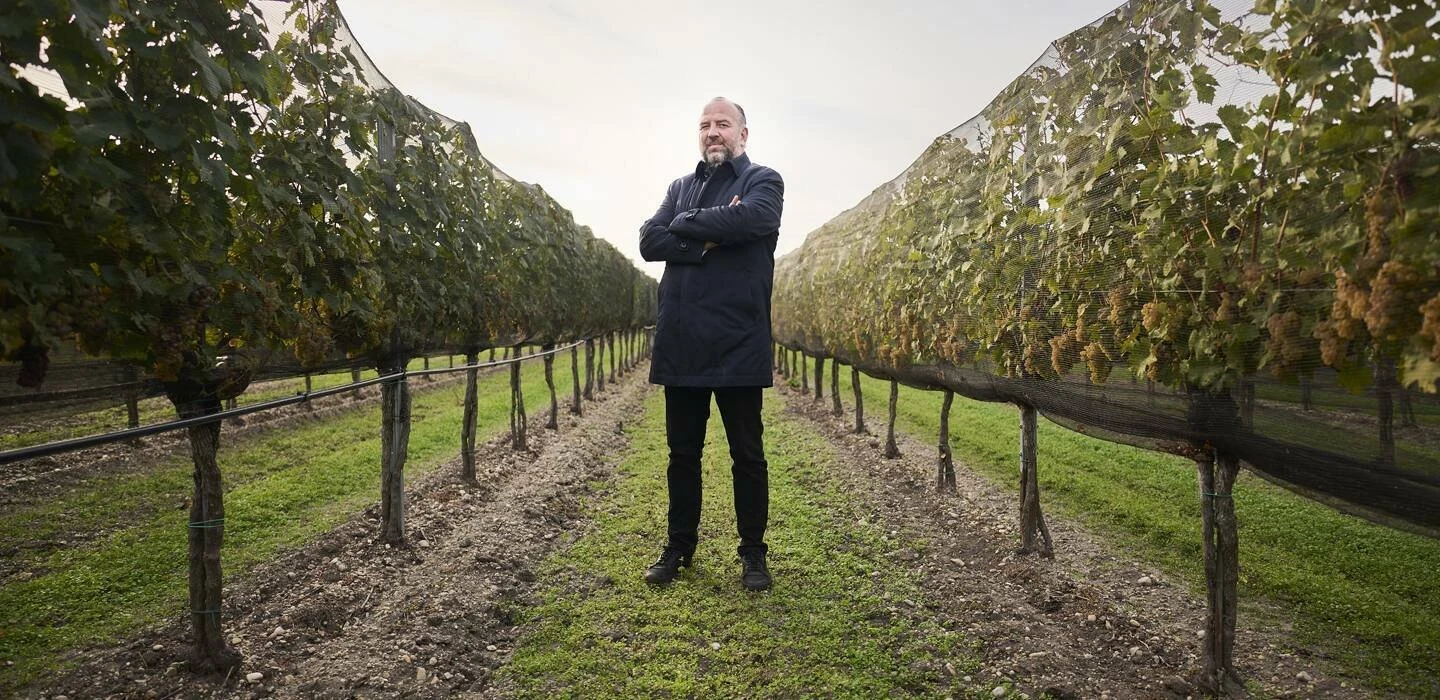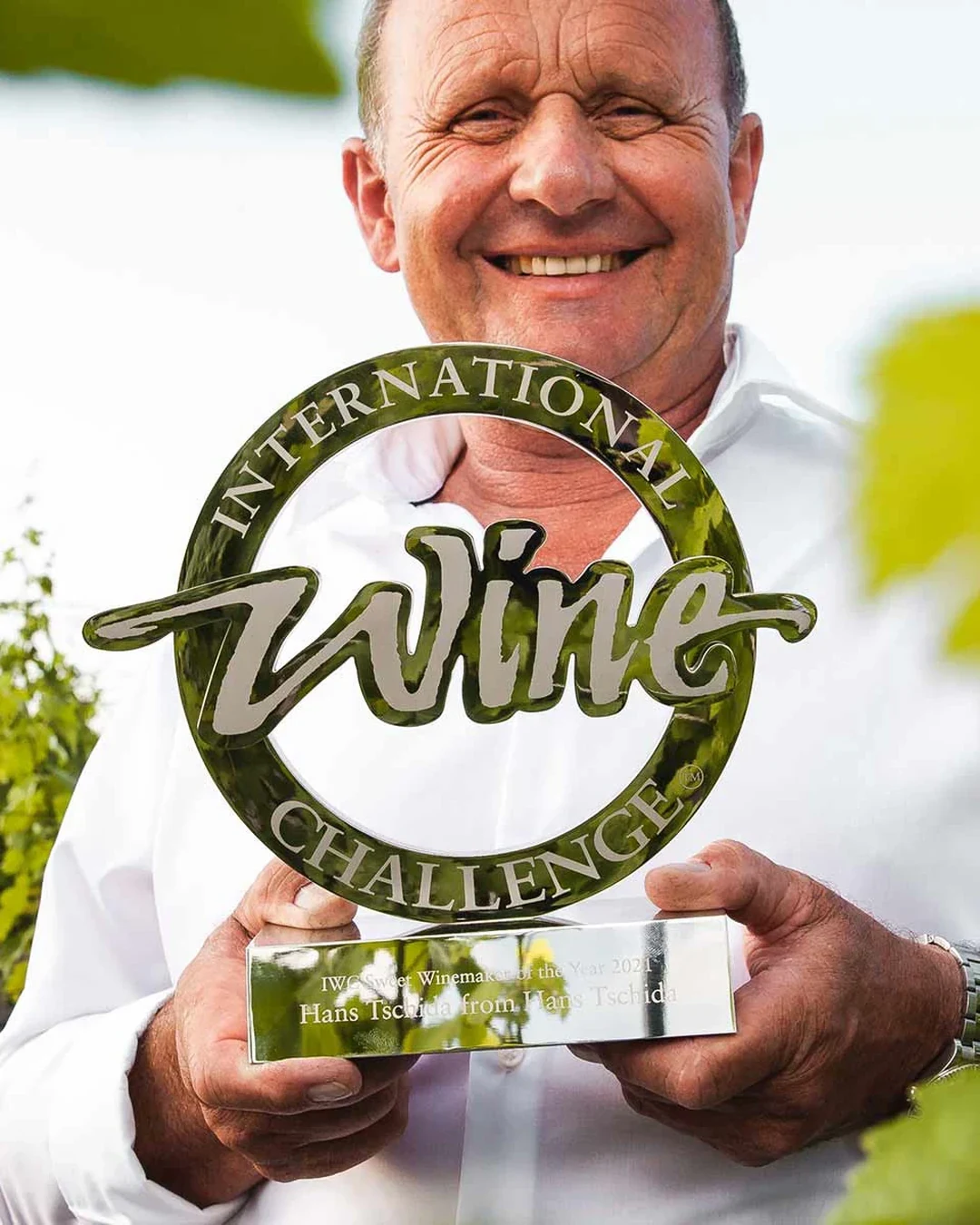
Weingut Hans Tschida operates from the heart of Illmitz, one of Austria's most climate-privileged wine villages on the western shore of Neusiedlersee. Awarded Pearl 2 Star Prestige recognition in 2025, the estate sits within a comparable set defined by the lake's extraordinary botrytis conditions and a winemaking tradition that turns humidity into concentration. A serious address for anyone tracing Austrian sweet wine at its most site-specific.
<h2>Where the Lake Writes the Wine</h2><p>Approach Illmitz from the flat eastern edge of Burgenland and the landscape does something unusual: it stops. The land levels to near-zero gradient, the reeds of the Neusiedlersee press in from the east, and the sky takes over in a way that feels less like scenery and more like weather. This is not incidental atmosphere. It is the operating condition for one of Central Europe's most specific wine-producing environments, and every serious estate in the village, including Weingut Hans Tschida on Angergasse, is built around reading it correctly.</p><p>The Neusiedlersee's role in Austrian wine is structural, not decorative. The shallow lake, rarely more than two metres deep across its entire body, generates a micro-climate with autumn fog that persists long enough and with enough regularity to produce <em>Botrytis cinerea</em> conditions on a near-annual basis. That fungal consistency is what separates Illmitz and its immediate neighbours from most sweet wine regions globally, where noble rot is an event rather than a planning assumption. For estates like Tschida, the question is not whether botrytis will arrive but how to respond to its particular expression in a given vintage.</p><h2>Pearl 2 Star Prestige and What It Signals</h2><p>Weingut Hans Tschida holds a Pearl 2 Star Prestige rating for 2025, which places it in a tier that carries genuine editorial weight within the EP Club evaluation framework. Pearl 2 Star recognition in this context identifies estates that demonstrate consistent, measurable quality with a defined regional identity, not simply production scale or marketing reach. Within Illmitz's winery set, that credential matters for how the estate should be positioned against peers.</p><p>The village's most referenced name internationally is <a href="https://www.enprimeurclub.com/wineries/weingut-kracher-illmitz-winery">Weingut Kracher</a>, whose Trockenbeerenauslese wines established Illmitz as a serious address for collectors in the 1980s and 1990s. Tschida operates in the same appellation and climate, but estates at this level compete on their specific site readings and vintage interpretations rather than on shared geography. The Pearl 2 Star rating positions Tschida as a reference point in its own right, not simply as a contextual footnote to the region's larger names.</p><h2>Burgenland's Sweet Wine Geography in Practical Terms</h2><p>Illmitz sits at the southern end of the Neusiedlersee DAC region, Austria's designated origin system for the lake area. The DAC structure matters because it attempts to codify what the lake's climate produces: Welschriesling, Chardonnay, and red varieties from Zweigelt through to Blaufränkisch in dry expressions, plus Prädikatswein categories, Spätlese, Auslese, Beerenauslese, Ausbruch, and Trockenbeerenauslese, for the botrytis-influenced sweet wines that define the region's international reputation.</p><p>The distinction between Ausbruch and Trockenbeerenauslese is worth understanding before visiting any estate in this area. Ausbruch, a category with deep historical roots in the nearby town of Rust, requires a minimum must weight between Beerenauslese and TBA levels, but the style is typically less concentrated and more acidic than TBA. Both styles depend on the same botrytis mechanism, but TBA demands individually selected, fully shrivelled berries, labour-intensive work that limits production volumes significantly. Estates serious about both categories, as many in Illmitz are, maintain separate picking teams and timing decisions for each tier.</p><p>For context on how Burgenland's sweet wine tradition compares to other Austrian wine regions, the contrast with the Wachau's dry wine focus is instructive. Estates like <a href="https://www.enprimeurclub.com/wineries/weingut-emmerich-knoll-durnstein-winery">Weingut Emmerich Knoll in Dürnstein</a> and <a href="https://www.enprimeurclub.com/wineries/weingut-brundlmayer-langenlois-winery">Weingut Bründlmayer in Langenlois</a> work in a fundamentally different climate register, Danube-carved valleys with granite and gneiss soils, where Grüner Veltliner and Riesling in dry Smaragd format are the primary language. Illmitz's sweet wine tradition requires entirely different vineyard management, harvest decisions, and cellar timing.</p><h2>Terroir in Practice: What the Neusiedlersee Gives and Takes</h2><p>The soils around Illmitz are predominantly loam and sand with a high humus content, quite different from the loess-heavy soils of the Wagram or the primary rock formations of the Wachau. Sandy soils drain well, which matters in a region where autumn rainfall can arrive in volume, but they also warm quickly, an advantage for even ripening in the lake's humid microclimate, where canopy management determines whether botrytis proceeds elegantly or tips into grey rot.</p><p>Temperature variance is relatively low here compared to inland Austrian regions. The lake acts as a thermal buffer, moderating overnight cooling and extending the growing season. That extended hang time, combined with the fog-triggered botrytis, creates the conditions for the multi-harvest passes that TBA and Beerenauslese production requires. For red wine production, Blaufränkisch and Zweigelt are the area's dominant varieties, the warmth and extended season produce wines with riper tannin structure than the cooler Eisenberg DAC further south.</p><p>Estates operating at Tschida's level within this geography are, in effect, managing two completely different winemaking programs in the same calendar year: the autumn sweet wine harvest, which requires patience, selective picking, and the ability to read botrytis development across weeks, and the dry wine program, which competes against a very different comparable set. <a href="https://www.enprimeurclub.com/wineries/weingut-pittnauer-gols-winery">Weingut Pittnauer in Gols</a>, a short distance north along the lake, demonstrates how Neusiedlersee estates can build serious reputations in organic red wine production while remaining within the same broad appellation.</p><h2>Visiting Illmitz: Context for Planning</h2><p>Illmitz is a small village, the kind of settlement where the main street is lined with estate gates and cellar doors are often a knock rather than a booking form. The practical reality of visiting serious producers in this area is that contact matters. The region does not market itself aggressively to wine tourism; it functions primarily as a production area with a loyal trade and collector following.</p><p>The address for Weingut Hans Tschida is Angergasse 5, 7142 Illmitz. Visitors should arrange appointments in advance.</p><p>Autumn is the obvious window for visiting the sweet wine estates of Illmitz, when the harvest is either underway or just concluded and the lake's fog season provides the atmospheric backdrop that explains everything. Spring visits, before vine growth resumes, offer a cleaner logistical window for cellar appointments without harvest-period disruption.</p>
Weingut Hans Tschida is located at Angergasse 5, 7142 Illmitz, Illmitz.
Weingut Hans Tschida has received recognition including: Pearl 2 Star Prestige (2025).
The estate operates within the Neusiedlersee DAC region, where the shallow lake generates the persistent autumn fog that triggers Botrytis cinerea — the noble rot essential to Burgenland's celebrated sweet wines. Illmitz sits at the epicentre of this microclimate, which historically produces Beerenauslese and Trockenbeerenauslese from grapes such as Welschriesling and Scheurebe. The estate's Pearl 2 Star Prestige rating for 2025 reflects standing within this tradition.
Weingut Hans Tschida carries a Pearl 2 Star Prestige (2025) from EP Club, placing it among the editorially recognised producers in the Neusiedlersee DAC zone. Illmitz itself is one of Austria's most concentrated wine villages: the address at Angergasse 5 puts the estate within a settlement where cellar gates line the main streets and the lake is close enough to shape every growing season. For anyone tracing Burgenland's sweet wine geography from source, this estate is a primary stop.
Illmitz operates on a smaller scale than urban wine destinations — cellar visits here typically run on personal appointments rather than walk-in schedules. Contacting the estate directly at Angergasse 5, 7142 Illmitz before arrival is advisable, particularly during harvest season in October when demand from both trade buyers and wine tourists is at its peak.
Angergasse 5, 7142 Illmitz
Illmitz