Shell limestone, Silvaner, selective harvest
- Falstaff Winery - 4 Stars · 2026
- Pearl 3 Star Prestige · 2025
Low yields before the cellar
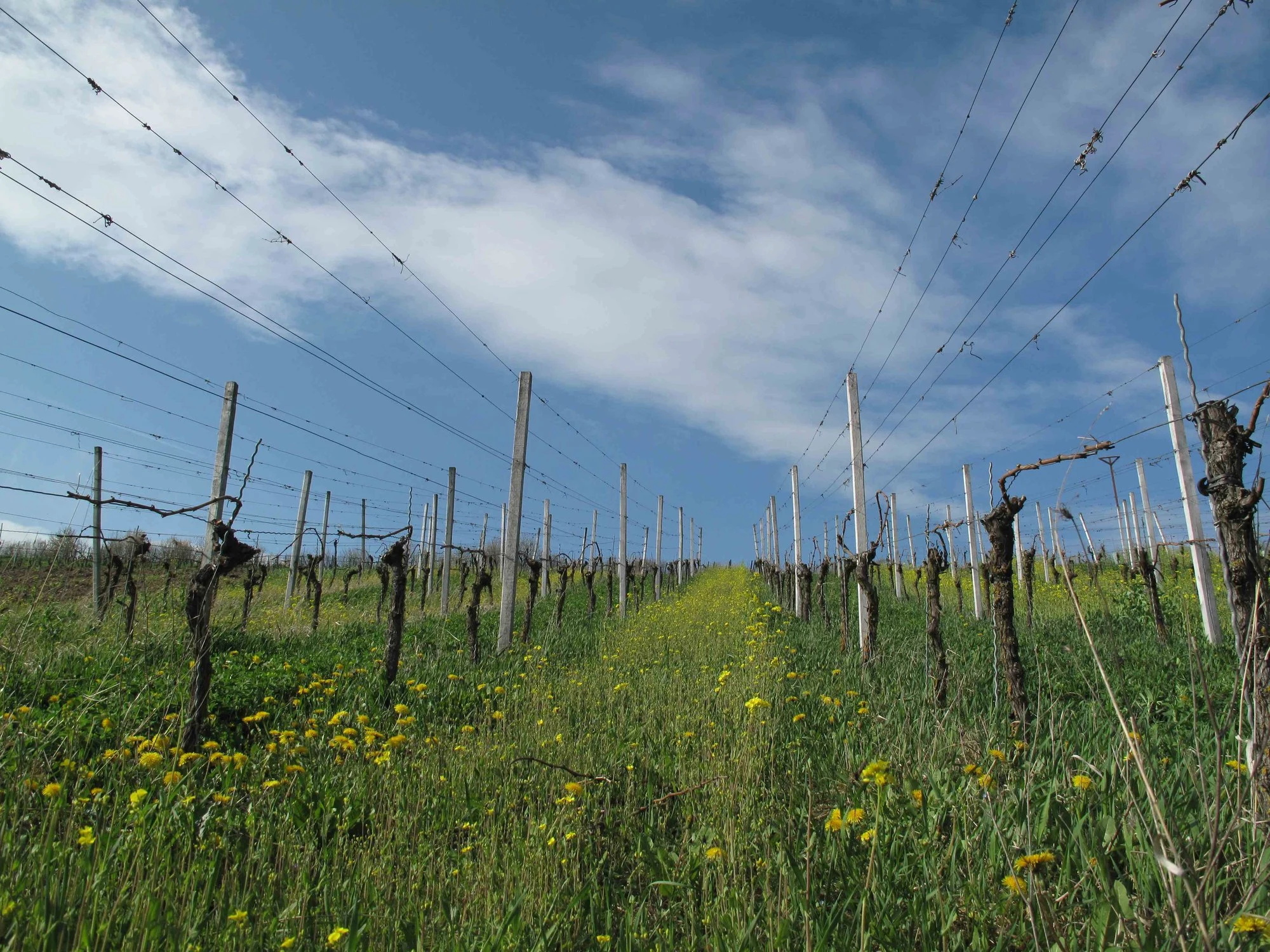
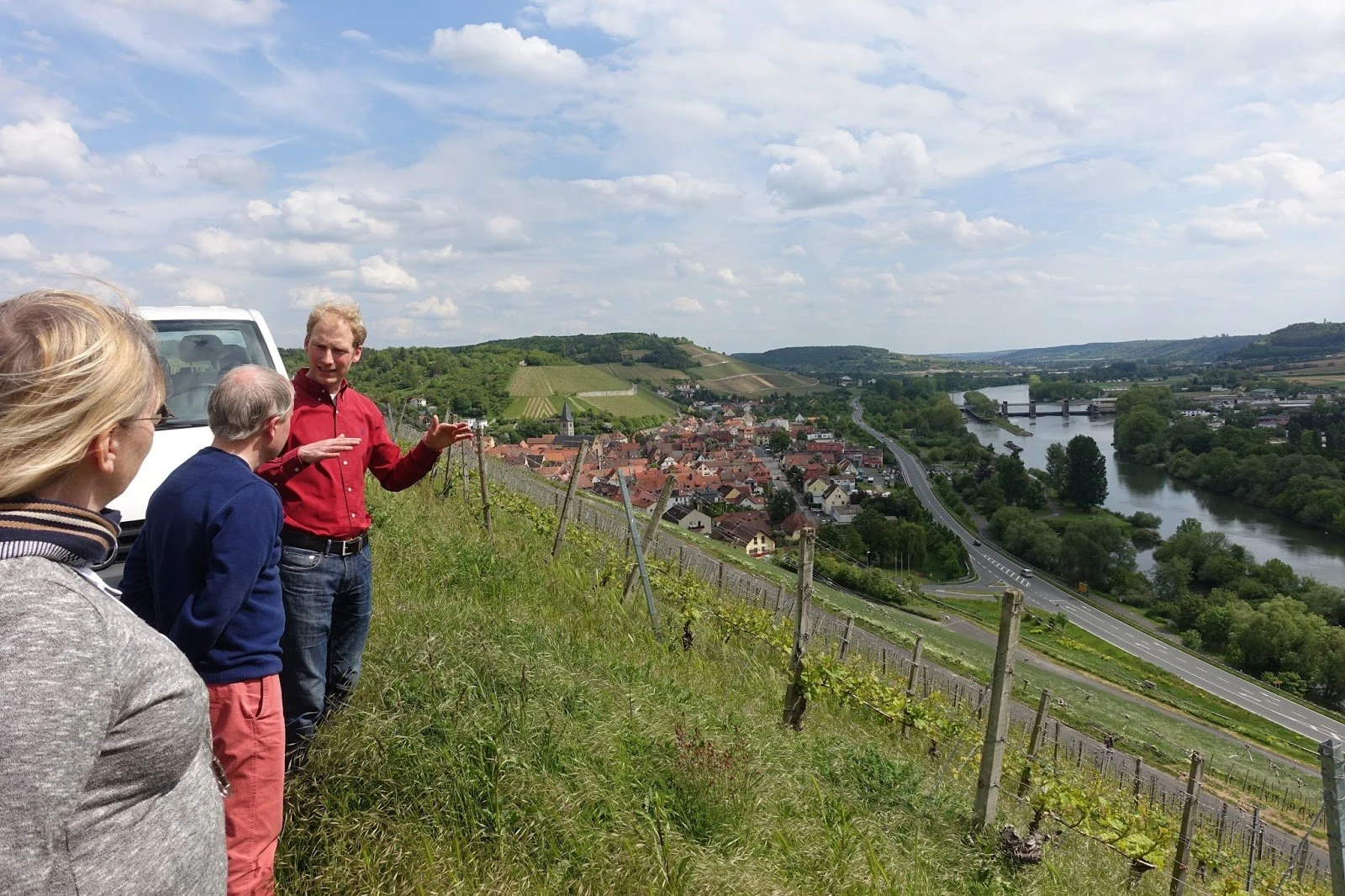
Selective hand harvest sets the pace for Martin Schmitt, winemaker at Weingut Schmitt’s Kinder in Randersacker. He works from a family estate whose history reaches 1712, at the foot of the Sonnenstuhl in the Main valley, where steep southwest-facing vineyards sit on loamy shell limestone. The wines are not built around force. Their register is restraint: subtle fruit, mineral tension, quiet density, and enough freshness to let them age without losing the line that makes them drinkable young.
Schmitt’s role sits across the practical choices that give the cellar its shape. Low yields matter here because concentration is not treated as an effect to be added later. Selective picking matters because the estate’s strongest bottles depend on keeping site character intact before the fruit reaches the press. Silvaner carries the center of the work, with Riesling, Spätburgunder, Müller-Thurgau, Bacchus, Scheurebe, and Domina forming the wider range. The method is a discipline of limit and selection, not a bid for volume.
Muschelkalk as the main instrument
The program is clearest in the wines tied to Randersacker’s named sites. The 2023er Randersackerer Pfülben Silvaner GG comes from Pfülben, a classic Muschelkalk site, and the bottle reads as a direct argument for limestone, depth, and reserve. Riesling vom Spielberg, a new wine in the program, gives another line of precision from a top Randersacker site. Together they show how Schmitt uses variety without loosening the estate’s grammar.
Silvaner gives breadth and a Franconian center of gravity. Riesling sharpens the edge. Pinot Noir broadens the cellar’s expression without moving it away from still wines shaped by mineral line. The estate does not need a crowded vocabulary to make its point. Loamy shell-limestone soils, low yields, and hand selection supply the structure; the cellar’s task is to preserve what those decisions have already made possible. That is why density here feels held in the wine rather than laid over it.
The quiet of the Main valley
The place itself keeps close to the vineyard. Weingut Schmitt’s Kinder combines a modern winery building with a baroque ancestral home, a pairing that makes the estate feel both worked and inherited. In the tasting room, the atmosphere is quiet, shaped by the landscape rather than by display. Outside, the slopes turn toward the southwest above the Main valley; inside, the wines return the same information in another form, limestone, ripeness, and restraint held in balance.
The cellar belongs to Franconia, but not as costume. Its craft is local in the concrete sense: Randersacker sites, classic varieties, and wines made to keep their form over time. The recognition in 2025 came across four German wine guides, with four-star placements from Falstaff Weinguide, Feinschmecker, Vinum Weinguide, and Eichelmanns Weine. There is agreement across the range. Schmitt’s next line is already in the glass with Riesling vom Spielberg.
Questions
Frequently asked
What kind of wines does Weingut Schmitt’s Kinder make?
The estate works mainly with Silvaner and Riesling, alongside Spätburgunder, Müller-Thurgau, Bacchus, Scheurebe, and Domina. The wines are described as restrained, with subtle fruit, mineral tension, quiet density, and enough freshness to drink young or age.
What is the winery known for?
Weingut Schmitt’s Kinder is known for wines shaped by low yields, selective hand harvest, and loamy shell limestone in steep southwest-facing vineyards above the Main valley. The Randersackerer Pfülben Silvaner GG and Riesling vom Spielberg are named as clear examples of that style.
How old is the estate?
The family estate’s history reaches back to 1712.
What is the setting like at the winery?
The estate combines a modern winery building with a baroque ancestral home. The tasting room is described as quiet, with the landscape rather than display shaping the atmosphere.
What recognition has it received?
In 2025, the winery received four-star placements from Falstaff Weinguide, Feinschmecker, Vinum Weinguide, and Eichelmanns Weine.
The field
How it compares
| Place | Notes |
|---|---|
| Weingut Schmitt’s Kinder | Randersacker, $$ |
| Weingut König | Randersacker |
| Weingut Martin Göbel | Randersacker |
| Weingut Schmachtenberger | Randersacker |
| Weingut Störrlein Krenig | Randersacker |
| Weingut Trockene Schmitts | Randersacker |
| Wilhelm Arnold | Randersacker |