Made ByWinery
Winzer Krems (Sandgrube 13)
- 01CityKrems, Austria
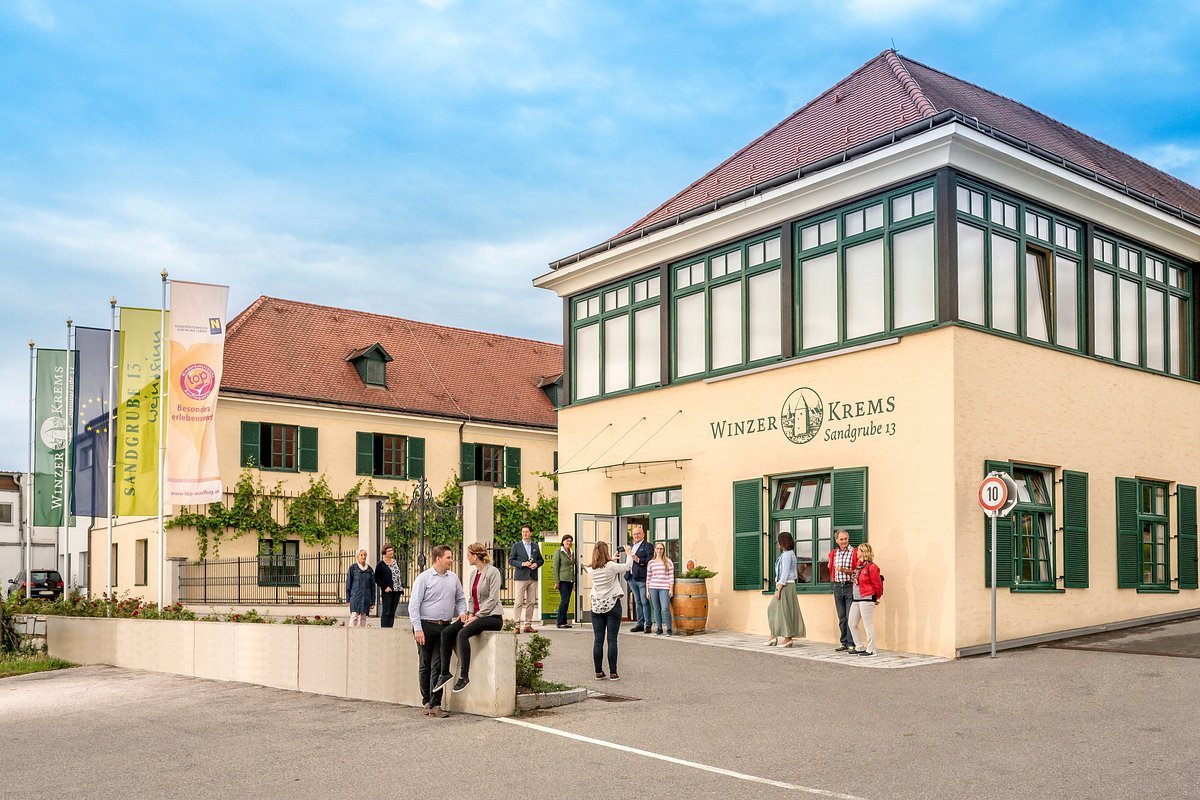
Winzer Krems (Sandgrube 13) sits at the centre of the Kremstal's cooperative winemaking tradition, earning a Pearl 2 Star Prestige rating in 2025 for wines that translate the region's loess and primary rock soils into precise, age-worthy expressions. The address on Sandgrube 13 places it within walking distance of Krems's historic centre, making it a natural reference point for understanding how the Danube's thermal influence shapes Austrian white wine at scale.
At a glance
- Price
- $$
- Neighborhood
- Krems an der Donau
Where Loess Meets the Danube: The Kremstal in Context
The Wachau tends to absorb most of the attention directed at the Danube wine corridor, but Krems itself anchors a separate and distinct appellation. The Kremstal DAC designation covers a defined zone where the Danube bends east and the Krems river cuts inland, creating a patchwork of loess-heavy slopes and harder primary rock terraces. These two soil types produce measurably different results even at short distances from one another: loess sites yield broader, more textured Grüner Veltliner and Riesling with early aromatic appeal, while primary rock plots, granite, gneiss, crystalline schist, produce wines with tighter structure and greater tension. That contrast is central to what Winzer Krems does at its Sandgrube 13 facility.
Winzer Krems is the Kremstal's principal cooperative, working with a membership base that spreads across the appellation's varied sites. That scale matters because it gives the operation access to a wider cross-section of the region's geology than almost any single estate could achieve. For context, compare this to the smaller family estates that define the region's prestige tier: Weingut Emmerich Knoll in Dürnstein works a focused set of named vineyards with deep vertical identity, while Weingut Bründlmayer in Langenlois draws on the Kamptal just north. Winzer Krems operates differently: it functions as an aggregator of terroir signals, with the Sandgrube 13 address serving as the site where those signals are assembled, evaluated, and expressed.
The Sandgrube 13 Address and What It Signals
The Sandgrube 13 designation refers specifically to the estate's primary facility in Krems an der Donau, positioned within the town itself rather than at a remote vineyard site. Arriving at the address places you at the edge of Krems's historic centre, a compact city with a well-preserved medieval core that draws visitors for its own architectural character as much as for wine. The physical facility is large by regional standards, reflecting the cooperative's scale, but the winery's premium range at this address is curated to express site-specific identity rather than volume.
In 2025, Winzer Krems (Sandgrube 13) received a Pearl 2 Star Prestige award. Within the Kremstal specifically, the cooperative's premium range is the benchmark against which smaller estates measure their own terroir claims.
Terroir Expression: What the Kremstal's Soils Produce
Grüner Veltliner is the Kremstal's primary vehicle for terroir expression, and the appellation's split between loess and crystalline rock defines the wine's character more sharply here than in some adjacent regions. Loess-derived Grüner tends toward round texture and early-drinking accessibility, with the grape's signature white pepper note sitting inside a broader, more cushioned frame. Rock-derived examples from granite or gneiss sites produce a leaner profile: more linear acid structure, less immediate aromatic weight, and the kind of mineral persistence that extends the wine across a decade or more in bottle.
Riesling on primary rock in the Kremstal follows a similar trajectory. The Danube's thermal mass moderates the growing season, reducing the diurnal swings that might otherwise produce aggressive acid, while the rocky soils add a petrolic, almost saline undertone that distinguishes Kremstal Riesling from the Wachau expressions grown just a few kilometres west. The river acts as both moderator and amplifier: it keeps frost damage limited in spring, holds warmth through the harvest window in autumn, and reflects light onto steep slopes in ways that push phenolic ripeness without sacrificing freshness.
Winzer Krems's position as a cooperative means it sources from multiple altitude bands and aspect orientations within the appellation. South and southeast-facing slopes capture the most thermal intensity; north-facing parcels on the Rehberg ridge retain more tension and acid. Managing the blend across these exposures is the central technical challenge of cooperative production at this level, and the Pearl 2 Star Prestige recognition in 2025 suggests the programme navigates it with some rigour.
The Kremstal's comparable set in Austrian White Wine
Austria's premium white wine scene has consolidated around a small number of appellations and individual estates over the past two decades, with DAC classifications providing the regulatory framework that allows specific varieties to claim geographic identity. The Kremstal DAC runs Grüner Veltliner and Riesling as its two designated varieties, and the cooperative model here sits in a different relationship to that system than an estate producer. A cooperative aggregates member fruit and must make quality decisions at scale; the premium result, when achieved, carries the same DAC credentials as an estate wine but involves a different kind of precision.
For comparison, Weingut Kracher in Illmitz works the opposite end of Austria's premium spectrum, with Burgenland's Neusiedlersee conditions and a focus on botrytised dessert wines. Weingut Wohlmuth in Kitzeck operates from Styria's Südsteiermark, where Sauvignon Blanc and Welschriesling define a different regional identity. Weingut Pittnauer in Gols and Weingut Heinrich Hartl in Oberwaltersdorf extend the comparison further into red wine territory and Thermenregion character. The Kremstal, by contrast, remains one of the purest expressions of Austrian white wine's capacity for both immediate pleasure and extended cellaring.
Planning a Visit to Sandgrube 13
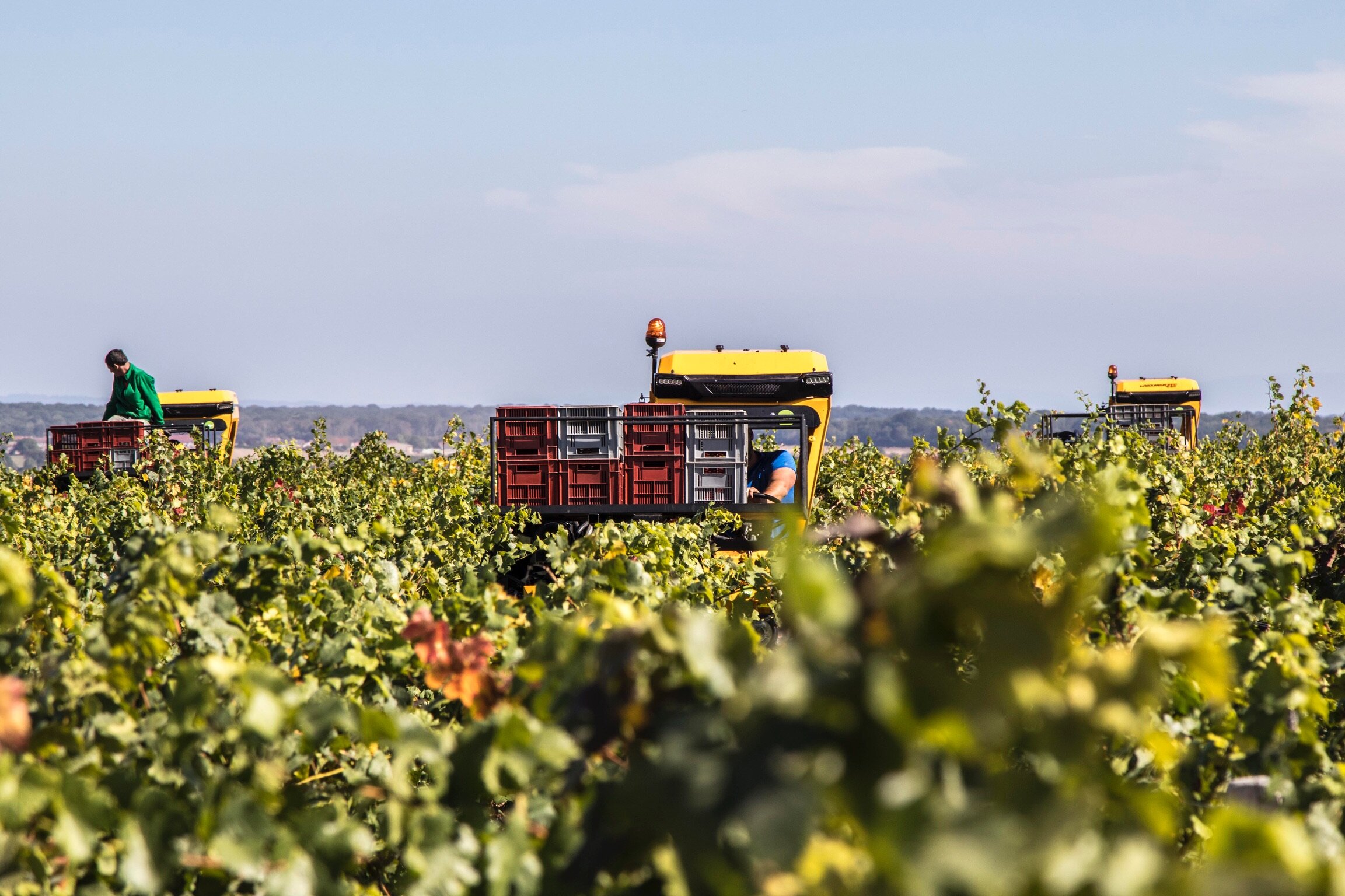
Krems an der Donau sits approximately 75 kilometres west of Vienna along the Danube valley, reachable by direct train from Wien Hauptbahnhof or Franz-Josefs-Bahnhof in under ninety minutes, making it a practical day trip from the capital for wine-focused visitors. The city is also the eastern gateway to the Wachau, so pairing a stop at Winzer Krems with visits to estates further along the river corridor is a logical itinerary. Autumn harvest season, from late September through October, is the period when the Kremstal's agricultural character is most legible: vineyards are active, producers are present, and the thermal shift toward cooler evenings sharpens the contrast between day and night that defines the final weeks of ripening.
Because Winzer Krems operates at cooperative scale, access to the Sandgrube 13 facility is generally more open than at boutique estates, where appointment-only visits are standard. Sandgrube 13 is generally more open than boutique estates, though visitors should confirm details before going, particularly for group visits or cellar-door purchases of the premium range. For a broader view of Austrian production beyond wine, see 1516 Brewing Company Distillery in Vienna, 1310 Spirit of the Country Distillery in Sierning, A. Batch Distillery in Bergheim, Abfindungsbrennerei Franz in Leithaprodersdorf, 1404 Manufacturing Distillery in Sankt Peter-Freienstein, and Weingut Scheiblhofer Distillery in Andau International reference points such as Accendo Cellars in St. Helena and Aberlour in Aberlour complete a broader comparative view of estate-scale premium production.
Know before you go
- Dress code
- casual
- Reservations
- walk_in_friendly
- Parking
- on_site_lot
- Payment
- cash, credit_card
- Groups
- Welcomed
Frequently asked
How would you describe the overall feel of Winzer Krems (Sandgrube 13)?
Sandgrube 13 operates as a working estate facility within the town of Krems an der Donau rather than as a destination restaurant or hospitality showcase, so the atmosphere skews toward serious wine production and direct engagement with the appellation. The 2025 Pearl 2 Star Prestige recognition signals a level of critical standing that draws wine-focused visitors rather than casual tourists. Expect a producer-led experience oriented around the Kremstal's loess and crystalline terroir.
What part of town is Winzer Krems (Sandgrube 13) in?
Winzer Krems (Sandgrube 13) is located at Sandgrube 13, 3500 Krems an der Donau, Krems.
What awards has Winzer Krems (Sandgrube 13) received?
Winzer Krems (Sandgrube 13) has received recognition including: Pearl 2 Star Prestige (2025).
What's the signature bottle at Winzer Krems (Sandgrube 13)?
Grüner Veltliner is the Kremstal's defining grape, and Winzer Krems works across the appellation's two distinct soil profiles — loess and crystalline bedrock — which produce markedly different expressions of the variety. The estate's Pearl 2 Star Prestige award in 2025 points to benchmark-level production, but specific bottling names are not confirmed in current public records. Visiting the Sandgrube 13 address directly is the most reliable way to assess current releases.
What is Winzer Krems (Sandgrube 13) known for?
Winzer Krems at Sandgrube 13 is recognised as one of the Kremstal appellation's leading producers, holding a Pearl 2 Star Prestige award in 2025. The estate's reputation is built on terroir-specific white wines, with Grüner Veltliner and Riesling drawn from the loess plateaus and crystalline slopes that define the Kremstal's geography. Krems an der Donau itself anchors the appellation separately from the neighbouring Wachau, and Winzer Krems is central to that distinction.
Do I need a reservation for Winzer Krems (Sandgrube 13)?
Confirmed booking policies for the Sandgrube 13 facility are not publicly documented at this time. For a 2025 Pearl 2 Star Prestige estate in a dedicated wine region, contacting the producer directly before visiting is the standard approach, particularly for organised tastings. The address is Sandgrube 13, 3500 Krems an der Donau.
How does Winzer Krems (Sandgrube 13) rank among Kremstal wine producers?
Winzer Krems at Sandgrube 13 holds a Pearl 2 Star Prestige award as of 2025, placing it within the upper tier of recognised Austrian wine estates. The Kremstal DAC appellation competes for critical attention alongside the Wachau and Kamptal, and a two-star Prestige designation from the Pearl system reflects consistency at production level, not just single-vintage performance. For visitors based in Vienna, Krems an der Donau is approximately 75 kilometres west and reachable by direct train.
Address
Sandgrube 13, 3500 Krems an der Donau
Krems an der Donau
How it compares
Winzer Krems (Sandgrube 13)
- Cuisine
- Grüner Veltliner, Blauer Zweigelt
- Price
- $$
- Awards
- 1 recognition
- Notes
- Krems an der Donau
Weingut Johann Topf
- Cuisine
- Grüner Veltliner, Riesling
- Price
- $$
- Awards
- 1 recognition
- Notes
- Straß im Straßertale
Weingut Jäger
- Cuisine
- Grüner Veltliner, Riesling
- Price
- $$
- Awards
- 1 recognition
- Notes
- Weißenkirchen in der Wachau
Weingut Leth
- Cuisine
- Grüner Veltliner, Roter Veltliner
- Price
- $$
- Awards
- 1 recognition
- Notes
- Fels am Wagram
Kausl Distillery
- Cuisine
- Wachau DAC
- Price
- $$
- Awards
- 1 recognition
- Notes
- Wachau
Baumann Obstbrand Distillery
- Cuisine
- Winery
- Price
- —
- Awards
- 1 recognition
- Notes
- Stanz bei Landeck