Chef
Bee Satongun
- Discipline
- Chef
- Venue
- Paste · Restaurant
Made By record
Awards & recognition
1 total
1 winner


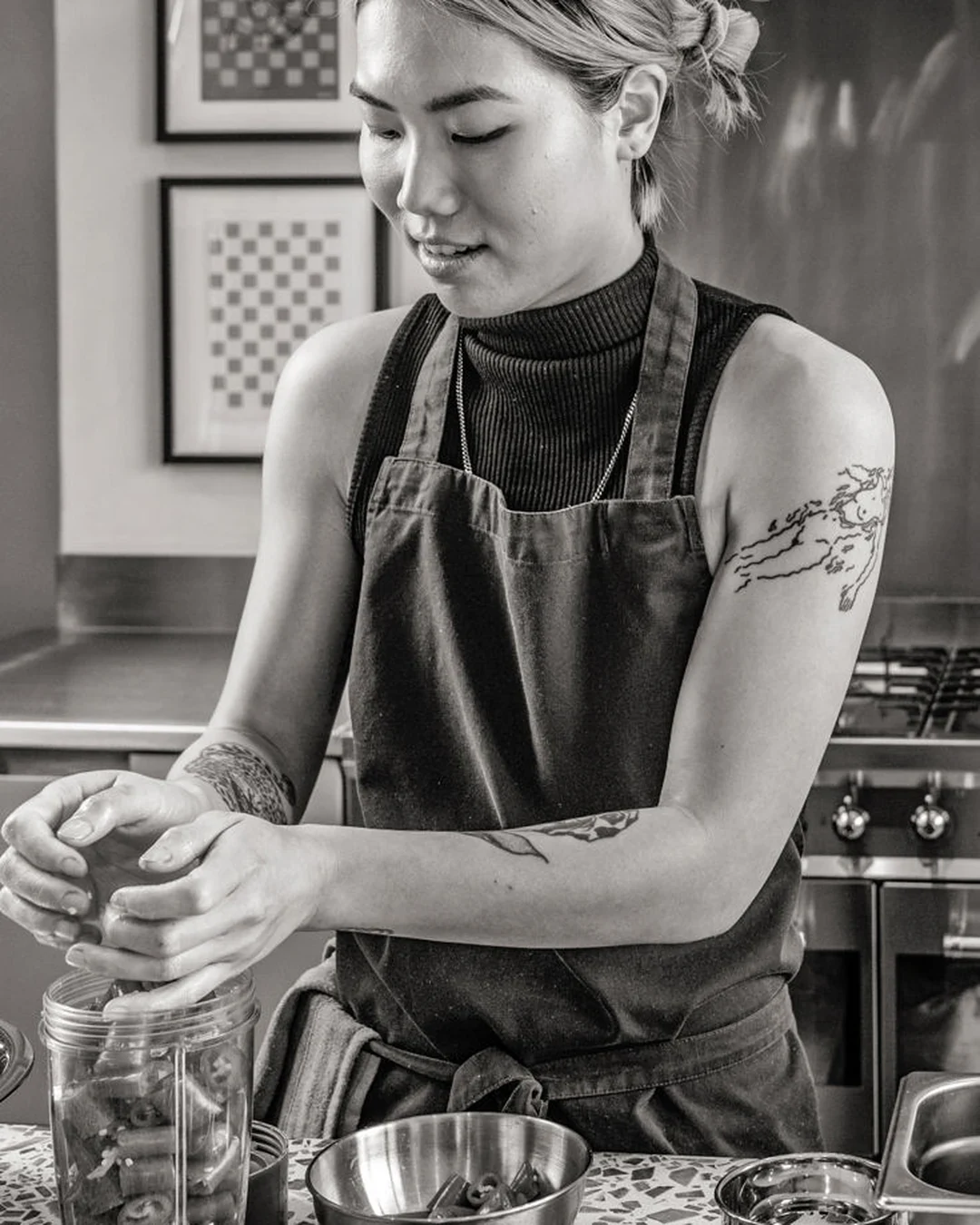
Portrait of Bee Satongun
i. Biography
Bee Satongun opened Paste in Bangkok in 2012, and the restaurant’s language has been built around balance: measured, disciplined, and willing to shift without breaking from tradition. Thai cooking, in her hands, is treated as a working craft rather than a fixed display piece. The aim is not novelty for its own sake, but adjustment with control. Her own shorthand is direct: “We innovate about 20 per cent and we keep 80 per cent of the traditional dish.” That ratio explains the method. In Bee Satongun’s cooking, inheritance is not preserved by leaving it untouched; it is preserved by handling it carefully enough to let change sit inside it. At Paste in Bangkok, that approach shows in familiar dishes presented with a different kind of order. Bee Satongun’s work is not a break from tradition, but a study in how much clarity and surprise can be carried within it. The point is not to erase a dish’s memory, but to work with it—its expected flavours, its recognizability, the comfort it carries even when the form shifts. The result is composed rather than theatrical, with each plate set up to be read, then tasted, then understood as faithful in a different register.
The Sunday letter
Read Made By's new profiles every Sunday.
Meet the chefs, winemakers and sommeliers behind the places we cover. See a sample below before you subscribe.
See a sample of the Sunday emailOne email a week. Unsubscribe from any issue.
Career - Chef and co-founder — Paste Bangkok, Thonglor, Bangkok, Thailand (2012–present) - opened first overseas branch of Paste — Paste Laos at the Apsara, Luang Prabang, Laos (2018–present) - opened a new iteration of Paste — Paste Bangkok, Gaysorn Shopping Mall, Bangkok, Thailand (from 2015)
Signature
Bee Satongun's signature dishes include Tom Kha soup. Tom Kha soup suits this method because it can carry depth without losing legibility. In Bee Satongun’s hands, it becomes a case study in controlled change: a dish that can shift in presentation or emphasis and still remain identifiable as itself. That tension between comfort and refinement is central to her cooking. The signature here is less a single flourish than a way of working, with the essential flavour held in place while the plate is reconsidered around it.
In Their Words “We feed our creativity into the form, so the presentation might not be what people are used to, but the flavour stays true.” The focus in this line is on structure, not ornament. Bee Satongun treats presentation as a vessel, not a distraction, giving creativity a way in while keeping flavour as the anchor. The statement also shows how she manages expectation: the eye is altered first, then the palate confirms the dish. It is a restrained form of hospitality, one that changes the frame without cutting the thread. “We innovate about 20 per cent and we keep 80 per cent of the traditional dish.” That ratio is the clearest expression of Bee Satongun’s method. She speaks in proportion, not in slogans, and the number itself sets out a craft position: tradition can absorb interpretation if the core remains intact and readable. At Paste in Bangkok, that makes the work less a departure from heritage than a disciplined negotiation with it, carried out with control and confidence in Thai flavour.
Recognition
Bee Satongun has received World's 50 Best Restaurants — Asia's Best Female Chef (2018).
FAQ Where did Bee Satongun work before? Bee Satongun's earlier career included Paste Bangkok. What recognition has Bee Satongun received? One Michelin star (2018).

The Sunday letter
Get the next Made By profile in your inbox.
We send one email every Sunday morning with the people we profiled that week.
See a sample of the Sunday emailOne email a week. Unsubscribe from any issue.