Application scientist
David Zilber
- Discipline
- Application scientist
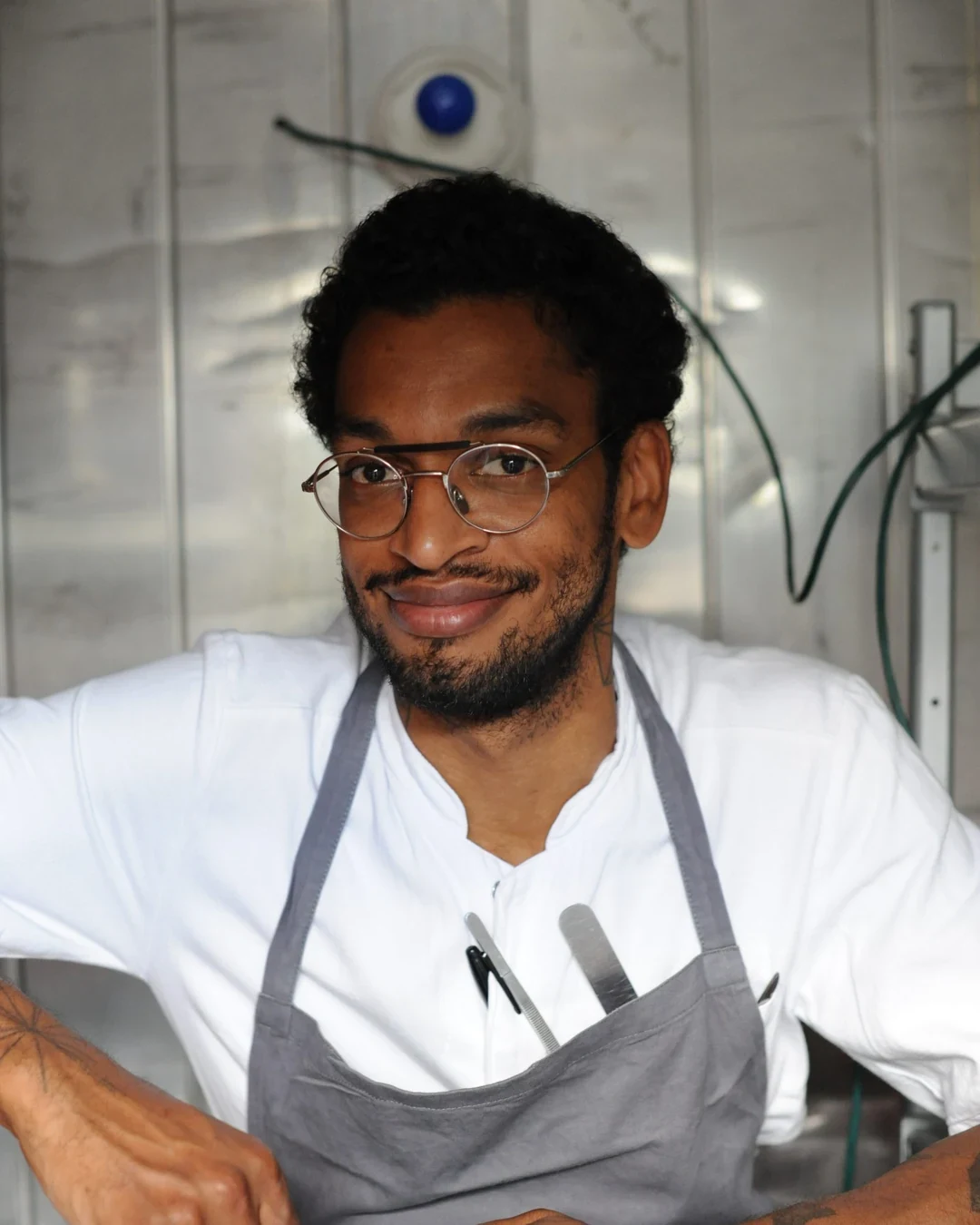
i. Biography
Living organisms are working material in fermentation, not garnish for an idea. “Living organisms change and they change everything around them. If they didn't, there would only be one species of bacteria alive on Earth, and we would not exist.” In David Zilber’s practice, that line describes the job at hand: fungi, bacteria, yeasts, time, temperature, and patience acting on raw ingredients, with flavor as one outcome and food-system change as another.
The Climb
Precision in a kitchen is built through repetition before it is expressed as technique. Early work as sous chef at Hawksworth in Vancouver gave David Zilber that discipline: palate, attention, and the hand knowledge that comes from handling ingredients under service conditions. The next setting was Noma in Copenhagen, where he joined the kitchen staff from 2014. Fermentation at Noma functioned as a method of inquiry rather than a side station. In the role of head of fermentation / director of the Fermentation Lab at Noma in Copenhagen, Zilber worked where kitchen practice and laboratory observation met: flavor was cultured, monitored, adjusted, and made usable. Fermentation food science now carries that same logic into a broader technical setting. As a food scientist / recipe developer in fermentation food science of Chr. Hansen, David Zilber works between kitchen instinct and lab rigor, applying microbial processes as tools for food development.
The Work Today
Applied fermentation now sits inside questions of sustainability, access, and scale. Today, Zilber works as a food scientist building a more sustainable food system with fungi and bacteria. He is an application scientist at Novonesis and is also connected in his career history with Chr. Hansen. The craft problem has widened beyond restaurant production. Fermentation still concerns flavor, but it also concerns how living processes can be guided in systems that feed cities, not only dining rooms. “There are eight billion people on Earth, and more than half live in cities. Not everyone can get vegetables from a local farm. Access to fermented foods, even industrially produced, is good for the world.” Industrial fermentation, in this view, is not a lesser copy of handmade preservation. For Zilber, fungi and bacteria are contemporary food tools: organisms that can build taste, resilience, and a more sustainable food system when handled with culinary judgment and scientific control.
Career - Food scientist / recipe developer in fermentation food science — Chr. Hansen - Sous chef — Hawksworth, Vancouver - Kitchen staff — Noma, Copenhagen (from 2014) - Head of Fermentation / Director of the Fermentation Lab — Noma, Copenhagen
Signature
Pea miso, rose kombucha, and The Noma Guide to Fermentation mark three registers of the same practice. One works through legume depth over time, one through a living drink with floral lift, and one through a written framework that makes fermentation legible to other practitioners.
Awards and Standing
Recognition for this work is tied to the Noma Fermentation Lab years. As Director of the Fermentation Lab from 2016 to 2020, David Zilber helped give form to ingredients such as pea miso and rose kombucha. The method is direct: observe living systems, set conditions, and let change produce flavor. The professional line stays consistent across restaurant and food science settings. From sous-chef at Hawksworth Restaurant, to chef de partie and Director of the Fermentation Lab at Restaurant Noma, to application scientist at Novonesis, Zilber has treated living organisms as culinary material and as part of thinking about the future of food.
FAQ What role does David Zilber hold? David Zilber is food scientist / recipe developer in fermentation food science of Chr. Hansen. Where did David Zilber work before? Earlier in their career, David Zilber worked at Hawksworth, Noma, and Noma. What is David Zilber known for? At Noma he developed innovative fermentation techniques and flavors


