i. Biography
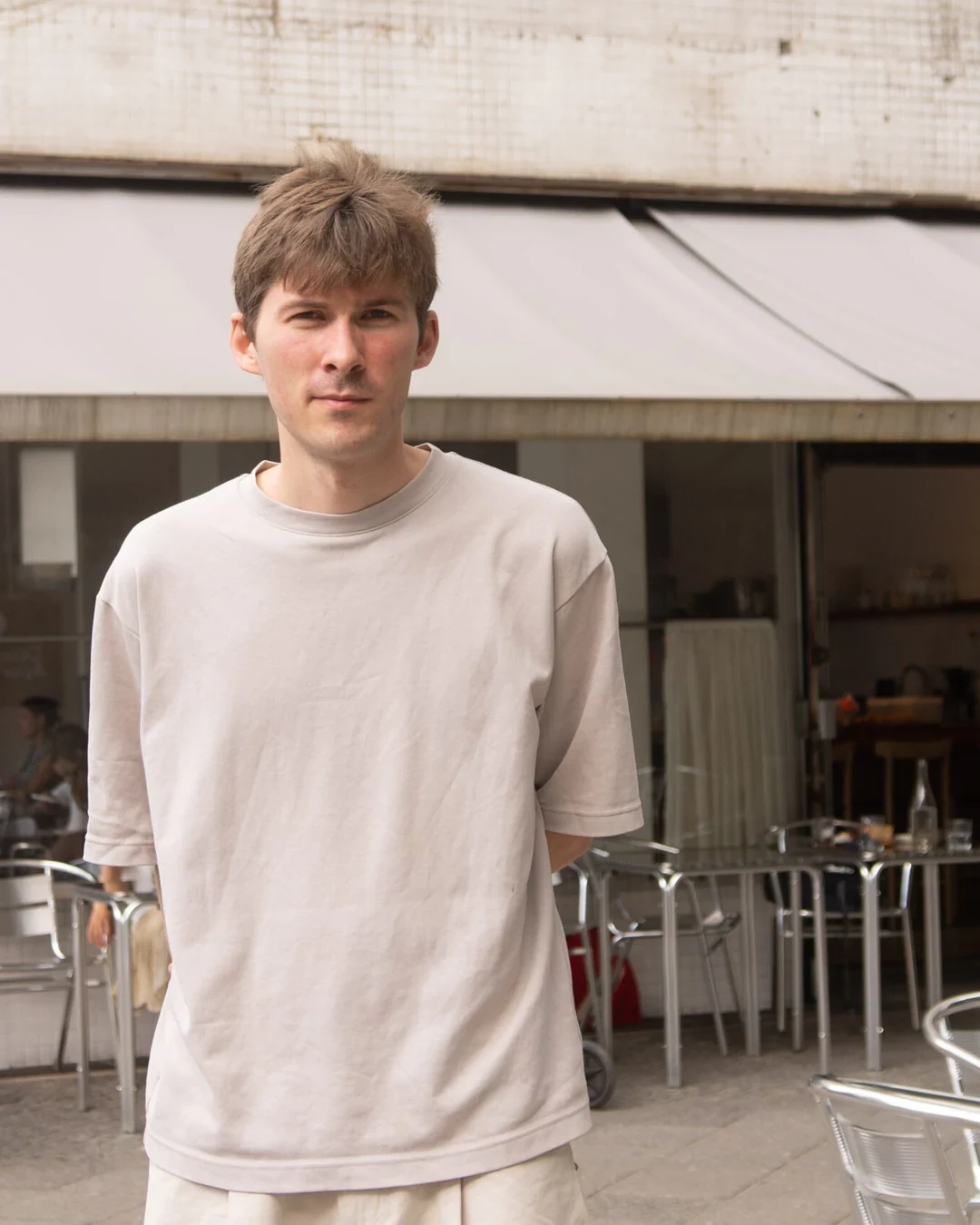
The format did much of the work: a daily changing tasting menu, a nine-seat counter, and more than 30 bite-sized courses built around produce at its peak. In Dylan Watson-Brawn’s hands, that structure required compression rather than display. Small courses leave little room for correction; a counter with nine seats makes pacing, prep, and decision-making visible. The craft sat in sequencing, restraint, and the ability to read an ingredient at the point when it could carry a dish without excess.
The Climb
International kitchen work gave the early practice its frame: kitchen staff at Shambar in Vancouver, apprentice / intern at Restaurant RyuGin in Tokyo, trainee at Eleven Madison Park in New York, and trainee at Noma in Copenhagen. In Dylan Watson-Brawn’s case, those rooms point to a cook formed by repetition, service pressure, and exposure to different systems for handling flavor, season, and detail. The long-form expression of that training was Ernst in Berlin, Germany, where Dylan Watson-Brawn was co-founder from 2014–2024. The restaurant’s work depended on proximity: a nine-seat counter, a daily changing tasting menu, and a kitchen close enough for guests to see the small calls behind each course. That kind of room rewards clarity. It also punishes looseness, because every transition and every product choice is exposed. From 2014 to 2024, Ernst became associated with intensity built from produce, timing, and repetition rather than scale. More than 30 bite-sized courses required a menu that could move without becoming noisy. Produce at its peak was the operating condition, not an embellishment. In Dylan Watson-Brawn’s cooking there, small variations in harvest, texture, and season were treated as usable information.
Today
After Ernst ended in 2024, Dylan Watson-Brawn became associated with Julius in Berlin. The continuity is in the ingredient work: attention to farmers, growing conditions, and the flavor decisions that happen before the kitchen receives the product. Seed and farmer comparisons function as part of the method. As Dylan Watson-Brawn put it, "We’ll do things like give the same seeds to three different farmers, to see whose soil or whose environmental conditions make them most delicious." For a working kitchen, the point is practical: the same seed does not guarantee the same result, and soil and environmental conditions can be read through taste. The cooking remains refined and ingredient-driven, tied to seasonality and Japanese influence. "It’s about the dishes, the setting, the contemplation associated with it, the pureness and appreciation of the product." That statement places technique in service of attention: dish, room, pace, and product handled with enough restraint that the source remains legible.
In Their Words “For me, Japanese cuisine was something incredible. I'd never tasted anything like it. I appreciated the rigour, the attention to detail, the flavours, and the seasonal sensitivity.” “We’ll do things like give the same seeds to three different farmers, to see whose soil or whose environmental conditions make them most delicious.”
Recognition
Dylan's honors include One Michelin star for Ernst (2019) and Top chef in Germany (2022).
Profile updated July 2026
FAQ
Asked of Dylan
Where did Dylan Watson-Brawn work before?
Earlier in their career, Dylan Watson-Brawn worked at Shambar, Restaurant RyuGin, and Eleven Madison Park.
What recognition has Dylan Watson-Brawn received?
One Michelin star for Ernst (2019).