Winemaker
Helmut Dönnhoff
- Discipline
- Winemaker
- Based in
- Oberhausen an der Nahe, Germany
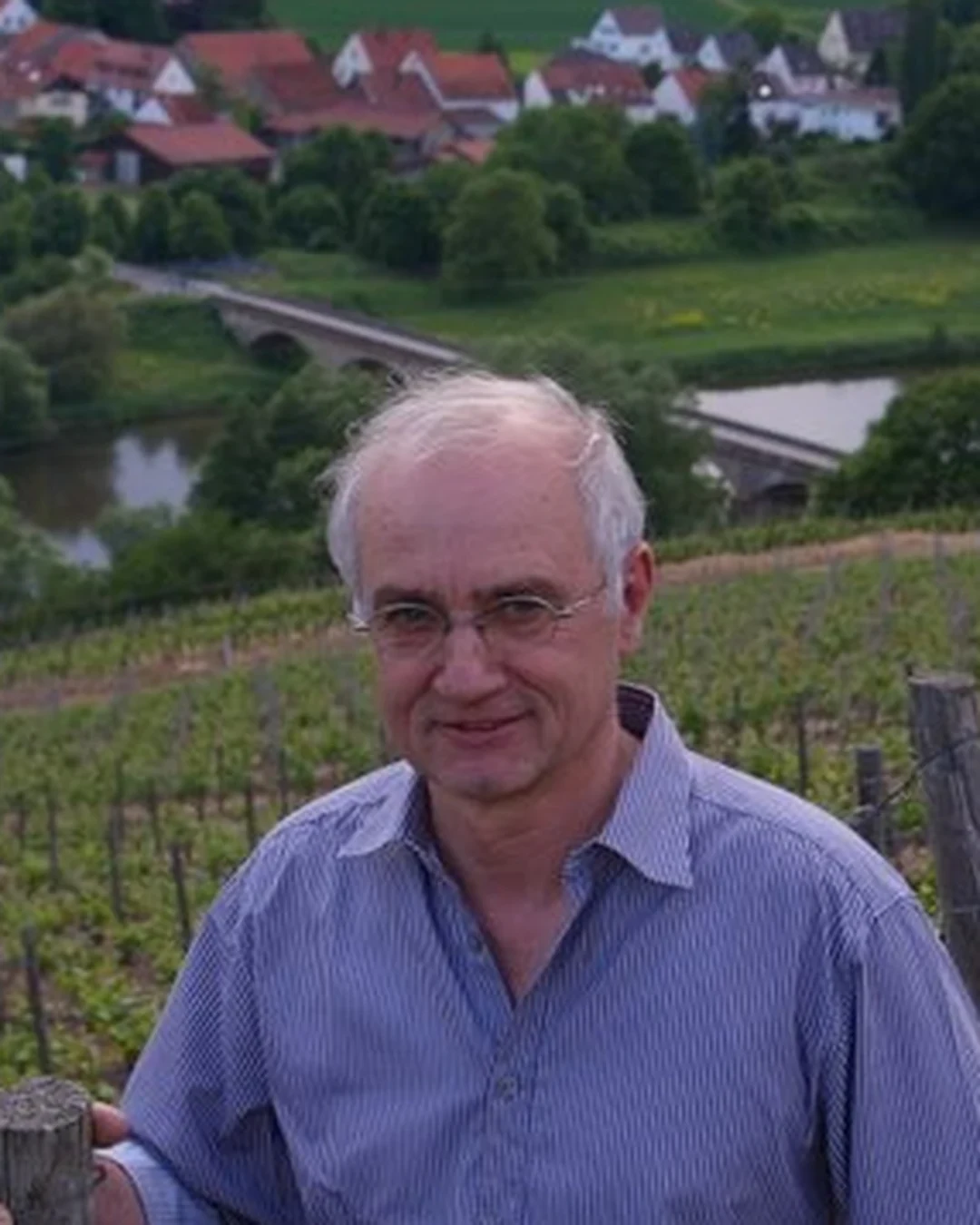
i. Biography
The Path
Nahe Riesling is built from site before cellar. Oberhausen an der Nahe, in the Nahe, Rhineland-Palatinate, Germany, gives Weingut Hermann Dönnhoff its working ground: slopes, stone, weather, and a family estate structure where decisions pass through generations. In that context, Helmut Dönnhoff took over the family winery from his father at Weingut Hermann Dönnhoff from 1966, a succession measured less by title than by responsibility for place. Winemaking continuity at a family estate depends on repeated judgment across seasons. Since 1971, Helmut Dönnhoff has been in charge of winemaking at Weingut Hermann Dönnhoff, where the estate’s work has remained tied to inheritance, site, and restraint. In the Nahe, the useful register is precision: clarity over ornament, and patient reading of vineyard character over cellar performance.
The Work Today
The work remains centered on Weingut Hermann Dönnhoff in Oberhausen an der Nahe, Germany. Its stated priority is the vineyard rather than a winemaker’s imposed mark: "We must take the best product that the vineyard can produce; I’m always looking for the vineyard’s own talent." That approach places the cellar in service of site expression. The craft position is plain: the vineyard has capacity and character, and the winemaker’s job is to recognize what is available rather than cover it. At Weingut Hermann Dönnhoff, that makes humility a practical discipline, not a slogan; excellence begins in the site, and the cellar work is judged by how clearly it carries what the land made possible.
Career - In charge of winemaking — Weingut Hermann Dönnhoff, Oberhausen an der Nahe, Rhineland-Palatinate, Germany (1971–present) - Took over the family winery from his father — Weingut Hermann Dönnhoff, Oberhausen an der Nahe, Rhineland-Palatinate, Germany (from 1966)
Signature
The signature wines include Brücke Großes Gewächs Riesling, Niederhäuser Hermannshöhle, Oberhäuser Brücke, 2017 Tonschiefer, and Dönnhoff Riesling 2022 Nahe. Taken together, they show the estate’s working vocabulary: named sites, vintage, regional identity, and Riesling handled as a vehicle for origin rather than a single fixed house style. Brücke Großes Gewächs Riesling and Oberhäuser Brücke keep Oberhausen an der Nahe in the foreground. Niederhäuser Hermannshöhle adds another named place within the estate language. 2017 Tonschiefer and Dönnhoff Riesling 2022 Nahe broaden the frame through time, soil reference, and region, without moving away from the same central question: what a specific source can give.
In Their Words “We must take the best product that the vineyard can produce; I’m always looking for the vineyard’s own talent.” “Most people in wine today make it for business. I make it for me, myself.”
Acclaim
Helmut Dönnhoff has received Gault Millau Guide to German Wines — German Winemaker of the Year (1999). Recognition in this trade carries weight when it follows sustained work in one place. German Winemaker of the Year (1999) names Helmut Dönnhoff within that frame: Weingut Hermann Dönnhoff, Oberhausen an der Nahe, and a long practice organized around what the vineyard can give.
FAQ Where did Helmut Dönnhoff work before? Earlier in their career, Helmut Dönnhoff worked at Weingut Hermann Dönnhoff. What recognition has Helmut Dönnhoff received? German Winemaker of the Year (1999).


