Chef
Hugo Brito
- Discipline
- Chef
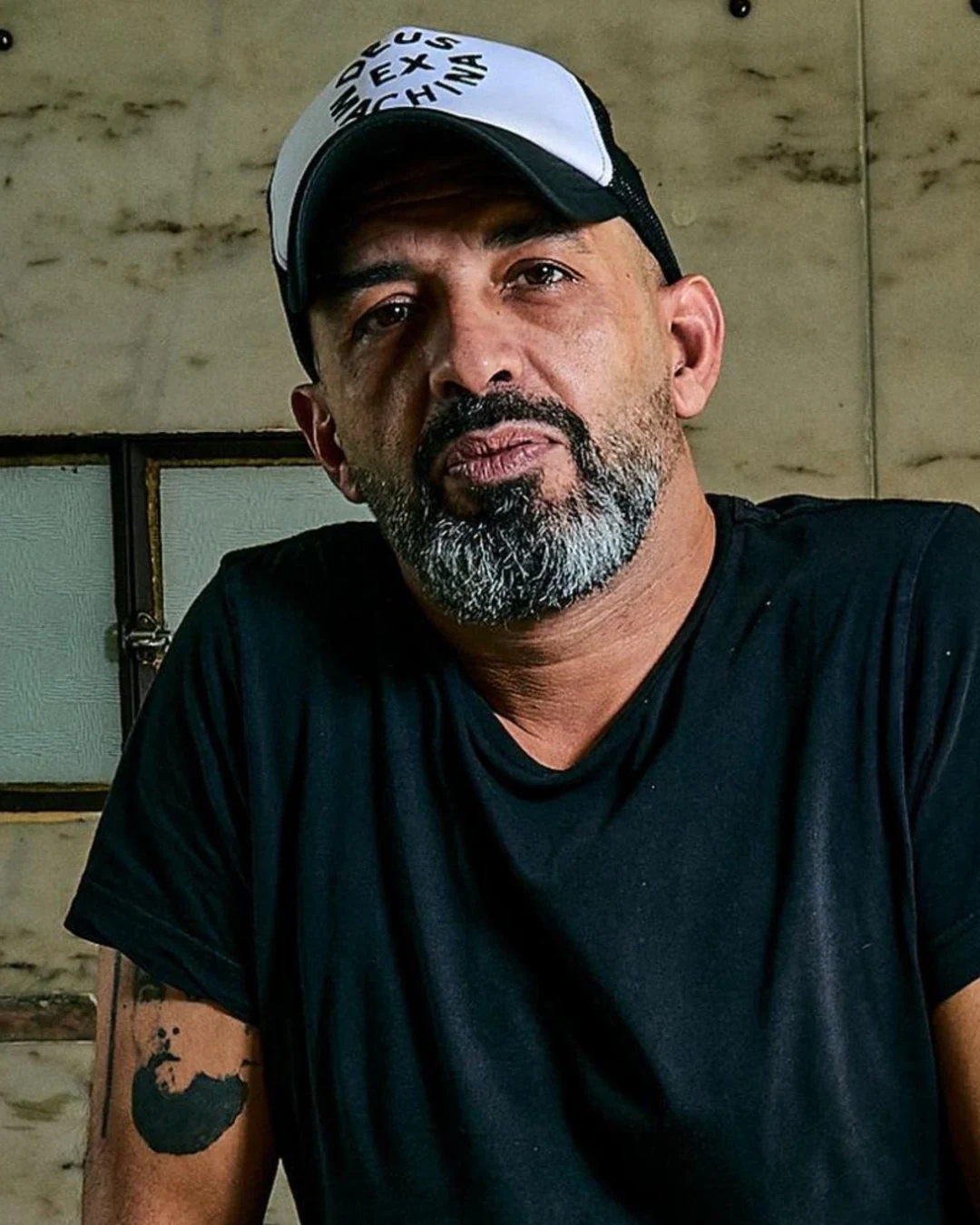
i. Biography
The formation to follow is a Lisbon one: Hugo Brito is chef and owner of Boi-Cavalo Restaurante in Lisbon, Portugal, a restaurant born at the Lisbon Architecture Triennale in 2013 and shaped by the city’s streets, memories, and communities. Its family tree runs through Alfama, through an old butcher’s shop, through Pedro Duarte, and through Alfredo Saramago’s Cozinha de Lisboa e o Seu Termo, the book that helped Brito look backward in order to cook the present.
The Training Brito introduces himself plainly: "Hello, I’m Brito, I’m the chef of Boi-Cavalo here in Lisbon, in Alfama." That sentence gives the work its place before it gives it a theory: Alfama first, then the kitchen. The restaurant began at the Lisbon Architecture Triennale in 2013, a useful origin for understanding its shape. Brito intended it to be characteristically Lisbon, tied to the city’s contemporary urban experience while drawing on its past. One formative source was a book rather than a kitchen brigade. "One of many books for us was fundamental: this book here, Cozinha de Lisboa e Seu Termo by Alfredo Saramago." From that printed inheritance came a way of reading Lisbon cuisine as something alive, layered, and open to many hands. Alongside the restaurant, Brito has also worked as chef consultant to 100 Maneiras and chef consultant to Delidelux. Those consulting roles sit beside, rather than replace, the Lisbon project that defines his authorship.
The Lineage At the Alfama restaurant, Brito and Pedro Duarte reworked classic Lisbon gastronomy in an old butcher’s shop. The setting is crucial: the cooking was not framed as nostalgia alone; it was a return to older materials with the pressure of contemporary Lisbon still present. The menu became constantly changing, and its idea of Lisbon cuisine was highly permeable to the influences of many communities. There was no à la carte menu; instead, the restaurant served a surprise tasting menu in permanent evolution. That structure made lineage feel less like a fixed archive than a conversation. Lisbon’s past entered the room, but so did the city’s present urban experience, with the menu moving as the community around it moved.
The Table A signature work makes the inheritance tangible: Coração Cravejado de Cravinhos, Brito’s recreation of a recipe from Alfredo Saramago’s Cozinha de Lisboa e o Seu Termo. The dish uses a whole pork heart served with boiled turnips. For Brito, the recipe was more than a historical curiosity. "There is a recipe that I always liked very much because it does something that is to open a door to a Lisbon that we almost do not suspect existed." In that door-opening, the dish connects offal, turnips, cloves, text, and city memory. The same instinct for translation appeared in Phoi-Cavalo in Lisbon, which served Vietnamese street-food dishes with a Boi-Cavalo twist. Its menu included pho, Banh Mi, and soft-serve coffee and cardamom ice cream with puffed wild rice and pomegranate caramel toppings. Read together, the work traces a cook attentive to sources: a city, a book, a neighborhood, a collaborator, and the communities that change what Lisbon cuisine can mean.
FAQ Who did Hugo Brito train under? Alfredo Saramago’s Cozinha de Lisboa e o Seu Termo is the explicit formative source connected to Brito’s Lisbon cooking. Where did Hugo Brito study or apprentice? The stated formation point for his restaurant work is the Lisbon Architecture Triennale in 2013, where the project was born. What tradition or house shaped Hugo Brito? His cooking is shaped by classic Lisbon gastronomy, reworked in Alfama with Pedro Duarte through a changing surprise tasting menu.


