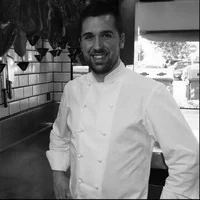
i. Biography
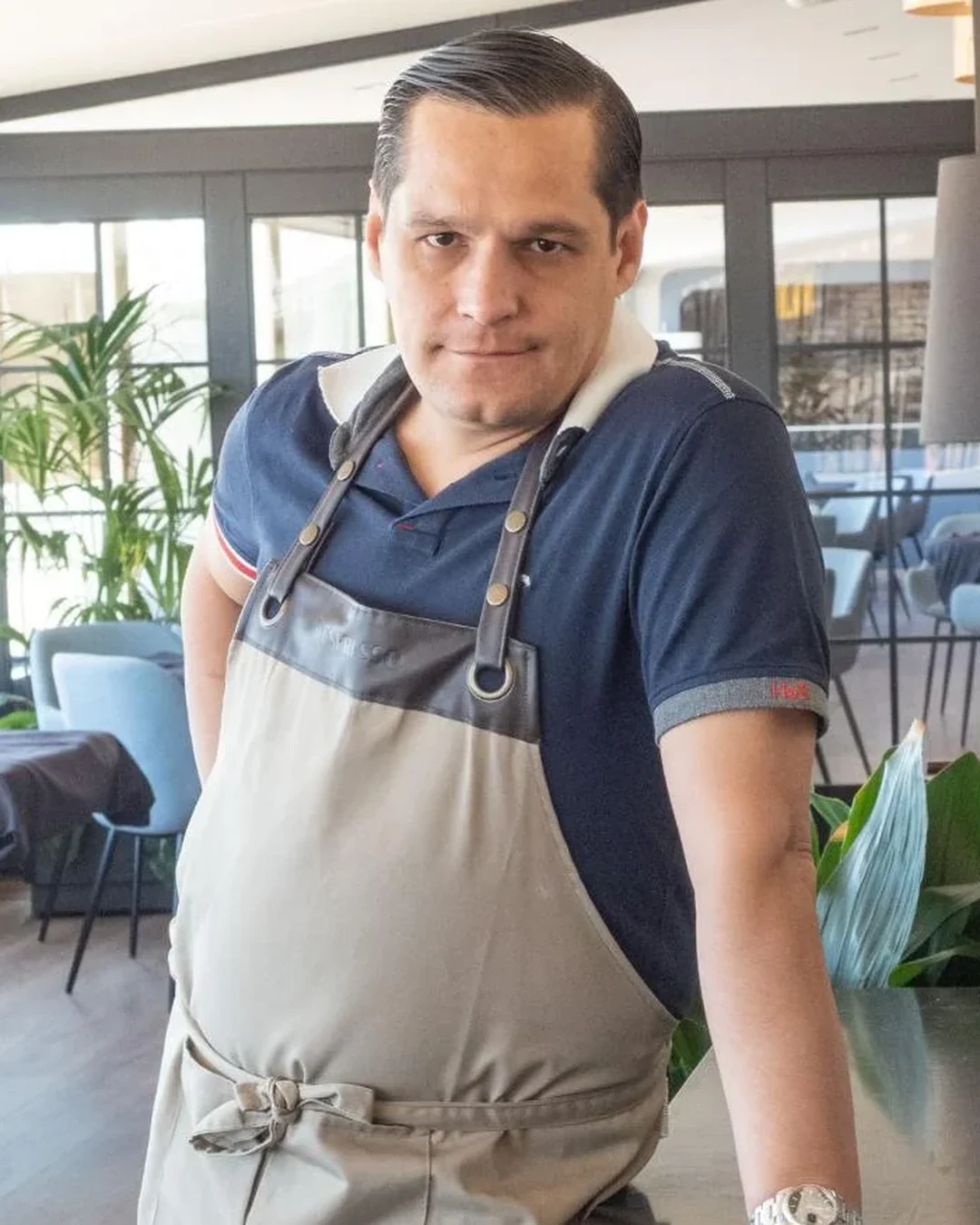
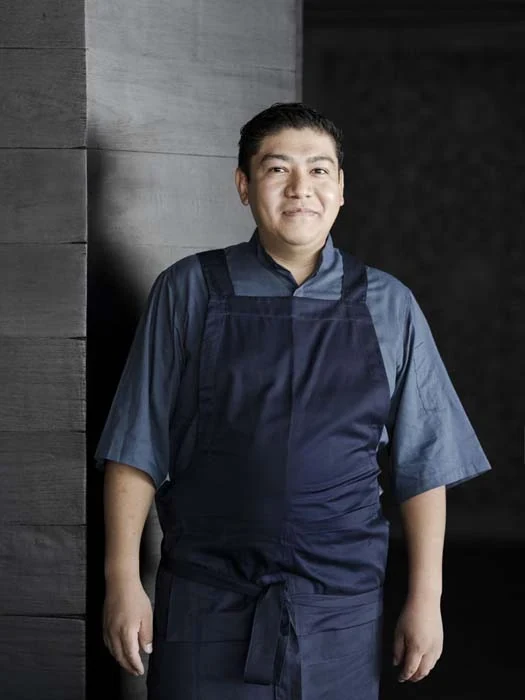
Before Isaac Loya became chef and restaurant manager of Real Balneario in Salinas, Spain, his formation began on the restaurant floor, among the rhythms of service and the discipline of a dining room facing the Cantabrian Sea. From there he moved into the kitchen, and that crossing became permanent: the floor gave him the measure of the guest, while the stove gave him the language of fish, shellfish, restraint, and continuity.
The Training The first lesson was the room. Loya worked on the dining room staff at Real Balneario, learning the house from the side of hospitality before taking his place behind the pass. That early movement from service into cooking matters in the way his work reads now: attentive to timing, precise in presentation, and built around the ingredient rather than around display. At Real Balneario de Salinas, he works as Executive Chef as well as chef and restaurant manager, a dual responsibility that keeps the kitchen connected to the full life of the restaurant. The path is unusually coherent: one house, one coastal address, one gradual deepening of responsibility from the restaurant floor to the kitchen he never left. His specialty is the treatment of sea produce. The phrase is simple, but it points to a demanding discipline: fish and seafood require speed, judgment, restraint, and a cook’s ability to stop before the ingredient is crowded.
The Lineage The family thread is clearest in *Lubina al Champange*, an emblematic dish inherited from his parents. On the menu, sea bass with champagne *Felix Loya* is described as a signature classic, and the sea bass in champagne sauce has become a cult dish at Real Balneario. That continuity does not make the cooking static. Loya’s culinary offering evolves without forgetting its roots, joining top-quality ingredients with flawless technique. The inheritance is not treated as museum work; it is carried as a living method, with the older dishes allowed to remain present while new creations take shape around them. His cooking works in two tracks. One is classic, ingredient-led Cantabrian fish and seafood preparation, where clarity and product lead the plate. The other is a considered innovative layer, adding complexity without obscuring the source material.
The Table Minimalism defines the menu: classic dishes sit beside new creations, and no plate uses more than four ingredients. That rule gives the cuisine its tension. With so few elements, there is little room for disguise; technique must carry flavor, texture, heat, and balance. Natural sea bass with vegetables, pan-seared with crispy skin, is one demonstration of that thinking at Real Balneario. The dish stays close to the fish, using vegetables as support and the skin as contrast, not decoration. In Salinas, Loya’s table is shaped by the sea and by a house he first knew from the dining room. His work joins service memory, parental inheritance, Cantabrian produce, and a disciplined contemporary hand, all returning to the same central question: how much can be done while still letting the fish remain itself?
Profile updated July 2026
FAQ
Asked of Isaac
Where did Isaac Loya study or apprentice?
His formation began on the restaurant floor at Real Balneario in Salinas, Spain, before he moved into the kitchen and remained there.
What tradition or house shaped Isaac Loya?
Real Balneario de Salinas shaped him, along with an inherited parental dish, *Lubina al Champange*.
Who has Isaac Loya mentored?
His public lineage runs backward to the Real Balneario floor and his parents rather than forward to a named mentee.