Founder and Pastry Chef
Jeffrey Cagnes
Founder and Pastry Chef, Maison Jeffrey Cagnes Paris
- Discipline
- Founder and Pastry Chef
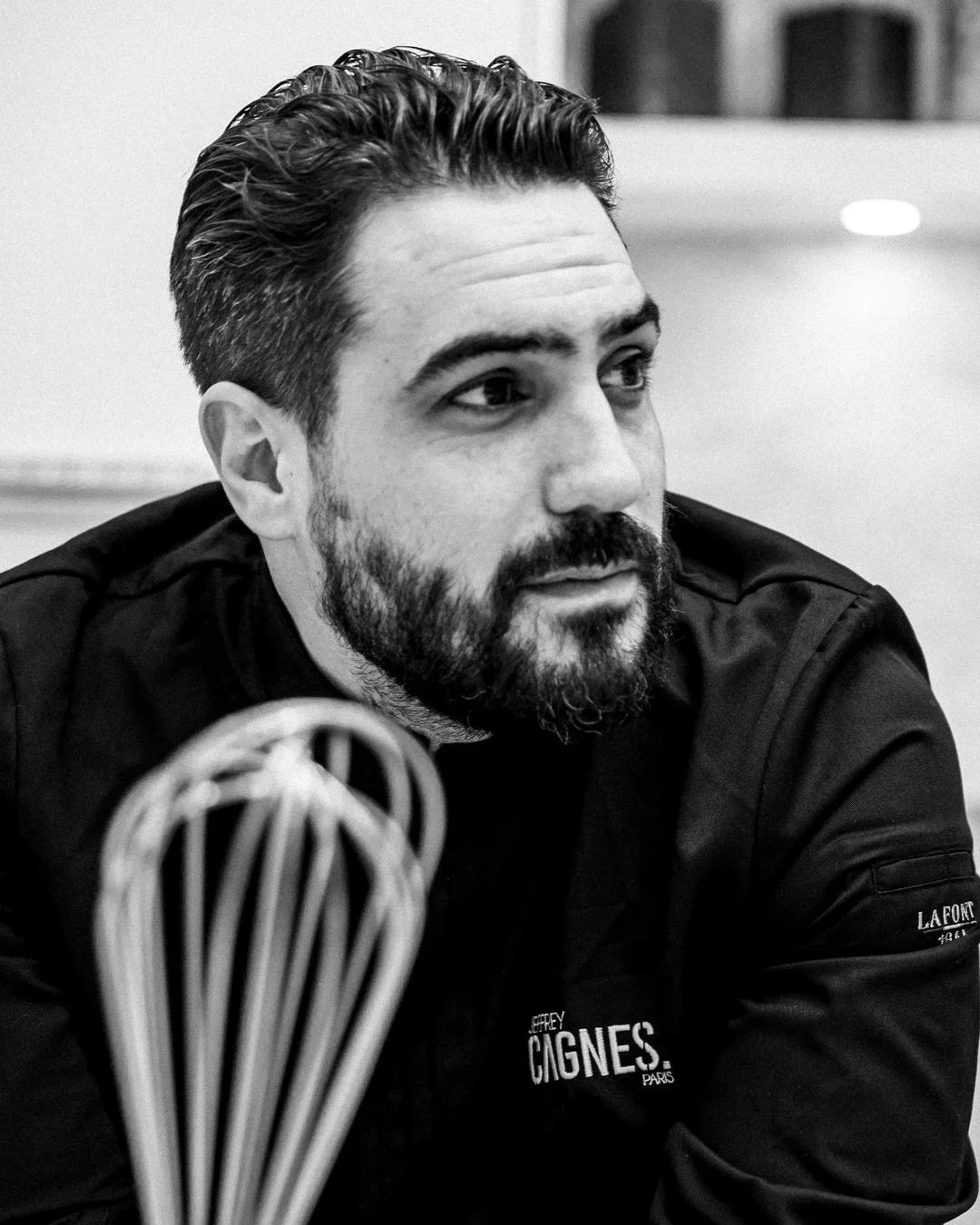
i. Biography
Paris, France, is the ground for Jeffrey Cagnes’s pastry: hazelnut and fleur de sel, mango and passion fruit, black sesame, basil folded into lemon, dark chocolate held against praline and soft biscuit. The French Pastry Chef and founder of Maison Jeffrey Cagnes Paris works in materials that can be read by hand as much as by eye.
The Place Before Maison Jeffrey Cagnes Paris, Cagnes worked as Pastry Chef at Casse-Noisette (Paris, France), where he designed a Paris-Brest described as to die for. The form is a classic one, but the notice belongs to texture and appetite: choux, cream, praline, and the kind of dessert that travels by word of mouth. At Stohrer (Paris, France), he led a 25-person brigade as head chef. There, at the oldest establishment in Paris, Rum Baba and Puits d’amour became central to his work: dormant classics he revived with a disciplined sense of inheritance. The point was not to erase age from the pastry, but to make the old recipes active again in the city that had kept their names.
The Method Cagnes has described an approach that resists excessive smoothness: "I wanted to take an almost irregular approach to pastry making, and it’s always more difficult to make something irregular look good than something regular." That sentence says a great deal about his work: the surface may be less uniform, but the difficulty is higher because the hand is exposed. The same thinking appears in his preference for proximity and daily use. His opposition is not to beauty, but to a kind of polish that hides the maker. "I wanted to give it an artisanal twist, to return to real values, not just make ‘Instagrammable” desserts but homemade ones, without necessarily using silicone moulds or coloured icings." The method is tactile before it is theatrical. As he puts it, "My commitment is in the handiwork. Mastered artisanal dexterity. It’s all in the hands, those of the Pastry Chef and of my teams. The ingredients are there, we just have to “draw” with them."
The Range The range under the Jeffrey Cagnes name in Paris is built from highly legible components. The hazelnut flan is described with fleur de sel flakes, whole hazelnuts, runny homemade praline, and vanilla cream. Chocolate Cupra is described in layers: 64% dark-chocolate mousse, almond-hazelnut praline, and soft biscuit. The lemon tart is described as a crispy sweet pastry with smooth cream and a basil confit center. Beyond France, Le Touessrok is a Saint-Honoré rewritten by Cagnes around mango, passion fruit, and black sesame for Coco’s Beach House (Mauritius), where it is described as the restaurant’s signature dessert at dinner time. It keeps the architecture of a French pastry name while changing the fruit, the scent, and the register of the plate.
FAQ What style or method defines Jeffrey Cagnes's work? His work is defined by hand-led pastry, an almost irregular approach, and an artisanal preference for homemade desserts over silicone moulds or coloured icings. What are Jeffrey Cagnes's signature releases or dishes? His named works include revived Rum Baba and Puits d’amour at Stohrer, a Paris-Brest at Casse-Noisette, Le Touessrok for Coco’s Beach House, hazelnut flan, Chocolate Cupra, and lemon tart. What is Jeffrey Cagnes known for making? He is known for French pastry rooted in classics, praline, chocolate, fruit, and visible handiwork.


