Chef
Jimmy Lau
- Discipline
- Chef
i. Biography
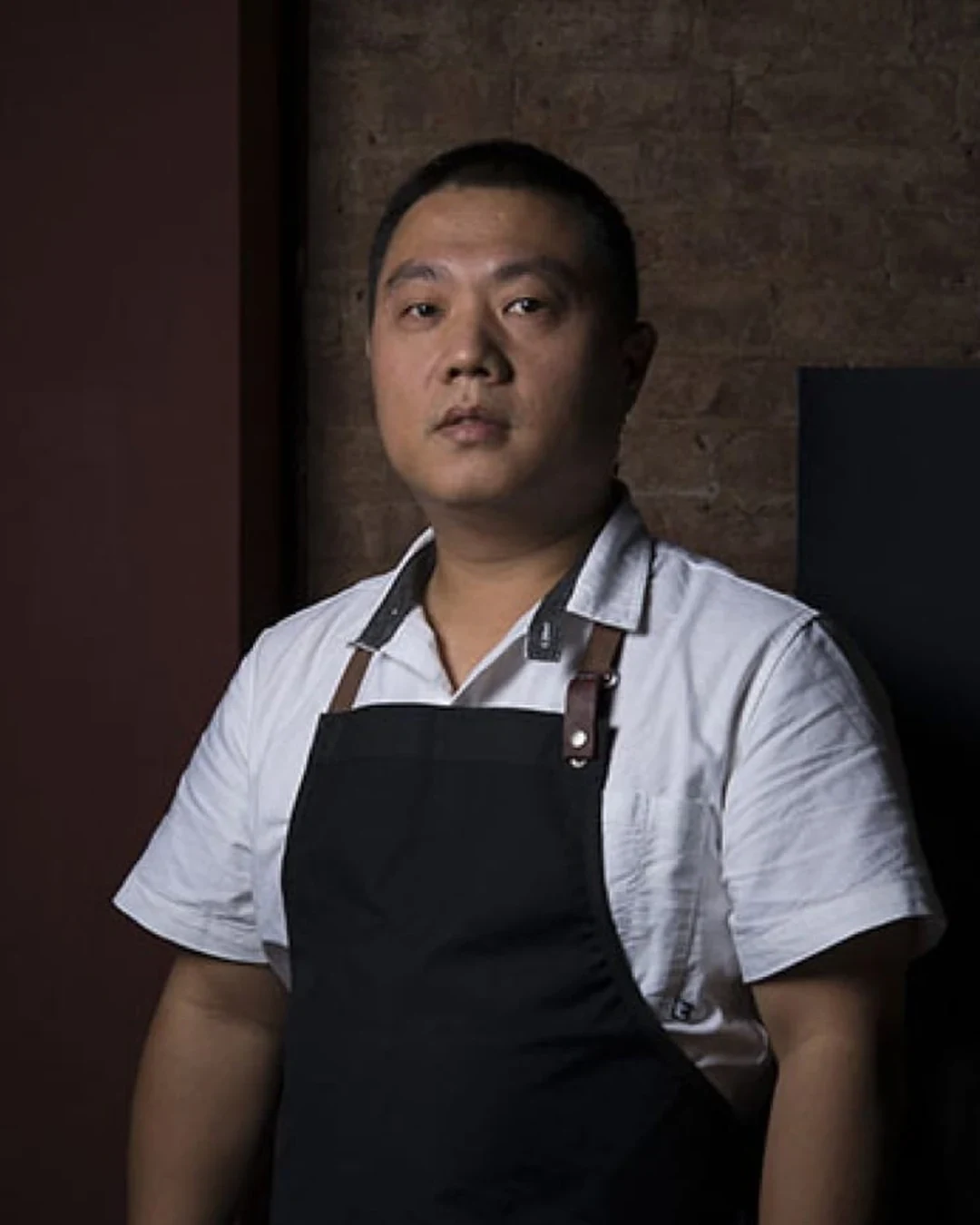
Jimmy Lau’s record is a compact New York City line through Japanese kitchen practice: Masa Columbus Circle, Bar Masa, Neta, and Shuko. The current role, Co-executive Chef and co-owner of Shuko in New York City, United States, follows chef work at Masa Columbus Circle, responsibility for the kitchens of Bar Masa in New York City and Las Vegas, and a co-chef role at Neta. The craft thread is control under pressure: counter work, kitchen leadership, ownership, and the daily requirement that standards hold across service.
The Path
Precision-led Japanese restaurant work formed the early register when Jimmy Lau worked for Masa Takayama at Masa Takayama's restaurants in the Time Warner Center in New York City. In that environment, preparation, timing, knife work, rice, fish, temperature, and restraint were not decorative values; they were operating conditions. The later move into charge of the kitchens at Bar Masa in New York and Las Vegas expanded the task from individual execution to maintaining kitchen standards across two cities. From 2012, the chef/owner role at Neta in Greenwich Village, New York City placed more of the room’s outcome under direct authorship. The work shifted from executing inside an established structure to carrying responsibility for the menu, service rhythm, and guest-facing identity of the restaurant. He was co-chef at Neta until 2013; today, Jimmy is chef/owner of Shuko.
The Work Today
At Shuko in New York City, the current role of Co-executive Chef and co-owner joins kitchen execution to ownership responsibility. That combination is practical rather than symbolic: the cooking has to hold, and the restaurant’s identity has to remain legible through staffing, sourcing, service, and repetition. Shuko brings the previous stages into one working frame. Masa Columbus Circle supplied the high-precision kitchen context; Bar Masa in New York City and Las Vegas added multi-city leadership; Neta added chef/owner responsibility. In Lau’s work at Shuko, the emphasis is concentration rather than display: luxury ingredients used with intent, polish applied without clutter, and dishes built for direct impact.
Career - Chef/owner — Shuko, New York City - Worked for Masa Takayama — Masa Takayama's restaurants in the Time Warner Center, New York City - In charge of the kitchens — Bar Masa, New York and Las Vegas - Chef/owner — Neta, Greenwich Village, New York City (from 2012)
Signature
The named signatures — spicy tuna roll, toro tartare topped with Oscietra caviar, tartare under a green-gray hump of Osetra caviar, truffle-topped scallops, and caviar-loaded toro — work in a direct luxury register. The structure is clear: tuna sharpened by spice, toro reinforced by caviar, scallops paired with truffle, and richness kept close to the bite. The discipline is not the use of opulence itself, but the control required to keep it from flattening the ingredient.
Acclaim
Recognition in this record is carried by the appointments themselves: chef work at Masa Columbus Circle, charge of the kitchens at Bar Masa in New York City and Las Vegas, co-chef at Neta until 2013, and Co-executive Chef and co-owner at Shuko. The sequence shows increasing responsibility inside demanding Japanese restaurant formats. The path does not need enlargement. Its value is the clear progression from chef work to multi-city kitchen leadership to shared ownership, with Shuko in New York City as the current expression of that responsibility.
FAQ What is Jimmy Lau's current role? As of 2026, Jimmy Lau is Co-executive Chef and Co-owner. Where did Jimmy Lau work before? Jimmy Lau's earlier career included Masa Takayama's restaurants in the Time Warner Center, Bar Masa, and Neta. What is Jimmy Lau known for? Sushi and omakase.


