i. Biography
Coming Up
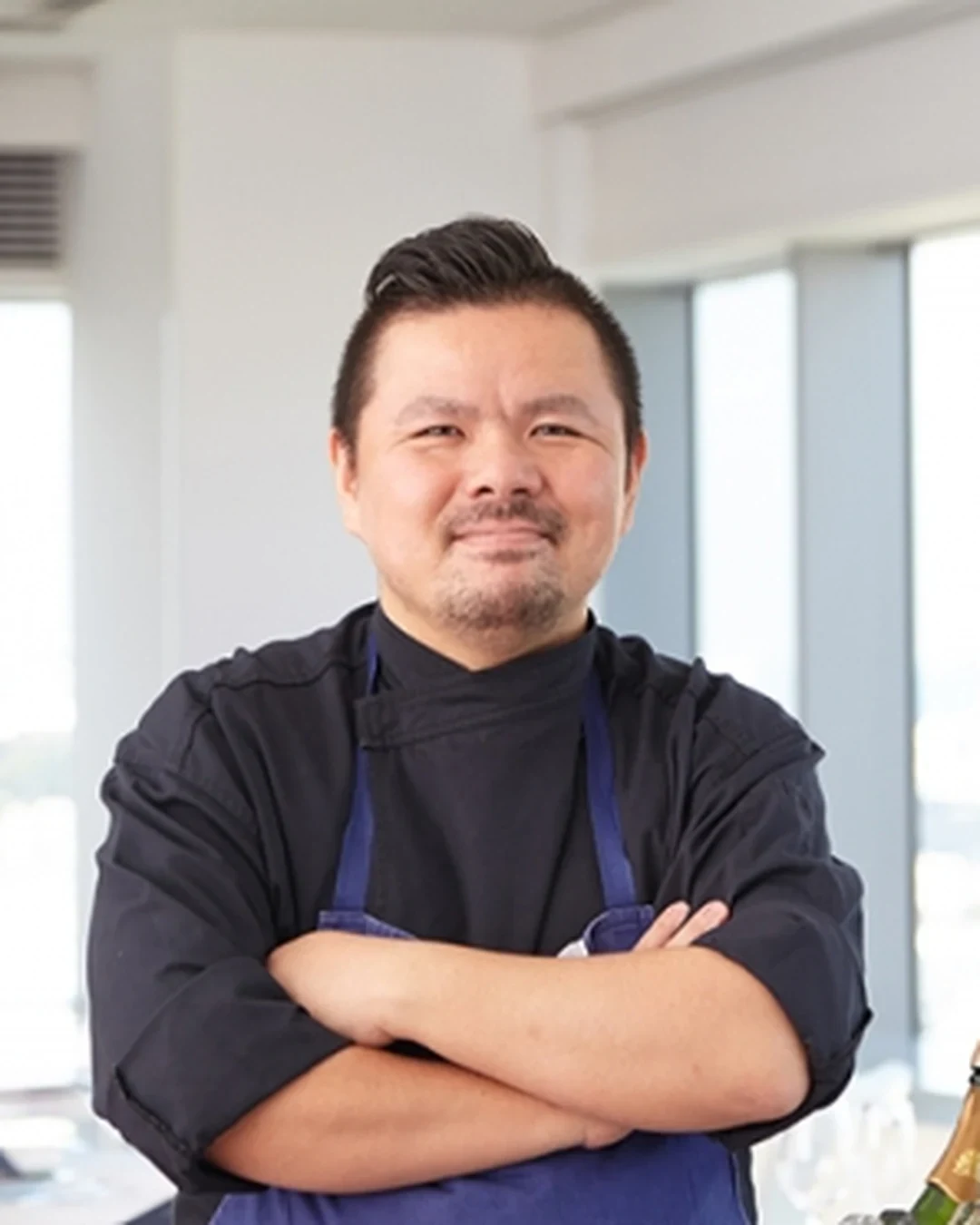
Training at Stella Maris, Paris, placed Junya Teshima inside a fine-dining discipline defined by repetition, control, and exacting standards before he returned to Japan. The move from Paris to Tokyo sharpened the terms of the work: technique first, then authority. At Restaurant Tateru Yoshino Shiba Park Hotel in Tokyo, Japan (2007), the Head Chef title meant more than supervision. It marked the kitchen as a daily exercise in rhythm, command, and consistency. Since 2007, that work has continued through Hotel de Yoshino, where Junya Teshima is Head Chef and chef-owner, and since 2022 through Chez Inno, where he is Head Chef / Head Chef. The continuity matters. It shows a career built on sustained standards rather than one-off moments: the same discipline carried across rooms, years, and responsibilities, with ownership and leadership treated as part of the craft rather than separate from it.
Where They Are Now
At Chez Inno in Tokyo, Junya Teshima served as chef de cuisine in 2022, and the kitchen’s account of his work turns on one dish: Sautéed Lobster with Sauce Américaine. The plate sits squarely in the French canon, with polish and precision doing the heavy lifting. Chez Inno selected it as a signature pairing for Bollinger La Grande Année, which places the dish in a refined context where texture and flavor have to meet on equal terms. “I think it is a very important dish for me as I continue to study technique, so I make it.” In Teshima’s own words, the value of the dish lies in repetition as practice. The work is not presented as a fixed endpoint but as an ongoing measure of standards, a way to keep technique active through use. That is the practical side of kitchen discipline: making the same thing well enough to keep learning from it. The career reads as accumulation rather than display. Hotel de Yoshino and Chez Inno provide the framework, but the real throughline is the method: classical discipline, steady attention, and a refusal to treat consistency as secondary. In that sense, the kitchen becomes the record of the work, with each role adding another layer of proof.
Signature
Junya's signature dishes include Sautéed Lobster with Sauce Américaine and Lamb in Pastry "Maria Callas Style. The two dishes point to a classical register. Sautéed Lobster with Sauce Américaine carries the precision and balance of French technique; Lamb in Pastry "Maria Callas Style" adds a more declarative, theatrical note through its naming. Together, they describe a chef working within tradition while giving each plate a clear, controlled identity. The signatures do not rely on excess. They rely on structure.
In Their Words “I started because I wanted to study what it meant to keep going.” “When I first entered this world, he was already a god-like chef.” These lines frame the profession as endurance and hierarchy. The first puts study and persistence at the center of the work. The second acknowledges the authority that shapes a kitchen before a chef has fully entered it. Between them is the practical arc of the trade: learning, measuring, advancing, and continuing.
Honors
Junya's honors include Tabelog Bronze Award. The Tabelog Bronze Award gives the work a public marker without changing its terms. It sits alongside the career itself as a quiet confirmation of standards already visible in the roles, the repetition, and the signatures.
Profile updated July 2026
FAQ
Asked of Junya
Where did Junya Teshima train or study?
Junya Teshima trained at Stella Maris, Paris.
What recognition has Junya Teshima received?
Tabelog Bronze Award (2017).