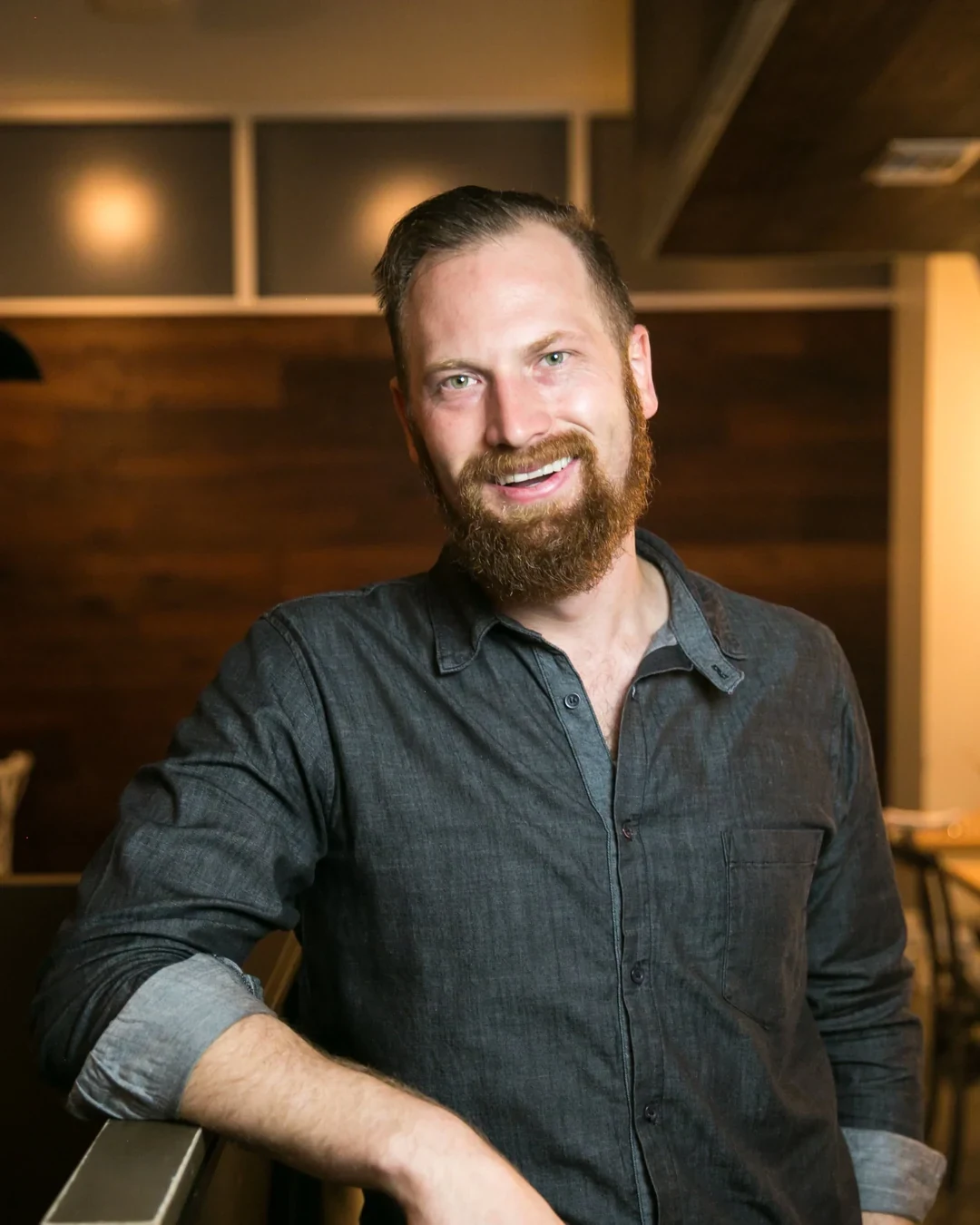
Portrait of Kevin Fink
i. Biography
Partner and Executive Chef of Emmer & Rye Hospitality Group in Austin, Texas, Kevin Fink reads less like a profile subject than a position on a map: Arizona in one direction, Austin in the other. The work carries that geography plainly. From Northern Arizona University to Tucson operations, then into Austin kitchens and a restaurant built around sustainable, locally sourced cooking, the thread is accumulation—training, repetition, and a voice sharpened over time.
The Sunday letter
Read Made By's new profiles every Sunday.
Meet the chefs, winemakers and sommeliers behind the places we cover. See a sample below before you subscribe.
See a sample of the Sunday emailOne email a week. Unsubscribe from any issue.
The Path
Training at Northern Arizona University gave Kevin Fink the base that shows up later in the work: process, pace, and enough discipline to move through different sides of the business without losing the line. In Tucson, as director of operations at Zona 78, he worked from the operational side of the restaurant, where coordination, timing, and consistency are part of the craft rather than the backdrop. That kind of role teaches how a restaurant holds together before it teaches how it speaks. At Olamaie in Austin, Texas, the title changed to Chef de partie, and the work moved onto the line. That shift brought the day-to-day demands of service into sharper focus and connected management perspective to hands-on execution. In practical terms, it is the sort of progression that matters: learning the room from one side, then from the other. Since 2015, Emmer & Rye has been the place where that progression resolves into authorship. As Executive Chef and owner, Kevin Fink holds a role that combines direction with execution, and the restaurant’s shape reflects that. The title marks not just advancement, but control over a kitchen identity that is defined from within.
The Work Today
Sustainable, locally sourced cooking is the working language at Emmer & Rye Hospitality Group in Austin, Texas, where Kevin Fink serves as Partner and Executive Chef. The role is also specific to Emmer & Rye itself, where he has been Executive Chef since 2015. The repetition of place and title matters: this is a kitchen identity built in one city, and maintained there over time. In 2019, the restaurant was identified with a weekly rotating menu using local farm-to-table ingredients. That format tells you what the cooking asks of the kitchen: responsiveness, discipline, and a willingness to work with what the week actually provides. Local sourcing is not treated as a slogan here; it is built into the menu structure. The dim sum-style service introduced in 2015 and the weekly rotating farm-to-table menu noted in 2019 give the restaurant a clear operating logic. Service format and sourcing move together, which is what makes the work legible. The result is a kitchen that changes in public, with the menu and the service both carrying the marks of adjustment.
Career - Executive Chef and owner — Emmer & Rye, Austin, Texas (2015–present) - Director of operations — Zona 78, Tucson, Arizona - Chef de partie — Olamaie, Austin, Texas Education: Northern Arizona University
Signature
The signature dishes associated with Kevin's work are Diver Sea Scallops, Grilled Mushroom, Prawns and Walnuts, and Green Emmer Shoyu Glass, Beef Tallow, and Pink Lady Apple. Read as a set, they suggest a kitchen that favors precision in naming and composition, with ingredients placed for effect rather than excess.
Acclaim
Kevin's honors include James Beard semi-finalist, Best Chef: Southwest, StarChefs Rising Star, Food & Wine Best New Chef, and Bon Appétit Best New Restaurant. The list places his work in the field, but the more useful detail is what it points to underneath: a restaurant practice tied to place, and a career built by moving through the job in stages rather than arriving all at once.
FAQ What is Kevin Fink's current role? As of 2026, Kevin Fink is Partner and Executive Chef. Where did Kevin Fink train or study? Kevin Fink trained at Northern Arizona University. What recognition has Kevin Fink received? James Beard semi-finalist, Best Chef: Southwest (2018).


The Sunday letter
Get the next Made By profile in your inbox.
We send one email every Sunday morning with the people we profiled that week.
See a sample of the Sunday emailOne email a week. Unsubscribe from any issue.