Chef guiding Eliane's 15-course dinner
Kobe Desramaults
- Discipline
- Chef guiding Eliane's 15-course dinner
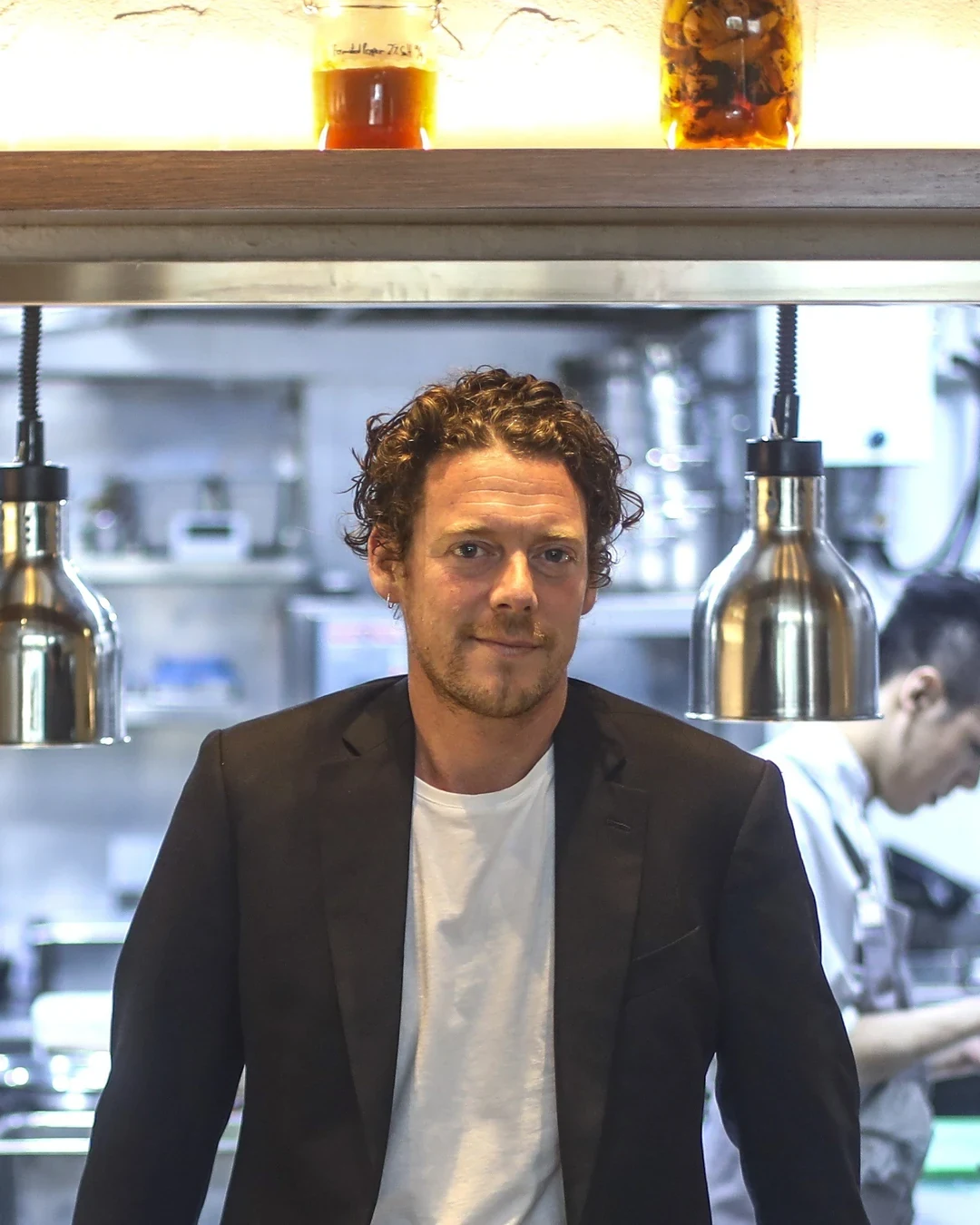
i. Biography
From Poperinge and Belgian by origin, the cooking associated with Kobe Desramaults works from proximity: nearby ingredients, foraged elements, and heat used with control rather than display. The vocabulary is place-based without turning decorative: what can be gathered, brought in from the fields, handled over flame, or left spare enough to keep its own register. Across Dranouter, Ghent, and Brussels, the countryside remains part of the method — as texture, memory, and discipline.
The Path
Apprenticeship supplies the first grammar of restraint, and Kobe Desramaults’ early work at Picasso gave him a discipline that later showed in stark, expressive cooking. As the food became more pared back, it did not become casual. It asked for attention to smoke, bitterness, acidity, grain, leaf, skin, and bone, and to the point at which heat changes an ingredient without burying it. Rural cooking gains force when the setting is treated as working material rather than scenery. As chef/owner at In De Wulf in Dranouter, Belgium (until 2016), Kobe Desramaults brought that condition into focus: distance from the expected centers of dining, immediate access to what grew or could be found nearby, and a cuisine stripped of excess while remaining alert to its surroundings. An urban room changes the tempo of the same craft. At De Vitrine in Ghent, Belgium, Kobe Desramaults operated with a sensibility shaped by intimacy, exchange, and a tighter social rhythm. Where Dranouter carried fields, edges, and rural quiet, Ghent gave the work a compressed frame in which ideas could move at close range without losing their roots. Elemental cooking becomes most legible when the room, the fire, and the ingredient sit close together. As chef/owner at Chambre Séparée (2017–2020), Kobe Desramaults sharpened that intimate approach: proximity as structure, fire as tool rather than flourish, restraint as pressure. Across In De Wulf in Dranouter, Belgium (until 2016), De Vitrine in Ghent, Belgium, and Chambre Séparée (2017–2020), the line did not move away from origin; it worked further into it, even as the path extended toward Brussels and beyond.
The Work Today
The current value of Kobe Desramaults’ work is best read through continuity. Nearby ingredients, foraged elements, and careful heat remain the central concerns. The cooking favors clarity over decoration, with an emotional register tied to landscape: the fields of childhood, the material directness of the Belgian countryside, and the creative openness of Ghent. The style holds rawness and refinement in the same hand. Its references can be rustic, but the execution is exacting; memory is present, but sentiment is kept out of the way. Completion comes through focus rather than abundance: a limited palette, a decisive gesture, and elements chosen because they belong.
Career - apprentice — Picasso - chef/owner — In De Wulf, Dranouter, Belgium (until 2016) - operator — De Vitrine, Ghent, Belgium - chef/owner — Chambre Séparée (2017–2020)
Signature
The signature dish Mackerel from Dunkirk fits the wider register of Kobe Desramaults’ cooking: direct, coastal in spirit, and concerned with the character of a specific ingredient rather than embellishment.
In Their Words “Ghent is super open-minded, it’s a nice hub for creative people. It feels more like a metropolitan village full of progressive things going on, but in a small town. It allows people to get the chance to interact.” “The reason is simple. My heart is there. My heart and my food. This is the area where I grew up. It is where I played in the fields with my brother, sister and friends.”
Acclaim
Recognition for Kobe Desramaults includes World’s 50 Best Restaurants: No. 111 for Chambre Séparée (2019) and Michelin star for In De Wulf.
FAQ What is Kobe Desramaults's current role? Kobe Desramaults is Chef Guiding Eliane's 15-course dinner. Where did Kobe Desramaults work before? Earlier in their career, Kobe Desramaults worked at Picasso, In


