i. Biography
In Cenlle, Spain, the work at Bodegas El Paraguas begins with Treixadura, Albariño and Godello held apart long enough for origin and weather to speak. Marcial Pita owns the estate, and his method is grounded in separations: different grapes, different harvest conditions, different cellar decisions before the final shape of the wine is considered.
The Estate
Cenlle gives Pita the fixed point for a project tied to New Galician wine. His language for the estate is agricultural before it is commercial: "The winegrowing effort to interpret the terroir, precision winemaking, and a commitment to continue discovering the potential of the Galician vineyard are part of the philosophical basis of our project." The estate entered his career in 2011, after a path that had already moved between cellars, warehouses, books and journalism. Before this Galician chapter, he collaborated at the Vinoselección wine club warehouse preparing orders, a practical post close to bottles as finished objects: packed, selected, moved and sent to drinkers. Pita is also a journalist specializing in wine and gastronomy. That work sits beside his role as an author of books specializing in wine, including Senderos de Vino y Gastronomía, Castilla-La Mancha y Madrid. His writing life gives his winemaking an unusual double lens: the bottle as a crafted thing and the bottle as something that must be read through place, food and culture.
In the Cellar
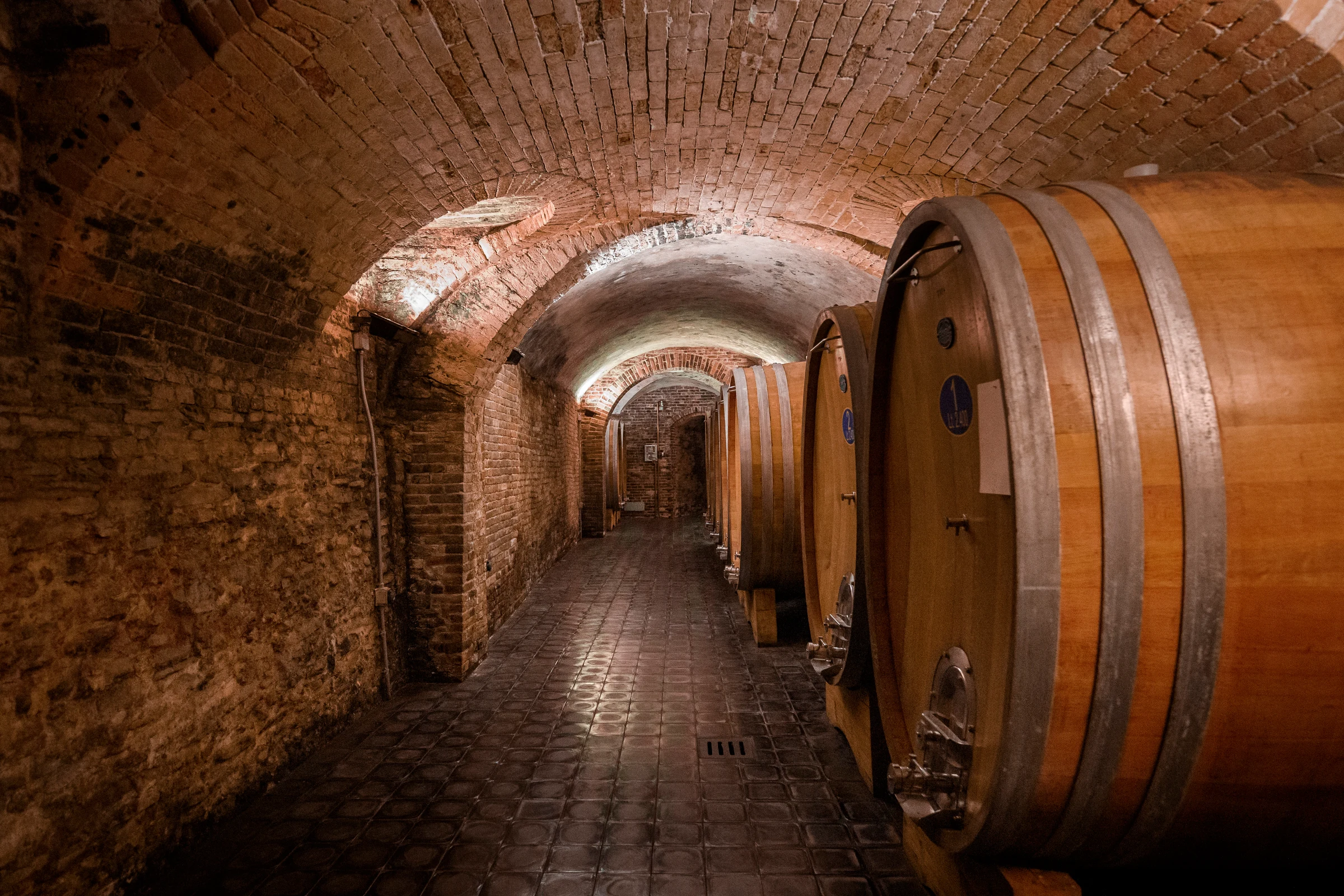
The cellar method is precise without becoming ornate. Treixadura, Albariño and Godello are vinified differently and independently according to grape origin and harvest conditions, so variety and site are not collapsed into a single formula too early. Fermentation relies on indigenous cultured yeasts from the area. Malolactic fermentation is avoided, preserving a different line of acidity and texture than a softer secondary conversion would bring. Aging takes place in a mixture of 600-liter French oak barrels and stainless steel. The wines spend 3–4 months on the lees, a short, tactile interval in which vessel and solids shape the final texture without erasing the separateness established at harvest. Those choices place process in service of Pita’s stated interest in the Galician vineyard. The work is not described by a single cellar trick; it is a sequence of decisions made from grape origin, harvest conditions, yeast selection, vessel and lees time.
The Bottlings
Pita’s earlier work with El Linze brought him into the national wine elite in 2006. That year gives an important marker before the Cenlle estate: his reputation was already tied to winemaking before the later Galician focus became the center of his production. At the estate, the signature is less a named bottle than a way of handling material. Treixadura, Albariño and Godello each receive independent treatment, while the cellar keeps to indigenous cultured yeasts, no malolactic fermentation, and a measured combination of large French oak and stainless steel. The result is a body of work defined by New Galician wine and by the patient reading of each harvest. Pita’s career connects order preparation, national recognition, journalism, books and cellar practice into one craft centered on origin.
FAQ What style or method defines Marcial Pita's work? His method centers on vinifying Treixadura, Albariño and Godello separately by grape origin and harvest conditions, with indigenous cultured yeasts, no malolactic fermentation, and 3–4 months on the lees in 600-liter French oak and stainless steel. What are Marcial Pita's signature releases or dishes? His signature work is the estate’s grape-led Galician winemaking, especially the independent handling of Treixadura, Albariño and Godello. What is Marcial Pita known for making? He is known for New Galician wine at Bodegas El Paraguas in Cenlle, Spain.