Chef
Marcos Campos
- Discipline
- Chef
i. Biography
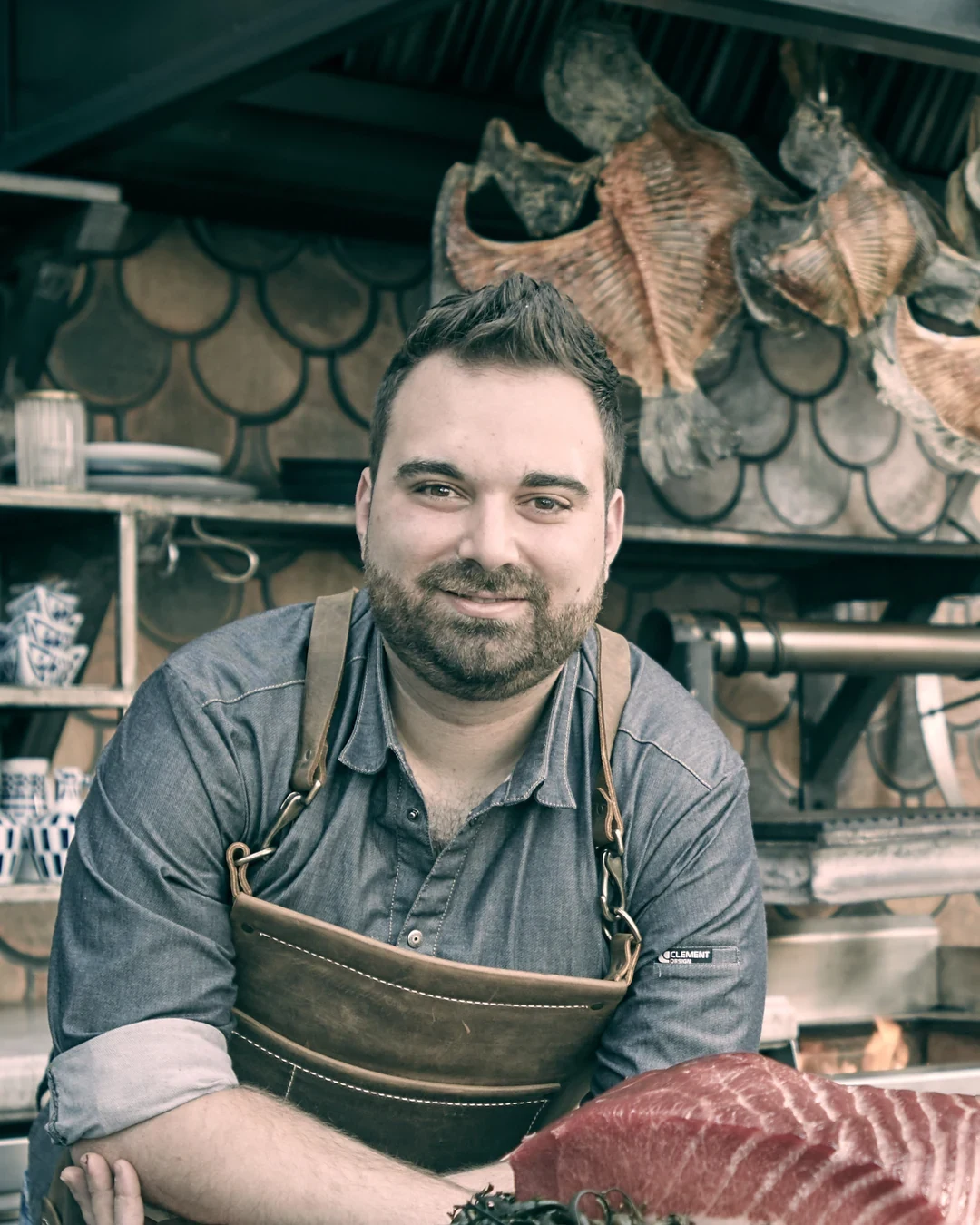
Executive Chef — Porto, Chicago: that is the defining line for Marcos Campos, a chef whose career has been shaped less by flash than by steady, hands-on accumulation. Born in Torrente, Valencia, Spain, Campos brings to Chicago a sensibility that feels grounded and exacting, the kind of approach that values craft, repetition, and the quiet authority of a kitchen that knows what it wants to say. His story moves from training and responsibility into a leadership role that helped define his trajectory, and now into a current post with a Chicago hospitality group.
The Climb
Early in his career, Marcos Campos served as Executive Chef at Porto in Chicago, a role that placed him at the center of a polished, ambitious kitchen. The title itself suggests the scale of the work: not merely cooking, but guiding, shaping, and setting a tone. At Porto, he was part of a culinary environment that required discipline and clarity, and that experience remains a key marker in the arc of his professional life. It is the sort of position that asks for both confidence and restraint, for a chef to hold the line while letting the food speak with precision. Today, Campos is chef of Bonhomme Hospitality Group, continuing to work within Chicago’s dining landscape with the same sense of purpose that has defined his ascent. The move from one significant role to another reads less like a detour than a deepening—an evolution from individual kitchen leadership to a broader, ongoing place within hospitality.
Today
He is chef at Bonhomme Hospitality Group in Chicago, where his attention settles on a single ingredient as a kind of anchor for the cooking: “One of the ingredients that’s the most central at the restaurant is our cod.” In a kitchen language full of textures, temperatures, and timing, cod becomes more than an ingredient; it becomes a point of focus, a way of framing the restaurant’s identity through something precise and recognizable. The method surrounding it is just as important. “I think ours is so special because of the dry-aging process.” That detail adds dimension to the picture of his kitchen: not only a devotion to an ingredient, but a commitment to what happens before the dish reaches the plate. The dry-aging process signals patience and control, an insistence that flavor be developed rather than rushed. In Campos’s hands, the work feels rooted in technique and intention.
In Their Words “One of the ingredients that’s the most at the restaurant is our cod.” “I think ours is so special because of the dry-aging process.”
Career - Chef — Bonhomme Hospitality Group, Chicago - Executive Chef — Porto, Chicago
Recognition
Campos frames the work as a shift in storytelling: “We’re moving from caricature to a complete narrative.” It is a telling phrase, one that places his cooking within a wider conversation about how a restaurant presents itself and how a chef shapes meaning through detail. In that line, the cod, the technique, the restaurant, and the chef all come into focus as parts of a more complete expression—one that aims for depth over shorthand, and for a fuller, more nuanced voice at the table.
FAQ


